

This cacio e pepe recipe delivers creamy, peppery pasta with just 4 ingredients and no cream. The sauce clings to each strand because starchy pasta water emulsifies with cheese and butter to form a silky coating in under 20 minutes.
The recipe takes 15 minutes from start to finish and serves 4. Success depends on tossing the pasta with cheese off the heat so the Pecorino Romano melts without clumping. Leftovers keep for 3 days in the refrigerator, though the texture is best when served immediately.
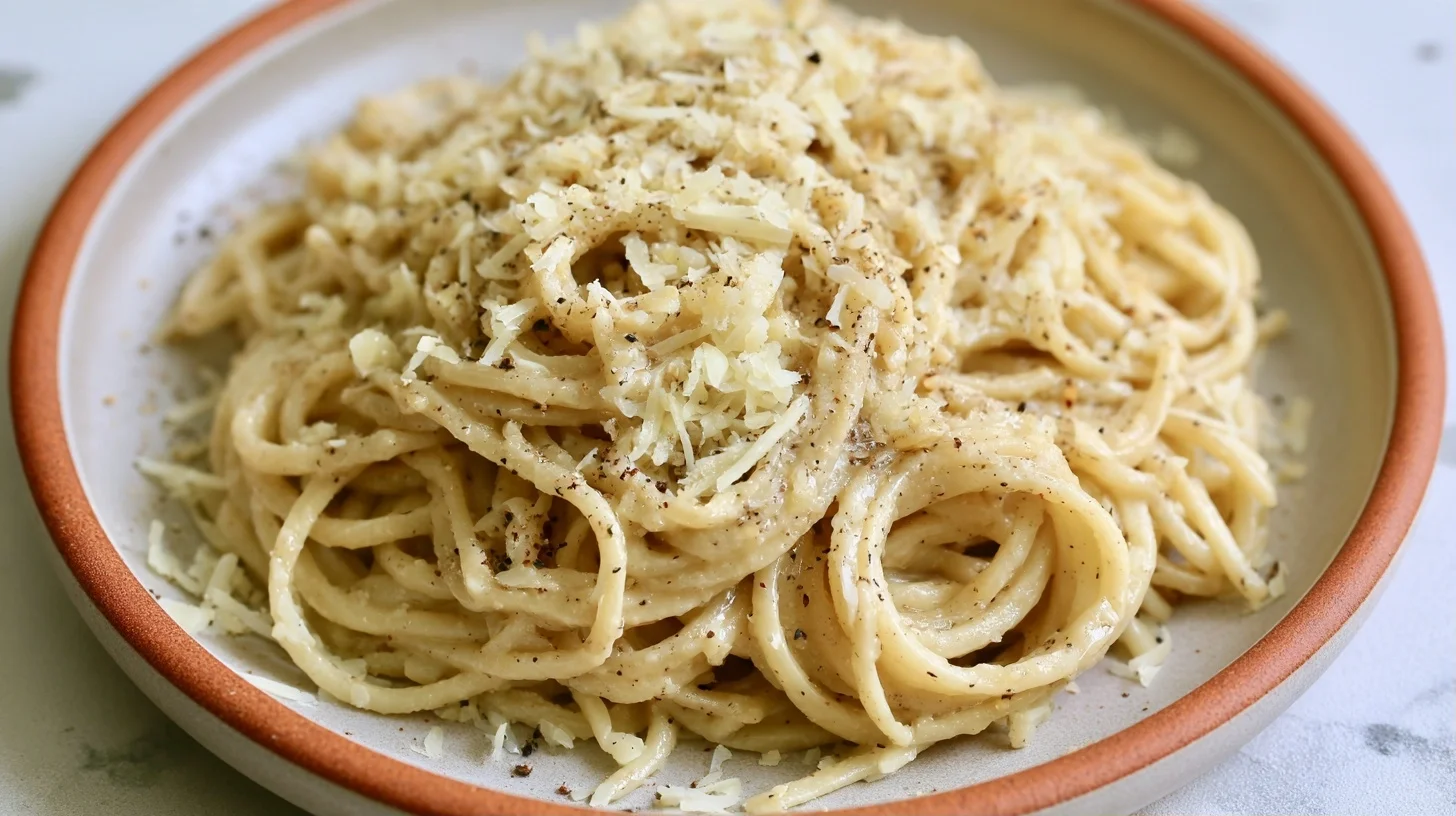
Table of contents
Why This Cacio e Pepe Recipe Works
- Reserving 2 cups of pasta water gives you enough starch to build a smooth sauce even if the first attempt breaks.
- Toasting whole peppercorns in a dry pan for 2 minutes releases their oils and creates the bold pepper flavor this recipe is named for.
- Removing the pan from heat before adding cheese prevents the Pecorino from seizing into grainy clumps.
Cacio e Pepe Recipe
Cacio e Pepe Recipe
4
servings5
minutes10
minutes425
kcalCacio e pepe is a classic Roman pasta with creamy Pecorino Romano cheese, black pepper, and butter that coats each strand in a silky sauce. The dish takes 15 minutes from start to finish and uses starchy pasta water to emulsify the cheese without cream.
Keep the screen of your device on
Ingredients
12 ounces spaghetti
2 tablespoons whole black peppercorns
3 tablespoons unsalted butter
3 ounces Pecorino Romano cheese
Directions
- Bring a large pot of salted water to a boil over high heat. Add spaghetti and cook for 8 to 9 minutes, 1 minute less than package directions, until the pasta has a firm bite. Reserve 2 cups of pasta water before draining.
- Toast the peppercorns in a large dry skillet over medium heat for 2 minutes, shaking the pan frequently, until fragrant. Transfer to a cutting board and crush coarsely with the bottom of a heavy pan or a mortar and pestle.
- Melt the butter in the same skillet over medium heat. Add the crushed pepper and stir for 30 seconds until the butter foams and smells peppery.
- Add the drained pasta to the skillet and toss for 1 minute to coat every strand with the pepper butter. Remove the pan from the heat.
- Add the grated Pecorino Romano and toss vigorously for 1 minute while adding pasta water 2 tablespoons at a time. Continue adding water and tossing until the cheese melts into a smooth, creamy sauce that clings to the pasta. The sauce should look glossy and loose.
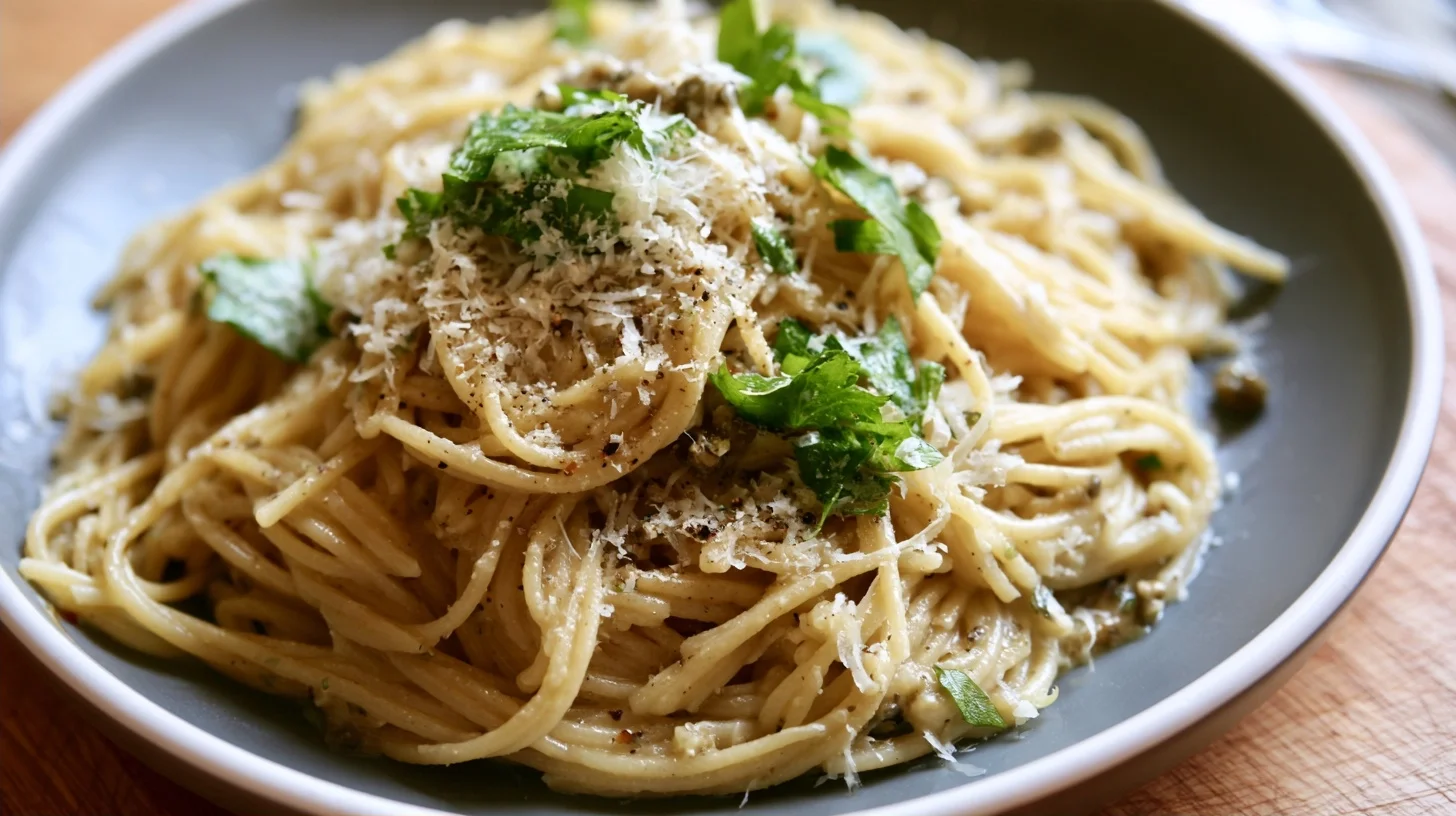
- Serve immediately in warmed bowls with extra grated Pecorino Romano and cracked black pepper on top. The cacio e pepe is best when the sauce is still hot and creamy.
Notes
- For every 8 ounces of dried spaghetti, use 2 ounces of finely grated Pecorino Romano to create the proper cacio e pepe ratio of cheese to pasta for a creamy sauce.
- If the sauce turns grainy, the cheese overheated. Remove the pan from heat immediately, add 2 tablespoons of cold pasta water, and whisk vigorously until smooth.
- Cacio e pepe keeps for 3 days in an airtight container in the refrigerator. Reheat gently in a skillet with 2 to 3 tablespoons of water over low heat. Parmigiano Reggiano can replace Pecorino Romano for a milder, less salty flavor.
Nutrition Facts
- Serving Size: 1 g
- Total number of serves: 4
- Calories: 425kcal
- Fat: 16g
- Carbohydrates: 52g
- Fiber: 2g
- Protein: 16g
Did you make this recipe?
Tag @therecipemasterblog on Instagram and hashtag it with #therecipemaster
Like this recipe?
Follow @therecipemasterblog on Pinterest
Follow us on Facebook!
Follow The Recipe Master on Facebook
The sections below explain which cheese works best for cacio e pepe and how to fix a broken sauce. You will also find storage tips and answers to the most common questions about this classic Roman pasta.
Key Ingredients and Substitutions
Four ingredients create the entire dish, and each one affects the final texture.
- Pecorino Romano: This aged sheep’s milk cheese melts into a creamy sauce and adds sharp, salty flavor. Parmigiano Reggiano is milder and less traditional but works if you prefer a gentler taste. The sauce will be less tangy.
- Black peppercorns: Whole peppercorns toasted and coarsely ground deliver the bold pepper punch that defines cacio e pepe. Pre ground pepper lacks the same intensity and aroma. Toast whole peppercorns for 2 minutes before crushing.
- Spaghetti: Long strands hold the sauce better than short shapes. Tonnarelli, bucatini, or linguine work equally well. Avoid thick pasta like rigatoni because the sauce slides off instead of coating each piece.
- Unsalted butter: Butter adds richness and helps the sauce emulsify. Salted butter can make the dish too salty when combined with Pecorino and pasta water. If using salted butter, reduce the salt in the pasta water.
How to Get Cacio e Pepe Right
Three steps control whether the sauce stays smooth or breaks into clumps.
- Reserve pasta water before draining: Scoop out 2 cups of starchy cooking water before you drain the spaghetti. The starch in this water binds the cheese and butter into a creamy emulsion. Tap water added later will not work.
- Cook pasta 1 minute under package time: Drain the spaghetti when it still has a firm bite. It finishes cooking in the sauce for 1 to 2 minutes and absorbs flavor while the cheese melts. Fully cooked pasta turns mushy during tossing.
- Add cheese off the heat: Remove the pan from the burner before stirring in Pecorino. High heat causes the cheese proteins to seize and form grainy lumps instead of a smooth sauce. Toss vigorously for 1 minute while adding pasta water in small splashes.
- Use a 1 to 1 ratio of cheese to pasta: For every 8 ounces of dried spaghetti, use 2 ounces of finely grated Pecorino. This cacio e pepe recipe balances creaminess with the pasta without making the sauce too thick or too thin.
- Grate cheese finely: A Microplane or the smallest holes on a box grater create a powder that melts instantly. Large shreds take longer to melt and can clump before they incorporate into the sauce.
What Went Wrong
Why Did the Sauce Turn Grainy?
The cheese overheated and the proteins seized into clumps. This happens when you add Pecorino while the pan is still on the burner or when the pasta water is boiling hot. Always remove the pan from heat before adding cheese. If the sauce has already broken, add 2 tablespoons of cold pasta water and whisk vigorously off the heat. The sauce will smooth out as it cools slightly.
Why Is the Sauce Too Thick?
You did not add enough pasta water during tossing. The sauce thickens quickly as the pasta absorbs liquid. Add pasta water 1 tablespoon at a time while tossing until the sauce coats the spaghetti in a glossy layer. The consistency should look creamy and loose in the pan because it will tighten as it cools on the plate.
Why Is the Sauce Watery?
You added too much pasta water at once or the water was not starchy enough. Use water from the end of cooking when the starch concentration is highest. Add it in small splashes and toss constantly so the starch has time to bind the fat and cheese. If the sauce is already too thin, return the pan to low heat and toss for 30 seconds to evaporate excess liquid.
Recipe Variations
Cacio e Pepe With Lemon
Add 1 teaspoon of finely grated lemon zest with the cheese for a bright citrus note. The zest cuts the richness without adding liquid that could break the sauce. This variation pairs well with pasta limone techniques if you want a more pronounced lemon flavor.
Cacio e Pepe With Guanciale
Render 4 ounces of diced guanciale in the pan before adding butter and pepper. The pork fat adds smoky richness and turns the dish into a bridge between cacio e pepe and carbonara. Remove the guanciale with a slotted spoon before adding pasta and stir it back in at the end.
Gluten Free Cacio e Pepe
Use gluten free spaghetti made from rice or corn and cook it 1 minute less than the package directs. Gluten free pasta releases less starch, so add 1 teaspoon of cornstarch to the reserved pasta water and whisk it in before tossing with the cheese. The sauce will emulsify just as smoothly.
What to Serve With Cacio e Pepe
The rich, peppery pasta works best with simple sides that do not compete for attention. A crisp green salad with lemon vinaigrette balances the creaminess. Roasted asparagus or broccolini adds a bitter contrast that cuts through the cheese. Serve crusty Italian bread to soak up any sauce left on the plate.
How to Store and Reheat Cacio e Pepe
Cacio e pepe keeps for 3 days in the refrigerator in an airtight container. The sauce will thicken and may separate as it cools. Reheat gently in a skillet over low heat with 2 to 3 tablespoons of water or milk, tossing constantly until the sauce loosens and coats the pasta again. Do not microwave because the cheese will turn rubbery.
This dish does not freeze well. The cheese sauce breaks when thawed and the pasta turns mushy. Make only what you plan to eat within 3 days. For best texture and flavor, serve cacio e pepe immediately after tossing.
Cacio e Pepe FAQs
No, cacio e pepe is best served immediately after tossing. The sauce thickens and separates as it sits. You can prep ingredients in advance by grating cheese and toasting peppercorns, then cook the pasta and assemble the dish just before serving.
Cacio e pepe means cheese and pepper in Roman dialect. Cacio refers to Pecorino Romano cheese and pepe is black pepper. The dish originated in Rome as a simple pasta made by shepherds with ingredients that traveled well.
Pecorino Romano is traditional and gives the dish its sharp, salty flavor. Parmigiano Reggiano works as a substitute but tastes milder and less tangy. A 50/50 blend of both cheeses offers balanced flavor and smooth melting.
The sauce lacks enough starchy pasta water to emulsify the cheese and butter. Add reserved pasta water 1 tablespoon at a time while tossing vigorously off the heat. The starch binds the fat and cheese into a smooth, creamy coating.








Leave a Reply