

This kimchi recipe ferments napa cabbage with Korean red pepper flakes, garlic, and ginger into tangy, crunchy kimchi in 3 to 5 days at room temperature. The brine stays simple with just salt and water, so the vegetables keep their crisp bite.
The recipe makes 2 quarts in about 30 minutes of active prep. Salt draws moisture from the cabbage, then the seasoned paste coats every leaf. Fermentation time depends on room temperature, but the kimchi is ready when bubbles form and the flavor turns pleasantly sour.
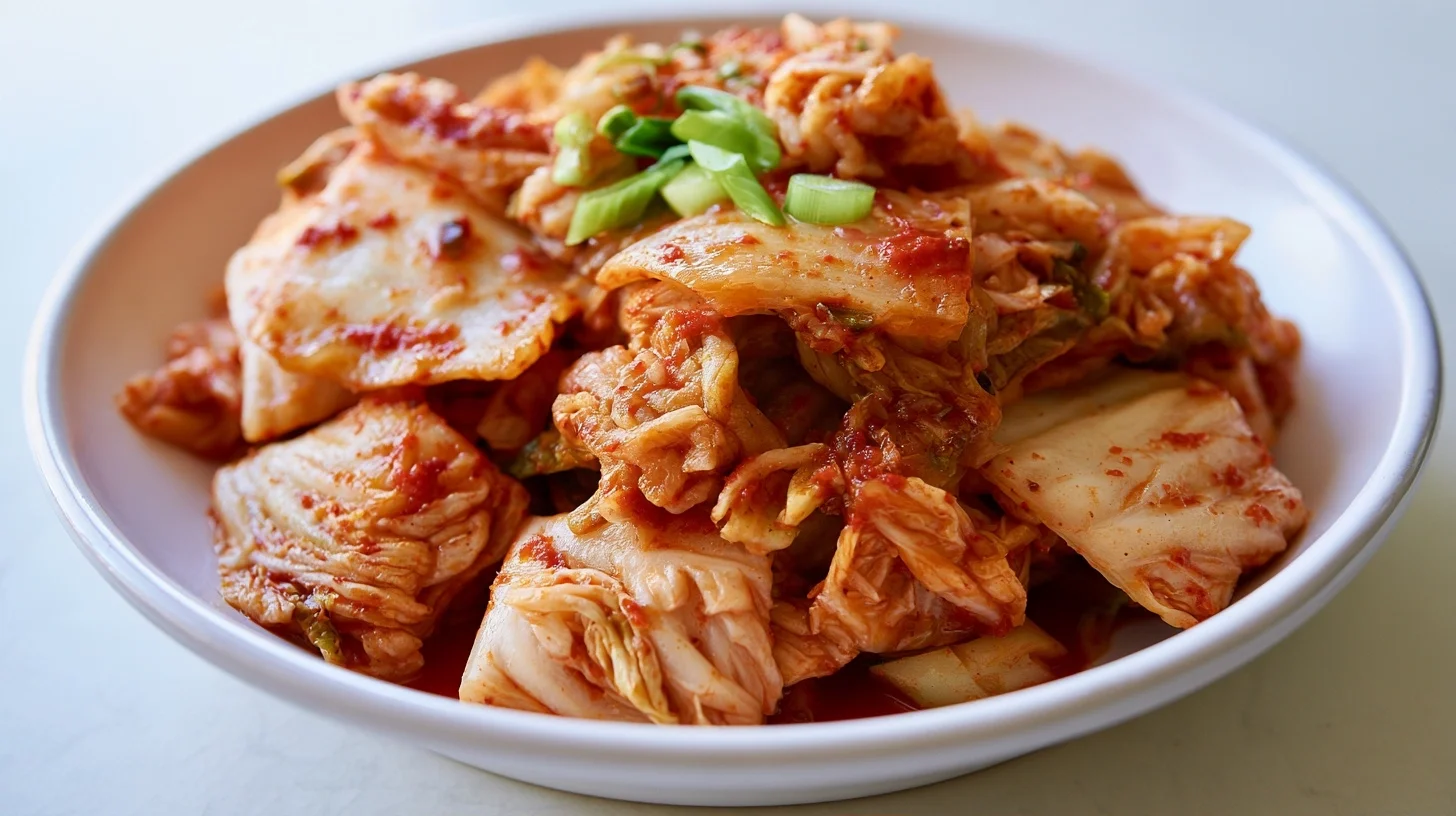
Table of contents
Why This Kimchi Recipe Works
- Salting the cabbage for 2 hours pulls out excess water so the kimchi stays crunchy instead of turning limp.
- Gochugaru, the Korean red pepper flakes, gives this kimchi recipe its signature color and heat without making it bitter.
- Room temperature fermentation for 3 to 5 days develops the tangy flavor and probiotics that make kimchi distinct from raw cabbage slaw.
Kimchi Recipe
Kimchi Recipe
8
servings30
minutes0
minutes45
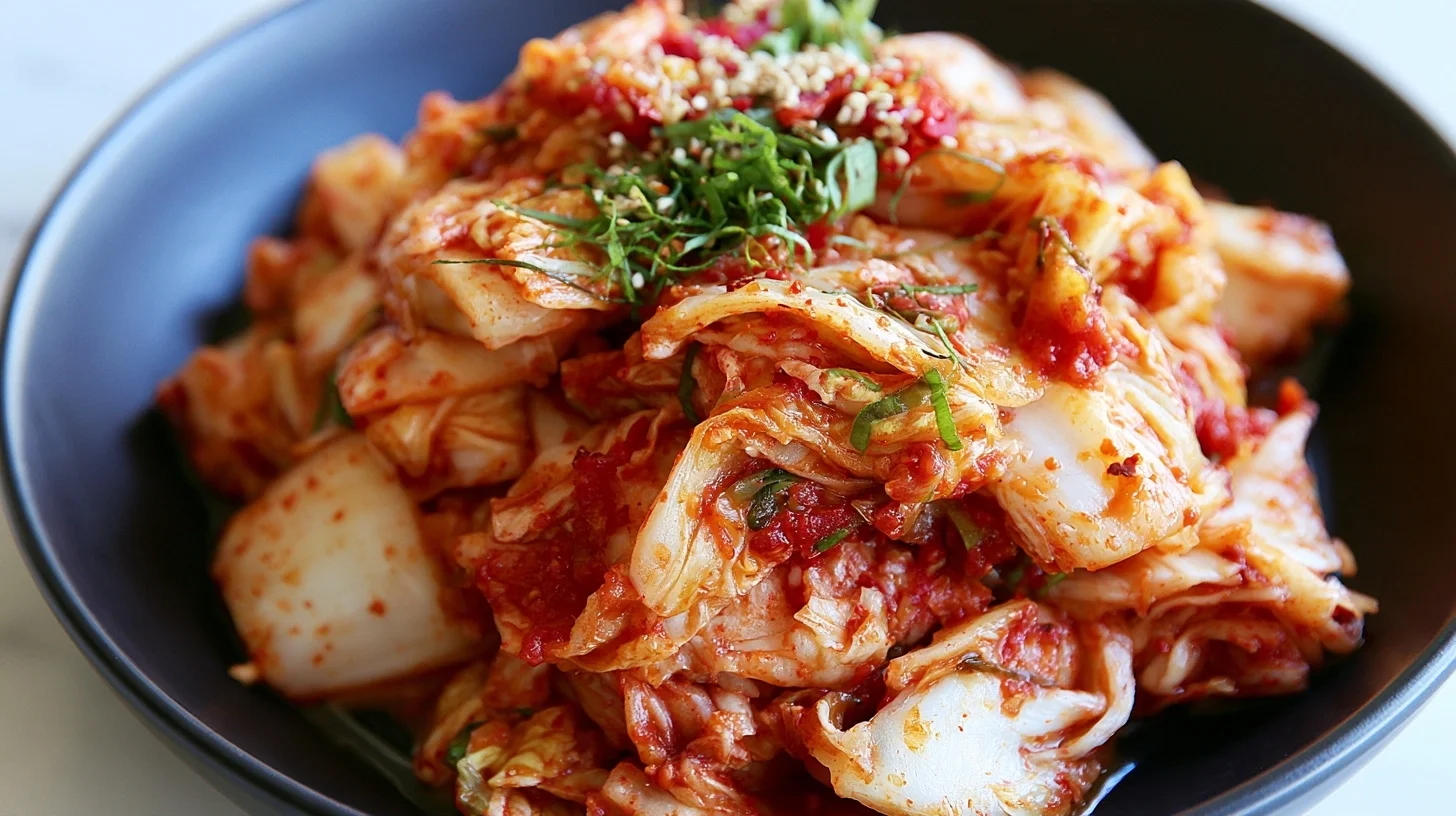
kcalThis kimchi recipe ferments napa cabbage with Korean red pepper flakes, garlic, ginger, and fish sauce into tangy, crunchy kimchi. The process takes 30 minutes of active prep and 3 to 5 days of fermentation at room temperature to develop the signature sour flavor and probiotic benefits.
Keep the screen of your device on
Ingredients
1 head napa cabbage
0.25 cup coarse sea salt
0.25 cup gochugaru
6 cloves garlic
1 tablespoon fresh ginger
2 tablespoons fish sauce
1 tablespoon sugar
1 cup daikon radish
4 green onions
Directions
- Cut the cabbage in half lengthwise, then cut each half into quarters. Remove the core from each quarter. Rinse the cabbage under cold water and shake off excess water.
- Salt the cabbage by sprinkling the 1/4 cup coarse sea salt between the leaves of each quarter, focusing on the thicker white parts. Place the salted cabbage in a large bowl and let it sit for 2 hours at room temperature. The cabbage should bend easily without snapping when ready.
- Rinse the cabbage under cold water 3 times to remove excess salt. Squeeze gently after each rinse to remove water. Taste a leaf; it should be pleasantly salty but not overpowering.
- Make the paste by combining the gochugaru, minced garlic, minced ginger, fish sauce, and sugar in a bowl. Stir until the mixture forms a thick paste. The paste should be deep red and smell pungent.
- Coat the cabbage by spreading the paste between the leaves of each cabbage quarter, using your hands or a brush. Add the julienned daikon radish and green onion pieces to the bowl and toss them with any remaining paste.
- Pack the kimchi into a clean 2 quart jar or airtight container, pressing down firmly with your fist to remove air pockets. Tuck the daikon and green onions around the cabbage. Leave 1 inch of headspace at the top.
Notes
- Kimchi ferments in 3 to 5 days at 70°F, but cooler rooms take longer and warmer rooms speed it up, so taste daily after day 3 to catch it at your preferred sourness.
- If the cabbage turns mushy, the room was too warm or fermentation went too long; taste on day 3 and refrigerate as soon as the flavor is tangy to keep the cabbage crisp.
- Kimchi keeps for 3 to 6 months in the refrigerator in an airtight jar; replace fish sauce with 2 tablespoons soy sauce for a vegetarian version, though the flavor will be slightly sweeter.
Nutrition Facts
- Serving Size: 1 g
- Total number of serves: 8
- Calories: 45kcal
- Fat: 0g
- Carbohydrates: 9g
- Net Carbs: 7g
- Fiber: 2g
- Protein: 2g
Did you make this recipe?
Tag @therecipemasterblog on Instagram and hashtag it with #therecipemaster
Like this recipe?
Follow @therecipemasterblog on Pinterest
Follow us on Facebook!
Follow The Recipe Master on Facebook
The sections below explain which ingredients you can swap in this kimchi recipe, how to adjust the heat level, and what to do if fermentation stalls or the cabbage turns too soft.
Key Ingredients and Substitutions
Six ingredients shape the flavor and texture of this fermented cabbage.
- Napa cabbage: This variety has tender leaves and a mild flavor that absorbs the seasoning paste. Green cabbage is too dense and stays tough even after fermentation. Use 1 medium head weighing 2 to 2.5 pounds.
- Coarse sea salt: Draws moisture from the cabbage and seasons the brine. Table salt dissolves too fast and can make the kimchi overly salty. Use 1/4 cup for the initial salting.
- Gochugaru: Korean red pepper flakes give kimchi its red color and fruity heat. Crushed red pepper flakes or cayenne are too sharp and will make the kimchi bitter. Find gochugaru at Asian markets or online.
- Garlic and ginger: Fresh garlic and ginger add pungency and help fermentation. Garlic powder or ground ginger lack the enzymes that support the process. Use 6 cloves garlic and 1 tablespoon minced ginger.
- Fish sauce: Adds umami and salt to the paste. Soy sauce can replace it for a vegetarian version, but the flavor will be less complex and slightly sweeter.
- Daikon radish: Adds crunch and a mild peppery note. Carrots can substitute, but they soften faster during fermentation and add more sweetness.
How to Make Kimchi Recipe Successfully
Five steps control whether your batch turns out crisp and tangy or limp and bland.
- Salt the cabbage evenly: Sprinkle 1/4 cup coarse salt between every leaf layer and let it sit for 2 hours. The cabbage should bend without snapping when ready. Under salted cabbage stays rigid and ferments unevenly.
- Rinse thoroughly: Rinse the salted cabbage under cold water 3 times to remove excess salt. Squeeze gently after each rinse. Too much residual salt will slow fermentation and make the kimchi too salty to eat.
- Pack tightly: Press the seasoned cabbage into the jar with your fist to remove air pockets. Leave 1 inch of headspace at the top. Air trapped inside causes uneven fermentation and can create off flavors.
- Ferment at 65 to 75°F: Room temperature determines speed. At 70°F, kimchi is ready in 3 to 5 days. Warmer rooms speed fermentation but can make the kimchi mushy. Cooler rooms slow it down but keep the cabbage crisper.
- Taste daily after day 3: Open the jar and taste a piece of cabbage. Kimchi made with this recipe is ready when it tastes tangy and bubbles rise to the surface. Stop fermentation by moving the jar to the refrigerator.
Adjusting the Heat Level
Start with 2 tablespoons gochugaru for mild kimchi. Add up to 1/4 cup for medium heat or 1/3 cup for spicy. The pepper flakes bloom during fermentation, so the heat intensifies after day 3.
What Went Wrong
Why Is the Cabbage Still Hard After 5 Days?
The room is too cold or you used too much salt. Fermentation slows below 65°F and can stall entirely below 60°F. Move the jar to a warmer spot and wait 2 more days. If the cabbage tastes very salty, you did not rinse it enough after the initial salting. Start a new batch and rinse the cabbage 3 times.
Why Did the Kimchi Turn Mushy?
The room was too warm or fermentation went too long. Above 75°F, the cabbage breaks down fast and loses its crunch. Taste the kimchi on day 3 and refrigerate it as soon as it tastes tangy. Once mushy, the texture will not improve, but the flavor is still good for cooked dishes like crispy kimchi fried rice.
Why Is There White Film on Top?
White film is kahm yeast, which forms when the kimchi is exposed to air. It is harmless but tastes off. Scrape it off with a clean spoon and press the cabbage under the brine. Make sure the cabbage stays submerged during fermentation by weighing it down with a small jar or a fermentation weight.
Kimchi Recipe Variations
Quick Kimchi Recipe
Skip fermentation and serve the seasoned cabbage immediately as a fresh side dish. The flavor is brighter and less sour, but you lose the probiotic benefit. Refrigerate and eat within 3 days.
White Kimchi
Omit the gochugaru for a mild, non spicy version. Add 1 Asian pear, julienned, and 2 teaspoons sugar to the paste for sweetness. The kimchi will be pale yellow instead of red and tastes milder after fermentation.
Cucumber Kimchi Recipe
Replace napa cabbage with 6 small Kirby cucumbers, quartered lengthwise. Salt for 30 minutes instead of 2 hours. Ferment for 1 to 2 days only, as cucumbers soften faster than cabbage.
How to Store and Use Kimchi
Kimchi keeps for 3 to 6 months in the refrigerator in an airtight jar or container. The flavor gets more sour and funky over time, which is preferred in Korean cooking. Press the cabbage under the brine after each use to prevent drying.
Kimchi does not freeze well because the cabbage turns mushy when thawed. Eat it straight from the jar, stir it into fried rice or noodles, or use it in stews and pancakes. According to Positively Probiotic’s kimchi origin story, traditional kimchi was stored in earthenware pots buried underground to maintain a steady cool temperature through winter. Refrigeration does the same job and keeps the fermentation slow so the kimchi stays crunchy longer.
Kimchi Recipe FAQs
Yes, replace fish sauce with soy sauce for a vegetarian kimchi. Use 2 tablespoons soy sauce in the paste. The flavor will be less umami rich and slightly sweeter, but fermentation works the same way.
Kimchi is ready when it tastes tangy and bubbles rise to the surface. This takes 3 to 5 days at room temperature. Taste a piece of cabbage daily after day 3 and refrigerate when the flavor is sour enough for you.
Gochugaru has a unique fruity heat that other peppers cannot match. Crushed red pepper flakes or cayenne will make the kimchi bitter and too sharp. Order gochugaru online or find it at an Asian grocery for the best result.
Yes, refrigerate kimchi after it reaches your preferred level of sourness. Cold storage slows fermentation so the flavor and texture stay stable. Kimchi keeps for 3 to 6 months in the refrigerator in an airtight jar.






Leave a Reply