

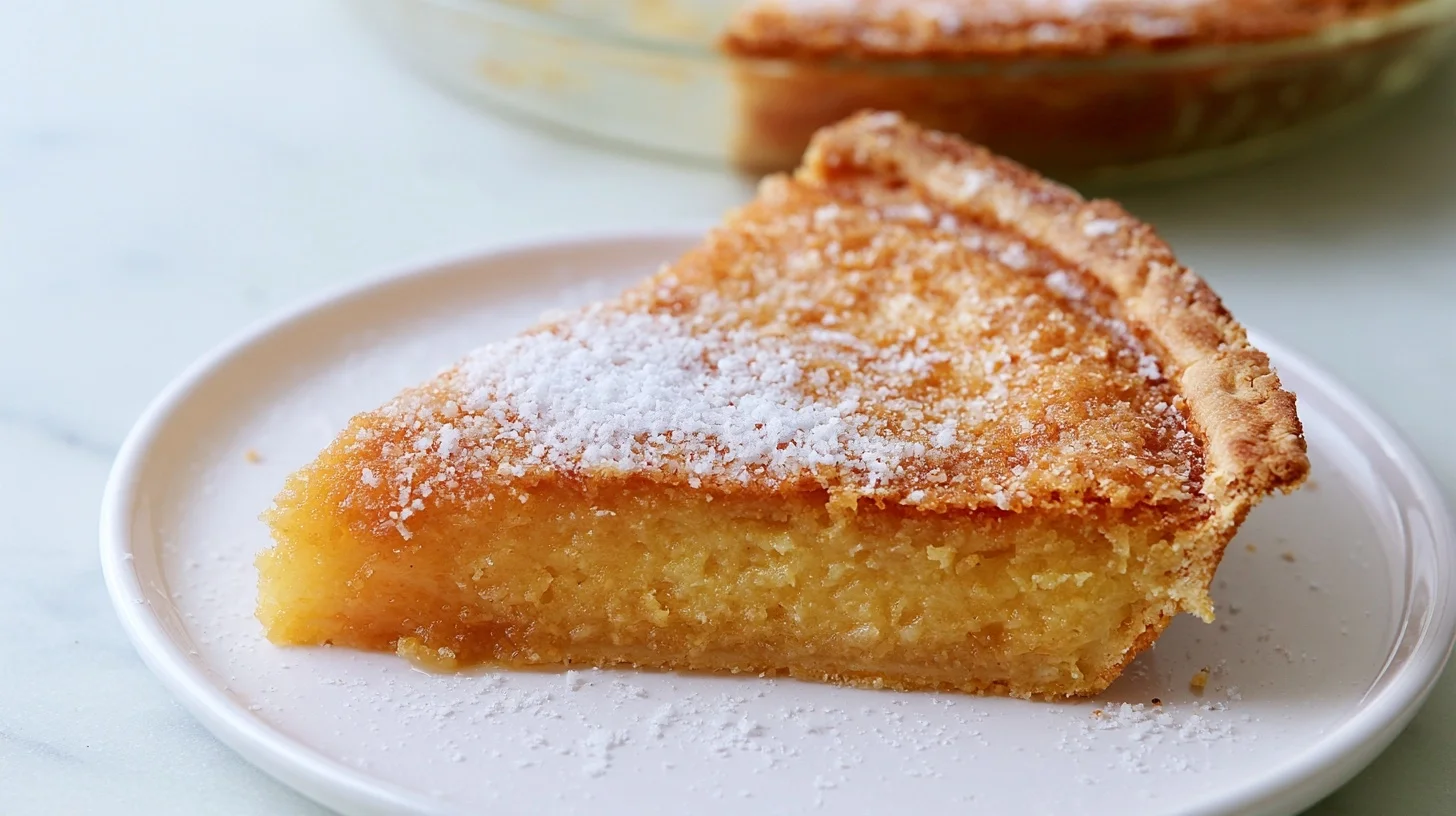
This chess pie recipe makes a sweet, buttery custard pie with a golden crackled top and a soft, slightly gooey center. The filling uses just butter, sugar, eggs, cornmeal, and vinegar for a classic Southern dessert with simple pantry ingredients.
The recipe takes 1 hour and 15 minutes start to finish and serves 8. The cornmeal gives the filling structure without making it dense, and the pie keeps at room temperature for 2 days. Chess pie stores well in the refrigerator for up to 4 days and slices cleanly when chilled.
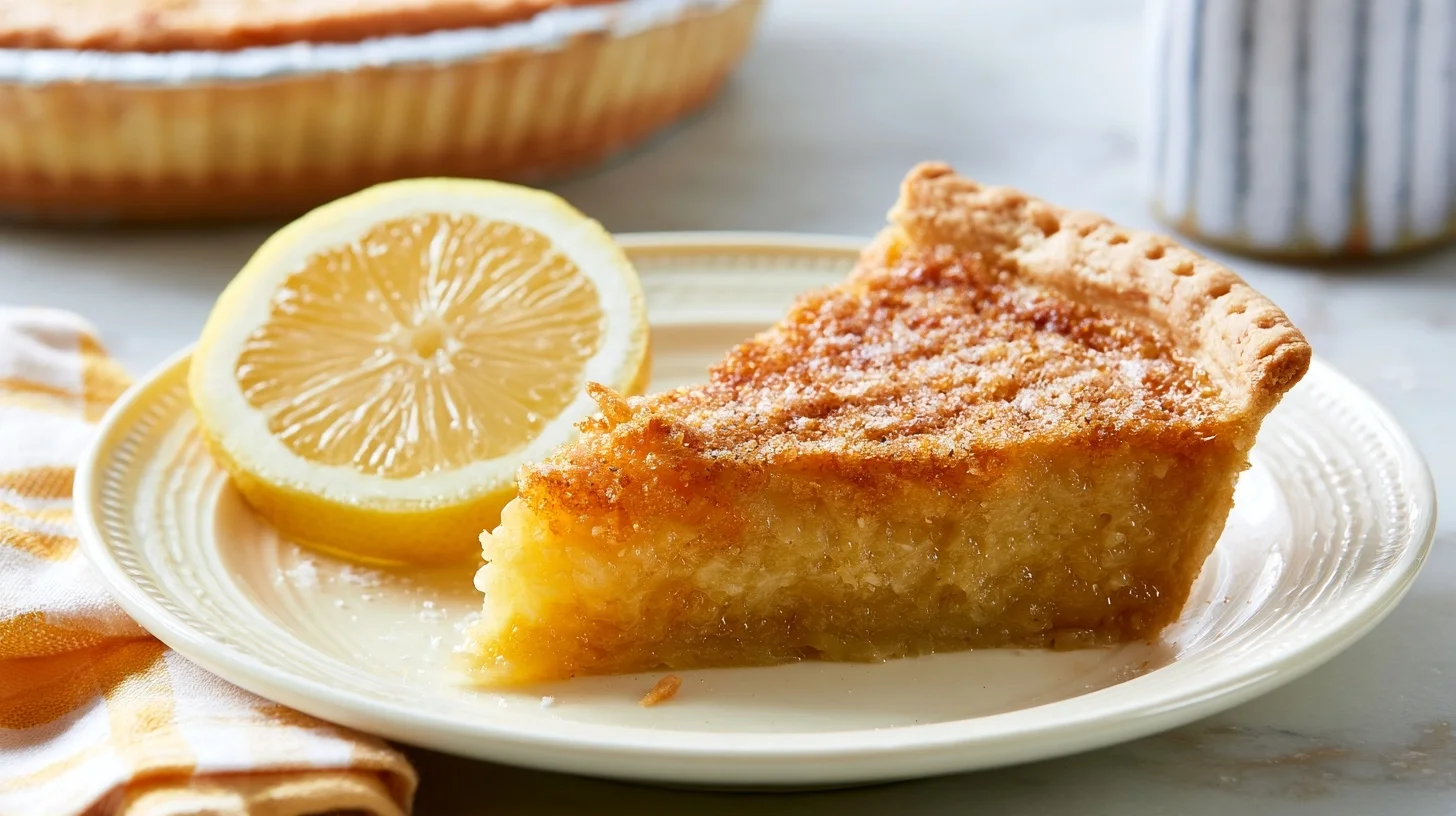
Table of contents
Why This Chess Pie Recipe Works
- The 2 tablespoons of cornmeal stabilize the custard and create the signature slightly grainy texture without weighing down the filling.
- Baking at 350°F for 50 to 55 minutes sets the edges while leaving the center with a gentle jiggle for the perfect soft texture.
- Adding 1 tablespoon of white vinegar balances the sweetness and gives chess pie its characteristic tangy finish.
Chess Pie Recipe
Chess Pie Recipe
8
servings15
minutes55
minutes385
kcalChess pie is a classic Southern custard pie with a sweet, buttery filling and a golden crackled top. This recipe takes 1 hour and 15 minutes and serves 8, using simple pantry ingredients and a straightforward mixing method.
Keep the screen of your device on
Ingredients
1 9-inch pie crust
1.5 cups granulated sugar
2 tablespoons yellow cornmeal
1 tablespoon all-purpose flour
0.25 teaspoon salt
0.5 cup unsalted butter
3 large eggs
0.25 cup whole milk
1 tablespoon white vinegar
1 teaspoon vanilla extract
Directions
- Preheat the oven to 350°F. Place the unbaked pie crust in a 9-inch pie pan and crimp the edges. Prick the bottom with a fork in several places.
- Parbake the crust for 10 minutes at 375°F until it is lightly golden and set. Remove from the oven and reduce the temperature to 350°F.
- Whisk the dry ingredients in a large bowl: sugar, cornmeal, flour, and salt until evenly combined with no lumps.
- Melt the butter in a small saucepan or in the microwave. Let it cool for 3 to 4 minutes until it is warm but not hot.
- Beat the eggs in a medium bowl with the milk, vinegar, and vanilla until smooth and pale yellow.
- Add the butter to the egg mixture in a slow stream, whisking constantly. The mixture should stay smooth with no scrambled bits.
Notes
- The 2 tablespoons of cornmeal give chess pie its signature slightly grainy texture and help the custard set without making it dense.
- If the filling cracks during baking, it was overmixed or baked at too high a temperature. Small cracks are normal and do not affect the taste.
- Chess pie keeps at room temperature for 2 days or in the refrigerator for 4 to 5 days in an airtight container. Substitute apple cider vinegar for white vinegar to add a hint of apple flavor.
Nutrition Facts
- Serving Size: 1 g
- Total number of serves: 8
- Calories: 385kcal
- Fat: 20g
- Carbohydrates: 48g
- Net Carbs: 47g
- Fiber: 1g
- Protein: 5g
Did you make this recipe?
Tag @therecipemasterblog on Instagram and hashtag it with #therecipemaster
Like this recipe?
Follow @therecipemasterblog on Pinterest
Follow us on Facebook!
Follow The Recipe Master on Facebook
The sections below cover the key ingredients for this chess pie recipe, how to get the texture right, and what to do if the filling cracks or weeps.
Key Ingredients and Substitutions
These ingredients control the texture and flavor of chess pie.
- Cornmeal: gives the filling body and the slightly gritty texture that makes chess pie different from smooth custard pies. Use fine or medium grind yellow cornmeal. Substitute all-purpose flour if needed, but the pie will be smoother and less traditional.
- White vinegar: cuts the sweetness and adds the tangy note chess pie is known for. Apple cider vinegar works and adds a hint of apple flavor. Lemon juice is sharper and more acidic.
- Butter: provides richness and the buttery flavor in the custard. Use unsalted butter so you control the salt level. Salted butter works but makes the pie taste slightly saltier.
- Granulated sugar: sweetens the filling and creates the crackled top as it caramelizes. Do not substitute brown sugar, which makes the filling too soft and changes the flavor to molasses.
- Eggs: bind the filling and give it structure. Use large eggs at room temperature so they blend smoothly. Cold eggs can cause the melted butter to seize.
How to Get Chess Pie Recipe Right
Follow these steps for a smooth filling and a clean bake.
- Mix the filling gently: whisk just until the ingredients combine. Overmixing adds air bubbles that cause cracks and an uneven top.
- Melt the butter completely: let it cool for 3 to 4 minutes before adding it to the eggs. Hot butter will scramble the eggs and make the filling lumpy.
- Bake until the edges set: the filling should jiggle in a 2 inch circle in the center when you gently shake the pan at 50 minutes. The center firms as the pie cools. Overbaking makes the texture dry and dense.
- Cool the pie completely: let it sit at room temperature for at least 2 hours before slicing. Cutting into warm chess pie causes the filling to run.
- Use a parbaked crust: blind bake the pie shell for 10 minutes at 375°F before adding the filling. A raw crust stays soggy under the custard.
What Went Wrong
Why Did the Top Crack?
The filling was overmixed or baked at too high a temperature. Whisking too much adds air that expands and cracks the surface. Baking above 350°F sets the top too fast and causes it to split. Mix just until smooth and bake at 350°F. Small cracks are normal and do not affect the taste.
Why Is the Filling Weeping?
The pie was overbaked or cooled too quickly. High heat forces liquid out of the eggs. Putting a hot pie in the refrigerator causes condensation on the surface. Let the pie cool completely at room temperature before refrigerating. If it has already wept, blot the surface gently with a paper towel.
Why Is the Center Runny?
The pie was underbaked. The filling needs 50 to 55 minutes at 350°F to set. The center should jiggle slightly when you shake the pan, but it should not slosh. If the pie is still liquid after the full bake time, return it to the oven for 5 minute intervals until it jiggles in only a small circle. Check that your oven temperature is accurate with an oven thermometer.
Chess Pie Variations
Chocolate Chess Pie
Add 1/4 cup of unsweetened cocoa powder to the filling along with the cornmeal. The pie will be darker, richer, and slightly less sweet. Bake for the same time.
Lemon Chess Pie
Replace the vinegar with 2 tablespoons of fresh lemon juice and add 1 tablespoon of lemon zest. The pie will taste bright and citrusy. The filling may set 3 to 5 minutes faster because of the extra acid.
Buttermilk Chess Pie
Replace the whole milk with buttermilk and reduce the vinegar to 1 teaspoon. The filling will be tangier and slightly thinner. Bake for 50 to 55 minutes as written.
What to Serve With Chess Pie
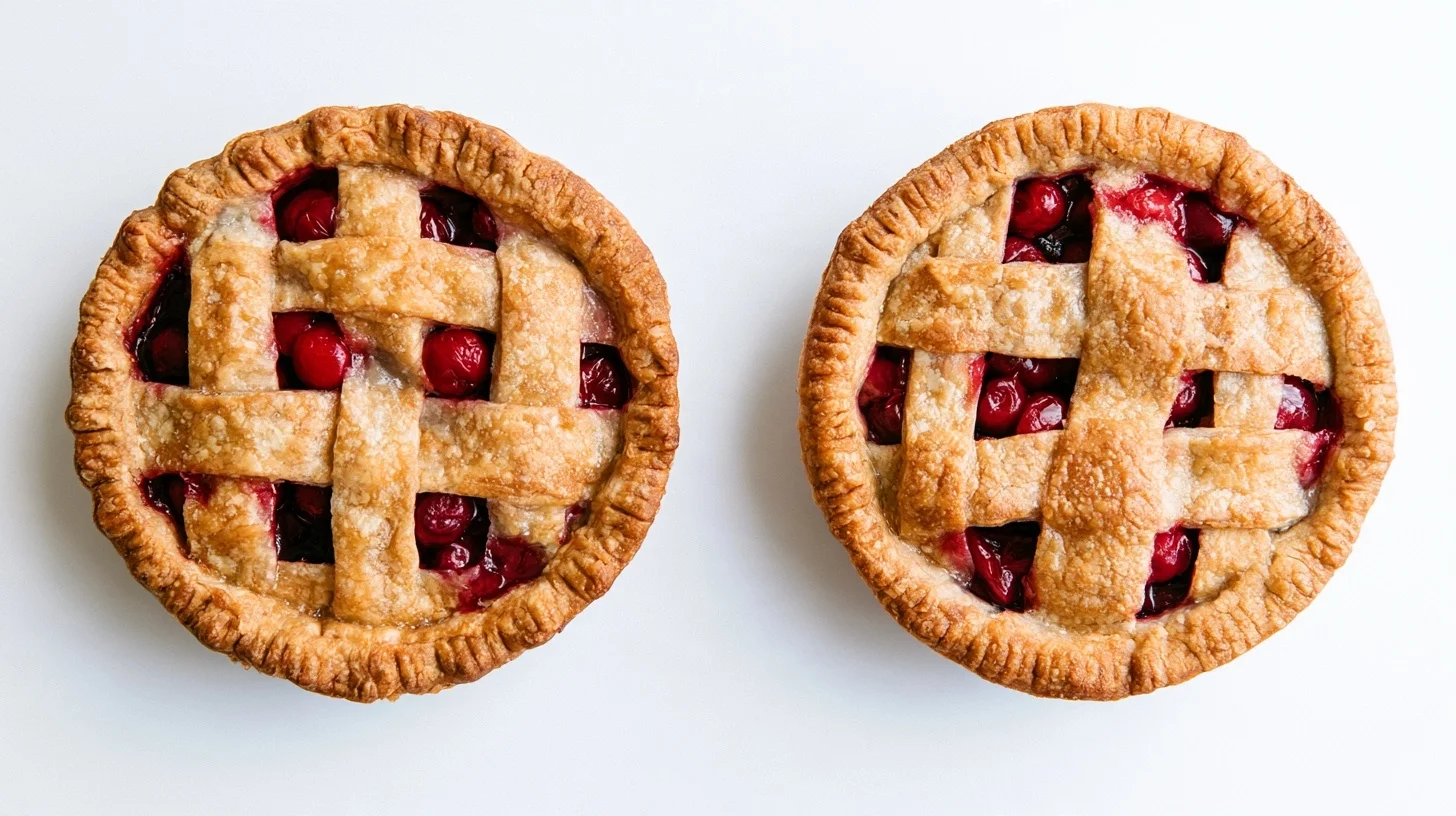
Chess pie is rich and sweet, so it pairs well with plain whipped cream or a scoop of vanilla ice cream. Serve it with strong black coffee to balance the sweetness. For a full Southern meal, serve it after fried chicken or barbecue. Try cherry pie if you want a fruit based dessert with a similar custard texture.
How to Store and Reheat Chess Pie
Chess pie keeps at room temperature for up to 2 days, covered loosely with foil or plastic wrap. It lasts 4 to 5 days in the refrigerator in an airtight container or wrapped tightly. The filling firms when cold and slices cleanly.
Chess pie does not freeze well because the custard weeps and turns grainy when thawed. Serve slices cold or at room temperature. To warm a slice, microwave it for 10 to 15 seconds or place it in a 300°F oven for 5 minutes.
Chess Pie Recipe FAQs
Chess pie is made of butter, sugar, eggs, cornmeal, vinegar, and milk baked in a pie crust. The chess pie recipe creates a sweet custard filling with a slightly grainy texture and a tangy finish.
The name likely comes from the pie being stored in a chest or pie safe. Another theory is that it is a mispronunciation of just pie. The exact origin is unknown.
Yes, you can substitute all-purpose flour for cornmeal in a chess pie recipe. Use 2 tablespoons of flour in place of the cornmeal. The filling will be smoother and less traditional.
Chess pie can sit at room temperature for up to 2 days. Refrigerate it after that for up to 4 days. The filling firms when cold and slices more cleanly.









Leave a Reply