

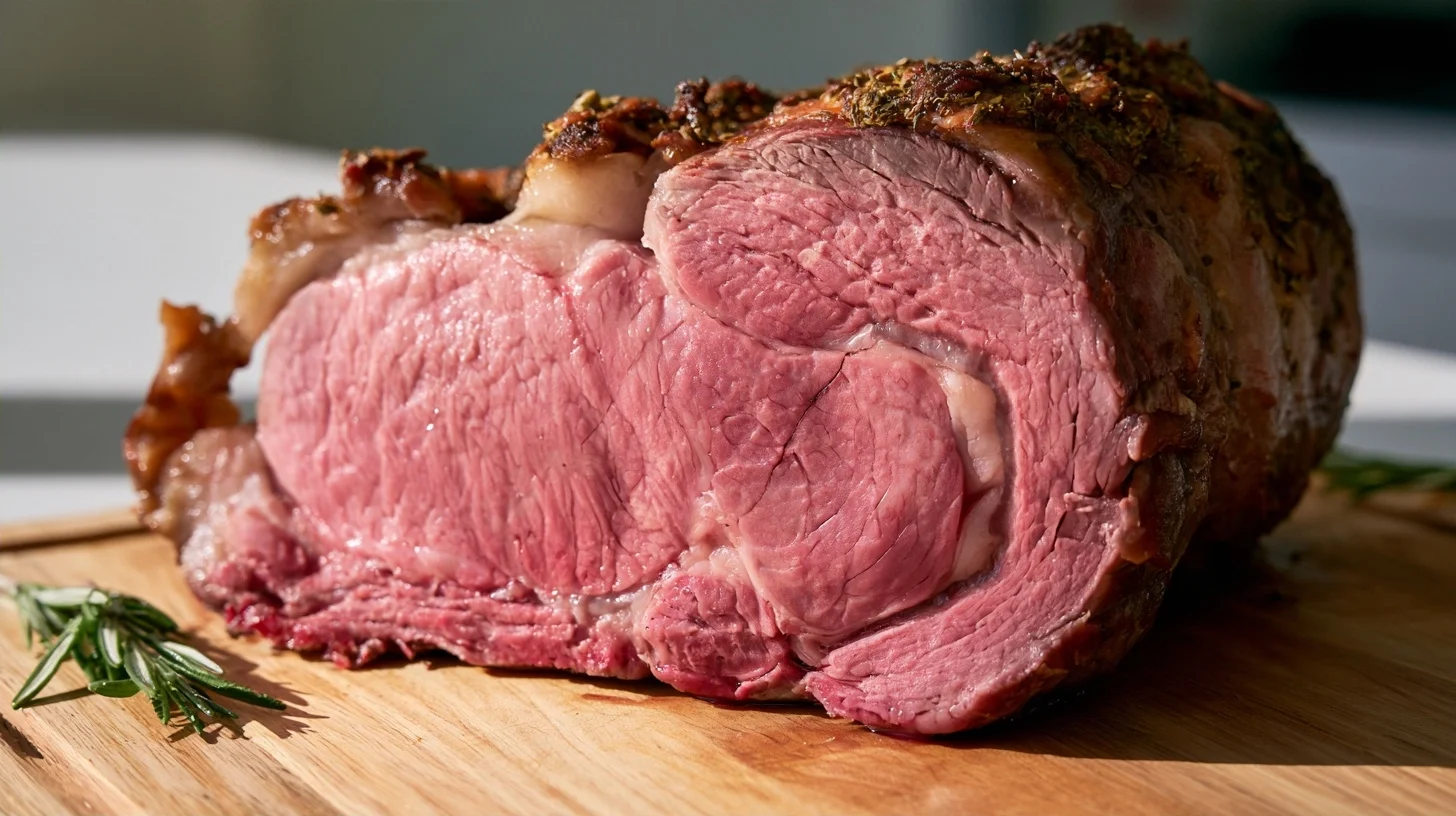
This prime rib recipe roasts a bone-in standing rib roast at high heat for 15 minutes, then at low heat until the center reaches 120°F for medium rare. The crust is deeply browned and the inside stays pink and juicy from edge to edge.
The recipe takes 2 hours 30 minutes for a 6 pound roast and serves 8. Salt the meat 24 hours ahead for the best crust. Prime rib keeps in the refrigerator for 3 to 4 days.
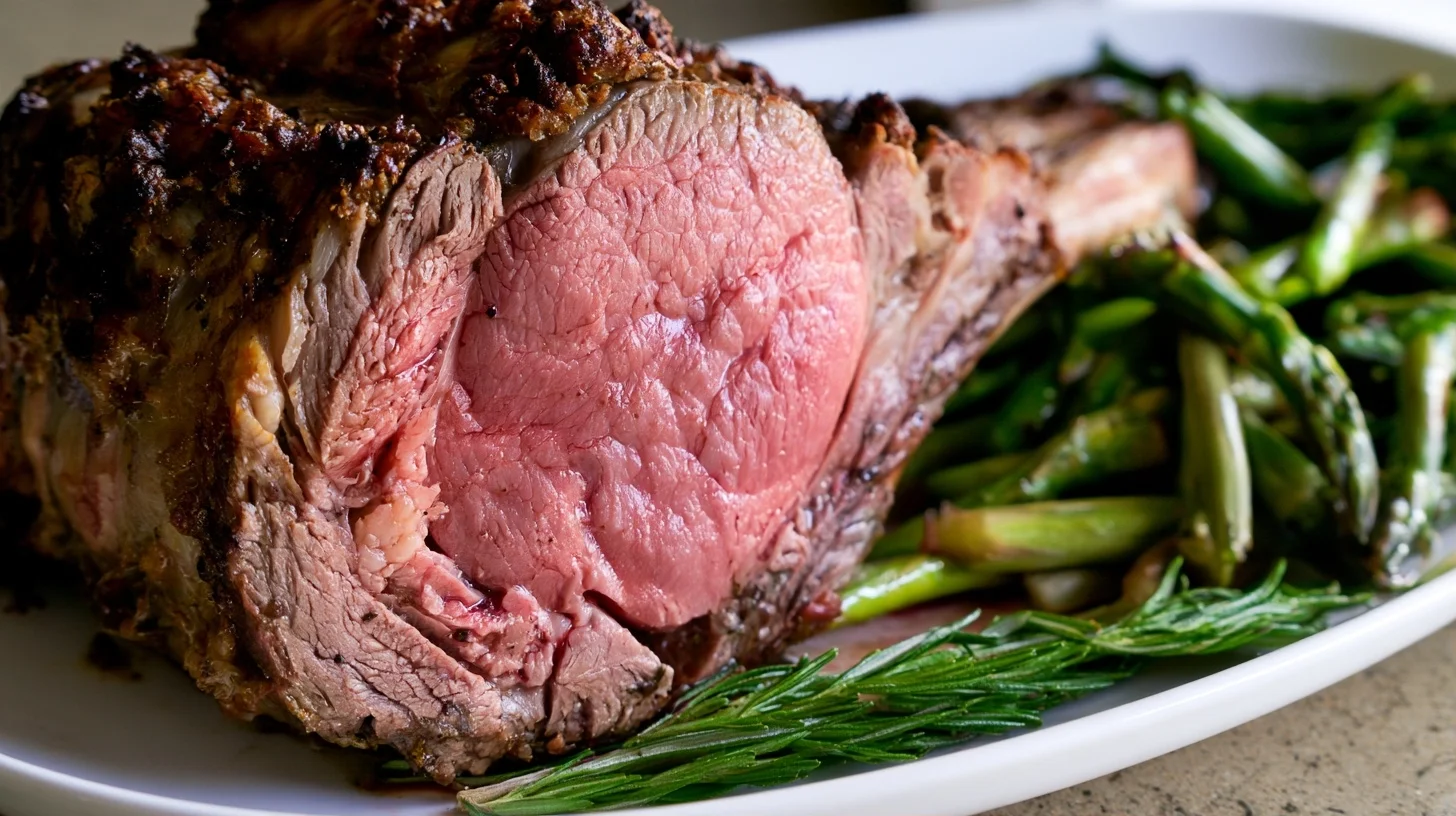
Table of contents
Why This Prime Rib Recipe Works
- Salting the roast 24 hours ahead draws moisture to the surface and dries the exterior for a thick, crispy crust.
- The initial 450°F sear for 15 minutes browns the fat cap before the long, gentle roast at 250°F.
- A 20 minute rest after roasting lets the juices redistribute, so the meat stays moist when sliced.
Prime Rib Recipe With Herb Crust
Prime Rib Recipe
8
servings15
minutes2
hours15
minutes620
kcalThis prime rib recipe roasts a bone-in standing rib roast at 450°F for 15 minutes, then at 250°F until the center reaches 120°F. The result is a deeply browned crust and pink, juicy meat from edge to edge.
Keep the screen of your device on
Ingredients
6 pounds bone-in standing rib roast
2 tablespoons kosher salt
1 tablespoon coarse ground black pepper
2 tablespoons olive oil
6 clove garlic
2 tablespoons fresh rosemary
2 tablespoons fresh thyme
Directions
- Salt the roast 24 hours ahead. Rub the standing rib roast all over with 2 tablespoons of kosher salt. Place it on a wire rack set over a rimmed baking sheet and refrigerate uncovered for 24 hours. The surface dries and the salt penetrates the outer inch of meat.
- Bring the roast to room temperature. Remove the roast from the refrigerator 2 hours before cooking. Let it sit on the counter until it no longer feels cold to the touch. A cold roast cooks unevenly.
- Preheat the oven to 450°F. Position a rack in the lower third of the oven.
- Make the herb rub. Mix 2 tablespoons of olive oil, 6 cloves of minced garlic, 2 tablespoons of chopped rosemary, 2 tablespoons of chopped thyme, and 1 tablespoon of black pepper in a small bowl. Rub the mixture all over the roast, covering the top and sides. The oil helps the herbs stick and promotes browning.
- Sear the roast at 450°F for 15 minutes. Place the roast bone side down in a roasting pan. Roast for 15 minutes. The fat cap turns golden brown and the herbs darken.
- Lower the heat to 250°F. Reduce the oven temperature without opening the door. Continue roasting for 1 hour 45 minutes to 2 hours 15 minutes. Check the internal temperature every 20 minutes after the first hour. The roast is done when an instant read thermometer inserted into the thickest part reads 120°F for medium rare.
Notes
- A 6 pound prime rib recipe takes about 2 hours at 250°F after the initial sear, and the internal temperature should reach 120°F for medium rare.
- If the roast cooks too fast, tent it with foil and lower the oven to 225°F. Check the temperature every 10 minutes. The roast overcooks quickly once it passes 115°F.
- Prime rib keeps for 3 to 4 days in the refrigerator in an airtight container. Substitute canola oil for olive oil with no change in flavor or browning.
Nutrition Facts
- Serving Size: 1 g
- Total number of serves: 8
- Calories: 620kcal
- Fat: 44g
- Carbohydrates: 2g
- Net Carbs: 2g
- Fiber: 0g
- Protein: 52g
Did you make this recipe?
Tag @therecipemasterblog on Instagram and hashtag it with #therecipemaster
Like this recipe?
Follow @therecipemasterblog on Pinterest
Follow us on Facebook!
Follow The Recipe Master on Facebook
This prime rib recipe uses a two stage roasting method and a dry rub. The sections below cover the key ingredients, the timing for each stage, and how to fix a roast that cooks too fast.
Meat Thermometer
An instant read thermometer is essential for prime rib. The roast reaches 120°F for medium rare, 130°F for medium, and 140°F for medium well. Without a thermometer, the roast can overcook in 5 minutes.
How to Get Prime Rib Right
These steps control the crust, the doneness, and the moisture in the finished roast.
- Salt 24 hours ahead: Rub the roast with salt and refrigerate it uncovered. The salt draws moisture to the surface, which evaporates in the cold air. The dry surface browns faster and forms a thicker crust.
- Bring the roast to room temperature: Set the roast on the counter 2 hours before cooking. A cold roast cooks unevenly, with a gray band under the crust. Room temperature meat roasts evenly from edge to center.
- Sear at 450°F for 15 minutes: The high heat browns the fat cap and sets the crust. Check that the oven reaches 450°F before the roast goes in. A cooler oven steams the meat instead of searing it.
- Roast at 250°F until 120°F: The low temperature cooks the roast gently, so the inside stays pink and the juices do not run out. Check the internal temperature every 20 minutes after the first hour. The roast is done when the thickest part reaches 120°F for medium rare.
- Rest for 20 minutes: Tent the roast with foil and let it sit before slicing. The temperature rises 5 to 10 degrees during the rest, and the juices move back into the meat. Slicing too soon releases all the moisture onto the cutting board.
What Went Wrong
Why Is the Crust Pale?
The roast was not dry enough or the oven was not hot enough during the sear. Pat the roast dry with paper towels before rubbing it with oil and herbs. Check that the oven reaches 450°F before the roast goes in. Next time, salt the roast 24 hours ahead and leave it uncovered in the refrigerator so the surface dries completely.
Why Is the Center Gray?
The roast cooked past 130°F or it went into the oven cold. A cold roast takes longer to cook, so the outer layers overcook before the center is done. Let the roast sit at room temperature for 2 hours before roasting. Use an instant read thermometer and pull the roast at 120°F for medium rare. The temperature rises another 5 to 10 degrees during the rest.
Why Did the Juices Run Out?
The roast was sliced before it rested. The juices need 20 minutes to move back into the meat after roasting. Tent the roast with foil and let it sit on the cutting board. Next time, plan for the rest when timing the meal. The roast stays warm enough to serve after a 20 minute rest.
Ways to Change the Prime Rib Recipe
Garlic Butter Crust
Replace the olive oil with 4 tablespoons of softened butter mixed with 6 cloves of minced garlic. Spread the butter over the roast after the initial sear, then continue roasting at 250°F. The butter browns and adds a rich, savory flavor.
Horseradish Crust
Mix 3 tablespoons of prepared horseradish with 2 tablespoons of Dijon mustard and spread it over the roast after the sear. The horseradish adds heat and the mustard adds tang. The crust stays moist and does not dry out during the long roast.
Coffee Rub
Add 2 tablespoons of finely ground coffee to the salt and pepper rub. The coffee forms a dark, slightly bitter crust that balances the rich fat. Use a medium roast coffee, not a dark roast, which tastes burnt at high heat.
What to Serve With Prime Rib
Prime rib pairs with rich sides that match its weight. Serve it with creamy horseradish sauce, mashed potatoes, roasted Brussels sprouts, or Yorkshire pudding. Air fryer corned beef uses a similar low and slow method if you want another roast option for a different occasion. A simple green salad with vinaigrette cuts through the richness of the meat.
How to Store and Reheat Prime Rib
Prime rib keeps for 3 to 4 days in the refrigerator in an airtight container or wrapped tightly in foil. Slice the roast before storing so it cools faster. Prime rib freezes well for up to 3 months. Wrap each slice in plastic wrap, then place the slices in a freezer bag.
Reheat slices in a 250°F oven for 10 to 15 minutes until warmed through. Cover the slices with foil to keep them moist. Do not microwave prime rib. The microwave overcooks the edges and makes the meat tough.
Prime Rib Recipe FAQs
A 6 pound prime rib recipe takes about 2 hours at 250°F after the initial 15 minute sear. Check the internal temperature after 1 hour 30 minutes. The roast is done when it reaches 120°F.
No, leave the prime rib uncovered during roasting. Covering it traps steam and prevents the crust from browning. Tent it loosely with foil during the 20 minute rest.
Prime rib should reach 120°F for medium rare, 130°F for medium, or 140°F for medium well. The recipe uses 120°F. The temperature rises 5 to 10 degrees during the rest.
Yes, salt the roast 24 hours ahead and refrigerate it uncovered. Bring it to room temperature 2 hours before roasting. You cannot fully cook prime rib ahead because reheating dries it out



Leave a Reply