

A congee recipe turns rice and water into a silky, savory porridge with a texture between soup and pudding. The grains break down completely after 60 to 90 minutes of gentle simmering, creating a creamy base that holds toppings and absorbs flavors without any cream or thickener.
This congee recipe takes 90 minutes total and makes 4 servings. The rice to water ratio of 1 to 8 is the key to getting the right consistency. Congee keeps for 4 days in the refrigerator and thickens as it cools, so you can thin it with broth when reheating.
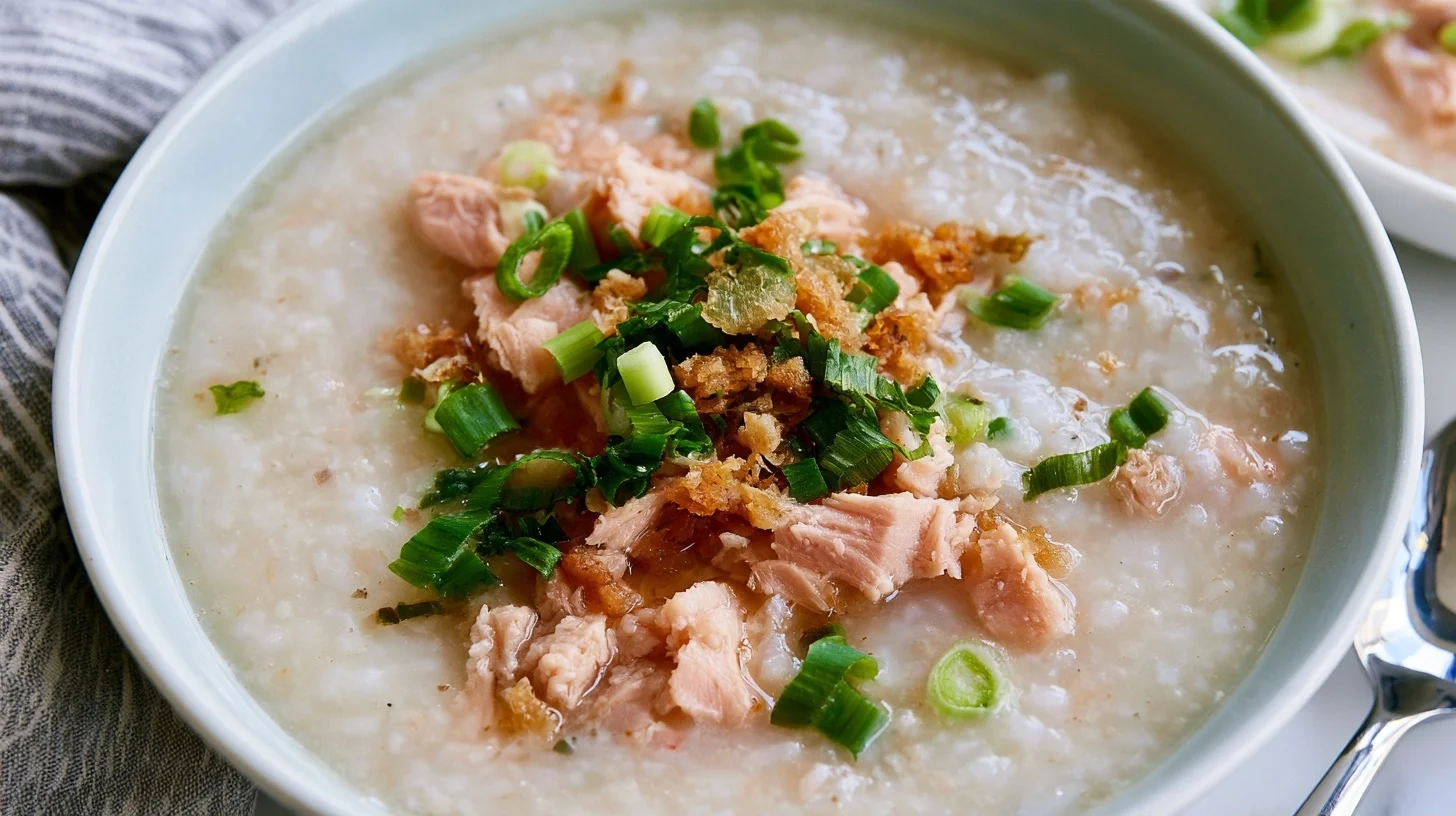
Table of contents
Why This Congee Recipe Works
- The 1 to 8 rice to water ratio breaks down the grains completely without burning, so the congee recipe produces a smooth porridge instead of soupy rice.
- Rinsing the rice before cooking removes excess starch that would make the finished congee gummy.
- Simmering uncovered for 60 to 90 minutes allows the liquid to reduce and the rice to release enough starch to create the silky texture congee is known for.
Congee Recipe
Congee Recipe
4
servings10
minutes1
hour20
minutes180
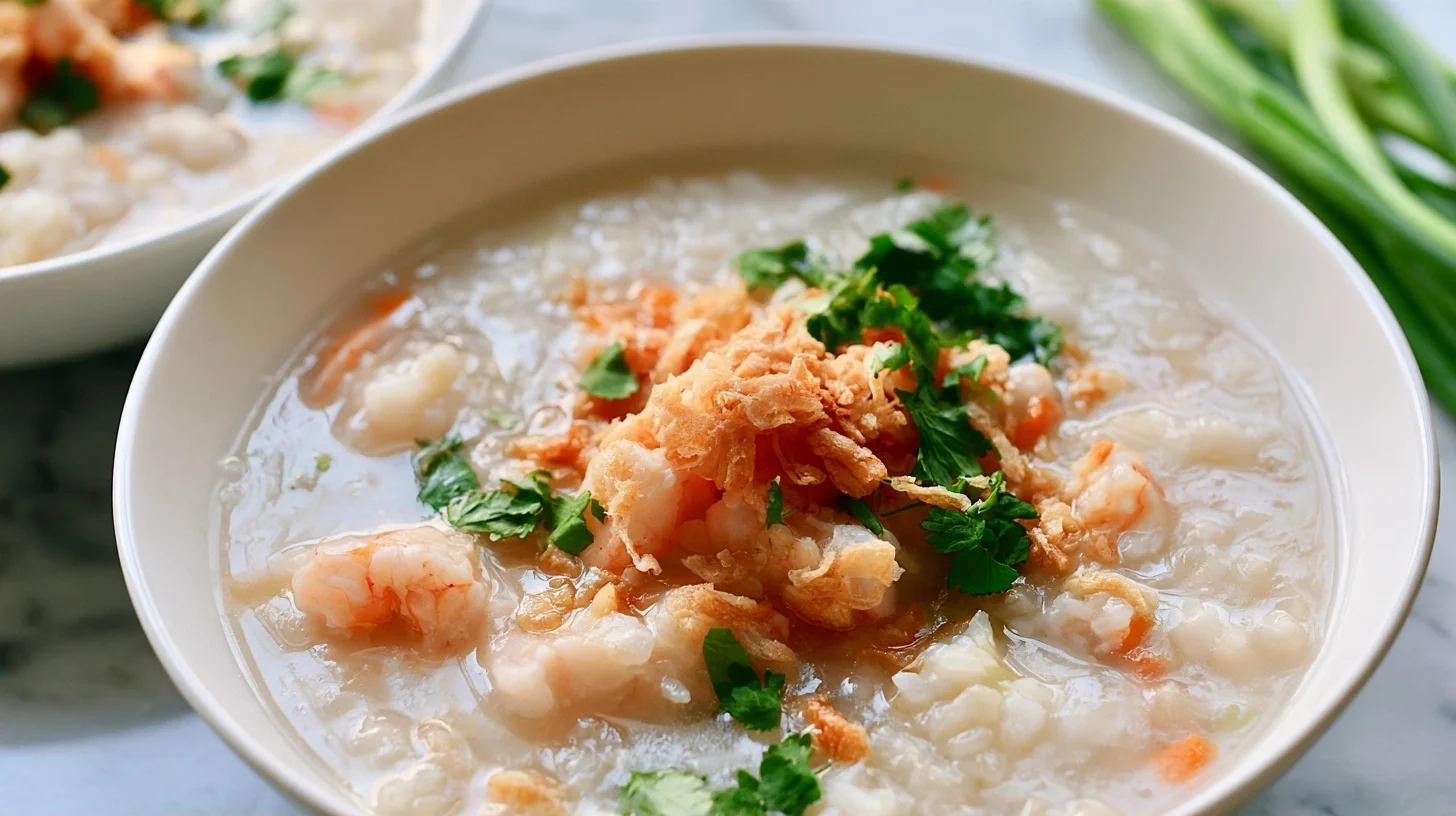
kcalCongee is a silky Chinese rice porridge made by simmering rice in broth until the grains break down completely. This recipe takes 90 minutes total, makes 4 servings, and uses a 1 to 8 rice to water ratio to create the smooth, creamy texture congee is known for.
Keep the screen of your device on
Ingredients
1 cup jasmine rice
8 cups chicken broth
2 inches fresh ginger
3 cloves garlic
2 tablespoons soy sauce
1 teaspoon sesame oil
0.5 teaspoon salt
Directions
- Rinse the rice in a fine mesh strainer under cold running water for 30 seconds. Stop when the water runs clear. This removes excess surface starch that would make the congee gummy.
- Combine the rice, broth, ginger, and garlic in a large pot over medium high heat. Bring to a boil, which takes 8 to 10 minutes. You will see large bubbles breaking the surface.
- Reduce the heat to medium low and simmer uncovered for 60 to 90 minutes. Stir every 15 minutes, scraping the bottom of the pot with a wooden spoon to prevent sticking. The congee is done when the rice grains have broken down completely and the mixture coats a spoon like thin oatmeal.
- Remove the ginger slices and garlic with a slotted spoon and discard them. Stir in the soy sauce, sesame oil, and salt. Taste and add more salt if needed.
- Serve the congee hot in bowls, topped with shredded chicken, sliced scallions, fresh cilantro, crispy fried shallots, and a drizzle of chili oil. The congee recipe is ready to eat immediately.
Notes
- The 1 to 8 rice to broth ratio produces congee with a silky, pourable consistency that coats a spoon without being too thick or too thin.
- If the congee burns on the bottom, pour the unburnt portion into a clean pot without scraping. Stirring every 15 minutes and keeping the heat at medium low prevents scorching.
- Congee keeps for 4 days in the refrigerator in an airtight container and thickens as it cools. Thin it with hot broth when reheating. Short grain white rice can replace jasmine rice for a thicker, stickier texture.
Nutrition Facts
- Serving Size: 1 g
- Total number of serves: 4
- Calories: 180kcal
- Fat: 2g
- Carbohydrates: 32g
- Net Carbs: 31g
- Fiber: 1g
- Protein: 8g
Did you make this recipe?
Tag @therecipemasterblog on Instagram and hashtag it with #therecipemaster
Like this recipe?
Follow @therecipemasterblog on Pinterest
Follow us on Facebook!
Follow The Recipe Master on Facebook
The sections below cover the best rice varieties for this congee recipe, the toppings that add flavor and texture, and how to fix a batch that turns out too thick or too thin.
Key Ingredients and Substitutions
These ingredients control the texture and flavor of congee.
- Jasmine rice: breaks down into a smooth, slightly fragrant porridge after 60 to 90 minutes of simmering. Short grain white rice works as a substitute and creates a thicker, stickier congee. Long grain rice takes longer to break down.
- Chicken broth: adds savory depth and makes the congee taste richer than water alone. Use low sodium broth so you can control the salt level. Vegetable broth or plain water work as substitutes, but the finished congee will taste milder.
- Ginger: infuses the porridge with a warm, slightly spicy flavor that cuts through the richness. Fresh ginger gives the best flavor. Ground ginger is not a good substitute because it turns bitter during the long simmer.
- Soy sauce: adds umami and balances the mild flavor of the rice. Use regular soy sauce or tamari for gluten free congee. Fish sauce can replace soy sauce for a more intense savory flavor.
- Sesame oil: finishes the congee with a nutty aroma and silky mouthfeel. A few drops go a long way. Skip it if you do not have it, but the congee will taste less complex.
How to Get Your Congee Recipe Right
Follow these steps to make congee with the right consistency and flavor.
- Rinse the rice: place the jasmine rice in a fine mesh strainer and run cold water over it for 30 seconds. Stop when the water runs clear. This removes the surface starch that would make the congee gummy instead of silky.
- Stir every 15 minutes: scrape the bottom of the pot with a wooden spoon to prevent the rice from sticking and burning. Congee recipes fail most often when the rice scorches on the bottom, which gives the whole pot a bitter taste.
- Simmer uncovered: keep the heat at medium low so the surface bubbles gently but does not boil hard. Uncovered simmering for 60 to 90 minutes lets the liquid reduce and the rice break down completely. Covering the pot traps too much steam and makes the congee watery.
- Check the texture at 60 minutes: scoop up a spoonful and let it cool for 10 seconds. The congee should coat the spoon and flow slowly, like thin oatmeal. If the grains are still whole, simmer for another 15 to 30 minutes.
- Season at the end: add soy sauce, salt, and sesame oil after the rice has broken down. Seasoning too early can make the congee taste too salty as the liquid reduces.
Slow Cooker Method
Combine rinsed rice, broth, ginger, and garlic in a slow cooker. Cook on low for 6 to 8 hours or on high for 3 to 4 hours. Stir once halfway through if possible. The congee will be thicker than the stovetop version, so add 1 cup of hot broth at the end to reach the right consistency.
What Went Wrong
Why Is the Congee Too Thick?
The congee absorbed too much liquid during cooking or sat too long after cooking. Congee thickens as it cools because the starch continues to bind water. Stir in hot chicken broth or water, 1/4 cup at a time, until it reaches the consistency you want. Reheat gently over medium low heat for 3 to 5 minutes.
Why Is the Congee Too Thin?
The rice did not simmer long enough to break down and release its starch. Return the pot to medium low heat and simmer uncovered for another 15 to 20 minutes, stirring every 5 minutes. The grains should lose their shape completely. If the congee is still thin after 90 minutes total, the heat was too low or the pot was covered.
Why Does the Bottom Taste Burnt?
The rice stuck to the bottom of the pot and scorched because the heat was too high or you did not stir often enough. Once congee burns, the bitter flavor spreads through the whole pot. Pour the unburnt congee into a clean pot without scraping the bottom. Taste it before serving. Next time, keep the heat at medium low and stir every 15 minutes.
Ways to Change This Recipe
Chicken Congee Recipe
Add 8 ounces of boneless skinless chicken thighs to the pot with the rice and broth. Simmer for 60 minutes, then remove the chicken and shred it with two forks. Return the shredded chicken to the pot and simmer for another 15 to 30 minutes. The chicken adds protein and makes the congee more filling.
Century Egg Congee
Peel and chop 2 century eggs. Stir the chopped eggs into the finished congee just before serving. The eggs add a creamy, umami rich flavor. Century eggs are preserved duck eggs sold in Asian grocery stores.
Vegan Congee Recipe
Replace the chicken broth with vegetable broth or water. Use tamari instead of soy sauce if you need gluten free. Top with sautéed mushrooms, scallions, and crispy fried shallots. The congee will be lighter in flavor but still creamy.
What to Serve With Congee
Congee is a blank canvas that needs toppings for texture and flavor. Serve it with shredded chicken, soft boiled eggs, crispy fried shallots, sliced scallions, fresh cilantro, and a drizzle of chili oil. Pickled vegetables and roasted peanuts add crunch. For a complete meal, serve congee alongside rice pilaf or steamed vegetables.
How to Store and Reheat Congee
Congee keeps for 4 days in the refrigerator in an airtight container. The porridge thickens as it cools because the rice continues to absorb liquid. Reheat individual portions in a saucepan over medium low heat for 5 to 7 minutes, stirring often. Add hot chicken broth or water, 1/4 cup at a time, until the congee reaches the consistency you want. Congee does not freeze well because the texture becomes grainy when thawed.
Congee Recipe FAQs
Jasmine rice is the best choice for congee because it breaks down smoothly after 60 to 90 minutes of simmering. Short grain white rice also works and creates a thicker texture. Long grain rice takes longer to break down.
Yes. Use the porridge setting if your rice cooker has one. Combine rinsed rice and broth in the rice cooker and cook for 1 to 2 hours. The congee will be thicker than the stovetop version, so add hot broth to thin it.
The congee is done when the rice grains have broken down completely and the mixture coats a spoon like thin oatmeal. This takes 60 to 90 minutes of simmering. If the grains are still whole at 60 minutes, cook for another 15 to 30 minutes.
Traditional toppings include shredded chicken, soft boiled eggs, sliced scallions, fresh cilantro, crispy fried shallots, and chili oil. Pickled vegetables, roasted peanuts, and sesame seeds add crunch and flavor.






Leave a Reply