

A turkey brine recipe is a salt and water solution that keeps turkey meat juicy and flavorful during roasting. The brine penetrates the meat over 12 to 24 hours and helps the turkey retain moisture even when cooked to the safe internal temperature of 165°F.
This turkey brine recipe takes 15 minutes to prepare and requires 12 to 24 hours of brining time for a 12 to 14 pound bird. The 1 cup of salt per gallon of water ratio creates the right balance to season the meat without making it salty, and the brine can be made up to 2 days ahead and stored in the refrigerator.
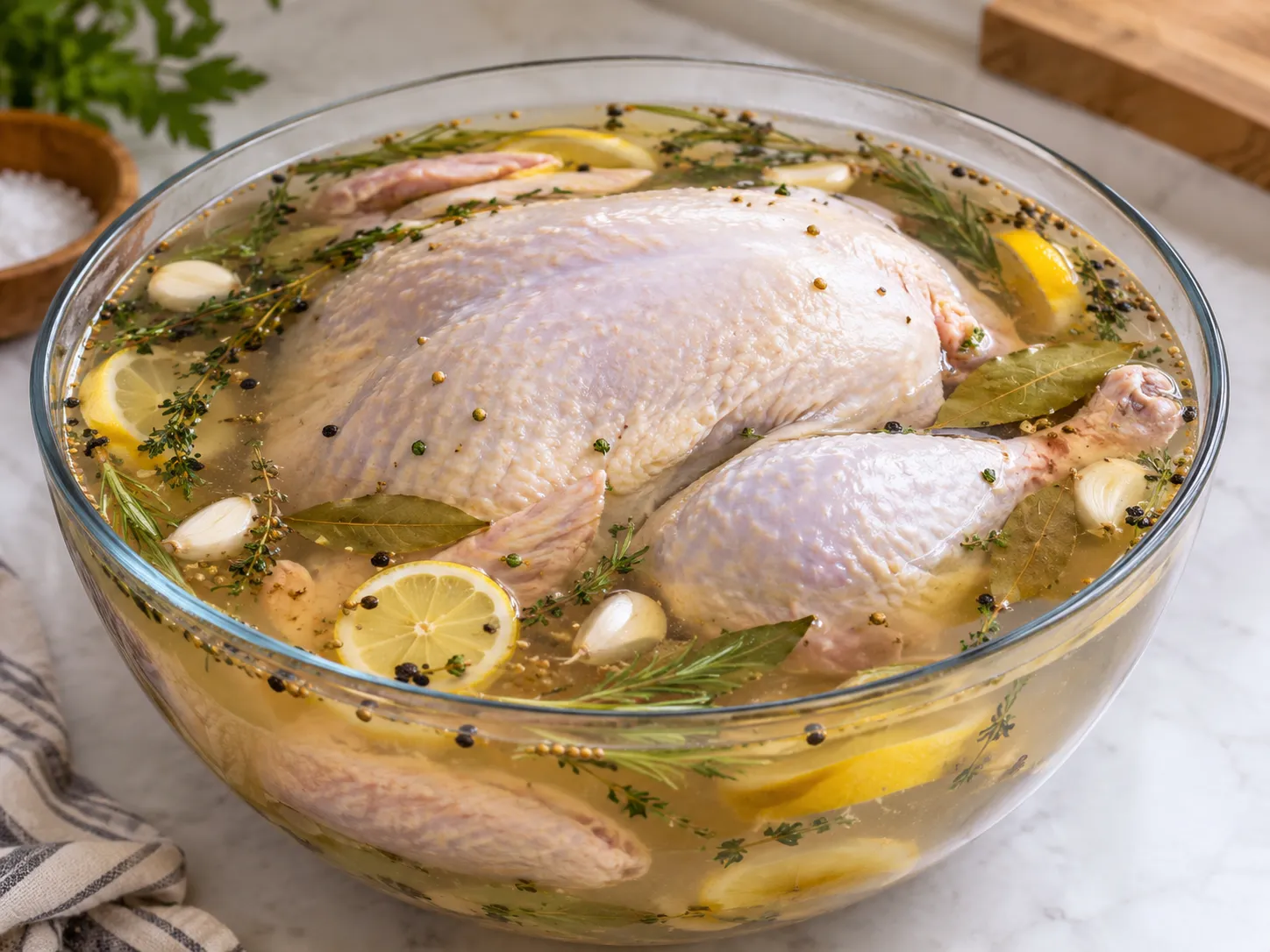
Table of contents
Why This Turkey Brine Recipe Works
- The 1 cup kosher salt per gallon of water ratio in this brine recipe creates enough salinity to season a turkey throughout without oversalting the outer layers.
- Brown sugar balances the salt and helps the skin caramelize to a deep golden color during roasting.
- Aromatics like garlic, peppercorns, and fresh herbs infuse subtle flavor into the meat during the 12 to 24 hour soak.
- Cooling the brine completely before adding the turkey keeps the bird in the safe temperature zone below 40°F throughout the brining process.
Turkey Brine Recipe
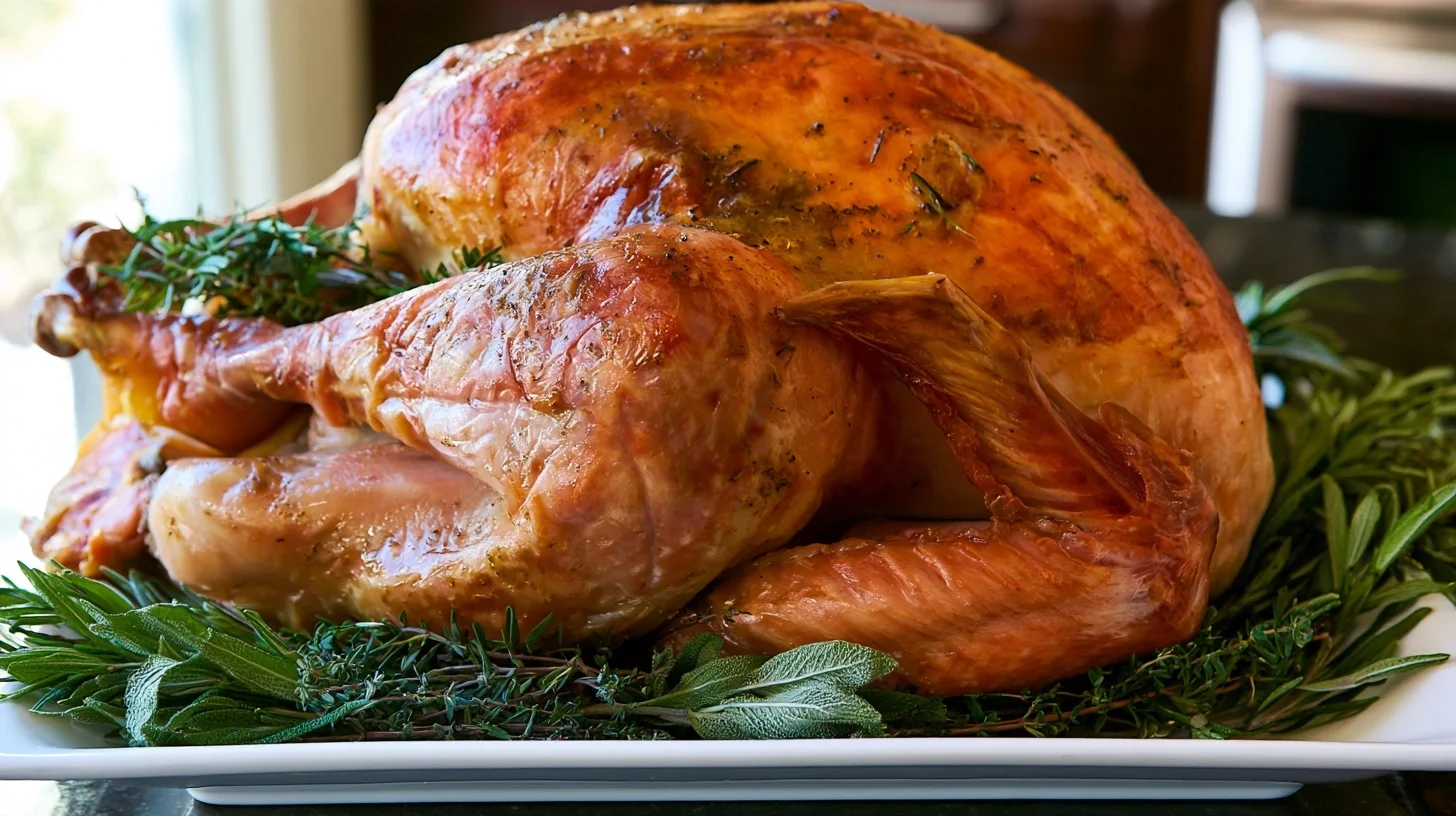
Turkey Brine Recipe
12
servings15
minutes0
minutes45
kcalThis turkey brine is a salt, sugar, and water solution infused with garlic, herbs, and citrus that keeps turkey meat juicy and flavorful during roasting. The recipe takes 15 minutes to prepare and requires 12 to 24 hours of brining time for a 12 to 14 pound turkey.
Keep the screen of your device on
Ingredients
1 gallon cold water
1 cup kosher salt
0.5 cup brown sugar
6 cloves garlic
1 tablespoon whole black peppercorns
4 sprigs fresh thyme
2 sprigs fresh rosemary
2 sprigs fresh sage
1 whole orange
1 whole turkey
Directions
- Heat 4 cups of the water in a large pot over medium high heat until steaming but not boiling, about 5 minutes, then remove from heat.
- Add the kosher salt and brown sugar to the hot water and stir for 2 to 3 minutes until completely dissolved, with no grains visible at the bottom of the pot.
- Add the garlic, peppercorns, thyme, rosemary, sage, and orange slices to the pot and stir to combine.
- Pour the remaining cold water into the pot and stir, then add ice cubes or refrigerate the brine for 30 to 45 minutes until the temperature drops below 40°F when tested with a thermometer.
- Place the thawed turkey in a food safe bucket, large stockpot, or brining bag and pour the cooled brine over it, making sure the turkey is fully submerged. Place a plate or lid on top of the turkey if needed to keep it under the brine.
- Refrigerate the turkey in the brine for 12 to 24 hours, keeping the temperature below 40°F throughout.
Notes
- The 1 cup of kosher salt per gallon of water ratio creates enough salinity to season a 12 to 14 pound turkey throughout without oversalting the outer layers.
- If the turkey skin is rubbery after roasting, it was not dried thoroughly after brining. Always pat the turkey completely dry with paper towels and let it air dry uncovered in the refrigerator for 2 to 4 hours before roasting.
- Used turkey brine keeps for up to 2 days in the refrigerator before adding the turkey, but must be discarded immediately after the turkey is removed because it contains raw poultry juices. Table salt can substitute for kosher salt at 3/4 cup per gallon.
Nutrition Facts
- Serving Size: 1 g
- Total number of serves: 12
- Calories: 45kcal
- Fat: 0g
- Carbohydrates: 11g
- Fiber: 0g
- Protein: 0g
Did you make this recipe?
Tag @therecipemasterblog on Instagram and hashtag it with #therecipemaster
Like this recipe?
Follow @therecipemasterblog on Pinterest
Follow us on Facebook!
Follow The Recipe Master on Facebook
The sections below cover the key ingredients that make this turkey brine work, the timing and temperature rules that keep your bird safe, and the fixes for the most common brining problems.
Key Ingredients for Turkey Brine
Each ingredient in a turkey brine recipe serves a specific purpose in flavor and texture.
- Kosher salt: The foundation of the brine, it pulls moisture into the turkey muscle fibers through osmosis and seasons the meat all the way to the bone. Use 1 cup per gallon of water. Table salt can substitute at 3/4 cup per gallon because its finer crystals pack more densely, and sea salt works at the same 1 cup measure as kosher salt.
- Brown sugar: Adds a subtle sweetness that balances the salt and promotes browning on the skin. Use 1/2 cup per gallon. White sugar or honey can replace it at the same measure, though honey adds a floral note and white sugar produces a lighter crust.
- Fresh garlic: Infuses a mild savory depth into the brine without overpowering the turkey. Use 6 to 8 smashed cloves per gallon. Garlic powder can substitute at 1 tablespoon per gallon, but the flavor is sharper and less rounded.
- Whole peppercorns: Contribute a gentle peppery warmth that complements the other aromatics. Use 1 tablespoon per gallon. Ground black pepper can replace them at 1 teaspoon per gallon, but it clouds the brine and can taste dusty.
- Fresh herbs: Thyme, rosemary, and sage are traditional choices that add earthy, woodsy notes. Use 4 to 6 sprigs per gallon. Dried herbs can substitute at 1 tablespoon per gallon, but use them in the last 2 hours of brining to prevent bitterness.
- Citrus: Orange or lemon slices brighten the brine with acidity and a hint of zest. Use 1 sliced orange or 2 sliced lemons per gallon. Lime works the same way, and apple cider can replace citrus at 1 cup per gallon for a sweeter, fruitier profile.
How to Get Turkey Brining Right
These steps ensure your turkey brine recipe delivers juicy meat and crisp skin every time.
- Cool the brine completely: After dissolving the salt and sugar in hot water, add ice or cold water to bring the temperature below 40°F before adding the turkey. A warm brine raises the turkey into the bacterial danger zone and can spoil the meat.
- Brine for 12 to 24 hours: A 12 to 14 pound turkey needs at least 12 hours for the salt to penetrate the thickest parts of the breast and thighs, and up to 24 hours for maximum moisture retention. Brining longer than 24 hours makes the meat mushy and overly salty.
- Keep the turkey submerged: Place a plate or lid on top of the turkey to keep it fully covered by the brine, which ensures even seasoning. Any part exposed to air stays unseasoned and can dry out during roasting.
- Rinse and dry thoroughly: After brining, rinse the turkey under cold running water for 30 seconds to remove excess salt from the skin, then pat it completely dry with paper towels. Moisture on the skin steams in the oven and prevents the crisp golden finish you want.
- Skip additional salt: A brined turkey already carries enough seasoning inside the meat, so do not salt the cavity or the skin before roasting. You can brush the skin with melted butter or oil and add pepper and herbs, but more salt makes the finished turkey taste like a salt lick.
Dry Brining as an Alternative
Dry brining uses only salt rubbed directly on the turkey skin and inside the cavity, with no water. For a 12 to 14 pound turkey, use 1/4 cup kosher salt and refrigerate uncovered for 24 to 48 hours. The salt draws moisture out, then the moisture dissolves the salt and gets reabsorbed, seasoning the meat without the need for a large container or brine disposal. The skin also dries out during the process, which produces an even crisper roasted finish than wet brining.
What Went Wrong With Your Turkey Brine
Why Is My Brined Turkey Too Salty?
The turkey tastes too salty when you brine it longer than 24 hours or use more than 1 cup of kosher salt per gallon of water. To fix a turkey that is already too salty, soak it in plain cold water for 1 hour after removing it from the brine, changing the water halfway through, then rinse and dry it. For the next turkey, measure the salt precisely and set a timer so the bird comes out of the brine on schedule.
Why Is My Turkey Skin Rubbery After Brining?
Rubbery skin happens when the turkey goes straight from the brine into the oven without drying. The moisture on the surface steams instead of roasting, which leaves the skin pale and soft. After rinsing the brined turkey, pat it completely dry with paper towels and let it sit uncovered in the refrigerator for 2 to 4 hours or overnight. This air drying step tightens the skin and allows it to crisp and brown properly during roasting.
Why Did My Turkey Brine Overflow?
Overflow occurs when the container is too small for both the turkey and the full gallon of brine. Use a food safe bucket, a large stockpot, or a brining bag that holds at least 3 gallons for a 12 to 14 pound turkey. If your container is still too small, make a half batch of brine with the same salt to water ratio and turn the turkey every 6 hours so all sides spend time submerged.
Turkey Brine Variations
Apple Cider Turkey Brine
Replace 2 cups of the water with 2 cups of apple cider and add 2 cinnamon sticks and 4 whole cloves to the brine. The cider adds a fruity sweetness and the spices contribute a warm, autumnal flavor that pairs well with Thanksgiving sides. The sugar content in the cider also deepens the color of the roasted skin.
Spicy Turkey Brine
Add 2 tablespoons of red pepper flakes or 2 sliced jalapeños to the brine for a gentle heat that does not overpower the turkey. The capsaicin infuses into the outer layers of the meat and adds a subtle kick without making the drippings too spicy for gravy.
Herb and Citrus Turkey Brine
Double the fresh herbs to 8 to 10 sprigs and add the zest of 2 oranges or 3 lemons along with the sliced fruit. This variation produces a brighter, more aromatic turkey with pronounced herb flavor in every bite. Use it when you want the brine to be the main seasoning and plan to roast the turkey with minimal additional herbs.
What to Serve With Brined Turkey
A brined turkey pairs well with classic Thanksgiving sides that balance its savory richness. Serve it with creamy mashed potatoes, roasted Brussels sprouts, cranberry sauce, and stuffing made with the turkey drippings. The juicy meat also works in sandwiches the next day with mayonnaise, lettuce, and cranberry relish on soft rolls. For a lighter option, slice the turkey over a salad with mixed greens, dried cranberries, toasted pecans, and a tangy vinaigrette, or use it in chickpea pasta and turkey meatballs for a high protein weeknight meal.
How to Store and Make Ahead Turkey Brine
Turkey brine keeps for up to 2 days in the refrigerator when stored in a covered container before you add the turkey. Make the brine, cool it completely, then refrigerate it until you are ready to submerge the bird. Once the turkey has been in the brine, discard the used brine immediately after removing the turkey because it contains raw poultry juices and is not safe to reuse or store.
After brining and roasting, leftover cooked turkey keeps for 3 to 4 days in the refrigerator in an airtight container or wrapped tightly in foil. Reheat slices in a covered dish with 2 tablespoons of broth or water in a 325°F oven for 15 to 20 minutes, or until warmed through. Cooked turkey also freezes well for up to 3 months in freezer safe bags with the air pressed out, and thaws overnight in the refrigerator. According to WebMD’s guide to turkey health benefits, turkey is a lean source of protein that provides selenium and B vitamins, making it a nutritious choice for meal prep and leftovers.
Turkey Brine FAQs
No, you cannot brine a frozen turkey. The turkey must be completely thawed before brining so the salt solution can penetrate the meat. Thaw a frozen turkey in the refrigerator for 24 hours per 4 to 5 pounds of weight, then proceed with the brine recipe.
Yes, the turkey must stay below 40°F during the entire brining process to prevent bacterial growth. Brine the turkey in the refrigerator, or if space is tight, place it in a cooler with ice packs and monitor the temperature with a thermometer, replacing the ice as it melts.
No, brining a turkey for 48 hours makes the meat mushy and overly salty. The ideal brining time for a 12 to 14 pound turkey is 12 to 24 hours. Larger turkeys up to 20 pounds can brine for up to 36 hours, but never longer.
Yes, rinse the turkey under cold running water for 30 seconds after brining to remove excess salt from the skin. Pat it completely dry with paper towels before roasting. Skipping the rinse can leave the skin too salty, and skipping the drying prevents the skin from crisping.
Yes, use the same salt to water ratio of 1 cup kosher salt per gallon for any size turkey, but reduce the total volume of brine to match your container and adjust the brining time. A 10 to 12 pound turkey needs 10 to 12 hours, and an 8 to 10 pound turkey needs 8 to 10 hours.










Leave a Reply