

This bok choy recipe transforms fresh Asian greens into a tender, garlicky side dish with crisp stems and silky leaves in just 10 minutes. The high heat method sears the cut sides while keeping the stems snappy, giving you restaurant quality results without a wok.
Ready in 10 minutes and serving 4, this stir fried bok choy depends entirely on cooking the garlic in oil for exactly 30 seconds before the greens hit the pan. That brief window releases the garlic flavor without burning, which would turn the whole dish bitter.
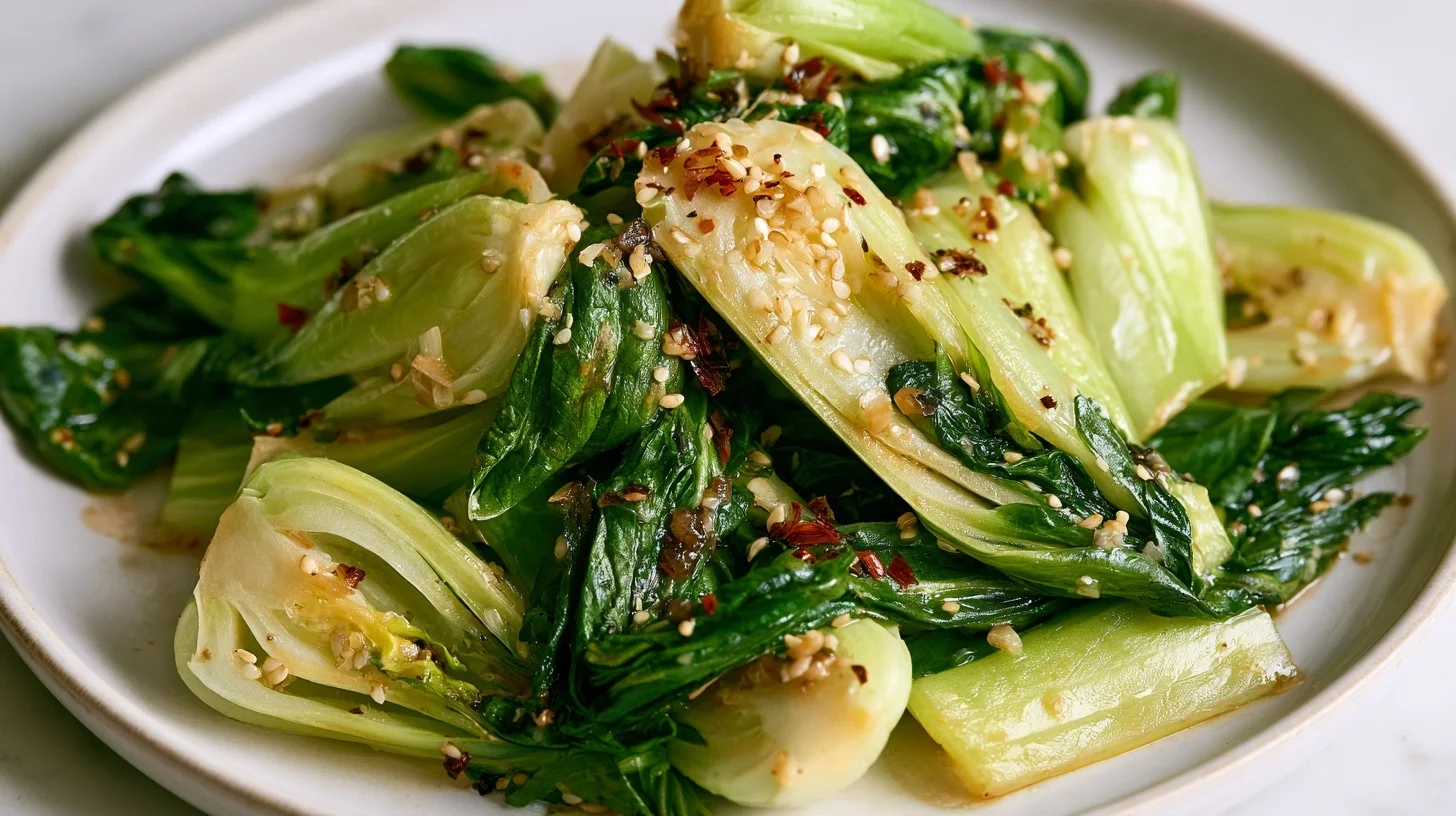
Table of contents
Why You Will Love This Garlic Bok Choy
- Cooks in one skillet in 10 minutes from start to finish.
- Uses only 6 ingredients including the bok choy and garlic.
- Keeps the stems crisp while the leaves turn tender.
- Works with baby bok choy or full size heads cut into quarters.
What You Need for Stir Fried Bok Choy
This dish relies on a handful of ingredients that work together to build flavor without covering up the mild, slightly sweet taste of the bok choy.
- Baby bok choy: the tender greens and crisp white stems cook at different rates, which is why you add them to the pan in stages. Regular bok choy works if you quarter the heads lengthwise and increase the cook time by 1 to 2 minutes.
- Garlic: sliced thin so it releases flavor in 30 seconds without burning. Minced garlic burns faster and turns bitter. Garlic powder does not give the same sharp, fresh flavor.
- Sesame oil: adds a nutty, toasted flavor that complements the garlic. Use toasted sesame oil, not the pale refined kind. Olive oil can replace it but the dish will taste more neutral.
- Soy sauce: provides salt and umami. Low sodium soy sauce works and gives you more control over the final saltiness. Tamari is a gluten free swap with the same flavor.
- Vegetable oil: a high smoke point oil that can take the heat without breaking down. Canola, grapeseed, or peanut oil all work. Butter will burn at the temperature this dish needs.
How to Stir Fry Bok Choy on the Stovetop
The key to tender leaves and crisp stems is cooking the bok choy in two stages and keeping the heat high enough to sear without steaming.
Prep the Bok Choy Recipe
Trim the root end of each baby bok choy head but leave enough base intact so the leaves stay attached. Rinse under cold water and pat completely dry. Wet greens will steam instead of sear, and the dish will turn soggy. If using regular bok choy, quarter each head lengthwise through the core.
Cook the Garlic First
Heat the vegetable oil in a large skillet over medium high heat for 1 minute until it shimmers. Add the sliced garlic and cook for 30 seconds, stirring constantly, until it turns fragrant and just starts to turn golden at the edges. Bok choy stir fry depends on this 30 second window because garlic that cooks longer than 45 seconds will burn and make the oil taste acrid.
Sear the Bok Choy
Place the bok choy cut side down in the skillet in a single layer. Let it cook undisturbed for 2 minutes until the cut sides turn golden brown. Flip and cook for another 2 minutes. The stems should still have a slight crunch when you press them with a fork. Add the soy sauce and sesame oil, toss for 30 seconds, and remove from heat. The health benefits of bok choy include vitamin C and vitamin K, both of which hold up better with quick cooking.
Steaming Method
If you prefer steamed bok choy, bring 1 inch of water to a boil in a pot with a steamer basket. Place the trimmed bok choy in the basket, cover, and steam for 4 to 5 minutes until the stems are tender. Toss with the garlic oil, soy sauce, and sesame oil after steaming.
What Goes Wrong with Bok Choy
Why Is the Bok Choy Soggy?
The greens were not dried thoroughly after washing, or the pan was not hot enough, so the bok choy steamed in its own moisture instead of searing. Drain the excess liquid from the pan, return it to high heat, and cook for 1 more minute to evaporate the water. Next time, pat the bok choy completely dry with a towel and wait until the oil shimmers before adding it to the pan.
Why Does It Taste Bitter?
The garlic burned because it cooked for more than 45 seconds before the bok choy went into the pan, or the heat was too high when the garlic hit the oil. There is no fix for burned garlic. Start over with fresh oil and garlic, and this time add the bok choy within 30 seconds of adding the garlic.
Why Are the Stems Still Hard?
The bok choy heads were too large or the heat was too high, so the leaves cooked faster than the stems. Add 2 tablespoons of water to the pan, cover, and steam for 1 to 2 minutes until the stems soften. Next time, use baby bok choy or cut regular bok choy into smaller pieces so the stems and leaves finish at the same time.
Ways to Change This Dish
Spicy Bok Choy Recipe
Add 1/4 teaspoon red pepper flakes or 1 thinly sliced red chili pepper to the oil with the garlic. The heat level will be moderate. For more heat, increase the red pepper flakes to 1/2 teaspoon.
Ginger Garlic Bok Choy
Add 1 tablespoon minced fresh ginger to the pan with the garlic. The ginger adds a sharp, warming flavor that pairs with the sesame oil. Ground ginger does not work here because it clumps in the oil.
Oyster Sauce Bok Choy
Replace the soy sauce with 2 tablespoons oyster sauce. The dish will taste richer and slightly sweeter. Oyster sauce is thicker than soy sauce, so toss the bok choy for a full minute to coat the leaves evenly.
What to Serve with Stir Fried Bok Choy
This garlicky side dish pairs with steamed rice and any protein that has a savory or slightly sweet glaze, such as teriyaki chicken, soy glazed salmon, or sesame beef. The crisp stems and tender leaves add textural contrast to soft rice and rich meat. For a lighter meal, serve it alongside mushroom stuffed sweet potatoes for a vegetable forward plate with earthy and garlicky flavors.
How to Store Leftover Bok Choy
Stir fried bok choy keeps for 2 days in the refrigerator in an airtight container. The stems will soften as it sits, but the flavor stays strong. It does not freeze well because the high water content in the leaves turns mushy when thawed. Reheat in a skillet over medium heat for 2 to 3 minutes, stirring often, until warmed through. The microwave will make the bok choy limp. This dish does not work as a make ahead because the texture is best right after cooking.
Get the Full Bok Choy Recipe
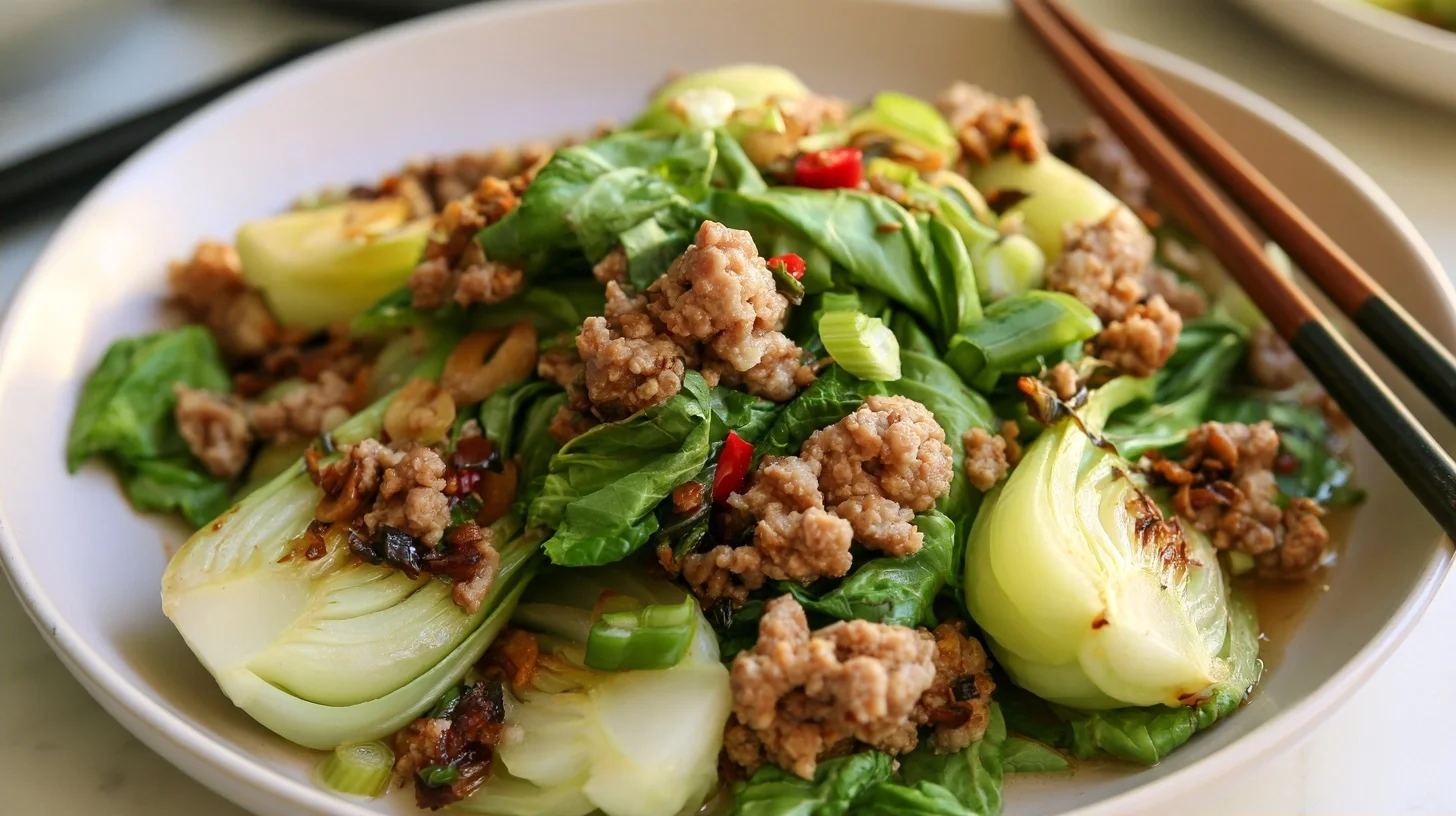
Garlic Bok Choy
4
servings5
minutes5
minutes70
kcalGarlic bok choy is a quick stir fried side dish with tender green leaves and crisp white stems coated in a garlicky soy sesame sauce. Ready in 10 minutes, it depends on cooking sliced garlic in hot oil for exactly 30 seconds before the bok choy goes in, so the flavor stays sharp without any bitterness.
Keep the screen of your device on
Ingredients
4 heads baby bok choy
2 tablespoons vegetable oil
4 cloves garlic
1 tablespoon soy sauce
1 teaspoon toasted sesame oil
0.25 teaspoon salt
Directions
- Rinse and dry the bok choy under cold water, separating the leaves to remove any dirt. Pat completely dry with a towel. Wet greens will steam instead of sear.
- Heat the vegetable oil in a large skillet over medium high heat for 1 minute until it shimmers. The oil must be hot enough to sizzle when the garlic goes in.
- Add the sliced garlic and cook for 30 seconds, stirring constantly, until fragrant and just starting to turn golden at the edges. Do not let it cook longer than 45 seconds or it will burn and turn bitter.
- Place the bok choy cut side down in the skillet in a single layer. Cook undisturbed for 2 minutes until the cut sides turn golden brown.
- Flip the bok choy and cook for another 2 minutes. The stems should still have a slight crunch when pressed with a fork.
- Add the soy sauce, sesame oil, and salt. Toss for 30 seconds to coat the bok choy evenly, then remove from heat and serve immediately.
Notes
- Bok choy stir fry depends on cooking the garlic for exactly 30 seconds before the greens go in, so the oil stays fragrant without any bitterness.
- If the bok choy turns soggy, the greens were not dried thoroughly after washing or the pan was not hot enough. Drain the excess liquid, return the pan to high heat, and cook for 1 more minute.
- Stir fried bok choy keeps for 2 days in the refrigerator in an airtight container, but the stems will soften as it sits.
Nutrition Facts
- Serving Size: 1 g
- Total number of serves: 4
- Calories: 70kcal
- Fat: 6g
- Carbohydrates: 4g
- Fiber: 1g
- Protein: 2g
Did you make this recipe?
Tag @therecipemasterblog on Instagram and hashtag it with #therecipemaster
Like this recipe?
Follow @therecipemasterblog on Pinterest
Follow us on Facebook!
Follow The Recipe Master on Facebook
Bok Choy Recipe FAQs
Yes, you can eat bok choy raw. The leaves are tender and mild, and the stems have a crisp texture similar to celery. Raw bok choy works well in salads or slaws, but cooking it for this recipe softens the leaves and brings out a slightly sweeter flavor in 10 minutes.
Yes, you need to wash bok choy before cooking because dirt and grit often hide between the tightly packed leaves near the base. Rinse each head under cold running water, separating the leaves gently, then pat completely dry with a towel so the bok choy sears instead of steams in the pan.
You cook the entire bok choy, including the white stems and the dark green leaves. The stems take slightly longer to cook than the leaves, which is why this recipe sears the bok choy cut side down first to give the stems a 2 minute head start before flipping.
Yes, you can use regular bok choy instead of baby bok choy. Quarter each head lengthwise through the core so the pieces are similar in size to baby bok choy, and increase the cook time by 1 to 2 minutes. The flavor will be the same, but the stems will be slightly thicker.







Leave a Reply