

This Hokkaido pumpkin recipe roasts wedges of the sweet, dense Japanese squash with olive oil and herbs until the edges caramelize and the flesh turns creamy. Hokkaido pumpkin, also called kabocha, has a naturally sweet flavor and a texture that holds its shape better than butternut squash.
The recipe takes 40 minutes total and serves 4. The key is roasting at 425°F so the natural sugars brown without the wedges turning mushy. Roasted Hokkaido pumpkin keeps for 4 days in the refrigerator and reheats well.
If you want to read more about the origins of this recipe, I suggest to read the The Allure of Hokkaido Pumpkin’s article.
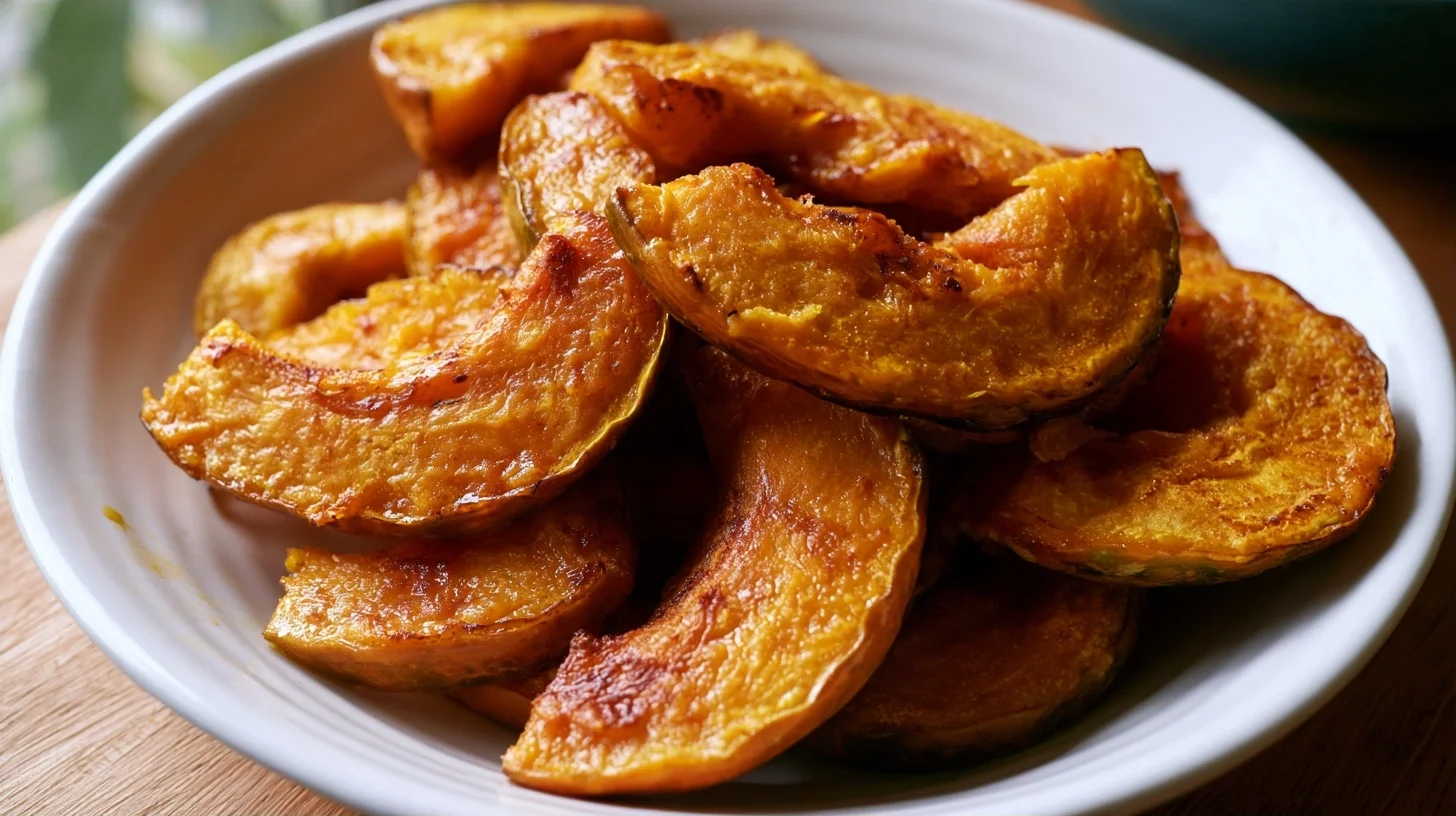
Table of contents
Why This Hokkaido Pumpkin Recipe Works
- Roasting at 425°F caramelizes the natural sugars in the Hokkaido pumpkin without steaming the flesh.
- Leaving the skin on during roasting protects the wedges and adds a pleasant texture once tender.
- Cutting the pumpkin into 1 inch thick wedges ensures even cooking in 30 minutes.
Roasted Hokkaido Pumpkin Recipe
Hokkaido Pumpkin Recipe
4
servings10
minutes30
minutes135
kcalRoasted Hokkaido pumpkin wedges have caramelized edges and creamy, sweet flesh with a texture that holds its shape. The recipe takes 40 minutes total and serves 4, with simple prep using olive oil, garlic powder, and fresh thyme.
Keep the screen of your device on
Ingredients
1 Hokkaido pumpkin
3 tablespoons olive oil
1 teaspoon garlic powder
1 tablespoon fresh thyme leaves
0.5 teaspoon salt
0.25 teaspoon black pepper
Directions
- Preheat the oven to 425°F and line a large baking sheet with parchment paper.
- Toss the pumpkin wedges with olive oil, garlic powder, and thyme in a large bowl until evenly coated.
- Arrange the wedges in a single layer on the prepared baking sheet, leaving at least half an inch of space between each piece. Crowded wedges steam instead of browning.
- Roast for 15 minutes, then flip each wedge with tongs. The side touching the pan should be golden brown.
- Continue roasting for 13 to 17 minutes until a fork slides through the thickest part with no resistance and both sides are caramelized.
- Season with salt and pepper immediately after removing from the oven, then serve the Hokkaido pumpkin recipe warm or at room temperature.
Notes
- Hokkaido pumpkin wedges roasted at 425°F for 28 to 32 minutes develop caramelized edges without turning mushy because the high heat evaporates moisture quickly.
- If the edges brown too fast but the center stays raw, the wedges were cut thicker than 1 inch. Lower the oven to 400°F and add 5 minutes to the roasting time.
- Store roasted Hokkaido pumpkin for up to 4 days in an airtight container in the refrigerator. Substitute butternut squash and reduce roasting time by 5 minutes because it softens faster.
Nutrition Facts
- Serving Size: 1 g
- Total number of serves: 4
- Calories: 135kcal
- Fat: 7g
- Carbohydrates: 18g
- Fiber: 3g
- Protein: 2g
Did you make this recipe?
Tag @therecipemasterblog on Instagram and hashtag it with #therecipemaster
Like this recipe?
Follow @therecipemasterblog on Pinterest
Follow us on Facebook!
Follow The Recipe Master on Facebook
The sections below explain how to choose and prepare Hokkaido pumpkin, what to do when the edges brown too fast, and how to store and reheat the roasted wedges.
Key Ingredients and Substitutions
These ingredients shape the flavor and texture of roasted Hokkaido pumpkin.
- Hokkaido pumpkin: This Japanese squash has dense, sweet flesh and edible skin. Substitute butternut squash, but reduce roasting time by 5 minutes because it softens faster.
- Olive oil: Coats the wedges so they brown evenly and prevents sticking. Use avocado oil for a higher smoke point, with no change in flavor.
- Garlic powder: Adds savory depth without the moisture of fresh garlic, which can burn at 425°F. Fresh minced garlic works if you add it in the last 10 minutes of roasting.
- Fresh thyme: Provides an earthy note that complements the pumpkin’s sweetness. Substitute dried thyme at half the amount, or use rosemary for a stronger herbal flavor.
How to Get Hokkaido Pumpkin Right
Follow these steps to roast Hokkaido pumpkin with caramelized edges and creamy centers.
- Cut uniform wedges: Slice the pumpkin into 1 inch thick pieces so they finish cooking at the same time. Thicker wedges stay raw in the center, and thinner ones turn mushy.
- Space the wedges apart: Leave at least half an inch between each piece on the baking sheet. Crowding traps steam and prevents browning.
- Flip halfway through: Turn the wedges at 15 minutes so both sides caramelize. The side touching the pan browns first.
- Check doneness with a fork: The pumpkin is ready when a fork slides through the thickest part with no resistance. This happens at 28 to 32 minutes depending on wedge size.
- Season after roasting: Add salt after the wedges come out of the oven. Salt draws out moisture during cooking, which interferes with caramelization in this recipe.
What Went Wrong
Why Are the Edges Burnt but the Center Raw?
The wedges were cut too thick or the oven ran hot. Measure wedges at 1 inch and use an oven thermometer to confirm 425°F. If the edges brown in under 20 minutes, lower the temperature to 400°F and add 5 minutes to the total time.
Why Is the Pumpkin Mushy Instead of Firm?
The pumpkin was overripe or roasted too long. Press the skin before buying: it should feel hard with no soft spots. Start checking doneness at 25 minutes to catch the wedges when they are tender but still hold their shape.
Why Didn’t the Pumpkin Brown?
The wedges were too wet or the pan was overcrowded. Pat the cut surfaces dry with a towel after oiling. Use two baking sheets if needed so each wedge has space around it. Moisture and crowding both prevent the Maillard reaction that creates browning.
Ways to Change It
Miso Glazed
Whisk 2 tablespoons white miso paste with 1 tablespoon maple syrup and brush it on the wedges in the last 10 minutes of roasting. The glaze adds umami and a glossy finish. The sugars in the miso and syrup brown quickly, so watch closely to prevent burning.
Spiced
Toss the wedges with 1 teaspoon cumin and half a teaspoon smoked paprika before roasting. The warm spices pair well with the pumpkin’s sweetness and create a savory side dish. Omit the thyme when using these spices.
With Tahini Drizzle
Mix 3 tablespoons tahini with 2 tablespoons lemon juice and 1 tablespoon water, then drizzle over the roasted wedges. The tahini adds richness and a nutty contrast to the sweet pumpkin. Thin the sauce with more water if it is too thick to drizzle.
What to Serve With Roasted Hokkaido Pumpkin
Roasted Hokkaido pumpkin works as a side for roasted chicken, grilled steak, or baked salmon because its sweetness balances savory mains. Serve it alongside oven baked sweet potato chips for a fall vegetable plate, or toss the cooled wedges into grain bowls with quinoa and greens. The wedges also pair well with a simple arugula salad dressed with lemon and olive oil.
How to Store and Reheat Roasted Hokkaido Pumpkin
Roasted Hokkaido pumpkin keeps for 4 days in the refrigerator in an airtight container or wrapped tightly in foil. The wedges do not freeze well because the texture turns grainy when thawed. Reheat in a 350°F oven for 10 minutes until warmed through, or microwave individual portions for 1 to 2 minutes. The wedges can also be eaten cold in salads or grain bowls.
Hokkaido Pumpkin FAQs
Yes, the skin of Hokkaido pumpkin is edible and becomes tender when roasted. Leave it on to save prep time and add texture.
The pumpkin is done when a fork slides through the thickest part with no resistance. This takes 28 to 32 minutes at 425°F.
Cut the pumpkin in half, scoop out the seeds, then slice each half into 1 inch thick wedges. Uniform thickness ensures even roasting.
Yes, roast at 375°F for 40 to 45 minutes if you prefer. The lower temperature reduces the risk of burning but produces less caramelization.






Leave a Reply