

- Remove skillet from heat before adding beaten eggs and cheese so residual heat creates a glossy, creamy sauce instead of scrambling the eggs.
- Reserve at least one cup of starchy pasta water and add a few tablespoons at a time to emulsify and loosen the sauce.
- Season chicken lightly and cook to 165°F internal temperature so it stays juicy and safe; slice smaller pieces for faster, even cooking.
If you’re craving the rich, creamy comfort of classic carbonara but want a heartier, protein-packed twist, this chicken carbonara recipe delivers exactly that. By adding tender, seasoned chicken to the traditional combination of crispy bacon, silky egg-based sauce, and sharp Parmesan, you get a satisfying one-pan meal that feels indulgent without being overly complicated. The key is timing, adding the egg mixture off heat so it coats the pasta in a glossy, velvety sauce rather than scrambling into dry curds.
This version balances the smoky saltiness of bacon with juicy chicken breast, creating a dish that works beautifully for weeknight dinners or casual entertaining. The sauce clings to every strand of pasta, and the whole dish comes together in under 30 minutes with just one pot for the pasta and one skillet for everything else.
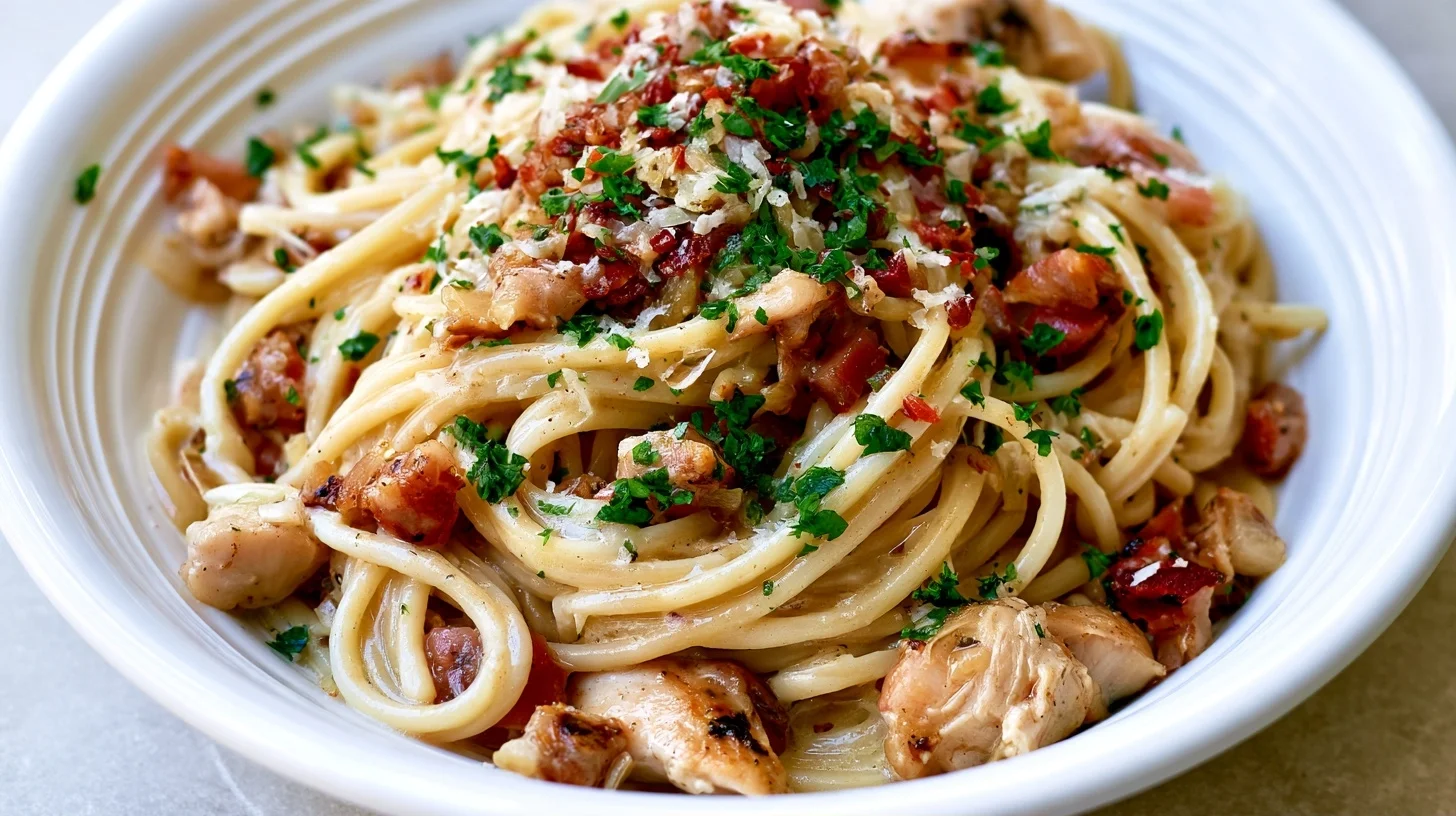
Table of contents
- Why You Will Love This Chicken Carbonara Recipe
- Essential Equipment for Chicken Carbonara Recipe
- How to Make Creamy Chicken Carbonara That Won’t Scramble
- Tips for Perfect Chicken Carbonara Every Time
- Common Mistakes That Ruin Chicken Carbonara Recipe
- Easy Variations for Chicken Carbonara
- What Makes Chicken Carbonara Nutritious
- Best Ways to Serve Chicken Carbonara Recipe
- How to Store and Reheat Chicken Carbonara
- Frequently Asked Questions about Chicken Carbonara Recipe
Why You Will Love This Chicken Carbonara Recipe
- Ready in under 30 minutes with minimal cleanup using just two pans.
- The egg-based sauce stays creamy and smooth without requiring cream or flour thickeners.
- Adds lean protein from chicken while keeping the traditional bacon flavor intact.
- Uses pantry staples and common ingredients you likely already have on hand.
Essential Equipment for Chicken Carbonara Recipe
You don’t need specialized tools to make this dish, but a few key pieces make the process smoother and help you control the texture of the sauce.
- Large skillet or sauté pan: A 12-inch skillet gives you enough room to cook the chicken and bacon without crowding, which helps them brown evenly instead of steaming.
- Large pot for pasta: Use a pot that holds at least 4 quarts of water so the pasta cooks evenly and doesn’t stick together.
- Whisk or fork: Essential for beating the eggs and cheese together into a smooth mixture that will emulsify into the sauce.
- Tongs or pasta fork: Makes it easy to transfer the hot pasta directly into the skillet and toss everything together without breaking the noodles.
- Measuring cups and spoons: Accurate measurements help you balance the richness of the eggs and cheese with the starchy pasta water.
How to Make Creamy Chicken Carbonara That Won’t Scramble
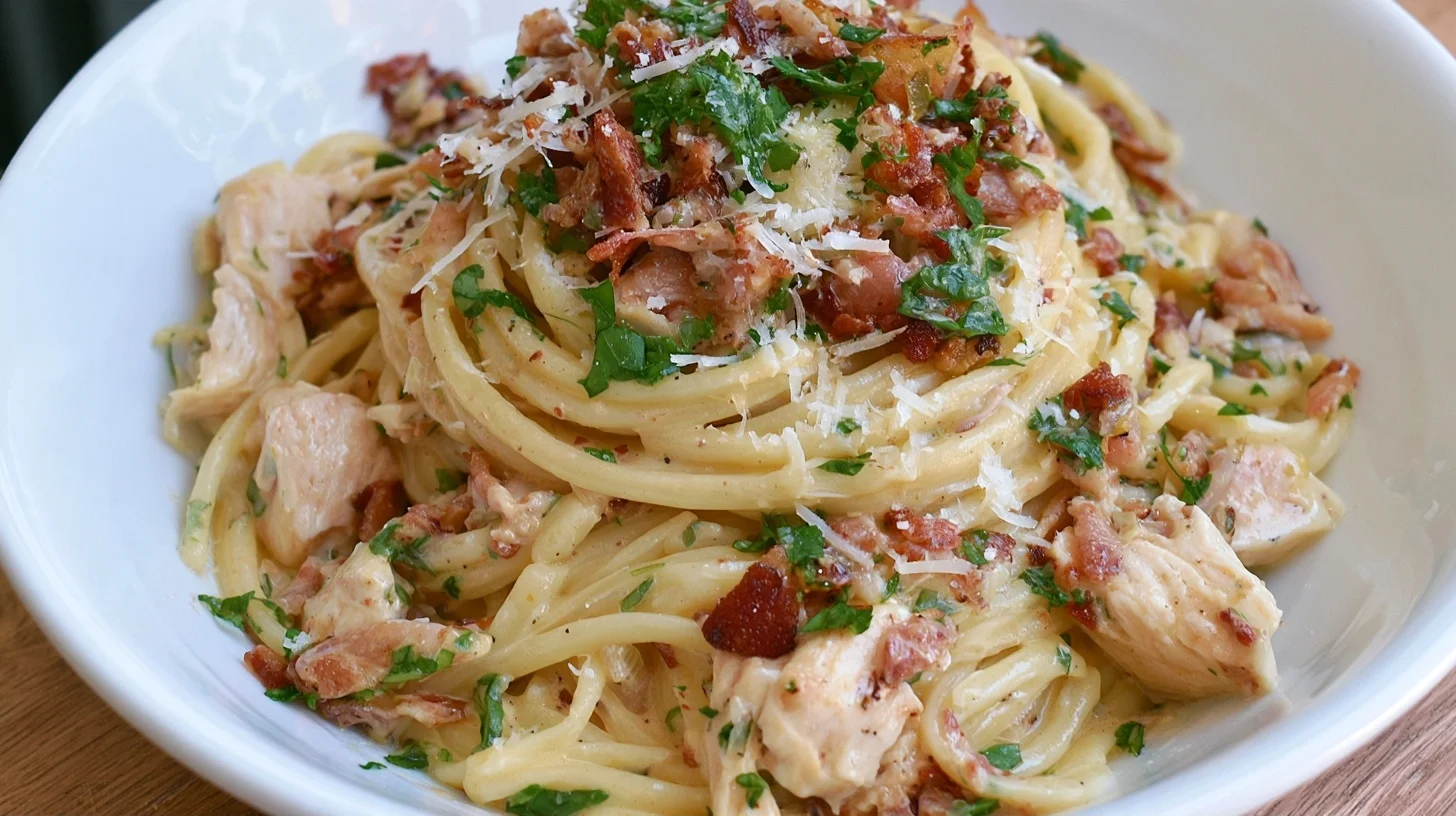
Chicken Carbonara
4
servings10
minutes20
minutes620
kcalThis chicken carbonara combines tender seasoned chicken breast with crispy bacon, silky egg-based Parmesan sauce, and perfectly cooked pasta. The key to success is removing the skillet from heat before adding the egg mixture, which creates a creamy, glossy sauce that coats every strand without scrambling.
Keep the screen of your device on
Ingredients
12 oz spaghetti or fettuccine
1 lb boneless skinless chicken breast
6 slices bacon
3 large eggs
1 cup freshly grated Parmesan cheese
0.5 cup reserved pasta water
2 cloves garlic
1 tsp black pepper
0.5 tsp salt
2 tbsp olive oil
2 tbsp fresh parsley
Directions
- Bring a large pot of salted water to a boil and cook the pasta according to package directions until al dente. Before draining, scoop out 1 cup of the starchy pasta water and set it aside—this will help create a smooth, creamy sauce later.
- Cook the bacon in a large skillet over medium heat until the edges are browned and the fat is rendered, about 5 to 6 minutes. Remove the bacon with a slotted spoon and set it aside, leaving about 1 tablespoon of bacon fat in the pan.
- Season the chicken pieces with salt, black pepper, and minced garlic, then add them to the same skillet. Cook over medium-high heat, stirring occasionally, until the chicken is golden on all sides and reaches an internal temperature of 165°F, about 6 to 7 minutes.
- Whisk together the eggs and grated Parmesan cheese in a medium bowl until smooth and well combined. Let the mixture sit at room temperature while the pasta finishes cooking.
- Add the drained pasta to the skillet with the cooked chicken and toss everything together. Remove the skillet from the heat completely—this step is critical to prevent scrambling the eggs.
- Pour the egg and cheese mixture over the hot pasta and toss continuously for about 30 seconds. The residual heat will gently cook the eggs into a creamy, glossy sauce. If the sauce looks too thick, add reserved pasta water one tablespoon at a time until it reaches a smooth, spoon-coating consistency.
Notes
- Removing the skillet from heat before adding the egg mixture is the most reliable way to prevent scrambling and ensures a smooth, creamy sauce.
- Use freshly grated Parmesan rather than pre-grated cheese, which contains anti-caking agents that can make the sauce grainy.
- Store leftovers in an airtight container in the refrigerator for up to 3 days. Reheat gently in a skillet over low heat with a splash of milk or pasta water to loosen the sauce.
Nutrition Facts
- Serving Size: 1 g
- Total number of serves: 4
- Calories: 620kcal
- Fat: 22g
- Carbohydrates: 58g
- Fiber: 3g
- Protein: 42g
Did you make this recipe?
Tag @therecipemasterblog on Instagram and hashtag it with #therecipemaster
Like this recipe?
Follow @therecipemasterblog on Pinterest
Follow us on Facebook!
Follow The Recipe Master on Facebook
Tips for Perfect Chicken Carbonara Every Time
The most important step in chicken carbonara is controlling the heat when you add the egg mixture. Removing the skillet from the burner before adding the eggs prevents them from scrambling and ensures a smooth, glossy sauce that coats the pasta evenly.
Reserve Pasta Water Before Draining
Always scoop out at least one cup of the starchy pasta cooking water before you drain the noodles. This water contains dissolved starch that helps the egg and cheese mixture emulsify into a creamy sauce instead of staying clumpy. Add it gradually—a few tablespoons at a time—until the sauce reaches a smooth, spoon-coating consistency.
Cook the Chicken to 165°F Internal Temperature
Use a meat thermometer to check that the thickest part of the chicken breast reaches 165°F. This ensures the chicken is fully cooked and safe to eat while staying juicy. If you slice the chicken before cooking, the smaller pieces cook faster and more evenly, usually in about 5 to 6 minutes over medium-high heat.
Use Freshly Grated Parmesan for Better Texture
Pre-grated Parmesan often contains anti-caking agents that prevent it from melting smoothly into the sauce. Grating a block of Parmigiano-Reggiano or Pecorino Romano yourself gives you a finer texture that blends more easily with the eggs and creates a silkier finish. For a more pasta dish with creamy cheese, you can explore other seasonal combinations.
Toss the Pasta Immediately After Adding the Egg Mixture
Once you pour the beaten eggs and cheese over the hot pasta, toss continuously for about 30 seconds. The residual heat from the pasta and the skillet gently cooks the eggs, turning them into a creamy sauce rather than scrambled bits. If the sauce looks too thick, add a splash of reserved pasta water and keep tossing until it loosens.
Season the Chicken Before Cooking
A simple seasoning of salt, black pepper, and a pinch of garlic powder on the chicken before it hits the pan adds flavor throughout the dish. Since the bacon and cheese are already salty, go light on the salt at this stage and adjust at the end after everything is combined.
Common Mistakes That Ruin Chicken Carbonara Recipe
Adding the Egg Mixture While the Pan Is Still on High Heat
If you pour the eggs into the skillet while it’s still on the burner, the direct heat will scramble them instantly instead of creating a smooth sauce. Always remove the pan from the heat before adding the egg and cheese mixture, then use the residual warmth from the pasta and skillet to gently cook the eggs. If the sauce isn’t thickening, return the pan to very low heat for a few seconds while tossing constantly.
Overcooking the Bacon Until It’s Too Crispy
Bacon that’s cooked until it’s completely brittle will turn hard and dry when tossed with the hot pasta. Cook it just until the edges are browned and the fat is rendered, leaving a slight chew in the center. This way, it stays tender and flavorful throughout the dish instead of crumbling into hard bits.
Using Cold Eggs Straight from the Refrigerator
Cold eggs don’t blend as smoothly with the hot pasta and can create an uneven, lumpy sauce. Let the eggs sit at room temperature for about 10 minutes before whisking them with the cheese, or place them in a bowl of warm water for a few minutes. This small step helps the sauce emulsify more easily.
Draining the Pasta Completely Without Saving Any Water
The starchy pasta water is essential for loosening the sauce and helping it cling to the noodles. If you drain the pasta without reserving at least a cup of the cooking liquid, you’ll have no way to adjust the consistency later. Keep a measuring cup near the pot and scoop out the water before you pour the pasta into the colander.
Easy Variations for Chicken Carbonara
Lighter Version with Turkey Bacon
Swap regular bacon for turkey bacon to reduce the fat content while keeping the smoky, salty flavor. Turkey bacon cooks faster and releases less grease, so you may need to add a small drizzle of olive oil to the skillet before cooking the chicken. The sauce will be slightly less rich, but the overall flavor remains satisfying.
Gluten-Free Chicken Carbonara Recipe
Use gluten-free pasta made from rice, corn, or chickpeas in place of traditional wheat pasta. Follow the package instructions closely, as gluten-free noodles can become mushy if overcooked. Reserve extra pasta water since gluten-free pasta sometimes absorbs more liquid, and you may need additional starchy water to reach the right sauce consistency.
Adding Vegetables for Extra Nutrition
Toss in a handful of fresh spinach, peas, or sautéed mushrooms during the last minute of cooking. Spinach wilts quickly in the residual heat, while peas add a pop of sweetness that balances the richness of the sauce. Mushrooms should be cooked separately until golden, then stirred in at the end to maintain their texture.
Using Pecorino Romano Instead of Parmesan
Pecorino Romano is the traditional cheese used in authentic carbonara and has a sharper, saltier flavor than Parmesan. If you make this swap, reduce or eliminate any added salt since Pecorino is more intensely flavored. You can also use a 50/50 blend of Pecorino and Parmesan for a balanced taste.
What Makes Chicken Carbonara Nutritious
This dish provides a solid balance of protein, carbohydrates, and fats, making it a complete meal in one bowl. The chicken breast contributes lean protein, which supports muscle repair and keeps you full longer. Bacon adds flavor and fat, while the eggs provide additional protein along with vitamins A, D, and B12. According to WebMD, chicken is a good source of lean protein that supports overall health.
The pasta supplies energy through complex carbohydrates, and using whole wheat pasta increases the fiber content, which aids digestion and helps stabilize blood sugar levels. Parmesan cheese adds calcium and phosphorus, both important for bone health. While this dish is rich, a single serving provides a well-rounded nutritional profile that can fit into a balanced diet when paired with a simple green salad or steamed vegetables.
Best Ways to Serve Chicken Carbonara Recipe
Serve this pasta hot, straight from the skillet, with a generous sprinkle of freshly cracked black pepper and extra grated Parmesan on top. A simple arugula salad dressed with lemon juice and olive oil cuts through the richness and adds a peppery freshness that complements the creamy sauce. Garlic bread or a warm baguette works well for soaking up any extra sauce left in the bowl.
For a lighter side, steamed broccolini or roasted asparagus adds color and a slight bitterness that balances the savory, salty flavors of the carbonara. A crisp white wine like Pinot Grigio or Sauvignon Blanc pairs beautifully, offering acidity that cleanses the palate between bites.
How to Store and Reheat Chicken Carbonara
Store leftovers in an airtight container in the refrigerator for up to 3 days. The sauce will thicken as it cools, so expect the texture to change slightly. When reheating, add a splash of milk, cream, or reserved pasta water to the pasta in a skillet over low heat, stirring gently until the sauce loosens and the pasta is warmed through. Avoid using the microwave at full power, as it can make the eggs rubbery and dry out the chicken.
Freezing is not recommended for this dish. The egg-based sauce separates and becomes grainy when thawed, and the pasta texture deteriorates. If you want to meal prep, cook and store the chicken and bacon separately, then make the sauce fresh when you’re ready to eat.
Frequently Asked Questions about Chicken Carbonara Recipe
Yes, chicken thighs work well and stay more tender because they have higher fat content. Cook them until they reach 165°F internal temperature, which usually takes a minute or two longer than breast meat.
Spaghetti, fettuccine, or linguine are ideal because their long strands hold the creamy sauce well. Short pasta like penne or rigatoni also works, but the sauce may pool in the ridges instead of coating each piece evenly.
No, carbonara is best served immediately after cooking. The egg-based sauce doesn’t hold well and can become dry or separate if made in advance. You can prep the ingredients ahead—cook the chicken and bacon, grate the cheese, and beat the eggs—then assemble everything just before serving.
The eggs scrambled because the skillet was too hot when you added them. Always remove the pan from the heat before pouring in the egg mixture, then toss the pasta quickly using only the residual heat to gently cook the eggs into a creamy sauce.







Leave a Reply