

This M&M cookie recipe makes soft, thick cookies loaded with colorful candy pieces in every bite. The dough chills for 30 minutes to prevent spreading, so you get cookies that stay thick and chewy with crisp edges.
The recipe takes 50 minutes start to finish and yields 24 cookies. Chilling the dough is the step that controls the texture. These cookies keep for 5 days at room temperature in an airtight container.

Table of contents
Why This M&M Cookie Recipe Works
- The dough chills for 30 minutes, which firms the butter and prevents the cookies from spreading flat during baking.
- Brown sugar makes up half the sweetener, adding moisture that keeps the M&M cookies soft for days.
- Baking at 350°F for 10 to 12 minutes sets the edges while leaving the centers slightly underdone, so they finish cooking on the pan.
M&M Cookie Recipe
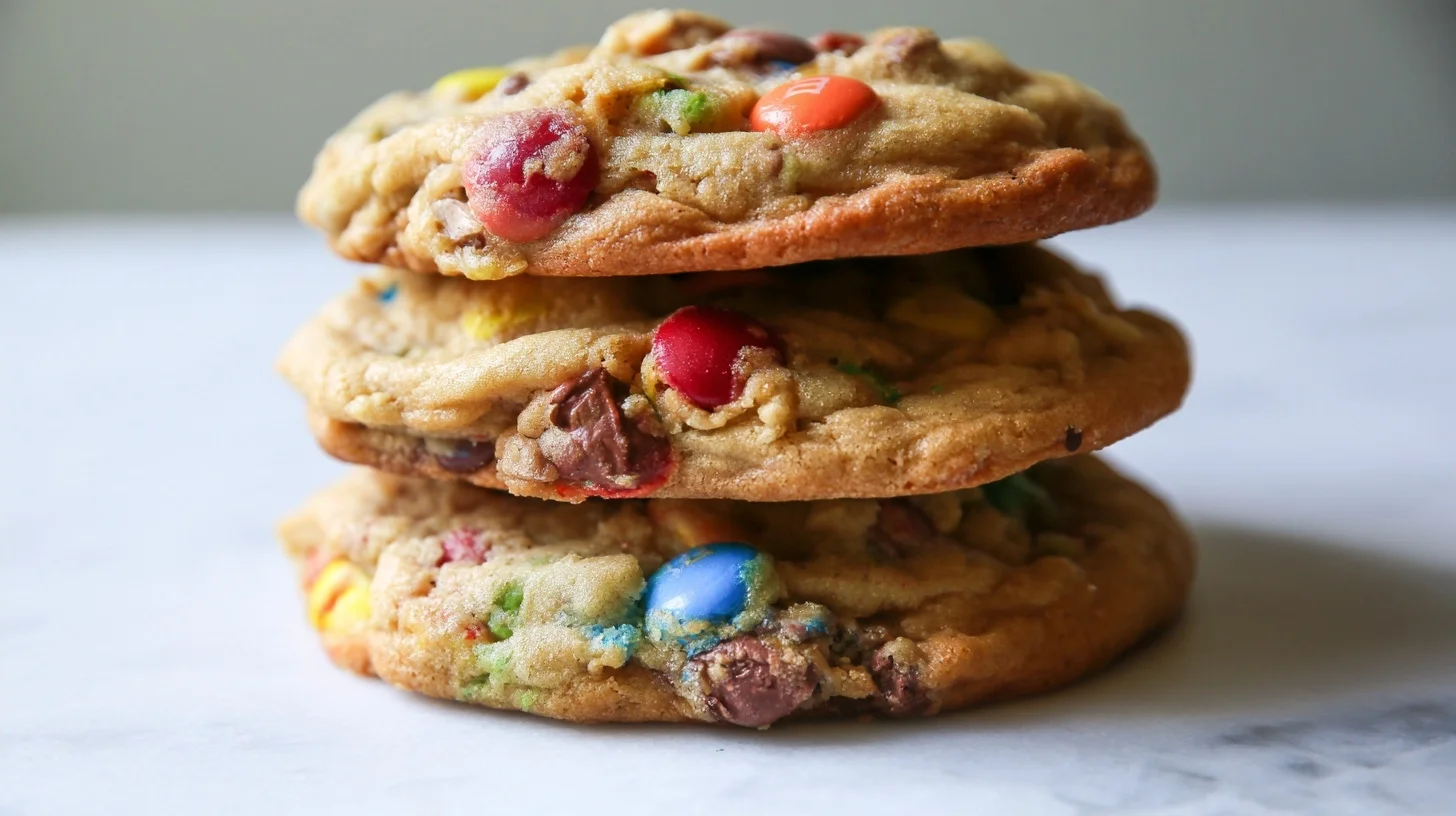
M&M Cookie Recipe
24
servings20
minutes12
minutes185
kcalThis M&M cookie recipe makes soft, thick cookies loaded with colorful candy pieces in every bite. The recipe takes 50 minutes total and yields 24 cookies, with 30 minutes of chilling time to prevent spreading.
Keep the screen of your device on
Ingredients
2.25 cups all-purpose flour
1 teaspoon baking soda
0.5 teaspoon salt
0.75 cup unsalted butter
0.75 cup granulated sugar
0.75 cup packed brown sugar
2 large eggs
2 teaspoons vanilla extract
1.5 cups M&M’s candies
Directions
- Whisk the dry ingredients in a medium bowl: flour, baking soda, and salt. Set aside.
- Cream the butter and sugars in a large bowl with an electric mixer on medium speed for 2 to 3 minutes. Stop when the mixture is light and fluffy.
- Beat in the eggs and vanilla on medium speed for 1 minute until fully combined and smooth.
- Mix in the flour mixture on low speed just until no dry streaks remain. Do not overmix. The dough will be thick.
- Fold in the M&M’s with a spatula until evenly distributed throughout the dough.
- Chill the dough in the refrigerator for 30 minutes. This firms the butter and prevents spreading during baking.
Notes
- Chilling the dough for 30 minutes is essential for thick M&M cookies that hold their shape and do not spread flat during baking.
- If the cookies spread too thin, the butter was too warm or the dough was not chilled long enough. Chill the dough for an extra 15 minutes and check that your butter is softened but still holds its shape.
- Store M&M cookies in an airtight container at room temperature for up to 5 days. Substitute mini M&M’s for regular size, but they will sink more during baking and the cookies may look less colorful on top.
Nutrition Facts
- Serving Size: 1 g
- Total number of serves: 24
- Calories: 185kcal
- Fat: 8g
- Carbohydrates: 26g
- Net Carbs: 26g
- Fiber: 0g
- Protein: 2g
Did you make this recipe?
Tag @therecipemasterblog on Instagram and hashtag it with #therecipemaster
Like this recipe?
Follow @therecipemasterblog on Pinterest
Follow us on Facebook!
Follow The Recipe Master on Facebook
The sections below explain which ingredients affect the cookie texture, how to keep them thick, and what to do when the centers stay too soft or the edges burn.
Key Ingredients and Substitutions
This M&M cookie recipe relies on five ingredients that control thickness, chewiness, and color.
- M&M’s candies: The candy shells stay intact during baking and add pockets of chocolate and crunch. M&M’s official site lists all current flavors, and any variety works in this recipe. Use 1.5 cups for even distribution. Mini M&M’s work but sink more during baking.
- Brown sugar: Provides moisture and a slight molasses flavor that keeps the cookies soft. Substitute with all granulated sugar for crisper cookies, but they will dry out faster.
- Butter: Use unsalted butter softened to room temperature so it creams properly with the sugars. Melted butter makes the cookies spread thin and greasy.
- All-purpose flour: Provides structure without making the cookies tough. Do not substitute cake flour, which lacks enough protein to hold the candy weight.
- Baking soda: Creates lift and browning. Do not use baking powder, which makes the cookies puff and then collapse.
How to Get M&M Cookies Right
Follow these steps to bake thick, chewy cookies that hold their shape.
- Chill the dough: Refrigerate the dough for 30 minutes before scooping. Cold dough spreads slowly in the oven, giving the cookies time to set before flattening. Unchilled dough makes thin, crispy cookies.
- Scoop uniform balls: Use a 2 tablespoon cookie scoop to portion the dough. Uniform size ensures every M&M cookie bakes in the same time. Roll each ball smooth before placing it on the sheet.
- Space them 2 inches apart: The cookies spread to about 3 inches wide. Closer spacing causes them to merge. Bake 12 cookies per sheet.
- Underbake slightly: Remove the cookies when the edges are golden but the centers still look soft and pale. They firm up as they cool. Overbaked cookies turn hard and dry.
- Press extra M&M’s on top: Right after baking, press a few more candies into the tops while the cookies are still soft. This makes the recipe look bakery style and adds color.
What Went Wrong with M&M Cookie Recipe
Why Did the Cookies Spread Flat?
The butter was too warm or the dough was not chilled. Soft butter melts immediately in the oven, and the cookies spread before the structure sets. Chill the dough for 30 minutes and make sure your butter is softened but still holds its shape. If the kitchen is very warm, chill the scooped dough balls on the baking sheet for 10 minutes before baking.
Why Are the Centers Still Doughy?
The dough balls were too large or the oven temperature was too high. Large cookies need longer baking time, and high heat sets the edges before the centers cook through. Use a 2 tablespoon scoop and check your oven temperature with an oven thermometer. Bake at 350°F for 10 to 12 minutes. The centers should look slightly underdone when you remove them.
Why Did the M&M’s Sink to the Bottom?
The dough was too soft or the candies were added to warm dough. Soft dough cannot hold the weight of the candies, so they sink during baking. Make sure the dough is fully chilled before you fold in the M&M’s. If using mini M&M’s, they will sink more because they are lighter. Press a few full size candies on top after baking to fix the appearance.
M&M Cookie Recipe Variations
Peanut Butter M&M Cookie Recipe
Replace 1/4 cup of the butter with 1/4 cup creamy peanut butter. The cookies will taste nutty and slightly denser. Use peanut butter M&M’s for a stronger peanut flavor.
Double Chocolate M&M Cookies
Reduce the flour to 2 cups and add 1/2 cup unsweetened cocoa powder. Sift the cocoa with the flour. The cookies will be darker and fudgier. Bake for 11 to 13 minutes.
Gluten-Free M&M Cookies
Substitute the all-purpose flour with a 1 to 1 gluten-free baking flour blend that contains xanthan gum. The texture will be slightly more crumbly. Chill the dough for 1 hour instead of 30 minutes.
What to Serve With M&M Cookies
Serve these cookies with cold milk, hot coffee, or vanilla ice cream. They pair well with Oreo inside cookies for a candy and cookie dessert platter. For parties, arrange them on a tray with brownies and chocolate chip cookies.
How to Store and Reheat M&M Cookies
Store the cookies in an airtight container at room temperature for up to 5 days. Place parchment paper between layers to prevent sticking. They stay soft without refrigeration. Freeze baked cookies in a freezer bag for up to 3 months. Thaw at room temperature for 30 minutes before serving. You can also freeze the dough balls on a baking sheet, then transfer them to a freezer bag. Bake frozen dough balls directly from the freezer, adding 2 minutes to the baking time.
Unbaked dough keeps in the refrigerator for 3 days. Let it sit at room temperature for 10 minutes before scooping if it becomes too firm. Do not reheat baked cookies in the microwave, as the M&M’s will melt and the cookies will turn soggy.
M&M Cookie Recipe FAQs
Yes, you can use mini M&M’s in this recipe. They will sink more during baking because they are lighter. Use the same amount by volume and press a few regular size M&M’s on top after baking for better appearance.
No, M&M cookies do not need refrigeration. Store them in an airtight container at room temperature for up to 5 days. They stay soft without refrigeration. Refrigerating them can make the candy shells sweat.
Chill the dough for 30 minutes before baking. Cold dough spreads slowly, giving the cookies time to set before flattening. Also make sure your butter is softened but not melted. Melted butter causes excessive spreading.
Yes, freeze scooped dough balls on a baking sheet until solid, then transfer to a freezer bag for up to 3 months. Bake directly from frozen, adding 2 minutes to the baking time. No thawing needed.










Leave a Reply