

- Build a golden roux to thicken the soup, develop nutty flavor, and create a spoon-coating, non-watery consistency.
- Add cheese off the heat in three batches, whisking each until melted to prevent separation and grainy texture.
- Cook broccoli just until tender and bright green; cut uniform florets and undercook slightly for reheating to preserve color and bite.
This broccoli cheddar soup recipe delivers a rich, velvety soup packed with tender broccoli florets and sharp cheddar cheese that melts into every spoonful. Unlike versions that turn out grainy or separate, this method uses a careful roux base and gradual cheese incorporation to create a smooth, creamy texture that stays stable from the first bowl to the last reheat. The soup strikes a balance between comforting richness and fresh vegetable flavor, making it satisfying without feeling heavy.
What sets this version apart is the attention to texture, the broccoli is cooked just until tender but still bright green, and the cheese sauce maintains its silky consistency without breaking. You’ll end up with a soup that tastes like it simmered all day but comes together in under an hour, perfect for weeknight dinners or meal prep that actually improves overnight.

Table of contents
- Why You Will Love This Broccoli Cheddar Soup Recipe
- Essential Equipment for Smooth Broccoli Cheddar Soup
- How to Make Broccoli Cheddar Soup Recipe That Stays Creamy
- Key Techniques for Perfect Broccoli Cheddar Soup
- Common Mistakes That Ruin Broccoli Cheddar Soup Recipe
- Broccoli Cheddar Soup Variations to Try
- Nutrition Facts and Health Considerations
- How to Serve Broccoli Cheddar Soup
- How to Store and Reheat Broccoli Cheddar Soup
- Frequently Asked Questions about Broccoli Cheddar Soup Recipe
Why You Will Love This Broccoli Cheddar Soup Recipe
- The cheese stays perfectly smooth without turning grainy or oily, even when reheated.
- Fresh broccoli cooks directly in the soup, infusing the broth with flavor while maintaining its texture.
- The soup thickens naturally from a proper roux, creating body without needing cream cheese or processed ingredients.
- It tastes even better the next day as the flavors meld together in the refrigerator.
Essential Equipment for Smooth Broccoli Cheddar Soup
The right equipment makes the difference between a silky soup and one with uneven texture. These tools help control temperature and create the smooth consistency that defines a quality broccoli cheddar soup.
- Large heavy-bottomed pot or Dutch oven: Distributes heat evenly and prevents the roux from scorching during the critical thickening stage.
- Whisk: Essential for incorporating flour into butter without lumps and for gradually adding milk to create a smooth base.
- Wooden spoon: Helps stir the soup gently once the broccoli is added without breaking up the florets.
- Box grater: Freshly shredded cheese melts more smoothly than pre-shredded varieties, which contain anti-caking agents that can make the soup grainy.
- Measuring cups and spoons: Accurate measurements of flour and liquid create the right soup consistency without trial and error.
How to Make Broccoli Cheddar Soup Recipe That Stays Creamy
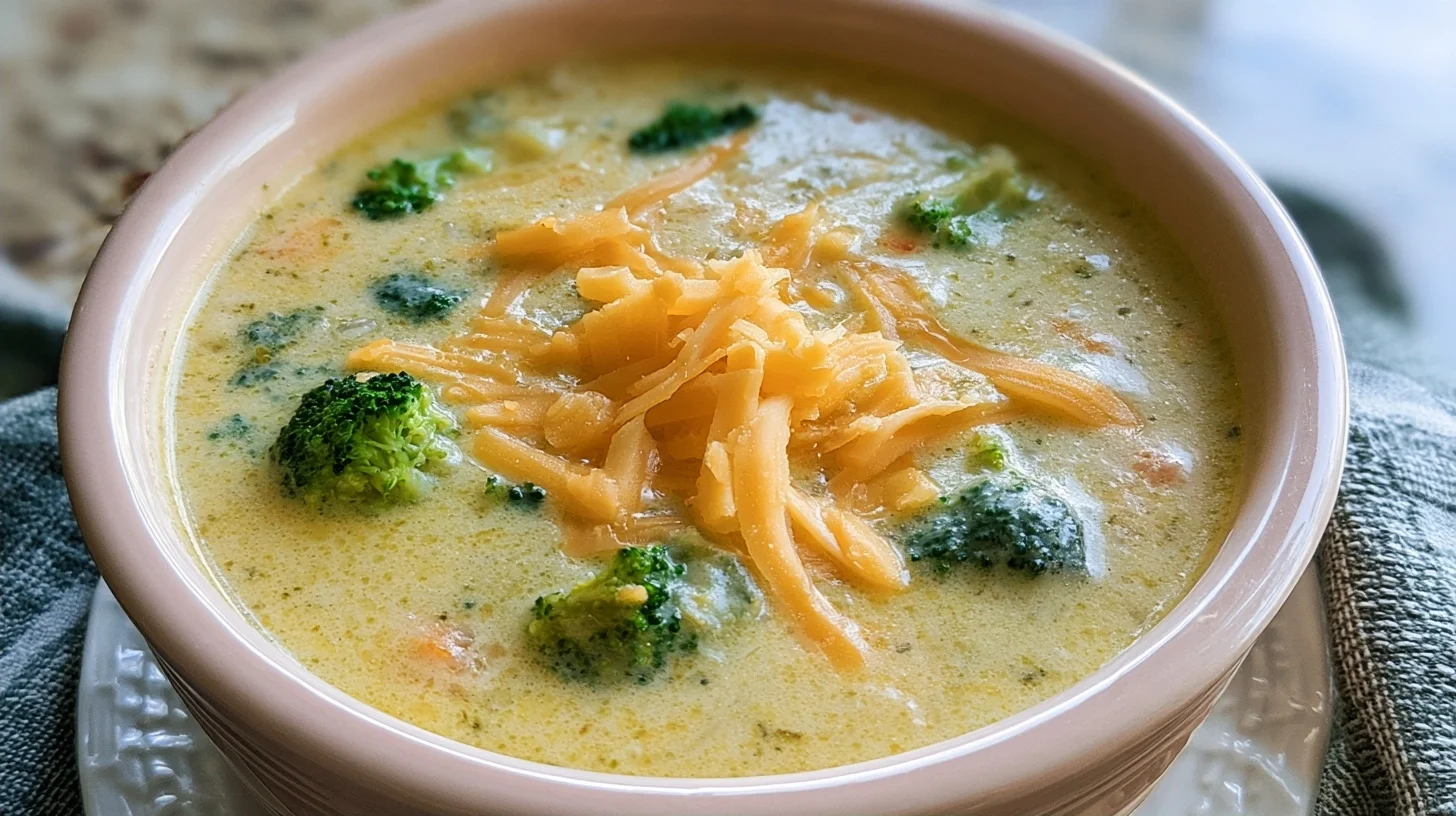
Broccoli Cheddar Soup
6
servings15
minutes35
minutes360
kcalThis broccoli cheddar soup creates a rich, velvety base using a proper roux and gradual cheese incorporation for a smooth texture that never turns grainy. Fresh broccoli florets cook directly in the soup, staying bright green and tender while infusing the broth with flavor.
Keep the screen of your device on
Ingredients
4 cups broccoli florets
4 tablespoons unsalted butter
1 medium yellow onion
2 cloves garlic
1/4 cup all-purpose flour
3 cups chicken or vegetable broth
2 cups half-and-half
3 cups sharp cheddar cheese
1/2 teaspoon salt
1/4 teaspoon black pepper
1/4 teaspoon nutmeg
2 tablespoons fresh chives
Directions
- Melt the butter in a large heavy-bottomed pot or Dutch oven over medium heat until it stops foaming, then add the diced onion and cook for 4 to 5 minutes, stirring occasionally, until the onion becomes translucent and softens without browning.
- Add the minced garlic and cook for 30 seconds, stirring constantly, until fragrant but not browned—garlic burns quickly and turns bitter if left too long.
- Sprinkle the flour over the butter and onion mixture, then whisk continuously for 2 to 3 minutes until the mixture turns light golden and smells nutty, which removes the raw flour taste and creates the base that will thicken your soup.
- Gradually pour in the broth while whisking constantly to prevent lumps from forming, adding it in a slow, steady stream until fully incorporated and the mixture is smooth.
- Stir in the half-and-half and bring the mixture to a gentle simmer over medium heat, stirring occasionally to prevent the bottom from scorching—the soup should start to thicken noticeably as it heats.
- Add the broccoli florets to the simmering soup and cook for 8 to 10 minutes, stirring occasionally, until the florets are tender enough to pierce easily with a fork but still bright green and holding their shape.
Notes
- Remove the pot from heat before adding cheese to prevent the proteins from seizing and creating a grainy texture—this single step makes the difference between smooth and broken soup.
- Freshly shredded cheese from a block melts more smoothly than pre-shredded varieties because it lacks anti-caking agents that interfere with proper melting.
- The soup thickens as it cools, so if reheating leftovers, add a few tablespoons of milk or broth to return it to the right consistency, warming gently over low heat while stirring frequently.
Nutrition Facts
- Serving Size: 1 g
- Total number of serves: 6
- Calories: 360kcal
- Fat: 24g
- Carbohydrates: 20g
- Fiber: 3g
- Protein: 16g
Did you make this recipe?
Tag @therecipemasterblog on Instagram and hashtag it with #therecipemaster
Like this recipe?
Follow @therecipemasterblog on Pinterest
Follow us on Facebook!
Follow The Recipe Master on Facebook
Key Techniques for Perfect Broccoli Cheddar Soup
The secret to restaurant-quality broccoli cheddar soup lies in three critical steps: building a proper roux, controlling the heat when adding cheese, and timing the broccoli correctly. Master these techniques and you’ll have a soup that holds its texture through storage and reheating.
Build a Golden Roux for the Right Thickness
Cooking the butter and flour together for 2 to 3 minutes until it turns light golden creates a base that thickens the soup without a raw flour taste. The roux should smell nutty and look like wet sand before you add any liquid. This step determines whether your soup will have a thin, watery consistency or the spoon-coating body that makes broccoli cheddar soup satisfying. Rushing this stage leaves a chalky aftertaste that no amount of cheese can mask.
Add Cheese Off the Heat to Prevent Separation
Once the soup base reaches the right consistency, remove the pot from the heat before stirring in the shredded cheddar. High heat causes the proteins in cheese to seize and separate from the fat, creating an oily, grainy texture instead of a smooth sauce. Add the cheese in three batches, stirring each addition until completely melted before adding more. This gradual incorporation gives the cheese time to emulsify into the liquid rather than clumping. If you notice any graininess starting to form, immediately remove the pot from heat and whisk vigorously until smooth.
Cook Broccoli Until Just Tender
Adding broccoli florets during the last 8 to 10 minutes of cooking keeps them bright green and slightly firm rather than mushy and olive-colored. The florets should be tender enough to pierce easily with a fork but still hold their shape. Overcooking turns the broccoli gray and releases sulfur compounds that create an unpleasant cabbage-like smell. For the best texture throughout the soup, cut florets into uniform bite-sized pieces so they cook at the same rate. The stems can be peeled and diced smaller since they take slightly longer to soften than the florets.
Use Freshly Shredded Sharp Cheddar
Pre-shredded cheese contains cellulose or potato starch to prevent clumping in the bag, but these additives interfere with smooth melting and can make your soup grainy. Buying a block of sharp cheddar and shredding it yourself takes an extra three minutes but produces noticeably smoother results. Sharp cheddar provides the tangy flavor that balances the richness of the soup, while mild cheddar can taste flat and one-dimensional. For even more depth, you can use a combination of sharp cheddar and a small amount of aged white cheddar, though this is optional. The recipe works well with classic broccoli cheese soup techniques that emphasize proper cheese handling.
Common Mistakes That Ruin Broccoli Cheddar Soup Recipe
Even experienced cooks run into problems with broccoli cheddar soup because cheese and heat require careful handling. These four mistakes account for most texture and flavor issues.
Adding Cheese While the Soup Is Boiling
When cheese hits liquid that’s too hot, the proteins contract rapidly and squeeze out the fat, leaving you with a broken, grainy soup with an oily film on top. Always reduce the heat to low or remove the pot entirely before stirring in cheese. If your soup does break, you can sometimes rescue it by transferring a cup of the soup to a blender, blending until smooth, then whisking it back into the pot off the heat. Prevention is easier than fixing, so make temperature control a habit.
Using Pre-Shredded Cheese
The convenience of pre-shredded cheese isn’t worth the grainy texture it creates. The anti-caking coating prevents the cheese from melting into a smooth emulsion, leaving your soup with a gritty mouthfeel and separated appearance. This is the single most common reason homemade broccoli cheddar soup doesn’t match restaurant versions. Invest three minutes in shredding your own cheese from a block, and you’ll immediately notice the difference in how smoothly it incorporates.
Overcooking the Broccoli
Broccoli that simmers too long turns army green, becomes mushy, and develops a sulfurous smell that overpowers the cheese. Once the florets are tender enough to pierce with a fork but still have a slight bite, the soup is done. If you’re making the soup ahead, slightly undercook the broccoli since it will continue softening as the soup cools and during reheating. For meal prep, some cooks prefer to blanch the broccoli separately and add it to individual portions when serving to maintain the best color and texture.
Making the Roux Too Thin
If you don’t use enough flour in proportion to butter, the soup will stay thin and watery no matter how long it simmers. The standard ratio is equal parts butter and flour by volume—typically 1/4 cup of each for a medium-thick soup. If your soup turns out too thin, you can fix it by making a small additional roux in a separate pan, then whisking it into the simmering soup. Alternatively, mix a tablespoon of cornstarch with two tablespoons of cold water and stir it in, though this creates a slightly different texture than a flour-based roux.
Broccoli Cheddar Soup Variations to Try
This base recipe adapts easily to different dietary needs and flavor preferences without losing the creamy, cheesy character that makes broccoli cheddar soup comforting.
Lighter Version with Milk Instead of Cream
You can make this soup with whole milk instead of half-and-half or heavy cream for a lighter result that still tastes rich thanks to the cheese and butter in the roux. The soup will be slightly thinner, so you may want to add an extra tablespoon of flour to the roux to compensate. The flavor remains satisfying, and you’ll save about 100 calories per serving. Using 2% milk works as well, though the soup will taste noticeably less creamy.
Extra Vegetables for More Nutrition
Diced carrots and celery added with the onions create a more complex vegetable base and add natural sweetness that balances the sharp cheddar. Cauliflower florets can replace up to half the broccoli for a milder flavor, and they blend well if you prefer a partially pureed soup. Some cooks add a handful of fresh spinach during the last two minutes of cooking for extra color and nutrients without changing the soup’s character.
Gluten-Free Broccoli Cheddar Soup Recipe
Replace the all-purpose flour with an equal amount of white rice flour or a gluten-free flour blend designed for thickening. The texture will be nearly identical to the original version. Alternatively, you can thicken the soup with pureed cooked potato or cauliflower for a completely grain-free option, though this changes the soup’s texture to something closer to a bisque.
Bacon and Cheddar Version
Cook four strips of bacon until crisp, remove them from the pot, and use the rendered fat in place of butter for the roux. The smoky bacon flavor complements the sharp cheddar beautifully. Crumble the cooked bacon and stir it into the finished soup or use it as a garnish. This variation adds a savory depth that makes the soup feel more substantial and works especially well for serving in bread bowls.
Nutrition Facts and Health Considerations
A typical serving of broccoli cheddar soup contains approximately 320 to 380 calories depending on the type of dairy used and the cheese-to-broccoli ratio. The soup provides a good amount of protein from the cheese and calcium for bone health. Broccoli contributes significant vitamin C, vitamin K, and fiber, making this soup more nutritious than many cream-based options.
The soup is relatively high in saturated fat due to the cheese and butter, so it works best as an occasional comfort meal rather than an everyday lunch. You can reduce the fat content by using reduced-fat cheddar and replacing half the butter with olive oil, though this will affect the richness. The sodium level can be high depending on your broth choice, so using low-sodium broth and controlling the salt you add during cooking helps keep it reasonable.
For those watching carbohydrate intake, the soup contains about 18 to 24 grams of carbs per serving, primarily from the flour in the roux and the natural sugars in the vegetables. Using cauliflower to thicken instead of flour reduces the carb count significantly while maintaining a creamy texture.
How to Serve Broccoli Cheddar Soup
Broccoli cheddar soup works equally well as a main course or a starter depending on portion size and accompaniments. For a complete meal, serve it in large bowls with crusty sourdough bread or garlic bread for dipping. The bread soaks up the creamy soup and adds textural contrast that makes the meal more satisfying.
Bread bowls turn the soup into an impressive presentation for casual dinners or game day gatherings. Hollow out round sourdough loaves, brush the insides with butter, and toast them in the oven before filling with hot soup. The bread absorbs the flavors as you eat, and you can tear off pieces to scoop up the last bits of soup.
As a starter, serve smaller portions in mugs or small bowls before a main course of roasted chicken, grilled steak, or a simple pasta dish. The rich, creamy soup pairs well with lighter main courses that won’t compete with its bold cheese flavor. A crisp green salad with a tangy vinaigrette provides a refreshing contrast to the soup’s richness.
Garnishes add visual appeal and textural variety. Try crispy bacon bits, extra shredded cheddar, a dollop of sour cream, cracked black pepper, or fresh chives. Oyster crackers or homemade croutons provide crunch that contrasts nicely with the smooth soup.
How to Store and Reheat Broccoli Cheddar Soup
Store leftover broccoli cheddar soup in an airtight container in the refrigerator for up to four days. The soup actually tastes better the next day as the flavors meld together overnight. The texture may thicken considerably as it cools because the starches in the roux continue to absorb liquid. This is completely normal and easy to fix during reheating.
To reheat, transfer the soup to a pot and warm it over low to medium-low heat, stirring frequently. Add milk or broth a few tablespoons at a time until the soup returns to your preferred consistency. Never reheat broccoli cheddar soup over high heat or in the microwave at full power, as this can cause the cheese to separate and become grainy. If using a microwave, heat in 90-second intervals at 50% power, stirring between each interval.
For longer storage, broccoli cheddar soup freezes reasonably well for up to two months, though the texture may change slightly. Let the soup cool completely, then transfer it to freezer-safe containers, leaving an inch of headspace for expansion. Dairy-based soups sometimes separate when frozen and thawed, but you can usually restore the texture by reheating gently and whisking vigorously. Some cooks prefer to freeze the soup base without the cheese, then add freshly shredded cheese when reheating for the smoothest results.
Frequently Asked Questions about Broccoli Cheddar Soup Recipe
No, pre-shredded cheese is not recommended because it contains anti-caking agents that prevent smooth melting and create a grainy texture. Shredding cheese from a block takes only a few extra minutes and produces noticeably smoother, creamier results that are worth the effort.
The soup turned grainy because the cheese was added while the liquid was too hot, causing the proteins to seize and separate from the fat. Always remove the pot from heat before stirring in cheese, add it gradually in batches, and keep the temperature below a simmer to maintain a smooth texture.
Yes, you can freeze broccoli cheddar soup for up to two months, though the texture may change slightly when thawed. For best results, cool the soup completely before freezing in airtight containers with an inch of headspace, then reheat gently over low heat while whisking to restore the smooth consistency.
If your soup is too thin, make a small additional roux by cooking equal parts butter and flour in a separate pan until golden, then whisk it into the simmering soup. Alternatively, mix one tablespoon of cornstarch with two tablespoons of cold water and stir it in, though this creates a slightly different texture than a flour-based roux.




Leave a Reply