

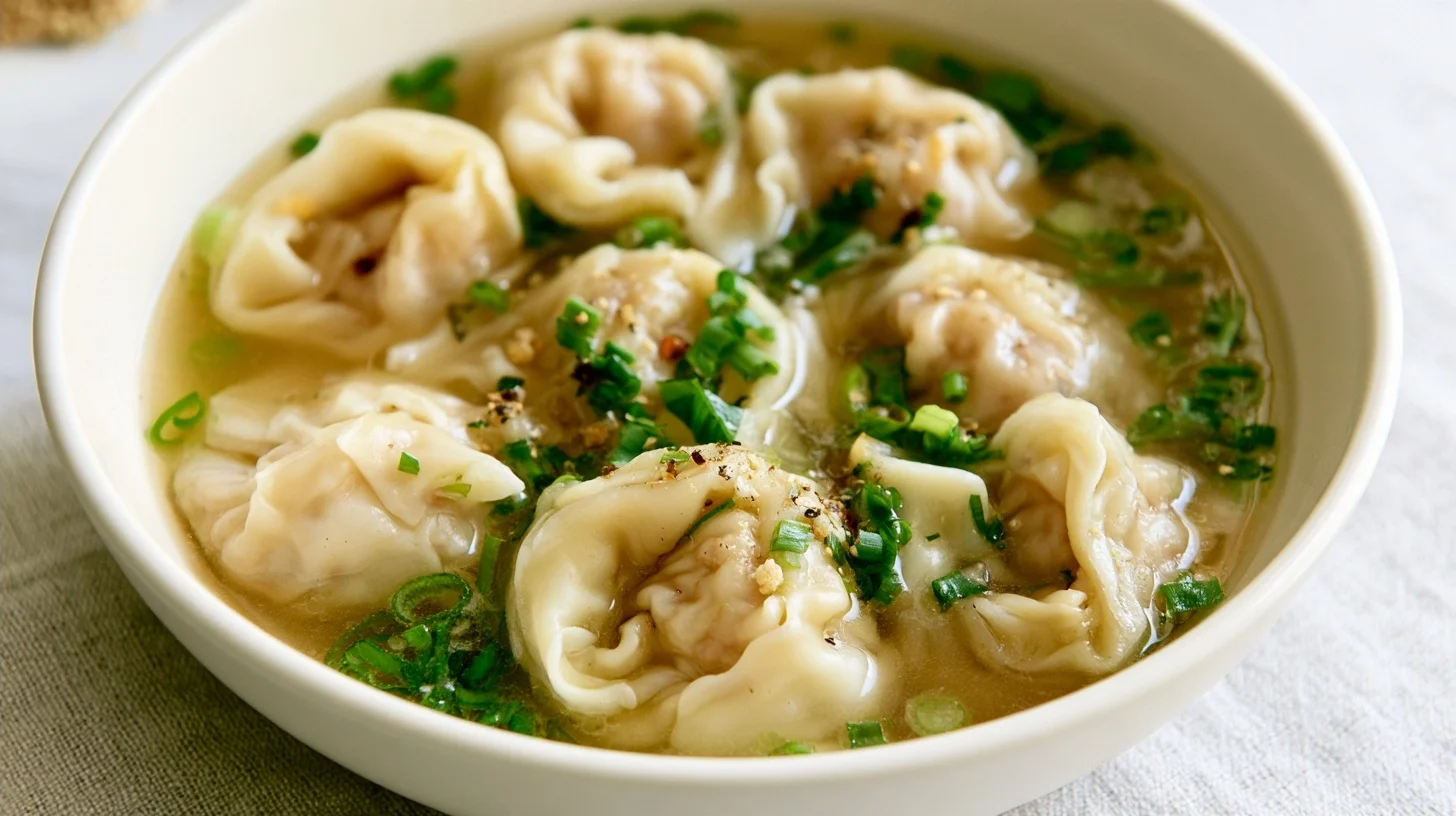
This wonton soup recipe delivers tender pork-filled wontons in a clear, savory chicken broth with bok choy and green onions. The broth is light but deeply flavored, and the wontons stay sealed because the edges are pressed dry before folding.
The soup is ready in 45 minutes and makes 4 servings. The key is sealing the wontons with a cornstarch slurry and keeping the broth at a gentle simmer so the wrappers don’t tear. Cooked wontons keep for 2 days in the refrigerator, stored separately from the broth.
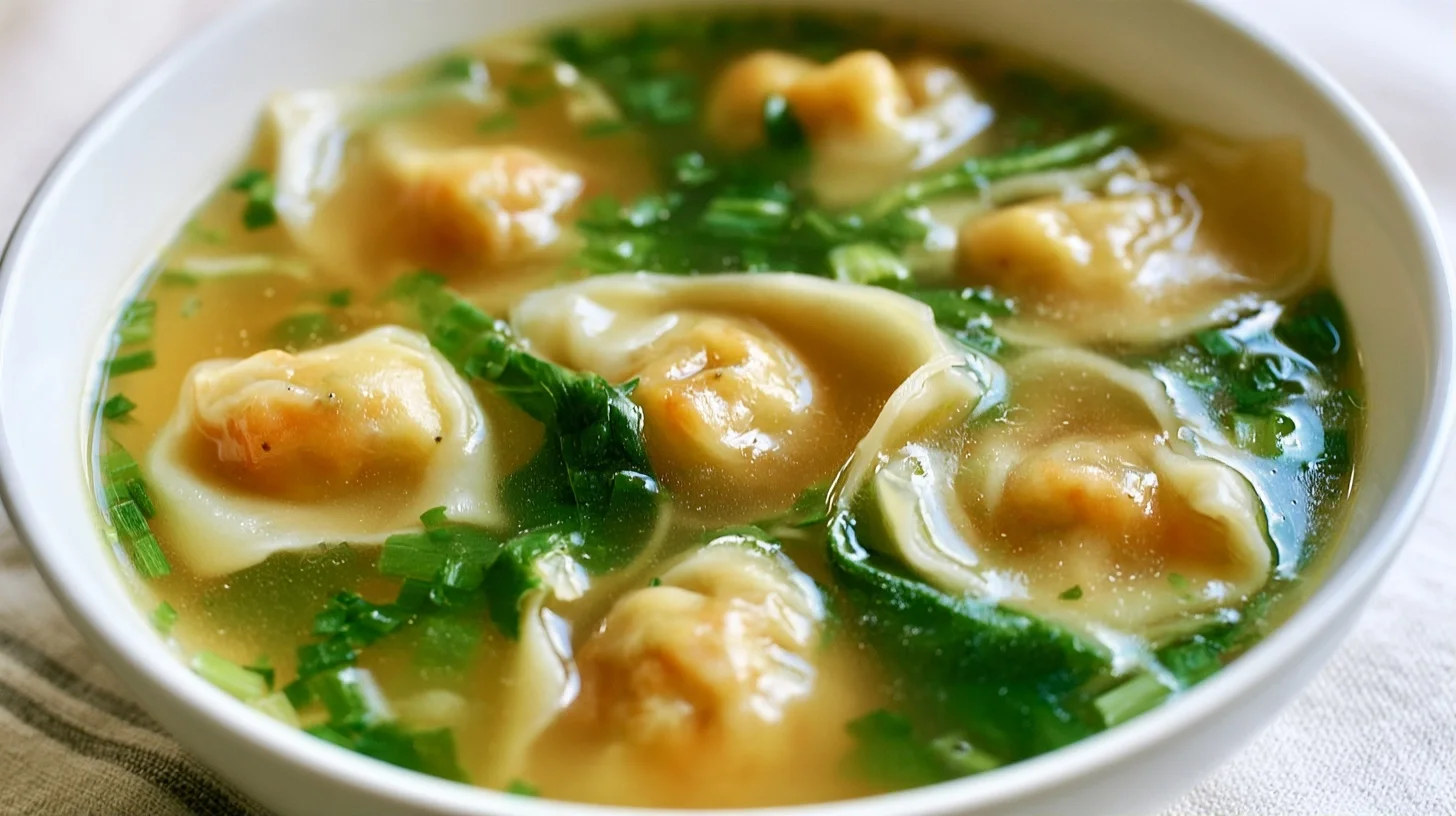
Table of contents
Why This Wonton Soup Recipe Works
- The cornstarch slurry creates a waterproof seal that keeps the wontons from opening during cooking.
- Simmering the wontons at medium heat for 5 to 6 minutes cooks the filling to 160°F without tearing the delicate wrappers.
- Adding the bok choy in the last 2 minutes keeps it bright green and tender-crisp instead of mushy.
Wonton Soup Recipe Card
Wonton Soup Recipe
4
servings25
minutes20
minutes285
kcalWonton soup is a clear chicken broth filled with tender pork wontons, bok choy, and green onions. The soup takes 45 minutes from start to finish and makes 4 servings, with the key step being the cornstarch slurry that seals each wonton shut.
Keep the screen of your device on
Ingredients
8 ounces ground pork
2 cloves garlic
1 teaspoon fresh ginger
2 teaspoons soy sauce
1 teaspoon sesame oil
1/4 teaspoon white pepper
24 wonton wrappers
1 tablespoon cornstarch
6 cups low-sodium chicken broth
1 teaspoon fish sauce
2 cups baby bok choy
2 green onions
Directions
- Mix the filling: combine the ground pork, garlic, ginger, soy sauce, sesame oil, and white pepper in a bowl. Stir until evenly mixed, then refrigerate for 15 minutes so the filling is cold and easier to handle.
- Fill the wontons: place 1 teaspoon of filling in the center of each wonton wrapper. Brush the edges with the cornstarch slurry, fold the wrapper in half to form a triangle, and press firmly from the center outward to seal, removing all air pockets. Bring the two bottom corners together and press to seal. The edges should be completely dry before folding to prevent the filling from leaking.
- Heat the broth: bring the chicken broth, fish sauce, and remaining ginger to a simmer in a large pot over medium heat, about 5 minutes. The broth should have small bubbles breaking the surface but not a rolling boil.
- Cook the wontons: add the filled wontons to the simmering broth and cook for 5 to 6 minutes, until they float to the surface and the filling reaches 160°F. The wrappers will turn slightly translucent and glossy. Do not stir vigorously or the wrappers will tear.
- Add the bok choy: stir in the chopped bok choy and cook for 2 minutes, until the leaves are bright green and the stems are tender-crisp. The bok choy should still have a slight crunch.
- Serve: ladle the soup into bowls, making sure each bowl gets 6 wontons, and top with sliced green onions. Serve immediately while the wontons are tender.
Notes
- The cornstarch slurry creates a waterproof seal that keeps the wontons from opening during the 5 to 6 minute simmer.
- If your wontons open during cooking, the wrappers were not sealed properly or the filling was too wet. Brush the edges with cornstarch slurry and press firmly to remove all air before cooking.
- Store cooked wontons and broth separately in airtight containers for up to 2 days in the refrigerator. Ground chicken can replace the pork but produces a drier filling that needs an extra teaspoon of sesame oil.
Nutrition Facts
- Serving Size: 1 g
- Total number of serves: 4
- Calories: 285kcal
- Fat: 11g
- Carbohydrates: 28g
- Fiber: 2g
- Protein: 18g
Did you make this recipe?
Tag @therecipemasterblog on Instagram and hashtag it with #therecipemaster
Like this recipe?
Follow @therecipemasterblog on Pinterest
Follow us on Facebook!
Follow The Recipe Master on Facebook
Key Ingredients and Substitutions
Each ingredient in this soup plays a specific role in flavor, texture, or structure.
- Ground pork: provides the savory, juicy filling for the wontons. Ground chicken works as a substitute but produces a drier, milder filling that benefits from an extra teaspoon of sesame oil.
- Wonton wrappers: thin square wheat wrappers that cook in 5 to 6 minutes and stay tender in broth. Egg roll wrappers are too thick and will turn gummy; gyoza wrappers are round and harder to seal.
- Chicken broth: forms the clear, savory base of the soup. Low-sodium broth gives you control over salt levels, while regular broth can make the soup too salty once the soy sauce and fish sauce are added.
- Sesame oil: adds nutty depth to the filling and keeps the pork moist. Omitting it makes the filling taste flat, and substituting vegetable oil removes the characteristic aroma.
- Baby bok choy: adds color, crunch, and a mild cabbage flavor. Regular bok choy works but needs the stems cut smaller and added 1 minute earlier than the leaves.
- Cornstarch slurry: mixed with water and brushed on the wrapper edges, it creates a sticky paste that seals the wontons shut. Plain water alone produces weak seals that open during cooking.
How to Get Wonton Soup Right
Success comes down to proper sealing, gentle heat, and timing the greens correctly.
- Keep the filling cold: refrigerate the pork mixture for 15 minutes before filling the wrappers. Cold filling is easier to handle and less likely to make the wrappers soggy before you seal them.
- Press out all the air: after placing 1 teaspoon of filling in the center of each wrapper, fold the wrapper in half and press firmly from the center outward to the edges. Trapped air creates pockets that expand and burst the wonton open during cooking.
- Simmer, don’t boil: keep the broth at a gentle simmer with small bubbles breaking the surface. A rolling boil at high heat tears the delicate wrappers and turns them mushy in 3 to 4 minutes instead of tender. The filling reaches 160°F in 5 to 6 minutes at medium heat.
- Add bok choy last: drop the bok choy into the soup 2 minutes before serving. Adding it earlier turns the leaves dark green and slimy and overcooks the stems until they lose their crisp texture.
- Taste before adding salt: the broth already contains soy sauce, fish sauce, and chicken broth, all of which are salty. Taste the soup after the wontons are cooked and add salt only if needed, starting with 1/4 teaspoon.
What Went Wrong With Your Wonton Soup
Why Did My Wontons Open During Cooking?
The wrappers were not sealed properly or the filling was too wet. If you used plain water instead of cornstarch slurry, the seal is too weak to hold under heat. Brush the edges with the slurry, press firmly to remove all air, and make sure no filling touches the edges where you seal. If a wonton has already opened, remove it and serve it as is; the filling is still cooked and safe to eat.
Why Is My Wonton Soup Cloudy?
The broth boiled too hard or the wontons were cooked at too high a heat, causing the wrappers to break apart and the filling to leak. Cloudiness also happens if you used a broth with added starch or if you stirred the soup too vigorously. Lower the heat to medium so only small bubbles break the surface, and use a slotted spoon to gently move the wontons instead of stirring. You cannot clear a cloudy broth, but the soup is still safe to eat.
Why Are My Wontons Mushy?
The wontons cooked too long or sat in the hot broth after cooking. Wonton wrappers turn soft and start to dissolve after 8 to 10 minutes in simmering liquid. Cook them for only 5 to 6 minutes, then serve immediately. If you need to hold the soup, store the cooked wontons separately from the broth and combine them just before serving.
Wonton Soup Variations
Shrimp Wonton Soup
Replace the ground pork with 8 ounces of peeled, deveined shrimp, chopped into 1/4 inch pieces. Mix the shrimp with 1 tablespoon of cornstarch, 1 teaspoon of sesame oil, 1 teaspoon of soy sauce, and 1/4 teaspoon of white pepper. The filling is slightly sweeter and the texture is firmer and more snappy than pork.
Spicy Wonton Soup
Add 1 to 2 teaspoons of chili oil or Sichuan chili crisp to each bowl before ladling in the soup. You can also stir 1 teaspoon of sambal oelek into the broth during the last 2 minutes of cooking. The heat level is adjustable and does not change the cooking time.
Vegetarian Wonton Soup
Use vegetable broth and fill the wontons with 1 cup of finely chopped mushrooms, 1/2 cup of chopped cabbage, 2 minced garlic cloves, 1 tablespoon of soy sauce, and 1 teaspoon of sesame oil. Press the vegetables in a towel to remove excess moisture before filling the wrappers. The wontons cook in the same 5 to 6 minutes but the filling is earthier and less rich.
What to Serve With Wonton Soup
Wonton soup is light and brothy, so it pairs well with dishes that add texture or richness. Serve it with steamed or fried rice, chicken pot pie soup for a heartier meal, spring rolls for crunch, or stir-fried vegetables for color. Potstickers or scallion pancakes also make good sides because they share the same flavor profile and can be dipped in soy sauce or chili oil.
How to Store and Reheat Wonton Soup
Wonton soup keeps for 2 days in the refrigerator when stored correctly. Store the cooked wontons and the broth in separate airtight containers because the wrappers absorb liquid and turn mushy if left in the broth. The bok choy also becomes slimy after a day, so it is best added fresh.
To reheat, bring the broth to a simmer in a saucepan over medium heat, add the cooked wontons, and heat for 2 to 3 minutes until warmed through. Add fresh bok choy in the last 2 minutes. Do not freeze wonton soup because the wrappers turn gummy and fall apart when thawed. Uncooked filled wontons freeze well for up to 2 months; place them on a parchment-lined tray, freeze until solid, then transfer to a freezer bag and cook from frozen for 7 to 8 minutes.
Wonton Soup FAQs
You can make the components ahead but should not assemble wonton soup more than 2 hours in advance. Prepare the filling and fold the wontons up to 1 day ahead, then refrigerate them on a parchment-lined tray covered with plastic wrap. Make the broth up to 3 days ahead and refrigerate separately. Cook the wontons and combine everything just before serving so the wrappers stay tender.
Wonton soup uses thin square wheat wrappers that cook quickly and stay tender in broth, while dumpling soup typically uses thicker round wrappers that are chewier. Wontons are usually filled with ground pork or shrimp and served in a clear broth, while dumplings can have a wider variety of fillings and are often served in a thicker, cloudier broth or with a dipping sauce.
Wontons are fully cooked when they float to the surface and the filling reaches 160°F, which takes 5 to 6 minutes in simmering broth. The wrappers turn from opaque white to slightly translucent, and the edges look glossy. Cut one open to check that the pork is no longer pink in the center.
Yes, store-bought low-sodium chicken broth works well for wonton soup and saves 1 to 2 hours of cooking time. Choose a clear broth without added vegetables or seasonings so you can control the flavor with soy sauce, fish sauce, ginger, and garlic. Regular broth instead of low-sodium may make the soup too salty once all the seasonings are added.






Leave a Reply