

A mignonette recipe is the classic vinegar-based sauce traditionally served with fresh oysters on the half shell. Made with red wine vinegar, finely minced shallots, cracked black pepper, and a pinch of salt, this bright and tangy condiment cuts through the briny richness of raw oysters without overpowering their delicate flavor. The beauty of mignonette lies in its simplicity, four ingredients that come together in minutes to create a sauce that enhances rather than masks the taste of premium seafood.
Unlike heavy cocktail sauces or creamy toppings, mignonette keeps the focus squarely on the oyster itself. The acidity from the vinegar balances the ocean salinity, while the shallots add a subtle aromatic sweetness and the pepper provides gentle heat. This sauce has been a staple in French oyster bars for generations, and once you taste how well it complements fresh shellfish, you’ll understand why it remains the gold standard pairing.
Making your own mignonette at home takes less than five minutes and requires no cooking whatsoever. The key is using quality red wine vinegar and mincing the shallots finely enough that they blend seamlessly into each spoonful without overwhelming the oyster.
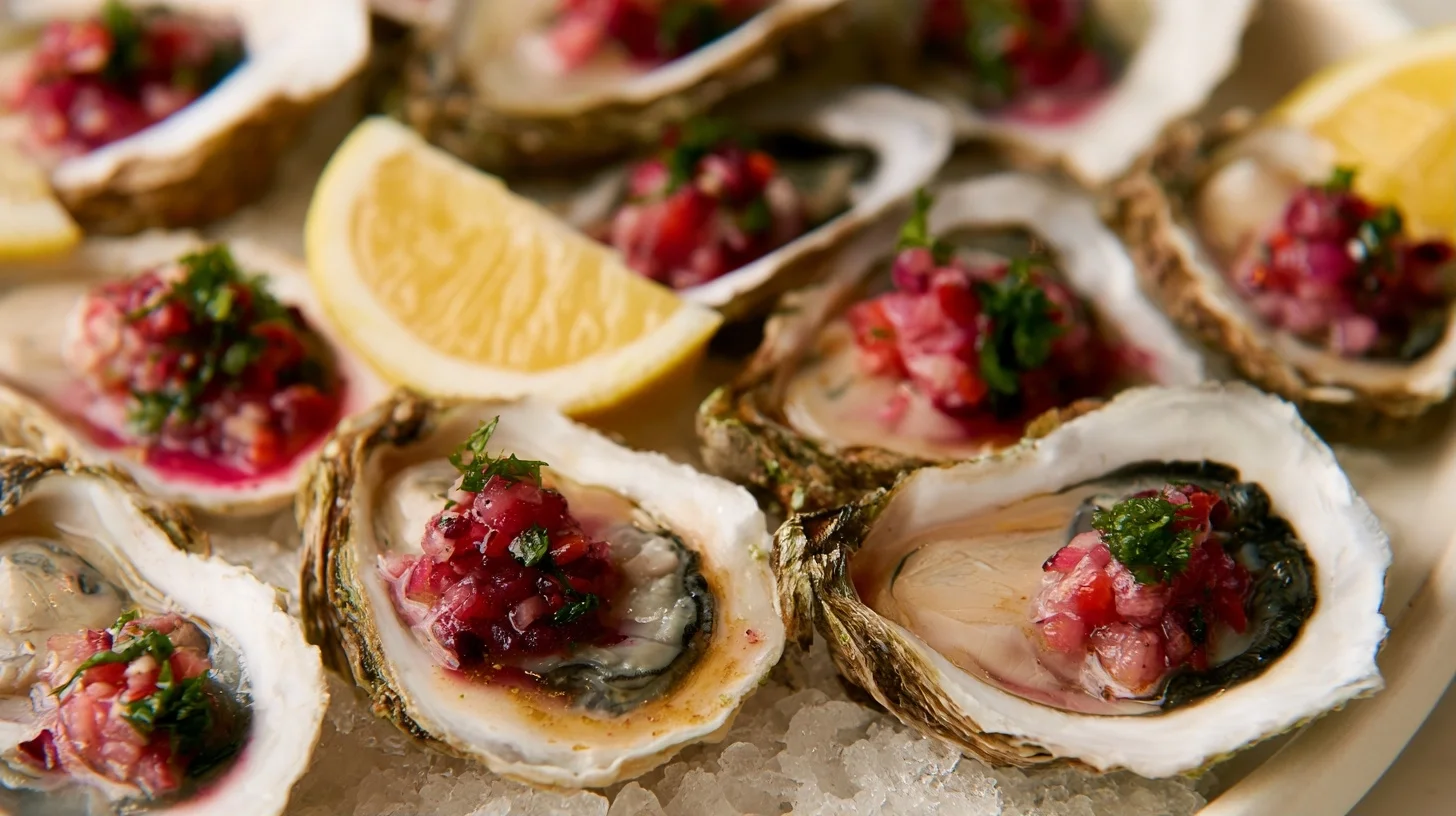
Table of contents
- Why You Will Love This Mignonette Recipe
- Essential Tools for Making Mignonette
- How to Make Perfect Mignonette Sauce
- Expert Tips for the Best Mignonette Every Time
- Common Mignonette Mistakes and How to Fix Them
- Delicious Mignonette Recipe Variations to Try
- Nutritional Benefits of Mignonette Recipe
- Serving Mignonette Recipe with Oysters and Beyond
- How to Store Mignonette Properly
- Frequently Asked Questions about Mignonette Recipe
Why You Will Love This Mignonette Recipe
- Ready in under five minutes with no cooking required, making it perfect for last-minute entertaining.
- Uses only four simple ingredients that you can find at any grocery store.
- The bright acidity and subtle shallot sweetness enhance oysters without masking their natural ocean flavor.
- Can be made several hours ahead and actually improves as the flavors meld together in the refrigerator.
If you want to learn more about this sauce, read this article about historical significance of Mignonette Sauce with Oysters.
Essential Tools for Making Mignonette
This sauce requires minimal equipment, but having the right tools makes preparation faster and ensures properly minced shallots that blend smoothly into the vinegar base.
- Sharp chef’s knife: A sharp blade is essential for mincing shallots into fine, uniform pieces that won’t overpower each bite of oyster.
- Small mixing bowl: A glass or ceramic bowl works best for combining the vinegar and shallots without any metallic taste transfer.
- Cutting board: A stable cutting surface ensures safe and precise shallot mincing.
- Measuring cups and spoons: Accurate measurements help maintain the proper balance between vinegar, shallots, and pepper.
- Small serving bowl or ramekin: A shallow dish makes it easy for guests to spoon mignonette onto their oysters.
How to Make Perfect Mignonette Sauce
Classic Mignonette Sauce
4
servings30
minutes40
minutes300
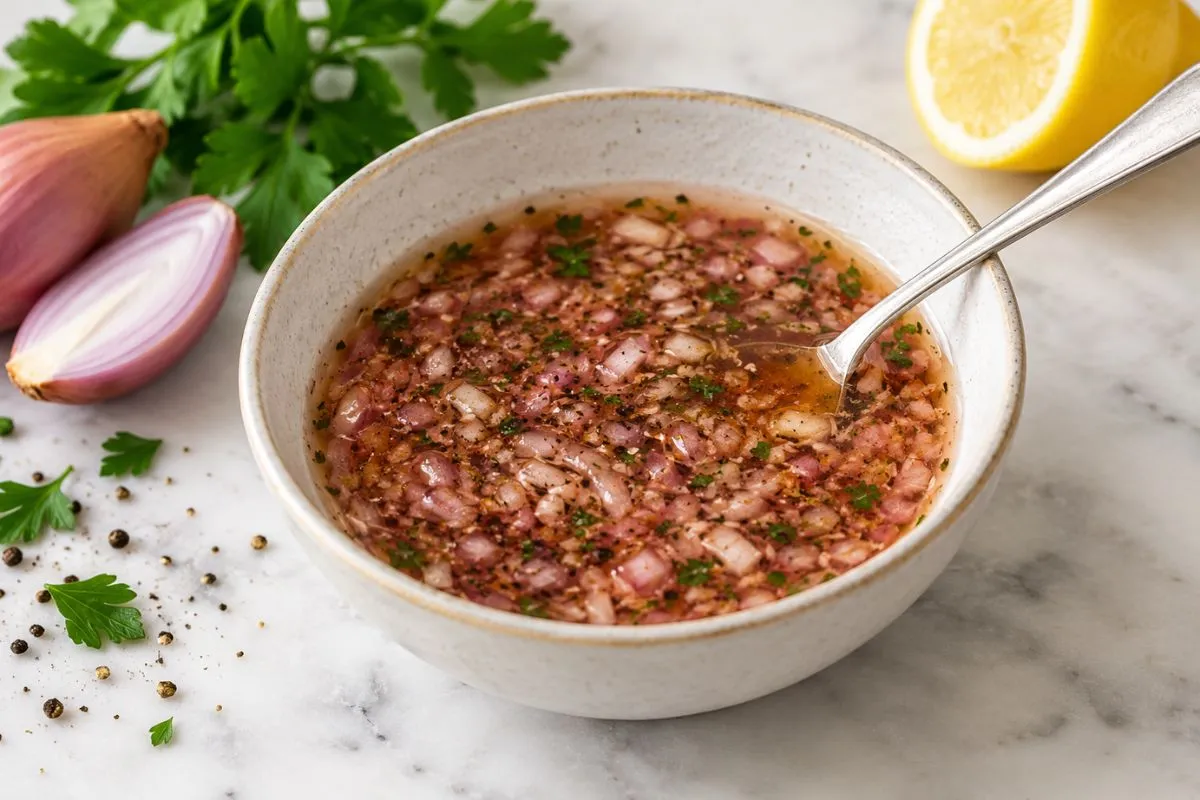
kcalThis traditional French mignonette sauce combines red wine vinegar, finely minced shallots, cracked black pepper, and salt to create the perfect tangy accompaniment for fresh oysters. The key is mincing the shallots finely and letting them macerate in the vinegar for at least 15 minutes to mellow their sharp bite.
Keep the screen of your device on
Ingredients
0.5 cup red wine vinegar
2 tablespoons shallot
0.5 teaspoon black peppercorns
1 pinch sea salt
1 tablespoon fresh lemon juice
1 teaspoon fresh parsley
0.25 teaspoon white pepper
1 teaspoon champagne vinegar
Directions
- Mince the shallot into very fine pieces, no larger than 1/8 inch, using a sharp chef’s knife and a rocking motion to ensure uniform size throughout.
- Combine the vinegar and shallots in a small glass or ceramic bowl, stirring gently to distribute the shallots evenly throughout the liquid.
- Crack the black peppercorns using a pepper mill set to coarse grind or by crushing whole peppercorns with the bottom of a heavy pan, then add them to the vinegar mixture.
- Add a small pinch of salt to the mixture, remembering that oysters are naturally briny and need only minimal additional seasoning.
- Stir all ingredients together until well combined, making sure the shallots are fully submerged in the vinegar.
- Let the sauce rest for at least 15 minutes at room temperature or up to 4 hours in the refrigerator to allow the shallots to macerate and the flavors to meld together.
Notes
- Mincing the shallots finely enough that they measure no larger than 1/8 inch prevents large chunks from overwhelming the delicate oyster and ensures even distribution throughout the sauce.
- The sauce can be made up to one week ahead and stored in an airtight container in the refrigerator, though the flavor is best within the first three days.
- If the vinegar tastes too sharp even after resting, add a teaspoon of cold water to dilute the acidity slightly without losing the essential tangy character.
Nutrition Facts
- Serving Size: 1 g
- Total number of serves: 8
- Calories: 5kcal
- Fat: 0g
- Carbohydrates: 1g
- Fiber: 0g
- Protein: 0g
Did you make this recipe?
Tag @therecipemasterblog on Instagram and hashtag it with #therecipemaster
Like this recipe?
Follow @therecipemasterblog on Pinterest
Follow us on Facebook!
Follow The Recipe Master on Facebook
Expert Tips for the Best Mignonette Every Time
The difference between good mignonette and exceptional mignonette comes down to a few key techniques that ensure balanced flavor and proper texture.
Mince the Shallots Finely and Uniformly
The shallots should be minced into pieces no larger than 1/8 inch so they distribute evenly throughout the sauce and don’t create large chunks that overwhelm the delicate oyster. Use a rocking motion with your chef’s knife, keeping the tip on the cutting board and moving the blade up and down through the shallot repeatedly until you achieve a fine, even mince. Larger pieces will create an unpleasant texture contrast and can taste too sharp against the oyster’s subtle brininess.
Use Quality Red Wine Vinegar
Since vinegar is the dominant ingredient in mignonette, its quality directly affects the final taste. Choose a red wine vinegar with a clean, bright acidity rather than one that tastes harsh or overly sharp. The vinegar should have a subtle fruity undertone that complements rather than competes with the oysters. Avoid using cheap distilled vinegar or balsamic vinegar, as these will create an unbalanced flavor profile.
Let the Flavors Marry Before Serving
Allowing the minced shallots to sit in the vinegar for at least 15 minutes before serving gives the shallots time to soften slightly and release their aromatic compounds into the liquid. This creates a more cohesive sauce where the flavors blend together rather than tasting like separate components. For even better results, make the mignonette up to four hours ahead and refrigerate it, which mellows the sharpness of the raw shallots and develops a rounder, more balanced taste.
Crack Your Own Black Pepper
Freshly cracked black pepper provides a more vibrant, aromatic heat than pre-ground pepper, which can taste stale and flat. Use a pepper mill set to a coarse grind or crush whole peppercorns with the bottom of a heavy pan to create irregular pieces that release their essential oils when they hit the acidic vinegar. The coarse texture also adds a pleasant visual element to the finished sauce.
Adjust the Ratio to Your Taste
While the classic ratio is roughly one part minced shallot to four parts vinegar, you can adjust this based on how much shallot flavor you prefer. If you want a more pronounced shallot presence, increase the amount slightly, but be careful not to add so much that it overpowers the oysters. Similarly, you can adjust the pepper level depending on whether you prefer a subtle hint of spice or a more assertive kick.
Common Mignonette Mistakes and How to Fix Them
Cutting Shallots Too Large
Large chunks of shallot create an unpleasant texture contrast and can taste too sharp against the delicate oyster. This happens when the shallot isn’t minced finely enough or when pieces are cut unevenly. To fix this, continue mincing until all pieces are uniformly small, about the size of a grain of rice. If you’ve already mixed the sauce, you can strain out the shallots, re-mince them properly, and return them to the vinegar.
Using the Wrong Type of Vinegar
Substituting white vinegar, balsamic vinegar, or apple cider vinegar changes the flavor profile dramatically and can create a sauce that tastes too harsh, too sweet, or simply wrong for oysters. Red wine vinegar has the specific acidity level and subtle fruity notes that complement shellfish without overwhelming it. If you absolutely must substitute, champagne vinegar is the closest alternative, though it will produce a slightly different but still acceptable result.
Serving the Sauce Immediately After Mixing
Raw shallots need time to macerate in the vinegar to soften their sharp bite and allow their flavors to blend with the other ingredients. Serving mignonette immediately after mixing results in a harsh, disjointed taste where the shallots taste too pungent and the vinegar too aggressive. Always let the sauce rest for at least 15 minutes at room temperature or up to four hours in the refrigerator before serving.
Adding Too Much Salt
Oysters are naturally briny, so mignonette needs only a small pinch of salt to enhance the other flavors without making the overall experience too salty. Adding too much salt creates an unpleasantly saline taste that masks the oyster’s natural sweetness. Start with just a pinch, taste the sauce on its own, and remember that it will taste even saltier once paired with the oyster itself.
Delicious Mignonette Recipe Variations to Try
While the classic red wine vinegar version is traditional, several variations offer different flavor profiles that pair beautifully with oysters.
Cucumber Mignonette Recipe
Add finely diced cucumber to the classic recipe for a refreshing variation with added texture and a cooling quality. Peel and seed the cucumber before dicing it into pieces the same size as the minced shallots. This version works particularly well during summer months and adds a subtle vegetal sweetness that complements briny East Coast oysters.
Citrus Mignonette Recipe
Add a tablespoon of fresh lemon or lime juice to the classic recipe for a brighter, more complex acidity. The citrus adds a fruity dimension that enhances the oyster’s natural sweetness while maintaining the traditional vinegar base. This variation pairs well with oysters that have a melon or cucumber finish.
Spicy Mignonette Recipe
Add a small amount of finely minced fresh jalapeño or serrano pepper to the classic recipe for a version with more pronounced heat. Start with just half a teaspoon of minced chile and adjust upward based on your heat tolerance. The capsaicin from the fresh chile creates a different type of heat than black pepper alone, adding complexity without overwhelming the oyster.
For a different taste, I would like you to try the Marinara Sauce Recipe.
Nutritional Benefits of Mignonette Recipe
Mignonette is an extremely low-calorie condiment that adds flavor without adding significant fat, sugar, or carbohydrates. Each tablespoon contains approximately 5 calories, making it an ideal choice for those watching their calorie intake. The sauce contains virtually no protein or fat, and the minimal carbohydrates come primarily from the shallots.
The vinegar base provides trace amounts of beneficial compounds including acetic acid, which may support digestive health. Shallots contribute small amounts of vitamins C and B6, along with minerals like potassium and manganese. Black pepper contains piperine, a compound that may enhance nutrient absorption and provide antioxidant benefits.
Because mignonette is used sparingly, typically just a small spoonful per oyster—the nutritional impact is minimal, making it suitable for virtually any dietary approach including low-carb, keto, paleo, and Whole30 eating patterns.
Serving Mignonette Recipe with Oysters and Beyond
The traditional serving method is to place a small bowl of mignonette on an oyster platter alongside freshly shucked oysters on the half shell, allowing guests to spoon a small amount directly onto each oyster just before eating. Use approximately one teaspoon of sauce per oyster to enhance rather than drown the shellfish flavor.
Beyond oysters, mignonette works beautifully as a dressing for other raw shellfish including clams and scallops. It also makes an excellent vinaigrette base for delicate seafood salads or can be drizzled over grilled fish to add brightness. Some chefs use mignonette as a finishing sauce for seared scallops or as a marinade component for ceviche.
For an elegant presentation, serve mignonette in small individual ramekins at each place setting, or use a small spoon to place a precise amount on each oyster before passing the platter. Keep the sauce chilled until serving time to maintain its refreshing quality.
How to Store Mignonette Properly
Store mignonette in an airtight glass or plastic container in the refrigerator for up to one week. The high acidity of the vinegar acts as a natural preservative, keeping the sauce fresh and preventing bacterial growth. Glass containers are preferable because they won’t absorb odors or flavors from the vinegar.
The flavor actually improves over the first 24 hours as the shallots continue to macerate and mellow in the vinegar. After three to four days, the shallots may begin to lose their texture and become slightly mushy, though the sauce will still be safe to eat and taste good. If you notice any off odors or mold growth, discard the sauce immediately.
Mignonette does not freeze well because the texture of the shallots breaks down completely upon thawing, creating an unpleasant mushy consistency. For best results, make only the amount you’ll use within a week.
Frequently Asked Questions about Mignonette Recipe
Yes, you can make mignonette up to one week ahead and store it in the refrigerator. The flavor actually improves over the first 24 hours as the shallots macerate in the vinegar, creating a more balanced and mellow taste.
While red wine vinegar is traditional and provides the best flavor, champagne vinegar is an acceptable substitute that creates a lighter, more delicate sauce. White wine vinegar can work in a pinch but will produce a sharper, less complex flavor profile.
Use approximately one teaspoon of mignonette per oyster to enhance the natural flavor without overwhelming it. The sauce should complement the oyster’s brininess rather than mask it completely.
Mignonette works beautifully with other raw shellfish like clams and scallops, as a vinaigrette for seafood salads, or as a finishing sauce for grilled fish. Some chefs also use it as a component in ceviche marinades.








Leave a Reply