

A great marinara sauce is one of those kitchen essentials that transforms everything from pasta to chicken parm into something deeply satisfying. This recipe delivers a bright, garlicky, herbaceous sauce with just the right balance of sweetness and acidity—no jar can compete. What makes this version stand out is the technique of blooming the garlic gently in olive oil before adding the tomatoes, which builds a sweet, mellow base instead of the harsh sharpness you get when garlic burns.
The sauce simmers just long enough to concentrate the flavors without losing that fresh tomato brightness. You’ll end up with a silky, spoonable consistency that clings beautifully to pasta, spreads easily on pizza dough, or works as a dipping sauce for crusty bread. It takes about 30 minutes from start to finish, and most of that time is hands-off simmering.
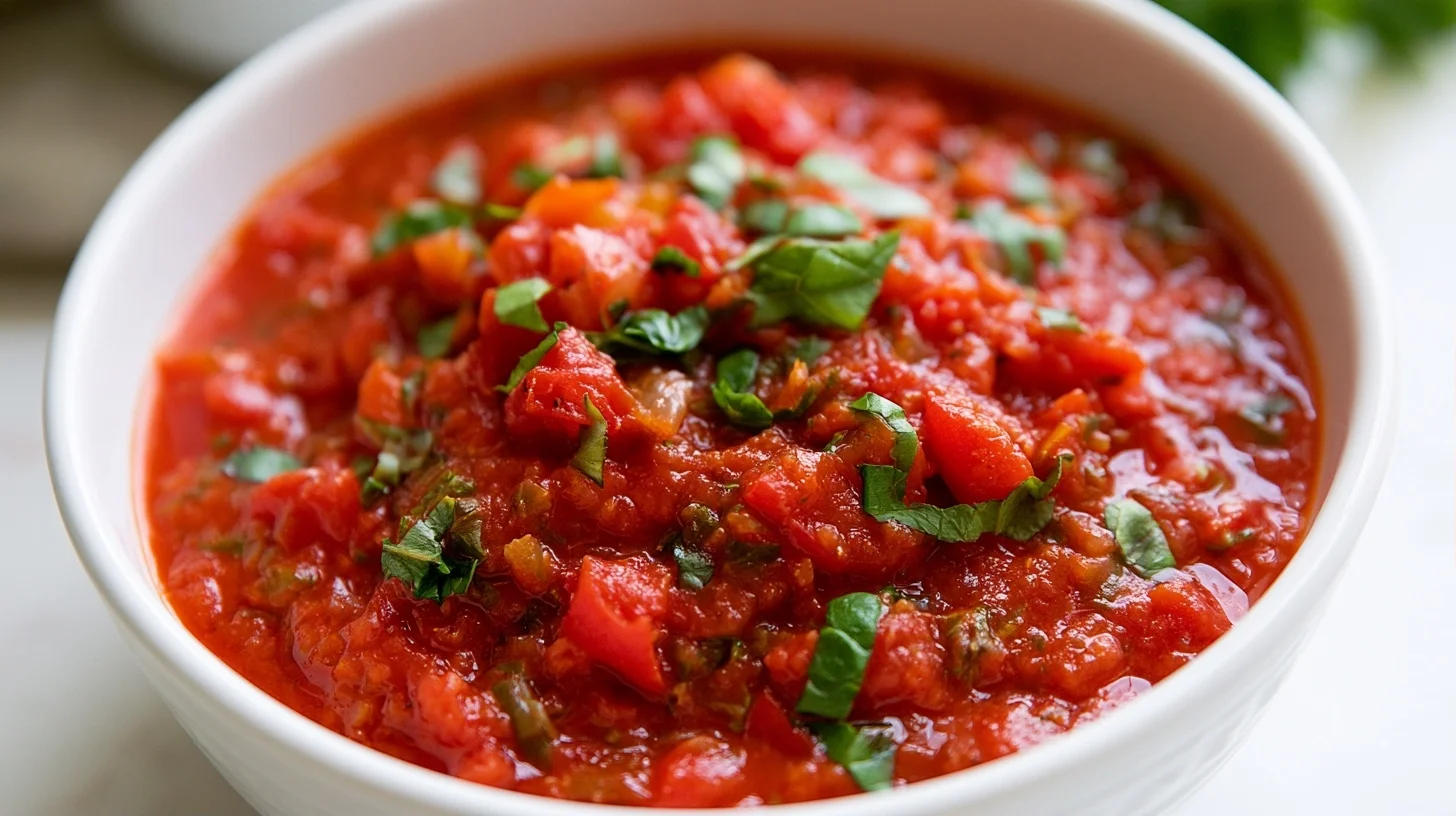
Table of contents
- Why You Will Love This Marinara Sauce
- What You Need to Make Perfect Marinara Sauce
- How to Make Restaurant-Quality Marinara at Home
- Essential Tips for the Best Marinara Sauce
- Common Mistakes That Ruin Marinara Sauce
- How to Customize Your Marinara Sauce
- Nutrition and Health Benefits of Marinara Sauce
- What to Serve with Marinara Sauce
- How to Store and Reheat Marinara Sauce
- Frequently Asked Questions
Why You Will Love This Marinara Sauce
- The garlic blooms gently in olive oil, creating a sweet, mellow base instead of bitterness.
- It uses canned San Marzano tomatoes, which deliver consistent sweetness and low acidity year-round.
- The sauce reaches the perfect spoon-coating consistency in just 20 minutes of simmering.
- Fresh basil added at the end preserves its bright, aromatic flavor instead of turning dull and bitter.
What You Need to Make Perfect Marinara Sauce
This recipe requires minimal equipment, but the right tools make the process smoother and help you control texture and consistency more precisely.
- Large saucepan or deep skillet: A 3- to 4-quart pan gives the sauce room to simmer without splattering and allows for better evaporation control.
- Wooden spoon: Prevents scratching and allows you to scrape up any caramelized bits from the bottom without damaging the pan.
- Can opener: Essential for opening the canned tomatoes cleanly without leaving sharp edges.
- Potato masher or fork: Useful for breaking down whole tomatoes to your preferred chunkiness without over-processing.
- Garlic press or sharp knife: A press creates finer garlic pieces that disperse more evenly, while mincing by hand gives you more control over texture.
How to Make Restaurant-Quality Marinara at Home
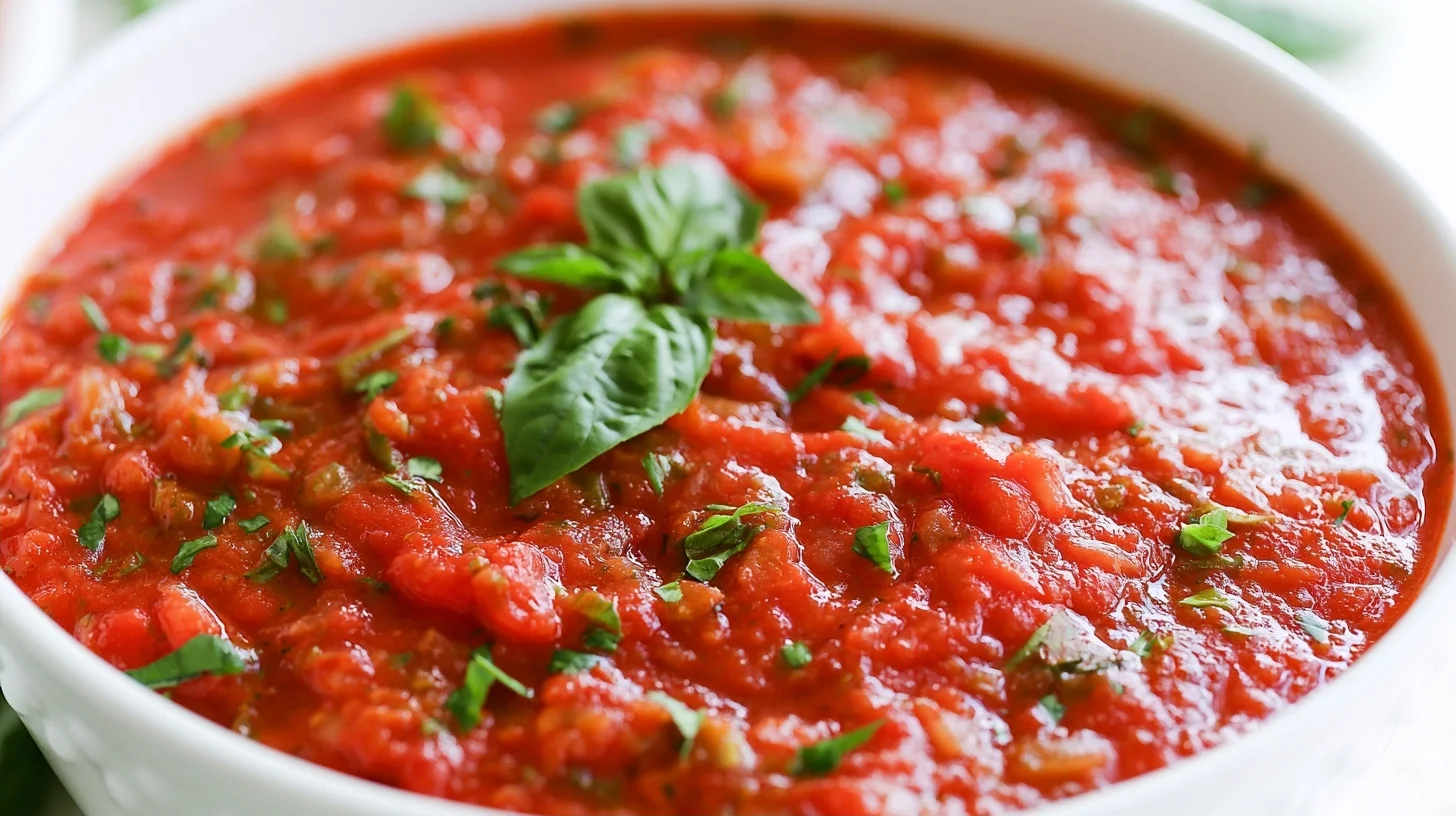
Classic Marinara Sauce
6
servings5
minutes25
minutes70
kcalThis classic marinara sauce uses San Marzano tomatoes, gently bloomed garlic, and fresh basil to create a bright, balanced sauce with deep flavor. The key technique is starting the garlic in cold olive oil and heating it gradually to develop sweetness instead of bitterness. It’s ready in 30 minutes and works beautifully with pasta, pizza, or as a base for countless Italian dishes.
Keep the screen of your device on
Ingredients
3 tablespoons extra virgin olive oil
4 cloves garlic
28 ounces whole peeled San Marzano tomatoes
1 teaspoon kosher salt
0.25 teaspoon black pepper
0.25 teaspoon sugar
0.25 teaspoon red pepper flakes
6 leaves fresh basil
1 tablespoon butter
Directions
- Add the garlic and olive oil to a large saucepan over medium-low heat. Let the garlic warm gradually in the oil, stirring occasionally, until it becomes fragrant and just begins to turn golden at the edges, about 2 to 3 minutes. This gentle blooming process develops the garlic’s natural sweetness and prevents bitterness.
- Pour in the whole tomatoes with their juices, then use a wooden spoon or potato masher to break them into smaller pieces. You can leave them chunky or mash them more thoroughly depending on your texture preference.
- Add the salt, black pepper, and sugar if using, then stir to combine. Bring the sauce to a gentle simmer, then reduce the heat to low and let it cook uncovered for 20 minutes, stirring occasionally. The sauce should bubble gently and thicken gradually as it reduces.
- Stir in the fresh basil during the last 2 to 3 minutes of cooking to preserve its bright, aromatic flavor. If you’re adding butter for extra richness, stir it in now as well.
- Taste the sauce and adjust the seasoning with additional salt, pepper, or a pinch more sugar if needed. The sauce should taste balanced, with no harsh acidity or bitterness. Use immediately, or let it cool before storing.
Notes
- Blooming garlic in cold olive oil and heating it gradually prevents bitterness and develops a sweet, mellow base that enhances the entire sauce.
- If the sauce tastes too acidic after simmering, add a small pinch of sugar and stir it in. This balances the acidity without making the sauce taste sweet.
- Store the sauce in an airtight container in the refrigerator for up to 5 days, or freeze it for up to 3 months. The flavor often improves after a day or two as the garlic and herbs continue to infuse the tomatoes.
Nutrition Facts
- Serving Size: 1 g
- Total number of serves: 6
- Calories: 70kcal
- Fat: 4g
- Carbohydrates: 8g
- Fiber: 2g
- Protein: 2g
Did you make this recipe?
Tag @therecipemasterblog on Instagram and hashtag it with #therecipemaster
Like this recipe?
Follow @therecipemasterblog on Pinterest
Follow us on Facebook!
Follow The Recipe Master on Facebook
Essential Tips for the Best Marinara Sauce
The key to exceptional marinara lies in controlling heat, timing, and ingredient quality. These techniques ensure your sauce develops deep flavor without bitterness or excessive acidity.
Bloom the Garlic Gently
Start the garlic in cold olive oil over medium-low heat and let it warm gradually. This gentle approach coaxes out the garlic’s natural sweetness and prevents the harsh, acrid flavor that develops when garlic hits a hot pan and burns. You’ll know it’s ready when the garlic turns fragrant and just begins to turn golden at the edges, which takes about 2 to 3 minutes. If you see any browning happen quickly, pull the pan off the heat immediately.
Use Quality Canned Tomatoes
San Marzano tomatoes, whether DOP-certified or domestic versions, deliver the best balance of sweetness and acidity for marinara. These plum tomatoes have fewer seeds, thicker flesh, and lower water content than standard canned tomatoes, which means your sauce thickens faster and tastes richer. Whole peeled tomatoes work better than crushed because you control the final texture, and they’re often packed with fewer additives. You can learn more about the history and tradition of marinara sauce and why ingredient quality matters so much in Italian cooking.
Simmer, Don’t Boil
Once the tomatoes go into the pan, keep the heat at a gentle simmer rather than a rolling boil. A simmer allows the flavors to concentrate and meld without breaking down the tomatoes into a watery puree or causing excessive splattering. You should see small bubbles breaking the surface steadily, but not aggressively. This controlled heat also prevents the sauce from reducing too quickly, which can lead to a bitter, overly concentrated flavor.
Add Fresh Basil at the End
Fresh basil loses its bright, aromatic flavor when cooked for extended periods, turning dull and slightly bitter. Stir torn basil leaves into the sauce during the last 2 to 3 minutes of cooking, or even after you turn off the heat. This preserves the herb’s vibrant flavor and keeps its color bright green instead of turning muddy brown. Dried basil added earlier in the cooking process provides a different, earthier note, so you can use both if you want layered herbal complexity.
Adjust Acidity with a Pinch of Sugar
Tomatoes vary in natural sweetness depending on the brand, harvest, and processing method. If your sauce tastes too sharp or acidic after simmering, add a small pinch of sugar—about a quarter to half a teaspoon—and stir it in. This doesn’t make the sauce taste sweet; it balances the acidity and rounds out the overall flavor. Taste again after a minute or two to see if the sharpness has mellowed.
Common Mistakes That Ruin Marinara Sauce
Burning the Garlic
Garlic burns quickly, especially when added to a hot pan, and burnt garlic creates a bitter, acrid flavor that permeates the entire sauce. This happens because garlic contains sugars that caramelize and then burn within seconds at high heat. To prevent this, add the garlic to cold or barely warm oil and heat it gradually. If you do accidentally burn the garlic, discard the oil and garlic completely and start fresh—there’s no way to mask that bitterness once it’s there.
Oversalting Early
Marinara sauce reduces as it simmers, which concentrates all the flavors, including salt. If you add too much salt at the beginning, the sauce becomes increasingly salty as it cooks down, and there’s no reliable way to fix it. Instead, add a small amount of salt when the tomatoes go in, then taste and adjust the seasoning during the last few minutes of cooking. This approach gives you control over the final flavor without risking an overly salty sauce.
Skipping the Simmer
Some cooks try to rush marinara by cooking it at high heat for just a few minutes, but this produces a thin, raw-tasting sauce. The simmering process allows the tomatoes to break down, the flavors to meld, and the sauce to thicken naturally. A proper marinara needs at least 20 minutes of gentle simmering to develop its characteristic smooth, cohesive flavor. If you’re short on time, it’s better to use a quality store-bought sauce than to rush a homemade version that won’t taste right.
Using Low-Quality Olive Oil
Olive oil forms the flavor foundation of marinara, so using a stale, rancid, or overly processed oil results in a flat, sometimes metallic-tasting sauce. Extra virgin olive oil with a fresh, fruity aroma adds depth and richness that cheaper oils can’t replicate. You don’t need an expensive finishing oil, but avoid the bottom-shelf options that have been sitting on the shelf for months. A mid-range extra virgin olive oil with a harvest date on the bottle is your best bet.
How to Customize Your Marinara Sauce
Add Red Pepper Flakes for Heat
Stir in a quarter to half a teaspoon of red pepper flakes along with the garlic to infuse the oil with gentle heat. This creates a subtle warmth that builds as the sauce simmers, rather than an aggressive spiciness. If you prefer more heat, add the flakes incrementally and taste as you go.
Make It Creamy
Stir in a quarter cup of heavy cream or a tablespoon of butter during the last few minutes of cooking to create a richer, silkier sauce. The fat mellows the acidity and gives the sauce a luxurious mouthfeel. This variation works especially well for baked pasta dishes or as a base for vodka sauce. If you enjoy bold, flavorful sauces, you might also like this vibrant red chimichurri sauce, which brings a tangy, herbaceous twist to grilled meats and vegetables.
Add Fresh Oregano or Thyme
Fresh oregano or thyme added during the last 5 minutes of cooking introduces an earthy, aromatic layer that complements the tomatoes without overpowering them. Use about a teaspoon of fresh leaves, or half that amount if using dried herbs earlier in the cooking process.
Make It Chunkier
Leave the tomatoes in larger pieces by breaking them up less aggressively with your spoon or masher. This creates a rustic, textured sauce that works beautifully with rigatoni, penne, or other pasta shapes that can trap the chunky bits.
Nutrition and Health Benefits of Marinara Sauce
Marinara sauce is naturally low in calories and fat while delivering a concentrated dose of lycopene, a powerful antioxidant found in cooked tomatoes. A half-cup serving typically contains around 60 to 80 calories, 2 grams of fat, 10 grams of carbohydrates, and 2 grams of fiber. The olive oil provides heart-healthy monounsaturated fats, and the garlic contributes compounds that support immune function and cardiovascular health.
Because this sauce uses whole ingredients and no added sugar beyond a small pinch for balance, it’s a much healthier option than most store-bought versions, which often contain high amounts of added sugar, sodium, and preservatives. You can control the sodium level by adjusting the salt to your preference, and the sauce is naturally vegetarian, vegan, and gluten-free.
What to Serve with Marinara Sauce
Marinara is incredibly versatile and works as a base for countless dishes. Toss it with spaghetti, penne, or rigatoni for a classic pasta dinner, or use it as the sauce layer in lasagna, baked ziti, or eggplant parmesan. It’s also excellent as a dipping sauce for mozzarella sticks, garlic bread, or fried calamari.
You can spoon it over chicken cutlets, meatballs, or sausages, then finish the dish under the broiler with a layer of melted mozzarella. It also works as a pizza sauce, either spread directly on the dough or simmered down a bit further to reduce moisture. For a lighter option, serve it over sautéed zucchini noodles, roasted vegetables, or grilled fish.
How to Store and Reheat Marinara Sauce
Let the sauce cool to room temperature, then transfer it to an airtight container and refrigerate for up to 5 days. The flavors often deepen and improve after a day or two in the fridge as the garlic and herbs continue to infuse the tomatoes.
For longer storage, freeze the sauce in portion-sized containers or freezer bags for up to 3 months. Flatten the bags before freezing so they stack easily and thaw faster. When you’re ready to use it, thaw the sauce overnight in the refrigerator, then reheat it gently on the stovetop over medium-low heat, stirring occasionally. You can also reheat individual portions in the microwave in 30-second intervals, stirring between each interval to ensure even heating.
If the sauce thickens too much during storage, thin it with a splash of water, chicken broth, or pasta cooking water when reheating. Avoid reheating the sauce multiple times, as this can dull the flavor and increase the risk of spoilage.
Frequently Asked Questions
Yes, but the results will vary depending on the season and tomato variety. Use about 2 pounds of ripe plum tomatoes, blanch them to remove the skins, then crush them by hand. Fresh tomatoes contain more water, so you’ll need to simmer the sauce longer to reach the right consistency.
Bitterness usually comes from burnt garlic or overcooking the tomatoes at too high a heat. Make sure the garlic is added to cold or warm oil and heated gently. Also, keep the sauce at a gentle simmer rather than a rolling boil, and avoid cooking it for longer than 30 minutes.
Yes, you can skip the garlic entirely or replace it with a small amount of shallot or onion for a milder, sweeter base. The sauce will taste less pungent but still flavorful, especially if you use quality tomatoes and fresh basil.
Continue simmering the sauce uncovered over medium-low heat until it reduces to your desired consistency. Stirring occasionally prevents sticking. If you need to thicken it faster, mash the tomatoes more thoroughly or add a tablespoon of tomato paste.






Leave a Reply