

This pumpkin pie recipe delivers a smooth, spiced filling in a flaky crust with no cracks and no soggy bottom. The filling sets at 350°F in 50 to 60 minutes, and the pie slices cleanly after chilling for at least 3 hours.
The recipe takes 90 minutes total and serves 8. Baking the crust before adding the filling keeps it crisp. You can make the pie a full day ahead, and it holds its shape in the refrigerator for up to 4 days.
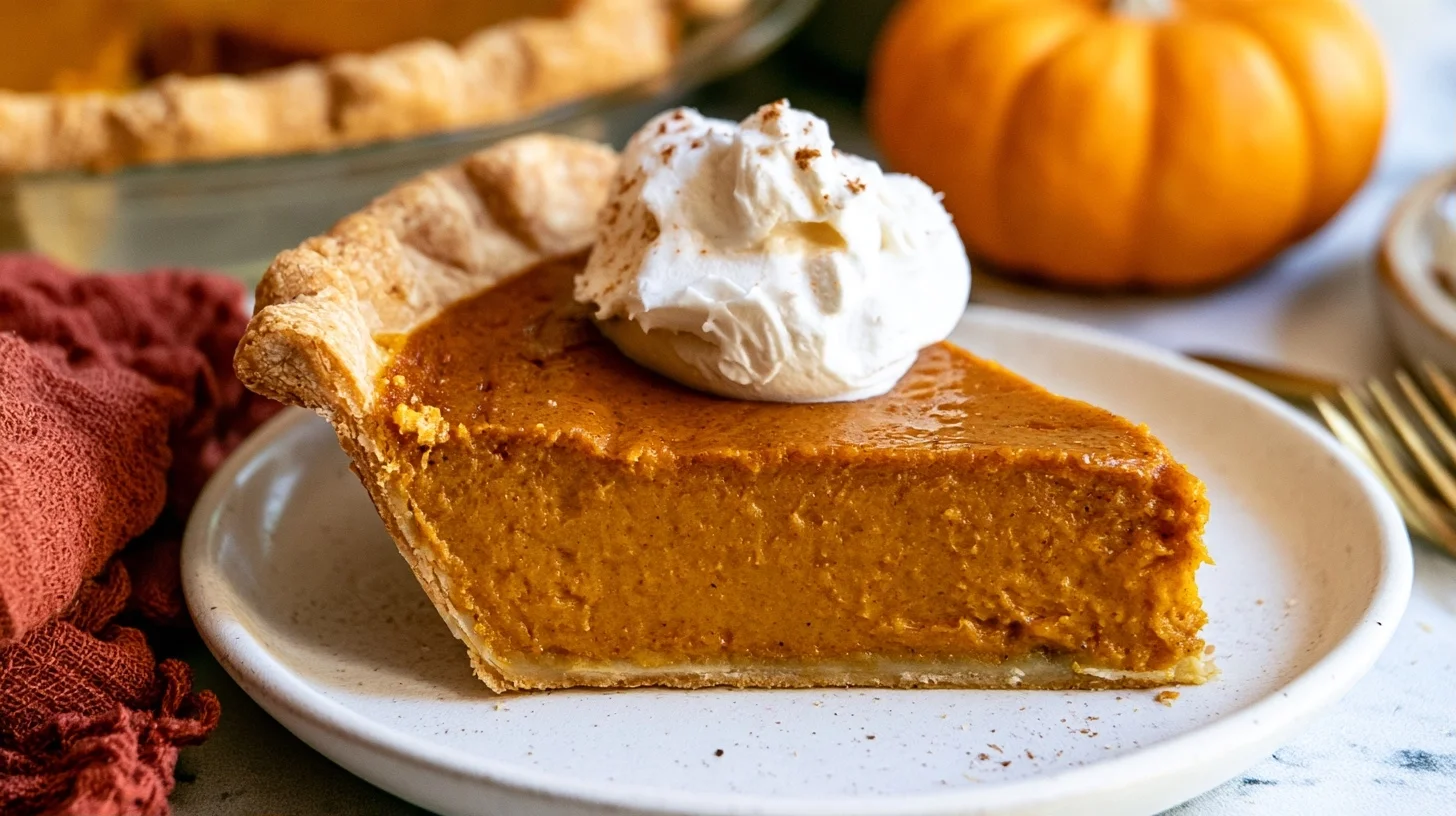
Table of contents
Why This Pumpkin Pie Recipe Works
- Blind baking the crust for 15 minutes before adding the pumpkin filling prevents a soggy bottom.
- Heavy cream instead of evaporated milk gives the pie a richer texture and helps the filling set without curdling.
- Baking at 350°F rather than starting high and lowering the temperature produces an even bake with no cracks on the surface.
Pumpkin Pie Recipe
Pumpkin Pie Recipe
8
servings20
minutes1
hour10
minutes310
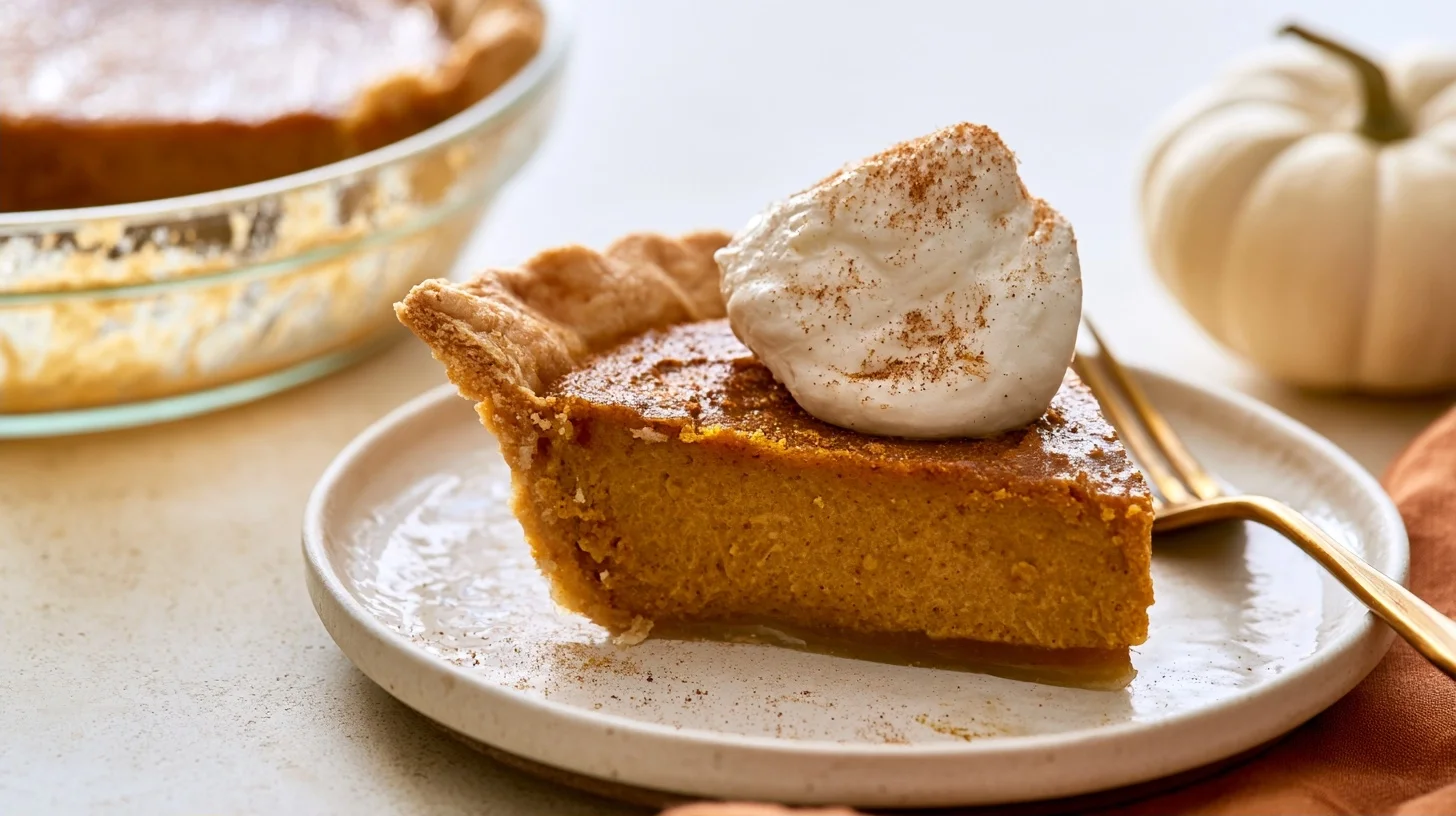
kcalThis pumpkin pie has a smooth, spiced custard filling in a flaky crust with no cracks. The recipe takes 90 minutes total, serves 8, and requires blind baking the crust before adding the filling.
Keep the screen of your device on
Ingredients
1 9-inch pie crust
15 oz pumpkin puree
3/4 cup packed brown sugar
2 large eggs
1 cup heavy cream
2 teaspoons pumpkin pie spice
1 teaspoon vanilla extract
1/2 teaspoon salt
Directions
- Preheat the oven to 375°F. Press the pie crust into a 9 inch pie pan and trim the edges. Line the crust with parchment paper and fill with pie weights or dried beans.
- Blind bake the crust for 15 minutes at 375°F. The edges should look set but not browned. Remove the weights and parchment, then reduce the oven temperature to 350°F.
- Beat the eggs in a large bowl until smooth. Add the pumpkin puree, brown sugar, heavy cream, pumpkin pie spice, vanilla, and salt. Whisk until no streaks remain and the mixture is completely smooth.
- Pour the filling into the crust. Tap the pan gently on the counter to release air bubbles. Place the pie on a baking sheet to catch drips.
- Bake at 350°F for 50 to 60 minutes. The center should jiggle slightly when you shake the pan, like set gelatin. The edges should look dry and puffed. An instant read thermometer inserted 1 inch from the edge should read 175°F.
- Cool on a wire rack for 2 hours at room temperature. The filling will continue to set as it cools. Refrigerate for at least 3 hours before slicing. Serve the pumpkin pie cold or at room temperature with whipped cream.
Notes
- Blind baking the crust for 15 minutes at 375°F before adding the pumpkin filling prevents a soggy bottom and keeps the crust crisp.
- If the center is watery after baking, return the pie to a 350°F oven for 10 more minutes. The filling was underbaked or contained too much liquid.
- The pie keeps for 3 to 4 days in the refrigerator, covered loosely with plastic wrap. It freezes well for up to 2 months when wrapped in plastic wrap and foil.
Nutrition Facts
- Serving Size: 1 g
- Total number of serves: 8
- Calories: 310kcal
- Fat: 16g
- Carbohydrates: 38g
- Net Carbs: 36g
- Fiber: 2g
- Protein: 5g
Did you make this recipe?
Tag @therecipemasterblog on Instagram and hashtag it with #therecipemaster
Like this recipe?
Follow @therecipemasterblog on Pinterest
Follow us on Facebook!
Follow The Recipe Master on Facebook
This recipe for pumpkin pie starts with a store-bought or homemade crust, then walks through the key ingredient swaps and the fixes for a watery center or cracked top.
Key Ingredients and Substitutions
Each ingredient in a pumpkin pie recipe affects texture, sweetness, and spice balance.
- Pumpkin puree: Use pure canned pumpkin, not pumpkin pie filling. The puree has no added sugar or spices. Homemade roasted pumpkin puree works but adds moisture, so drain it in a fine mesh strainer for 30 minutes before measuring.
- Heavy cream: Creates a custard that sets firm and slices cleanly. Evaporated milk is the traditional substitute and produces a slightly lighter texture. Whole milk makes the filling thinner and increases the risk of a watery center.
- Eggs: Bind the filling and provide structure. Two large eggs are enough for a 9 inch pie. Three eggs make the filling denser and more prone to cracking.
- Brown sugar: Adds molasses flavor that complements the spices. Granulated sugar works but tastes less complex. Reduce brown sugar by 2 tablespoons if the filling tastes too sweet after testing.
- Pumpkin pie spice: A blend of cinnamon, ginger, nutmeg, and cloves. You can mix your own with 1 1/2 teaspoons cinnamon, 3/4 teaspoon ginger, 1/4 teaspoon nutmeg, and 1/4 teaspoon cloves. See our pumpkin pie spice recipe for a larger batch to keep on hand.
How to Get Pumpkin Pie Right
This pumpkin pie recipe succeeds when you control oven temperature, crust prep, and doneness cues.
- Blind bake the crust: Press parchment into the shell, fill it with pie weights or dried beans, and bake at 375°F for 15 minutes. The edges should look set but not browned. This step keeps the bottom crisp once the wet filling goes in.
- Whisk the filling smooth: Beat the eggs first, then add the pumpkin, sugar, and spices. Whisk until no streaks remain. Lumps in the filling show up as grainy spots after baking.
- Check doneness at 50 minutes: The center should jiggle slightly when you shake the pan, like set gelatin. The edges should look dry and puffed. An instant read thermometer inserted 1 inch from the edge should read 175°F. The center will finish setting as the pie cools.
- Cool on a wire rack: Let the pie sit at room temperature for 2 hours, then refrigerate for at least 3 hours. Slicing a warm pie results in a runny filling that will not hold its shape.
- Protect the crust edges: If the rim browns too fast, cover it with a pie shield or a ring of foil at the 30 minute mark. The filling needs the full baking time even if the crust looks done.
What Went Wrong
Why Is the Center Watery?
The filling was underbaked or contained too much liquid. The center should jiggle slightly but not slosh when you shake the pan. If the pie is already baked, return it to a 350°F oven for 10 minutes and check again. Next time, measure the pumpkin puree after draining any liquid that has separated in the can.
Why Did the Top Crack?
The oven temperature was too high or the pie baked too long. Cracks form when the filling overheats and the proteins tighten. You cannot repair cracks, but you can cover them with whipped cream. For your next pumpkin pie recipe, use an oven thermometer to confirm 350°F and pull the pie when the center still jiggles.
Why Is the Crust Soggy?
The crust was not blind baked or the pie sat too long before serving. Moisture from the filling seeps into unbaked dough. Blind baking for 15 minutes creates a barrier. If the crust is already soggy, serve the pie with a spoon as a custard. Store leftovers in the refrigerator and eat within 2 days.
What to Serve With Pumpkin Pie
Serve pumpkin pie with unsweetened whipped cream to balance the sweetness. Vanilla ice cream works if you prefer a cold contrast. A dollop of creme fraiche adds tang. Coffee or spiced cider pairs well with the warm spices in the filling.
How to Store and Reheat Pumpkin Pie
Pumpkin pie keeps for 3 to 4 days in the refrigerator, covered loosely with plastic wrap or foil. Do not seal it tightly or condensation will make the crust soggy. The pie freezes well for up to 2 months. Wrap it in plastic wrap, then in foil, and thaw it overnight in the refrigerator before serving.
Serve the pie cold or at room temperature. Reheating is not necessary, but if you prefer it warm, place individual slices in a 300°F oven for 10 minutes. The filling will soften slightly. Do not microwave the pie or the crust will turn rubbery.
Pumpkin Pie FAQs
Yes. Roast a sugar pumpkin, puree the flesh, and drain it in a fine mesh strainer for 30 minutes. Fresh pumpkin has more moisture than canned, so draining is essential.
Yes. Blind baking the crust for 15 minutes at 375°F prevents a soggy bottom. Use pie weights or dried beans to keep the shell flat.
The center should jiggle slightly when you shake the pan, and the edges should look dry and puffed. An instant read thermometer inserted 1 inch from the edge should read 175°F.
Yes. Wrap the cooled pie in plastic wrap, then in foil, and freeze for up to 2 months. Thaw it overnight in the refrigerator before serving.






Leave a Reply