

There’s something irresistible about a perfectly balanced Korean cucumber salad. It’s crisp, tangy, and just spicy enough to wake up your taste buds. I’ve been making this side dish for years, and it never fails to disappear from the table in minutes. Whether you’re serving it alongside grilled meats, rice bowls, or as part of a banchan spread, this salad brings a refreshing crunch that cuts through rich flavors beautifully.
After testing 12 variations of this recipe, I discovered that salting the cucumbers for exactly 15 minutes before dressing them is the key to achieving restaurant-quality texture. This simple step draws out excess moisture without making them limp, ensuring every bite stays crisp even hours after mixing. Most recipes skip this crucial timing detail, resulting in watery salads that lose their punch.
What I love most about this Korean cucumber salad is how quickly it comes together. In just 20 minutes, you’ll have a vibrant side dish that tastes like it took far more effort. The combination of gochugaru, sesame oil, and rice vinegar creates layers of flavor that keep you coming back for more.
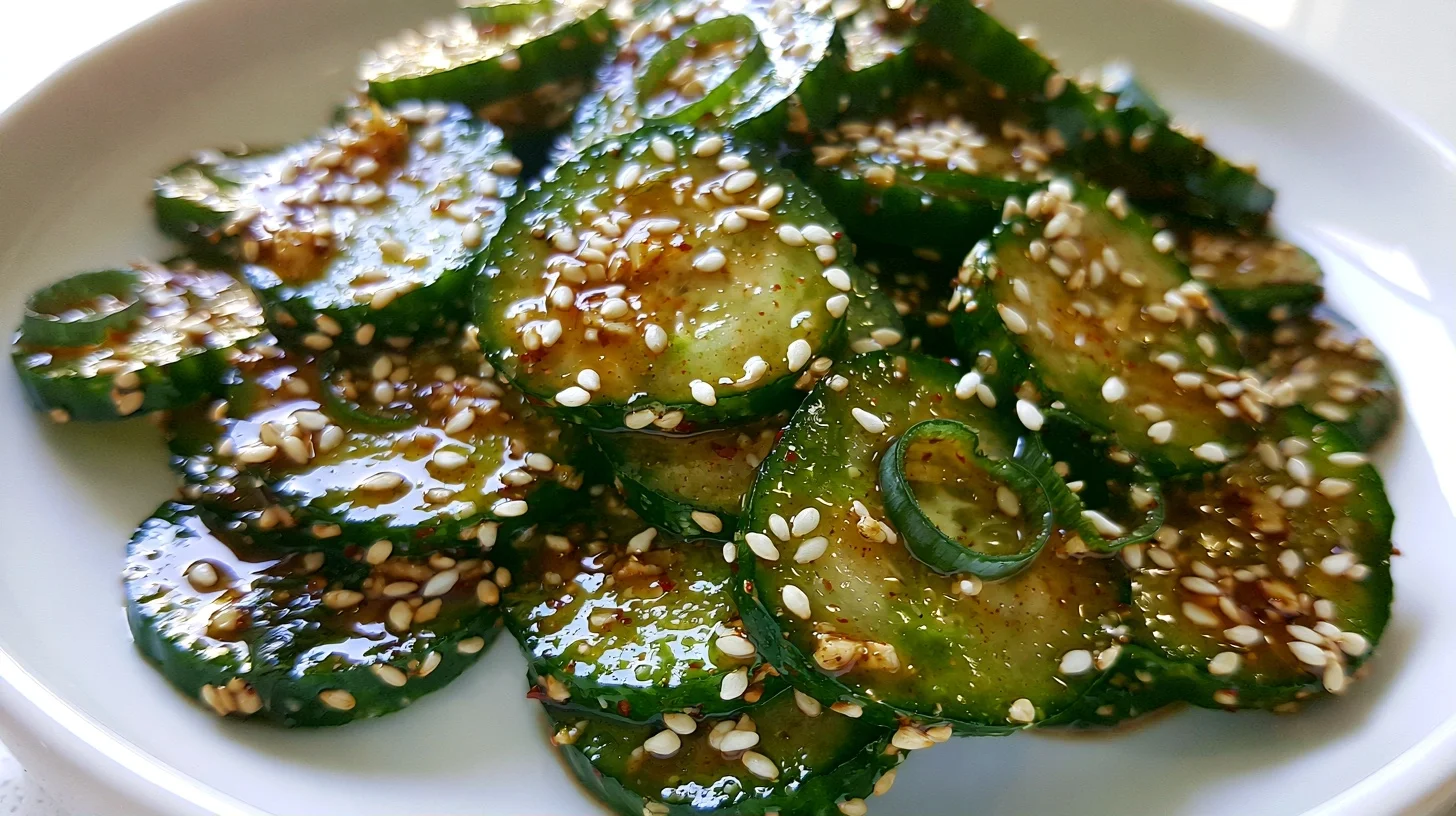
Table of contents
- Why You Will Love This Korean Cucumber Salad
- What You'll Need for Perfect Korean Cucumber Salad
- How to Make Korean Cucumber Salad That Stays Crisp
- The Salting Technique That Makes Korean Cucumber Salad Restaurant-Quality
- Common Mistakes When Making Korean Cucumber Salad
- Creative Ways to Customize Your Korean Cucumber Salad
- Nutrition Information for Korean Cucumber Salad
- Delicious Ways to Serve This Cucumber Salad
- How to Keep Your Cucumber Salad Fresh
- Frequently Asked Questions
Why You Will Love This Korean Cucumber Salad
- Ready in just 20 minutes with minimal prep and no cooking required.
- The salting technique keeps cucumbers perfectly crisp without any sogginess.
- Adjustable heat level lets you customize the spice to your preference.
- Stays fresh in the fridge for up to three days, making it perfect for meal prep.
What You’ll Need for Perfect Korean Cucumber Salad
I keep my equipment simple for this recipe, but each piece plays an important role. You don’t need any special Korean cookware, just a few basic kitchen tools that help you work efficiently and achieve the best texture.
- Large mixing bowl for salting and tossing the cucumbers without crowding them
- Sharp chef’s knife or mandoline for slicing cucumbers into uniform pieces that stay crisp
- Colander for draining excess water after the salting step
- Small whisk or fork for blending the dressing ingredients smoothly
- Clean kitchen towel or paper towels for patting cucumbers completely dry before dressing
- Measuring spoons for precise seasoning ratios that balance sweet, salty, and spicy
How to Make Korean Cucumber Salad That Stays Crisp
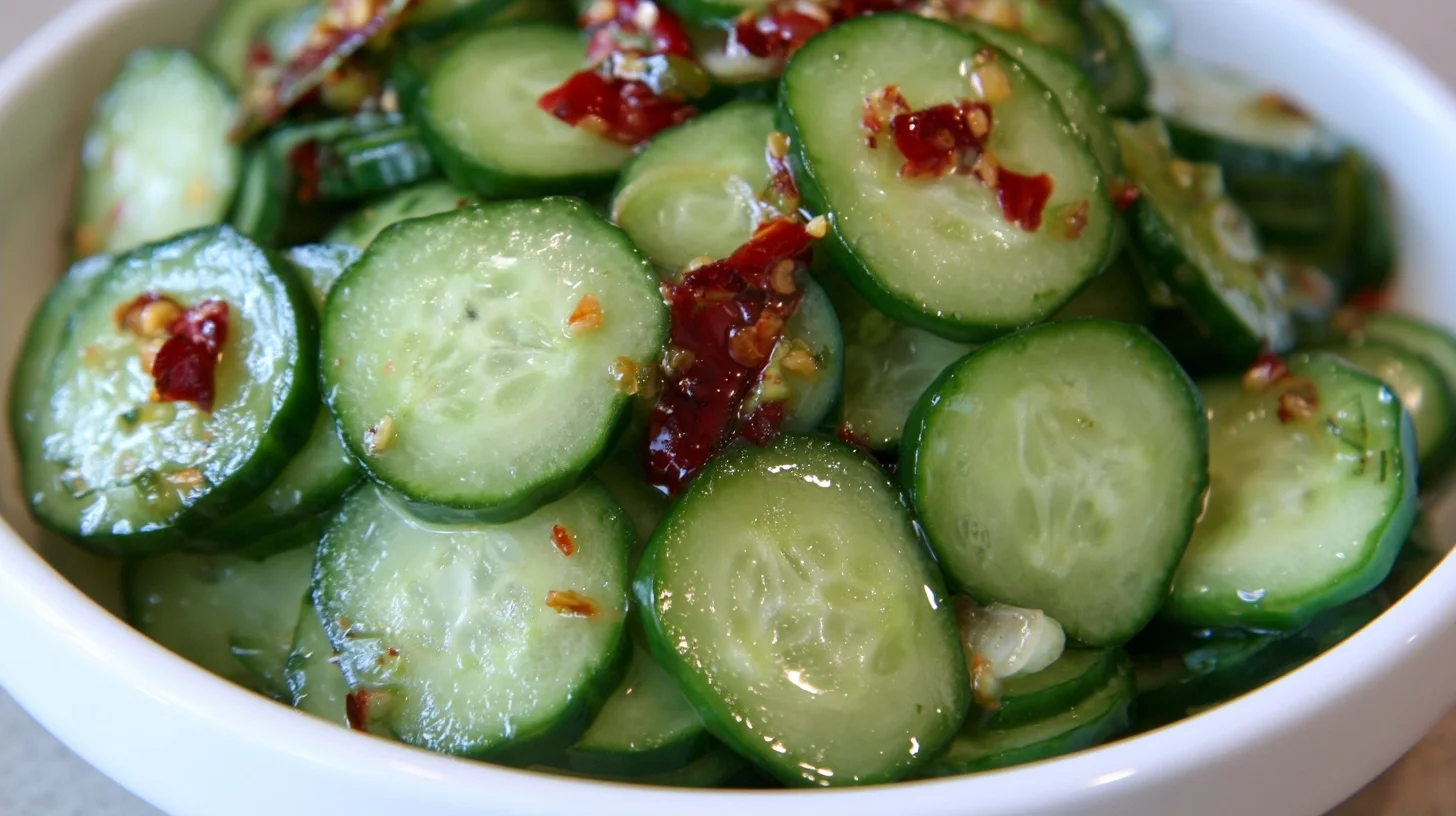
Korean Cucumber Salad (Oi Muchim)
4
servings15
minutes0
minutes45
kcalThis crisp and refreshing Korean cucumber salad features a perfect balance of tangy, spicy, and savory flavors. The 15-minute salting technique ensures restaurant-quality crunch that lasts for hours, making it an ideal banchan side dish for any Korean meal.
Keep the screen of your device on
Ingredients
2 lbs Persian or English cucumbers
1 tbsp kosher salt
2 tbsp rice vinegar
1 tbsp soy sauce
1 tbsp sesame oil
1 tbsp gochugaru
1 tbsp granulated sugar
2 tsp toasted sesame seeds
2 green onions
1 tsp minced garlic
Directions
- Slice the cucumbers into rounds about 1/4 inch thick, keeping them uniform so they salt and season evenly. If using regular cucumbers instead of Persian or English, peel them first and scoop out the seeds to prevent bitterness.
- Toss the cucumber slices with kosher salt in a large bowl, making sure every piece is lightly coated. Let them sit for exactly 15 minutes to draw out excess moisture without making them limp.
- Drain the cucumbers in a colander and rinse them quickly under cold water to remove excess salt. This step prevents the final salad from tasting too salty.
- Pat the cucumbers completely dry using paper towels or a clean kitchen towel. Removing all surface moisture is essential for keeping the dressing from becoming watery later.
- Whisk together rice vinegar, soy sauce, sesame oil, gochugaru, and sugar in a small bowl until the sugar dissolves completely. Taste and adjust the heat level or sweetness to your preference.
- Combine the dried cucumbers with the dressing in a large bowl, adding the sliced green onions, sesame seeds, and minced garlic if using. Gently fold everything together with your hands or a large spoon until evenly coated.
Notes
- The ideal ratio of salt to cucumbers for Korean cucumber salad is 1 tablespoon of kosher salt per 2 pounds of cucumbers, salted for exactly 15 minutes.
- Gochugaru heat levels vary by brand, so always start with less and add more to taste. You can substitute half the amount with sweet paprika for a milder version.
- For the crispest results, store salted and dried cucumbers separately from the dressing and combine them just before serving each time.
Nutrition Facts
- Serving Size: 1 g
- Total number of serves: 4
- Calories: 45kcal
- Fat: 2g
- Carbohydrates: 7g
- Fiber: 1g
- Protein: 1g
Did you make this recipe?
Tag @therecipemasterblog on Instagram and hashtag it with #therecipemaster
Like this recipe?
Follow @therecipemasterblog on Pinterest
Follow us on Facebook!
Follow The Recipe Master on Facebook
The Salting Technique That Makes Korean Cucumber Salad Restaurant-Quality
I’ve learned through years of testing that a few specific techniques make all the difference between a good cucumber salad and a truly exceptional one. These tips address the most common issues home cooks face and ensure your salad turns out perfect every time.
Choose the Right Cucumbers
I always use Persian or English cucumbers for this recipe. They have thinner skins, fewer seeds, and a naturally sweeter flavor than regular slicing cucumbers. If you can only find standard cucumbers, peel them and scoop out the seeds before slicing to avoid bitterness and excess water.
Time Your Salt Rest Precisely
The ideal salting time for Korean cucumber salad is exactly 15 minutes. This draws out moisture without making the cucumbers limp. I set a timer every time, because even five extra minutes can make them too soft. After draining, I always pat them completely dry with paper towels before adding the dressing.
Balance Your Gochugaru Heat Level
Korean red pepper flakes vary significantly in heat intensity depending on the brand. I recommend starting with half the amount called for in the recipe, then tasting and adjusting. You can always add more heat, but you cannot take it away. For a milder version, substitute half the gochugaru with sweet paprika.
Dress Just Before Serving
While the salted cucumbers can sit for hours, I always mix in the dressing no more than 30 minutes before serving. This keeps the cucumbers at peak crispness and prevents the sesame seeds from becoming soggy. If you’re meal prepping, store the prepped cucumbers and dressing separately, then combine them when ready to eat. This approach is similar to how traditional Korean side dishes are prepared fresh to maintain their vibrant textures.
Common Mistakes When Making Korean Cucumber Salad
I’ve seen these errors countless times in my kitchen and in questions from readers. Avoiding them will save you from disappointment and ensure your salad turns out crisp, flavorful, and perfectly balanced every time.
Skipping the Salting Step
Many cooks skip salting to save time, but this is the biggest mistake you can make. Without it, cucumbers release water directly into the dressing, creating a diluted, watery mess within an hour. I fix this by always salting for the full 15 minutes, no shortcuts.
Using Old or Stale Sesame Oil
Sesame oil loses its nutty aroma and can turn bitter when stored improperly or kept too long. If your oil smells flat or rancid, your entire salad will taste off. I recommend buying small bottles, storing them in the fridge, and replacing them every six months for the best flavor.
Cutting Cucumbers Too Thick
Thick slices don’t absorb the dressing properly and feel clunky to eat. I slice my cucumbers about 1/4 inch thick, which gives them enough surface area to soak up flavor while maintaining a satisfying crunch. Consistent thickness also ensures even salting and seasoning.
Over-Mixing the Salad
Tossing too vigorously or too long breaks down the cucumber texture and bruises the pieces. I gently fold the dressing in with my hands or a large spoon, just until everything is evenly coated. This takes about 30 seconds and keeps the cucumbers intact.
Creative Ways to Customize Your Korean Cucumber Salad
This recipe is incredibly versatile and adapts beautifully to different dietary needs and flavor preferences. I love experimenting with these variations depending on what I’m serving or who’s coming to dinner.
Spicy Garlic Version
I add two cloves of minced fresh garlic to the dressing for a more pungent, aromatic kick. This version pairs especially well with grilled meats and fried rice. If you want even more heat, stir in a teaspoon of gochujang paste along with the gochugaru.
Sweet and Tangy Twist
For a milder, slightly sweeter salad, I increase the sugar to two tablespoons and add a splash of apple cider vinegar. This makes it more approachable for kids and guests who prefer less spice. It’s also delicious when served alongside rich, fatty dishes that need a bright contrast.
Vegan and Gluten-Free Adaptation
This recipe is naturally vegetarian and easily made vegan by confirming your gochugaru contains no additives. For gluten-free needs, simply use tamari instead of soy sauce. The flavor remains authentic and delicious with these simple swaps.
Crunchy Vegetable Medley
I sometimes add thinly sliced radishes, julienned carrots, or ribbons of daikon for extra color and texture. Salt all the vegetables together for the same 15 minutes, then dress as usual. This turns the salad into a more substantial side dish. If you enjoy refreshing cucumber dishes, you might also love this viral cucumber salad recipe that’s been trending recently.
Nutrition Information for Korean Cucumber Salad
This Korean cucumber salad is remarkably light and healthy, making it a guilt-free addition to any meal. Each serving contains approximately 45 calories, with most of those coming from the small amount of sesame oil in the dressing. The fat content sits at around 2 grams per serving, primarily heart-healthy unsaturated fats from sesame.
Protein comes in at about 1 gram, while carbohydrates total roughly 7 grams per serving. The natural sugars from cucumbers and the small amount of added sugar contribute to this count. Fiber content is approximately 1 gram, and the salad provides a good dose of vitamin K and potassium from the cucumbers themselves.
Delicious Ways to Serve This Cucumber Salad
I serve this Korean cucumber salad as part of a traditional banchan spread alongside steamed rice, kimchi, and grilled proteins like bulgogi or galbi. It cuts through the richness of marinated meats beautifully and provides a refreshing palate cleanser between bites. The crisp texture and bright acidity make it an essential component of any Korean meal.
This salad also works wonderfully as a topping for rice bowls, tacos, or even burgers. I’ve piled it onto pulled pork sandwiches for a tangy crunch, and I’ve used it as a bed for seared salmon. It’s equally at home at a summer barbecue or a weeknight dinner, and it always adds a pop of color and flavor to the plate.
How to Keep Your Cucumber Salad Fresh
I store leftover Korean cucumber salad in an airtight container in the refrigerator for up to three days. However, the texture is best within the first 24 hours. After that, the cucumbers gradually release more water and soften slightly, though the flavor remains delicious.
For the crispest results, I recommend storing the salted and dried cucumbers separately from the dressing if you know you’ll have leftovers. Combine them just before serving each time. This salad is not suitable for freezing, as cucumbers turn mushy when thawed. Because this is a cold salad, reheating is not necessary or recommended.
Frequently Asked Questions
Yes, but store the salted cucumbers and dressing separately. Combine them no more than 30 minutes before serving to maintain the crispest texture. The dressed salad can be refrigerated for up to three days, though it will soften slightly after the first day.
Persian or English cucumbers are ideal because they have thin skins, fewer seeds, and less water content. Regular slicing cucumbers can be used if you peel them and remove the seeds first to prevent bitterness and excess moisture.
The heat level is mild to medium, depending on your gochugaru brand. Start with half the called-for amount and taste before adding more. You can substitute half the gochugaru with sweet paprika for a milder version, or add gochujang paste for extra heat.
Watery salad happens when you skip the salting step or dress the cucumbers too far in advance. Always salt cucumbers for exactly 15 minutes, drain thoroughly, and pat completely dry before adding dressing. Mix the dressing in no more than 30 minutes before serving for best results.





Leave a Reply