

If you’ve ever wanted to recreate the flaky, golden pastry and spiced apple filling of an authentic apple strudel recipe, you’re in the right place. This classic European dessert combines tender apples, warm cinnamon, and buttery layers of pastry that shatter with every bite. Whether you’re serving it warm with vanilla ice cream or enjoying it with afternoon coffee, homemade apple strudel delivers a satisfying combination of textures and flavors that’s surprisingly achievable at home.
The secret to a great apple strudel lies in the pastry. While traditional recipes call for hand-stretched strudel dough, this version uses store-bought puff pastry to simplify the process without sacrificing the crisp, layered texture. The filling is straightforward: thinly sliced apples tossed with sugar, cinnamon, and breadcrumbs that absorb excess moisture and prevent sogginess. The result is a dessert that looks impressive but comes together in under an hour.
What makes this apple strudel stand out is the addition of toasted breadcrumbs in the filling. This step is often skipped in simplified recipes, but it’s essential for absorbing the juice released by the apples as they bake, keeping the pastry crisp instead of soggy. You’ll also learn how to properly seal and score the pastry to encourage even browning and that signature flaky texture.
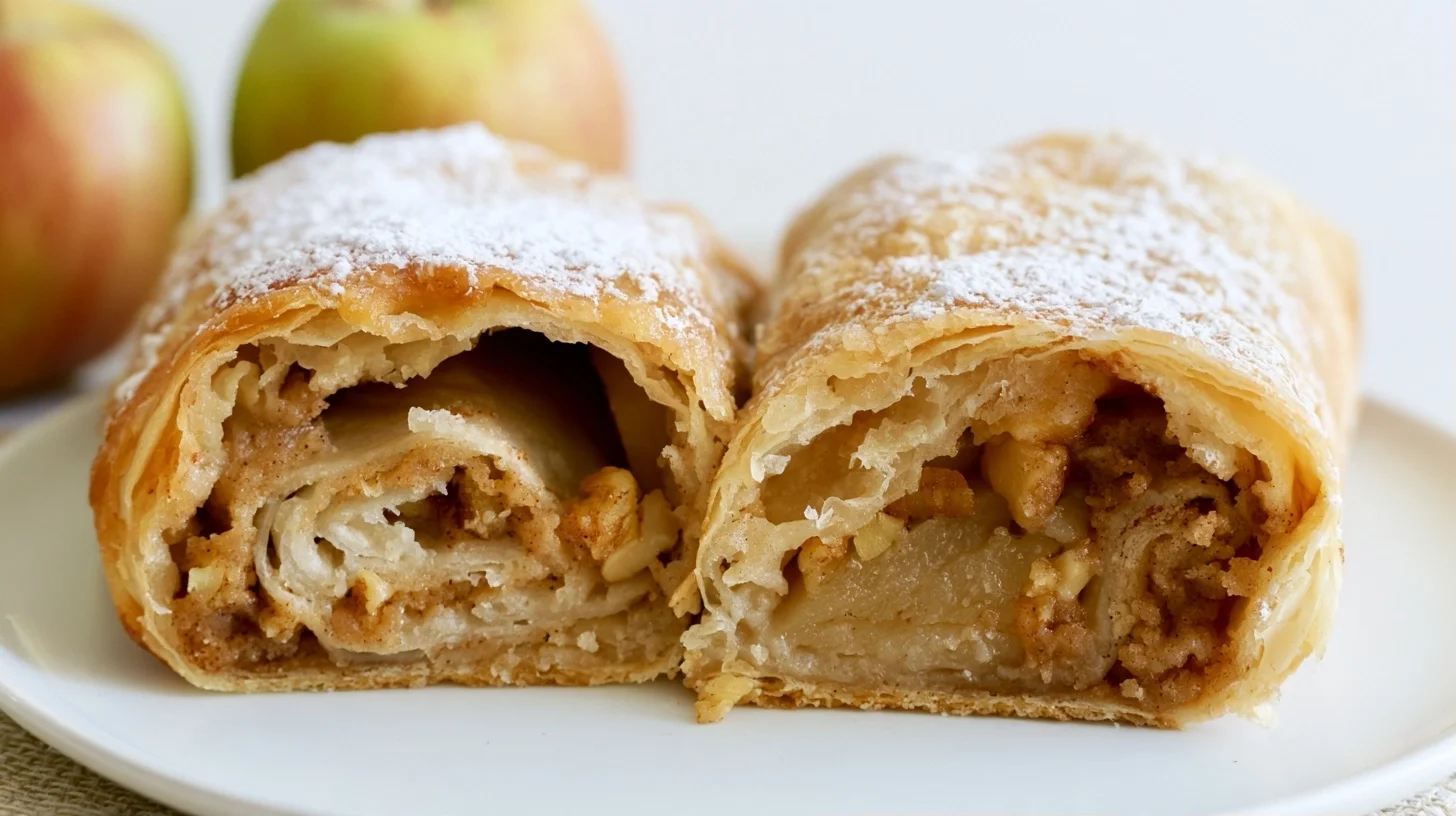
Table of contents
- Why You Will Love This Apple Strudel Recipe
- Essential Equipment for Making Apple Strudel
- How to Make Flaky Apple Strudel Every Time
- How to Get Crispy Apple Strudel with No Soggy Bottom
- Common Mistakes When Making Apple Strudel Recipe
- Apple Strudel Recipe Variations to Try
- What Makes Apple Strudel Taste Better
- Nutrition in Apple Strudel Recipe
- How to Serve Apple Strudel
- How to Store Apple Strudel
- Frequently Asked Questions
Why You Will Love This Apple Strudel Recipe
- Uses store-bought puff pastry to save time without compromising on texture or flavor.
- Includes toasted breadcrumbs in the filling to absorb apple juices and keep the pastry crisp.
- Ready in under an hour from start to finish, making it perfect for last-minute gatherings.
- Delivers authentic flavor with warm cinnamon, tender apples, and golden, flaky layers.
Essential Equipment for Making Apple Strudel
You don’t need specialized pastry tools to make apple strudel, but a few key items will help you achieve the best results. A sharp knife or mandoline ensures even apple slices that cook uniformly, while a rolling pin helps you gently stretch the puff pastry without tearing it. A clean kitchen towel is useful for rolling the strudel if you’re working with traditional dough, though it’s optional with puff pastry.
- Baking sheet: A rimmed baking sheet lined with parchment paper prevents sticking and makes cleanup easier.
- Sharp knife or mandoline: Thin, even apple slices cook more evenly and create a better texture in the finished strudel.
- Rolling pin: Helps you gently roll out puff pastry to the right thickness without tearing.
- Pastry brush: Used to brush the pastry with melted butter or egg wash for a golden, glossy finish.
- Small skillet: Needed to toast the breadcrumbs, which is essential for absorbing moisture from the apples.
How to Make Flaky Apple Strudel Every Time
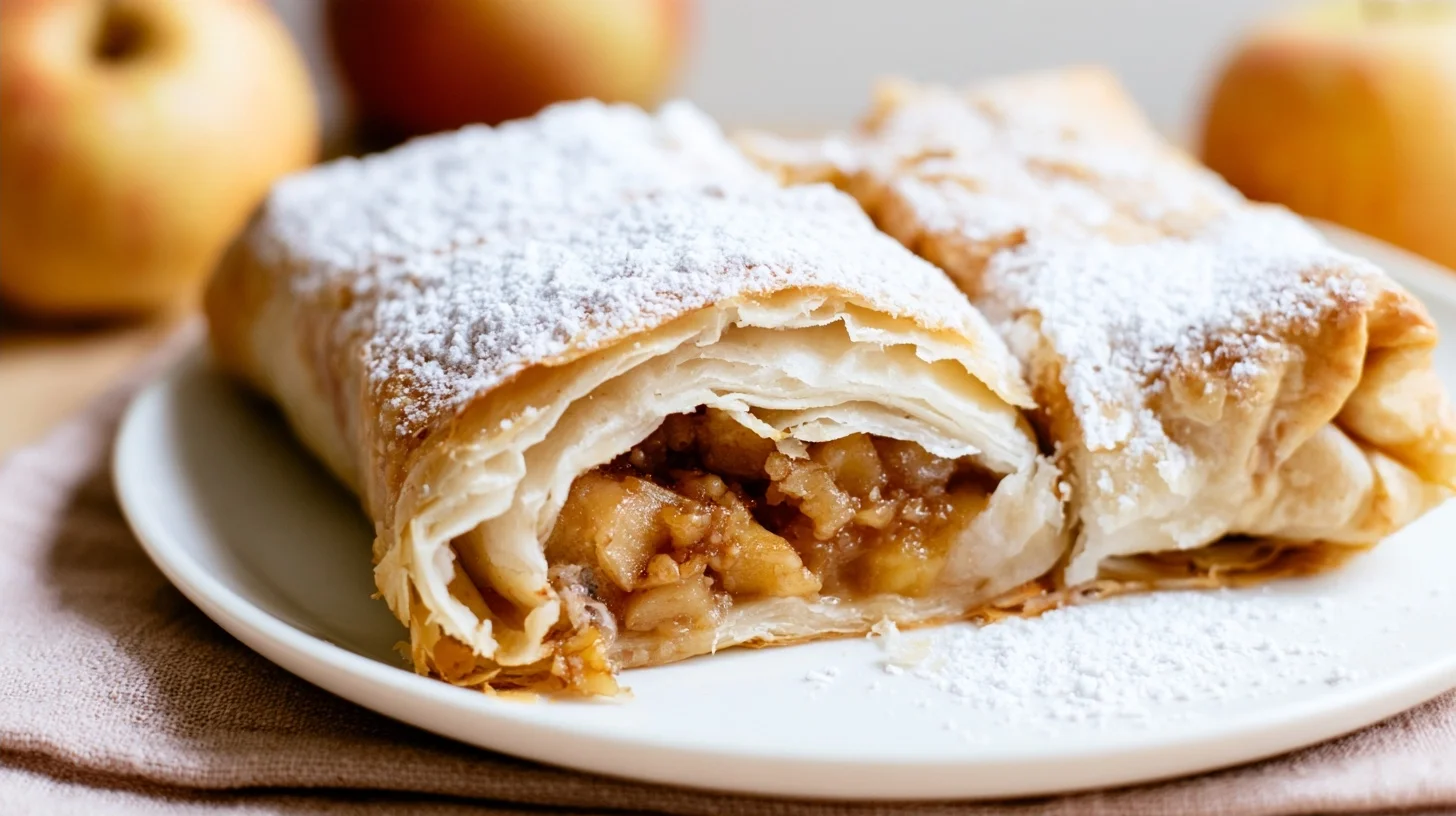
Apple Strudel
6
servings20
minutes30
minutes280
kcalThis apple strudel uses store-bought puff pastry and toasted breadcrumbs to create a crisp, flaky dessert with a spiced apple filling. The breadcrumbs absorb moisture from the apples, preventing the pastry from becoming soggy. Ready in under an hour, it’s an impressive dessert that’s easier than it looks.
Keep the screen of your device on
Ingredients
1 sheet puff pastry
3 medium Granny Smith apples
0.33 cup granulated sugar
1 teaspoon ground cinnamon
0.5 cup plain breadcrumbs
3 tablespoons unsalted butter
1 large egg
2 tablespoons powdered sugar
0.25 teaspoon nutmeg
1 tablespoon lemon juice
Directions
- Preheat your oven to 400°F and line a baking sheet with parchment paper. This prevents the strudel from sticking and makes cleanup easier.
- Peel and thinly slice the apples, aiming for slices about 1/8 inch thick. Toss them in a bowl with the sugar, cinnamon, and lemon juice if using. Let the mixture sit for 10 minutes, then drain off any liquid that collects in the bottom of the bowl. This reduces moisture that could make the pastry soggy.
- Toast the breadcrumbs in 2 tablespoons of butter in a small skillet over medium heat, stirring frequently, until golden and fragrant, about 3 to 4 minutes. Set aside to cool. Toasted breadcrumbs absorb moisture more effectively than raw ones and add a subtle nutty flavor.
- Unfold the puff pastry onto a lightly floured surface and roll it gently to smooth out the creases. If the pastry becomes too soft, refrigerate it for 10 minutes before continuing.
- Sprinkle the toasted breadcrumbs down the center of the pastry, leaving about 2 inches of space on each side. The breadcrumbs create a barrier that absorbs juice from the apples.
- Arrange the drained apple slices over the breadcrumbs in an even layer. Don’t overfill—you should be able to fold the pastry over without tearing.
Notes
- Toasting breadcrumbs in butter before adding them to the filling absorbs apple juices and prevents the pastry from becoming soggy.
- If the puff pastry becomes too soft while assembling, refrigerate it for 10 minutes to make it easier to handle and ensure it puffs properly during baking.
- Store leftover strudel in an airtight container at room temperature for up to two days, or refrigerate for up to four days. Reheat in a 350°F oven for 10 minutes to restore crispness.
Nutrition Facts
- Serving Size: 1 g
- Total number of serves: 6
- Calories: 280kcal
- Fat: 13g
- Carbohydrates: 38g
- Fiber: 2g
- Protein: 4g
Did you make this recipe?
Tag @therecipemasterblog on Instagram and hashtag it with #therecipemaster
Like this recipe?
Follow @therecipemasterblog on Pinterest
Follow us on Facebook!
Follow The Recipe Master on Facebook
How to Get Crispy Apple Strudel with No Soggy Bottom
The most common problem with homemade apple strudel is a soggy bottom, which happens when the apple filling releases too much juice during baking. The solution is to toast breadcrumbs in butter until golden and sprinkle them over the pastry before adding the apples. The breadcrumbs act like a sponge, absorbing moisture and creating a barrier between the apples and the pastry. This single step makes the difference between a crisp, flaky strudel and a limp, soggy one.
Another key technique is to slice the apples thinly and toss them with sugar and cinnamon at least 10 minutes before assembling. This allows the apples to release some of their juice in the bowl, which you can then drain off before filling the pastry. Less moisture going into the oven means a crisper result. If you’re using a particularly juicy apple variety like McIntosh, consider adding an extra tablespoon of breadcrumbs to the filling.
Why Toasted Breadcrumbs Matter
Raw breadcrumbs will absorb moisture, but toasted breadcrumbs do the job better because they’ve already lost their own moisture content. Toasting them in butter also adds flavor and helps them form a more effective barrier. Use plain dried breadcrumbs or panko, and toast them over medium heat until they’re golden and fragrant. This takes about three to four minutes and shouldn’t be skipped.
Choosing the Right Apples
Granny Smith apples are the most reliable choice for apple strudel because they hold their shape during baking and provide a tart contrast to the sweet filling. Honeycrisp and Braeburn also work well. Avoid Red Delicious or McIntosh, which break down too quickly and release excess moisture. For the best flavor, use a mix of tart and sweet apples, such as two Granny Smiths and one Honeycrisp.
How to Work with Puff Pastry
Puff pastry should be thawed in the refrigerator, not at room temperature, to prevent it from becoming too soft to handle. Once unfolded, roll it gently on a lightly floured surface to smooth out the creases, but don’t roll it too thin or it won’t puff properly. If the pastry becomes too warm and sticky while you’re working, slide it onto a baking sheet and refrigerate it for 10 minutes before continuing. Cold pastry is easier to handle and bakes up flakier.
Sealing and Scoring the Strudel
Once the filling is in place, fold the pastry over and press the edges firmly to seal. If the edges don’t stick, brush them lightly with water or beaten egg. Use a sharp knife to score the top of the strudel with shallow diagonal cuts. This isn’t just decorative—it allows steam to escape and prevents the pastry from puffing unevenly or splitting. Don’t cut all the way through the pastry, just deep enough to break the surface.
For more ideas on working with fruit-based desserts, check out this apple crumble recipe that uses similar spices and techniques.
Common Mistakes When Making Apple Strudel Recipe
Overfilling the Pastry
It’s tempting to pile as much filling as possible into the strudel, but overfilling makes it difficult to seal and increases the risk of the pastry splitting during baking. Use no more than two to two and a half cups of sliced apples for a standard sheet of puff pastry. The filling should form a neat log down the center, leaving at least an inch of pastry on each side for sealing.
Skipping the Egg Wash
An egg wash gives the strudel its signature golden, glossy finish. Without it, the pastry will still bake through, but it will look pale and dull. Beat one egg with a tablespoon of water and brush it over the entire surface of the strudel before baking. If you don’t have an egg, you can use milk or melted butter, but the color won’t be as deep.
Baking at the Wrong Temperature
Puff pastry needs high heat to puff properly. If your oven is too cool, the pastry will turn out dense and greasy instead of light and flaky. Bake apple strudel at 400°F, and make sure your oven is fully preheated before the strudel goes in. If the top is browning too quickly, tent it loosely with foil for the last 10 minutes of baking.
Cutting the Strudel Too Soon
Apple strudel needs at least 10 minutes to cool before slicing. If you cut it straight out of the oven, the filling will be too loose and will spill out. Letting it rest allows the juices to thicken slightly and makes for cleaner slices. Use a serrated knife and a gentle sawing motion to avoid crushing the layers.
Apple Strudel Recipe Variations to Try
Cherry or Berry Strudel
Replace the apples with pitted cherries, blueberries, or a mix of berries. Add an extra tablespoon of sugar and a teaspoon of cornstarch to the filling to help thicken the juices. Berries release more liquid than apples, so the cornstarch is essential to prevent sogginess.
Nutty Apple Strudel Recipe
Add half a cup of chopped walnuts or pecans to the filling for extra texture and flavor. Toast the nuts lightly before adding them to bring out their flavor. This variation pairs especially well with a drizzle of caramel sauce.
Dairy-Free Apple Strudel Recipe
Use dairy-free puff pastry, which is widely available, and replace the butter in the breadcrumb mixture with coconut oil or a plant-based butter substitute. The texture and flavor will be nearly identical to the traditional version.
Mini Apple Strudels
Cut the puff pastry into smaller rectangles and make individual strudels instead of one large one. Reduce the baking time to 18 to 20 minutes and keep an eye on them to prevent over-browning. Mini strudels are easier to serve and make portion control simpler.
What Makes Apple Strudel Taste Better
The flavor of apple strudel improves when you use freshly ground cinnamon instead of pre-ground. Freshly ground cinnamon has a brighter, more complex flavor that makes the filling taste more vibrant. A pinch of nutmeg or cardamom can add depth without overwhelming the apples. If you want a richer filling, add a tablespoon of dark rum or brandy to the apples when you toss them with the sugar and spices.
Another way to enhance the flavor is to brush the baked strudel with melted butter as soon as it comes out of the oven, then dust it lightly with powdered sugar. The butter adds richness and helps the sugar stick. For a more traditional presentation, serve the strudel with a dollop of lightly sweetened whipped cream or a scoop of vanilla ice cream. The contrast between the warm, spiced filling and the cold cream is what makes apple strudel a classic dessert. You can learn more about the history and cultural significance of strudel in European baking traditions.
Nutrition in Apple Strudel Recipe
Apple strudel is a dessert, so it’s naturally higher in sugar and carbohydrates, but it also contains fiber from the apples and some protein from the pastry. A typical serving contains around 280 calories, with most of those coming from the puff pastry and the sugar in the filling. The apples themselves contribute vitamins, particularly vitamin C, and a small amount of dietary fiber.
If you’re looking to reduce the sugar content, you can cut the sugar in the filling by up to half without significantly affecting the texture. The apples will still release enough natural sweetness, especially if you’re using a sweeter variety like Honeycrisp. You can also replace some of the sugar with a sugar substitute like erythritol, though this may slightly change the texture of the filling. Using whole wheat puff pastry, if available, will add a bit more fiber, though it will also make the pastry slightly denser.
How to Serve Apple Strudel
Apple strudel is best served warm, about 10 to 15 minutes after it comes out of the oven. This gives the filling time to set slightly while the pastry is still crisp. Dust the top with powdered sugar just before serving for a classic presentation. Serve it with a scoop of vanilla ice cream, a dollop of whipped cream, or a drizzle of custard sauce for a richer dessert experience.
Apple strudel also works well as a breakfast pastry or afternoon snack, especially when served with coffee or tea. If you’re serving it for breakfast, skip the ice cream and serve it plain or with a light dusting of cinnamon sugar. Leftover strudel can be reheated in a 350°F oven for about 10 minutes to restore some of the crispness, though it’s best enjoyed fresh.
How to Store Apple Strudel
Store leftover apple strudel in an airtight container at room temperature for up to two days. The pastry will soften slightly as it sits, but it will still taste good. For longer storage, refrigerate the strudel for up to four days. To reheat, place it on a baking sheet in a 350°F oven for 10 to 12 minutes to help restore some of the crispness. Avoid microwaving, as this will make the pastry soggy.
You can freeze unbaked apple strudel for up to three months. Assemble the strudel completely, including the egg wash, then wrap it tightly in plastic wrap and aluminum foil before freezing. Bake it directly from frozen, adding an extra 10 to 15 minutes to the baking time. Freezing baked strudel is also possible, but the texture of the pastry won’t be quite as crisp after reheating.
Frequently Asked Questions
Yes, phyllo dough works well for apple strudel and is more traditional. Brush each sheet with melted butter as you layer them, using about six to eight sheets. Phyllo creates a thinner, crispier pastry than puff pastry, though it requires more careful handling.
A soggy strudel is usually caused by too much moisture from the apples. Toast breadcrumbs in butter and sprinkle them over the pastry before adding the filling to absorb excess juice. Also, drain any liquid that collects in the bowl after tossing the apples with sugar.
Yes, you can assemble the strudel up to 24 hours in advance and refrigerate it unbaked. Brush it with egg wash just before baking. You can also freeze unbaked strudel for up to three months and bake it directly from frozen, adding 10 to 15 minutes to the baking time.
Granny Smith apples are the best choice because they hold their shape during baking and provide a tart flavor that balances the sweetness of the filling. Honeycrisp and Braeburn also work well. Avoid softer apples like McIntosh, which break down too quickly and release excess moisture.







Leave a Reply