

- Ready in under 40 minutes using pantry staples for a quick, comforting weeknight meal.
- Brown sausage well to develop deep flavor and fond before adding the broth.
- Add gnocchi during the last 5 minutes; stir gently so they stay pillowy and intact.
- Stir cream in at low heat and avoid boiling to prevent curdling and grainy texture.
- Store the soup base separately or cook gnocchi fresh when reheating; add broth to loosen consistency.
When the weather turns cold and you need a hearty, warming meal that comes together quickly, sausage gnocchi soup delivers comfort in every spoonful. This creamy, savory soup combines tender potato gnocchi with flavorful Italian sausage, fresh spinach, and a rich tomato-cream broth that’s satisfying without being heavy. The beauty of this recipe lies in its simplicity—most of the ingredients are pantry staples, and the whole pot comes together in under 40 minutes, making it perfect for busy weeknights when you want something that tastes like it simmered all day.
What sets this soup apart is the way the pillowy gnocchi absorbs the savory broth while still holding its shape, creating a texture that’s somewhere between soup and stew. The Italian sausage adds depth and warmth, while a touch of cream balances the acidity of the tomatoes without making the soup feel overly rich. Fresh spinach wilts into the pot at the end, adding color and a subtle earthy note that rounds out the flavors beautifully.
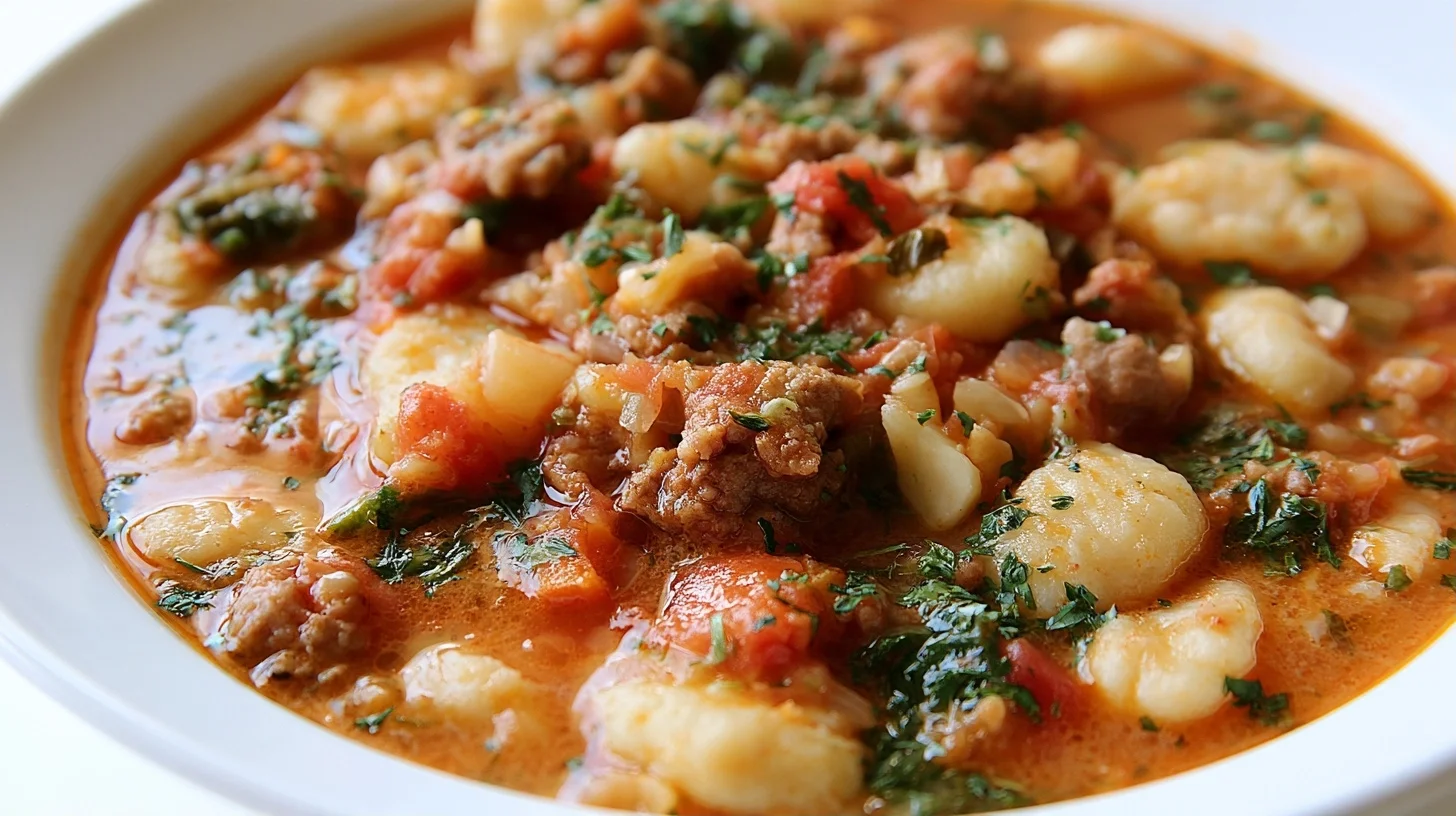
Table of contents
- Why You Will Love This Sausage Gnocchi Soup
- What You Need to Make Sausage Gnocchi Soup
- How to Make the Best Sausage Gnocchi Soup
- How to Get Perfectly Cooked Gnocchi Every Time
- Common Mistakes and How to Avoid Them
- Simple Ways to Customize Your Sausage Gnocchi Soup
- What Makes This Soup So Satisfying
- How to Serve Sausage Gnocchi Soup
- How to Store and Reheat Sausage Gnocchi Soup
- Frequently Asked Questions about Sausage Gnocchi Soup Recipe
Why You Will Love This Sausage Gnocchi Soup
- Ready in less than 40 minutes from start to finish, making it ideal for weeknight dinners.
- Uses simple ingredients you likely already have in your pantry and fridge.
- The creamy tomato broth is rich and satisfying without being overly heavy or calorie-dense.
- Easily adaptable for different dietary needs and ingredient substitutions.
What You Need to Make Sausage Gnocchi Soup
This soup comes together in one pot, which means minimal cleanup and maximum flavor. You’ll need just a few basic pieces of equipment that most home kitchens already have.
- Large Dutch oven or heavy-bottomed pot: A 5 to 6-quart pot gives you enough room to brown the sausage, simmer the broth, and stir in the gnocchi without crowding. The heavy bottom prevents scorching and distributes heat evenly.
- Wooden spoon or silicone spatula: Essential for breaking up the sausage as it cooks and scraping up the flavorful browned bits from the bottom of the pot.
- Sharp knife and cutting board: For dicing the onion and mincing the garlic quickly and safely.
- Measuring cups and spoons: Accurate measurements ensure the broth has the right balance of creaminess and acidity.
- Ladle: Makes serving the soup into bowls easy and neat, especially when you want to ensure each serving gets a good mix of gnocchi, sausage, and broth.
How to Make the Best Sausage Gnocchi Soup

Sausage Gnocchi Soup
6
servings10
minutes25
minutes380
kcalThis creamy sausage gnocchi soup brings together tender potato gnocchi, flavorful Italian sausage, and fresh spinach in a rich tomato-cream broth. The key to success is adding the gnocchi during the last 5 minutes of cooking so they stay pillowy and intact instead of turning mushy.
Keep the screen of your device on
Ingredients
1 lb Italian sausage
1 medium yellow onion
3 cloves garlic
4 cups chicken broth
1 can diced tomatoes
1 cup heavy cream
1 lb shelf-stable gnocchi
3 cups fresh spinach
1 tsp Italian seasoning
0.5 tsp salt
0.25 tsp black pepper
0.25 cup Parmesan cheese
Directions
- Brown the sausage in a large Dutch oven or heavy-bottomed pot over medium-high heat, breaking it into bite-sized crumbles with a wooden spoon. Let it sit undisturbed for a minute or two to develop a golden crust before stirring. Cook until no pink remains, about 6 to 8 minutes, then transfer the cooked sausage to a plate, leaving about 1 tablespoon of fat in the pot.
- Sauté the onion in the reserved sausage fat over medium heat, stirring occasionally, until softened and translucent, about 4 minutes. The onion should release its moisture and begin to turn golden at the edges.
- Add the garlic and cook for 30 seconds, stirring constantly, until fragrant but not browned. Garlic burns quickly, so watch it closely during this step.
- Pour in the chicken broth and diced tomatoes with their juices, scraping up any browned bits stuck to the bottom of the pot with your spoon. These bits add deep savory flavor to the broth.
- Stir in the Italian seasoning, salt, and pepper, then bring the mixture to a boil. Once boiling, reduce the heat to medium-low and let the soup simmer for 10 minutes to allow the flavors to meld.
- Return the cooked sausage to the pot and stir to combine. Let the soup simmer for another 5 minutes so the sausage can absorb some of the broth’s flavor.
Notes
- Adding the gnocchi during the last 5 minutes of cooking prevents them from absorbing too much liquid and becoming mushy.
- If the soup thickens too much after sitting, add a splash of chicken broth or water when reheating to loosen the consistency.
- For a lighter version, substitute half-and-half or whole milk for the heavy cream, though the soup will be less rich.
- Leftover soup can be stored in an airtight container in the refrigerator for up to 3 days. Reheat gently over low heat, stirring occasionally.
Nutrition Facts
- Serving Size: 1g
- Total number of serves: 6
- Calories: 380kcal
- Fat: 16g
- Carbohydrates: 42g
- Fiber: 4g
- Protein: 18g
Did you make this recipe?
Tag @therecipemasterblog on Instagram and hashtag it with #therecipemaster
Like this recipe?
Follow @therecipemasterblog on Pinterest
Follow us on Facebook!
Follow The Recipe Master on Facebook
How to Get Perfectly Cooked Gnocchi Every Time
The key to tender, pillowy gnocchi in your soup is adding them at the right moment and not overcooking them. Gnocchi are delicate and can turn mushy if they simmer too long, so timing matters more than you might think.
Add Gnocchi During the Last 5 Minutes
Fresh or shelf-stable gnocchi cook quickly, usually in 3 to 5 minutes. Adding them too early means they’ll absorb too much liquid and start to break apart. Instead, wait until your broth is fully seasoned and simmering, then stir in the gnocchi and cook just until they float to the surface and become tender. This ensures they stay intact and have the right soft, slightly chewy texture.
Don’t Stir Too Vigorously
Once the gnocchi go into the pot, stir gently. Aggressive stirring can cause them to break apart, especially if you’re using fresh gnocchi. A slow, careful stir every minute or so is enough to keep them from sticking to the bottom without damaging their structure.
Use the Right Type of Gnocchi
Shelf-stable vacuum-sealed gnocchi work beautifully in soup because they hold their shape well and have a firm texture. Fresh gnocchi from the refrigerated section are more delicate and cook faster, so watch them closely. Avoid frozen gnocchi for soup—they release too much starch and can make the broth cloudy and overly thick.
Brown the Sausage Thoroughly
Taking the time to brown the sausage properly creates a flavorful foundation for the entire soup. Let the sausage sit undisturbed in the hot pot for a minute or two before breaking it up—this allows a golden crust to form, which adds depth and richness to the broth. Those caramelized bits stuck to the bottom of the pot, called fond, dissolve into the liquid when you add the broth and contribute savory complexity you can’t get from simply cooking the meat through.
Balance the Cream and Tomatoes
The creaminess in this soup should complement the tomatoes, not overpower them. Adding heavy cream or half-and-half at the end of cooking prevents curdling and keeps the texture smooth. If you add it too early or let the soup boil after the cream goes in, the dairy can separate and create an unappetizing grainy texture. Stir the cream in gently after the heat is reduced to a simmer, and keep the temperature steady.
Layer Your Aromatics
Onions and garlic form the aromatic base of the soup, but they need different cooking times. Sauté the diced onion first until it softens and turns translucent, which usually takes about 4 minutes. Add the minced garlic only in the last 30 seconds, just until it becomes fragrant. Garlic burns quickly and turns bitter if cooked too long, so this timing ensures it adds flavor without any harshness. For even more depth, consider using homemade gnocchi variations to explore different flavor profiles in similar comfort dishes.
Common Mistakes and How to Avoid Them
Adding the Gnocchi Too Early
If you add the gnocchi at the beginning of the cooking process, they’ll absorb too much liquid and become bloated and mushy. The soup will also thicken excessively as the gnocchi release starch. Always add them during the last 5 minutes of cooking, right before you plan to serve. If you’re making the soup ahead, cook the gnocchi separately and add them to individual bowls when reheating.
Boiling the Soup After Adding Cream
Dairy-based soups can curdle if the temperature gets too high after the cream is added. Once you stir in the heavy cream or half-and-half, reduce the heat to low and keep the soup at a gentle simmer. If you see small white flecks forming or the texture looks grainy, the soup has curdled. To prevent this, temper the cream by whisking a small amount of hot broth into it before adding it to the pot, which gradually raises the cream’s temperature.
Using Lean Sausage
Italian sausage with a higher fat content contributes richness and flavor to the broth. Lean sausage or turkey sausage can work, but the soup may taste less robust and the broth will be thinner. If you do use a leaner option, consider adding a tablespoon of olive oil or butter when you sauté the aromatics to compensate for the missing fat.
Skipping the Spinach Until the Last Moment
Spinach wilts quickly and releases water as it cooks. If you add it too early, it becomes slimy and loses its vibrant green color. Stir the spinach in during the last 2 minutes of cooking, just long enough for it to wilt and soften. Fresh spinach works best, but if you’re using frozen, make sure to thaw and squeeze out as much moisture as possible before adding it to avoid watering down the broth.
Simple Ways to Customize Your Sausage Gnocchi Soup
Make Sausage Gnocchi Soup Lighter
Swap the heavy cream for half-and-half or whole milk to reduce the calorie count. The soup will be slightly less rich, but still creamy and satisfying. You can also use turkey sausage instead of pork sausage, though the flavor will be milder. Adding an extra cup of spinach or a handful of kale boosts the vegetable content without changing the overall character of the soup.
Add More Vegetables
Diced carrots, celery, or bell peppers can be sautéed along with the onion to add sweetness and texture. Zucchini or mushrooms also work well—just dice them small so they cook evenly. Add heartier vegetables like carrots early in the cooking process, and save delicate ones like zucchini for the last 10 minutes.
Make It Spicy
Use hot Italian sausage instead of mild, or add a pinch of red pepper flakes when you sauté the garlic. A dash of hot sauce or a spoonful of calabrian chili paste stirred in at the end adds heat without overwhelming the other flavors.
Try Different Greens
Kale, Swiss chard, or escarole can replace spinach. Kale and chard need a few extra minutes to soften, so add them earlier in the cooking process. Escarole has a slightly bitter flavor that pairs beautifully with the richness of the sausage and cream.
Make Sausage Gnocchi Soup Dairy-Free
Replace the heavy cream with full-fat coconut milk or a dairy-free cream alternative. Coconut milk adds a subtle sweetness that works surprisingly well with the tomatoes and sausage. Make sure to use unsweetened coconut milk to avoid an overly sweet result.
What Makes This Soup So Satisfying
Sausage gnocchi soup is a complete meal in a bowl, offering a balance of protein, carbohydrates, and vegetables in every serving. Each bowl provides approximately 380 calories, with 18 grams of protein from the sausage and 42 grams of carbohydrates from the gnocchi and tomatoes. The soup contains about 16 grams of fat, most of which comes from the sausage and cream, giving it a rich, satisfying mouthfeel without being overly indulgent.
The fiber content, around 4 grams per serving, comes from the spinach, tomatoes, and onions, which help make the soup more filling and support digestion. The sugar content is relatively low at 6 grams per serving, primarily from the natural sugars in the tomatoes and vegetables. If you’re watching your sodium intake, use low-sodium chicken broth and choose sausage with less added salt, or remove the casings from fresh sausage links and season the meat yourself.
This soup also provides a good amount of vitamins A and C from the spinach and tomatoes, along with iron from the greens and sausage. The combination of protein and fiber makes it a meal that keeps you full for hours, which is why it works so well as a weeknight dinner or a make-ahead lunch option. To learn more about the origins and versatility of gnocchi, check out this detailed guide on what gnocchi is and how it’s traditionally prepared.
How to Serve Sausage Gnocchi Soup
This soup is hearty enough to serve on its own, but a few simple sides can round out the meal. Crusty bread or garlic bread is perfect for soaking up the creamy broth, and a simple green salad with a tangy vinaigrette adds freshness and balances the richness of the soup. If you want to make the meal feel more substantial, serve the soup with a side of roasted vegetables or a light Caesar salad.
For a more casual presentation, ladle the soup into wide, shallow bowls and top each serving with a sprinkle of freshly grated Parmesan cheese and a few torn basil leaves. The Parmesan adds a salty, nutty flavor that complements the sausage, while the basil brings a pop of color and a hint of freshness. A drizzle of good-quality olive oil over the top just before serving adds a silky finish and enhances the soup’s richness.
This soup also works well for meal prep. Portion it into individual containers for easy lunches throughout the week, and reheat gently on the stovetop or in the microwave. Just be aware that the gnocchi will continue to absorb liquid as the soup sits, so you may need to add a splash of broth or water when reheating to loosen the consistency.
How to Store and Reheat Sausage Gnocchi Soup
Store leftover soup in an airtight container in the refrigerator for up to 3 days. The gnocchi will absorb some of the broth as it sits, making the soup thicker. When reheating, add a quarter to half cup of chicken broth or water to bring the consistency back to where you want it. Reheat gently over medium-low heat on the stovetop, stirring occasionally, until warmed through. Avoid boiling the soup during reheating, as this can cause the cream to separate and the gnocchi to break apart.
Freezing this soup is possible, but the texture of the gnocchi changes after thawing—they can become softer and more prone to falling apart. If you plan to freeze the soup, consider cooking and freezing the broth base without the gnocchi, then adding fresh gnocchi when you reheat. The soup base can be frozen for up to 2 months in a freezer-safe container. Thaw it overnight in the refrigerator, then reheat on the stovetop and add fresh gnocchi during the last 5 minutes of cooking.
If you do freeze the soup with the gnocchi already in it, be gentle when reheating and expect a slightly mushier texture. Some people don’t mind this change, especially if the soup is being used as a quick weeknight meal where convenience matters more than perfect texture.
Frequently Asked Questions about Sausage Gnocchi Soup Recipe
It’s not recommended. Frozen gnocchi release excess starch as they thaw and cook, which can make the broth cloudy and overly thick. Shelf-stable or fresh refrigerated gnocchi work best because they hold their shape and maintain a better texture in the soup.
Yes, but cook the gnocchi separately. Prepare the soup base with the sausage, broth, and cream, then store it in the refrigerator for up to 3 days. When ready to serve, reheat the base and add fresh gnocchi during the last 5 minutes of cooking. This prevents the gnocchi from becoming mushy.
Half-and-half or whole milk work well for a lighter version, though the soup will be less rich. For a dairy-free option, use full-fat unsweetened coconut milk or a dairy-free cream alternative. Avoid low-fat milk, as it can curdle when heated.
The gnocchi absorb liquid as they sit, which thickens the soup over time. To maintain the right consistency, add extra chicken broth or water when reheating leftovers. Start with a quarter cup and adjust as needed until the soup reaches your preferred thickness.








Leave a Reply