

There’s something magical about the combination of earthy beets, creamy feta, and protein-packed chickpeas that makes this chickpea beet feta salad an instant favorite in my kitchen. I’ve tested this recipe over a dozen times to nail the perfect balance of tangy lemon vinaigrette and hearty vegetables, and the result is a salad that works beautifully as a light lunch or a vibrant side dish. What sets this version apart is the technique of roasting the beets instead of using canned ones, which intensifies their natural sweetness and creates a depth of flavor that canned varieties simply can’t match.
This salad comes together in about 30 minutes if you roast the beets ahead of time, making it perfect for meal prep or busy weeknights. The contrast of textures is what keeps me coming back: tender roasted beets, firm chickpeas, and crumbly feta all coated in a bright lemon-garlic dressing. After testing various ratios, I found that using equal parts beets and chickpeas creates the ideal balance, with just enough feta to add richness without overwhelming the other ingredients.
Whether you’re looking for a nutritious lunch option or a colorful addition to your dinner table, this salad delivers on both taste and visual appeal. The vibrant magenta color from the beets makes it a showstopper at potlucks, and the combination of plant-based protein and fiber keeps you satisfied for hours.
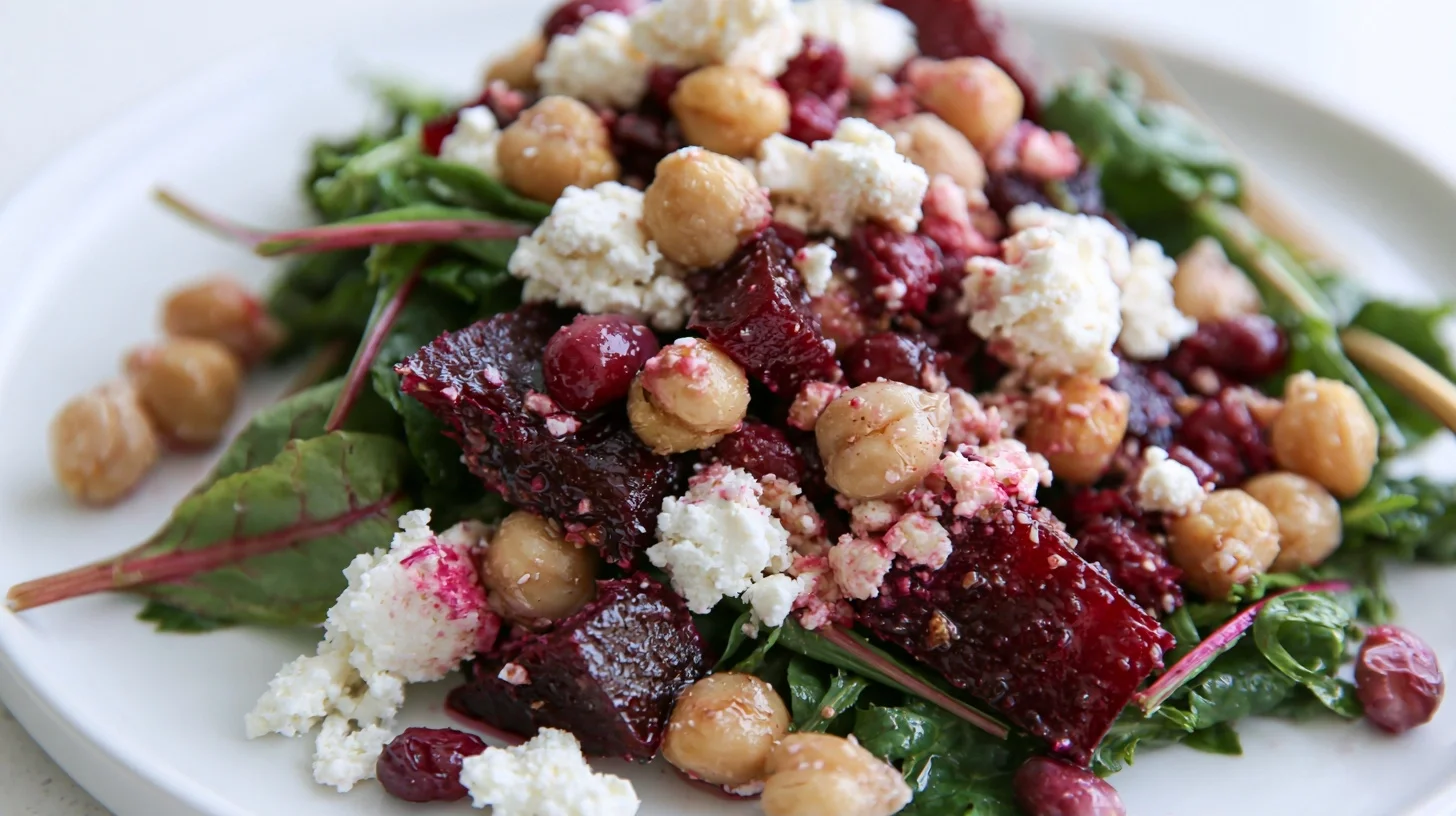
Table of contents
- Why You Will Love This chickpea beet feta salad
- What You Need to Make This chickpea beet feta salad
- How to Make the Best chickpea beet feta salad
- The Technique That Makes This chickpea beet feta salad Stand Out
- Mistakes to Avoid When Making chickpea beet feta salad
- Creative Variations for Your chickpea beet feta salad
- Nutritional Benefits of chickpea beet feta salad
- Delicious Ways to Serve Your chickpea beet feta salad
- Storing and Meal Prepping Your chickpea beet feta salad
- Frequently Asked Questions
Why You Will Love This chickpea beet feta salad
- Roasting the beets instead of using canned ones creates a naturally sweet, caramelized flavor that transforms this simple salad into something restaurant-quality.
- The lemon-garlic vinaigrette is perfectly balanced with just the right amount of acidity to complement the earthy vegetables without overpowering them.
- This salad is packed with plant-based protein and fiber from the chickpeas, making it a satisfying meal that keeps you full for hours.
- The vibrant magenta color and beautiful presentation make this dish a stunning addition to any table or meal prep container.
What You Need to Make This chickpea beet feta salad
I keep my equipment simple for this salad, but having the right tools makes the process much smoother. The most important piece is a good roasting pan for the beets, as even roasting is key to developing their natural sweetness. Here’s what I reach for every time I make this recipe.
- Rimmed baking sheet: Essential for roasting the beets without any juices spilling over, and the rim helps contain the moisture for even cooking.
- Aluminum foil: I wrap each beet individually in foil to trap steam and speed up the roasting process while keeping them moist.
- Large mixing bowl: You need enough space to toss all the ingredients with the dressing without making a mess.
- Small whisk or fork: Perfect for emulsifying the lemon-garlic vinaigrette so the oil and lemon juice blend smoothly.
- Sharp knife and cutting board: A sharp knife makes cutting the roasted beets and crumbling the feta much easier and safer.
- Measuring cups and spoons: Precision matters with the dressing ratios to achieve that perfect balance of tangy and savory.
- Can opener or colander: For draining and rinsing the chickpeas thoroughly to remove excess sodium and starch.
- Kitchen gloves or paper towels: Beets stain everything, so I always keep gloves handy when peeling and cutting them.
How to Make the Best chickpea beet feta salad
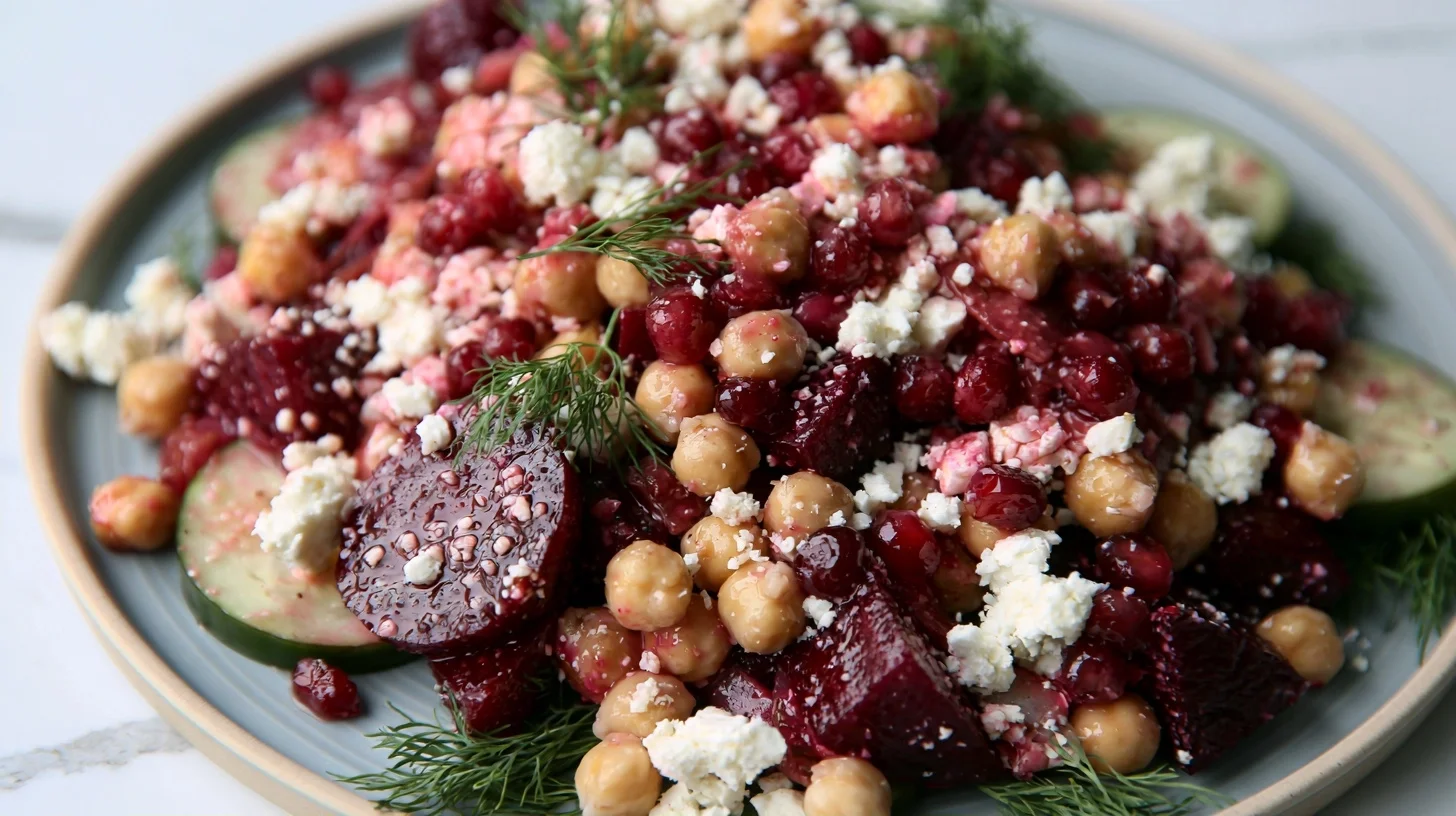
Chickpea Beet Feta Salad with Lemon Garlic Vinaigrette
4
servings15
minutes45
minutes320
kcalThis vibrant chickpea beet feta salad combines roasted beets, protein-rich chickpeas, and creamy feta cheese tossed in a bright lemon-garlic vinaigrette. The secret is roasting fresh beets instead of using canned ones, which creates a naturally sweet, caramelized flavor that elevates this simple salad to restaurant quality.
Keep the screen of your device on
Ingredients
3 medium fresh beets
1 can chickpeas
4 ounces feta cheese
3 tablespoons extra virgin olive oil
1 tablespoon fresh lemon juice
1 large garlic clove
1 teaspoon dried oregano
0.5 teaspoon sea salt
0.25 teaspoon black pepper
2 tablespoons fresh parsley
Directions
- Preheat your oven to 400°F and wrap each beet individually in aluminum foil. This traps steam and helps the beets roast evenly while keeping them moist and tender.
- Place the wrapped beets on a rimmed baking sheet and roast for 45 minutes until tender when pierced with a fork. The roasting time may vary slightly depending on the size of your beets.
- Remove the beets from the oven and let them cool for about 10 minutes until they’re comfortable to handle. The skins will slip off easily once they’ve cooled slightly.
- Peel the beets using your fingers or a paper towel and cut them into three-quarter-inch cubes. Wearing kitchen gloves during this step prevents your hands from staining.
- Drain and rinse the chickpeas thoroughly under cold running water for at least 30 seconds to remove the starchy canning liquid. Pat them dry with a clean kitchen towel for better dressing absorption.
- Whisk together the olive oil, lemon juice, minced garlic, oregano, salt, and pepper in a small bowl until the dressing is well emulsified. The 3-to-1 ratio of oil to lemon juice creates the perfect balance of richness and acidity.
Notes
- The ideal ratio of chickpeas to beets is 1:1 by volume, which creates perfect textural balance and ensures neither ingredient dominates the salad.
- This salad tastes even better the next day after the ingredients have had time to marinate in the vinaigrette, making it perfect for meal prep.
- If you must use canned beets, drain them completely and pat them very dry with paper towels to remove the metallic-tasting canning liquid before adding them to the salad.
- Store leftovers in an airtight glass container in the refrigerator for up to four days. The beets will continue to bleed color slightly, which is normal and doesn’t affect the flavor.
Nutrition Facts
- Serving Size: 1g
- Total number of serves: 4
- Calories: 320kcal
- Fat: 14g
- Carbohydrates: 38g
- Fiber: 9g
- Protein: 12g
Did you make this recipe?
Tag @therecipemasterblog on Instagram and hashtag it with #therecipemaster
Like this recipe?
Follow @therecipemasterblog on Pinterest
Follow us on Facebook!
Follow The Recipe Master on Facebook
The Technique That Makes This chickpea beet feta salad Stand Out
After making this salad countless times, I’ve discovered several techniques that elevate it from good to exceptional. The most important insight is this: The ideal ratio of chickpeas to beets is 1:1 by volume, which creates perfect textural balance and ensures neither ingredient dominates. Here are my essential tips for success.
Roast Your Beets for Maximum Flavor
I always roast fresh beets instead of using canned ones because the roasting process caramelizes their natural sugars and intensifies their earthy sweetness. Wrap each beet individually in foil and roast at 400°F for about 45 minutes until tender. This extra step transforms the entire dish and is worth every minute of wait time.
Rinse Your Chickpeas Thoroughly
I drain and rinse canned chickpeas under cold water for at least 30 seconds to remove the starchy liquid and excess sodium. This simple step prevents a gummy texture and allows the chickpeas to absorb the vinaigrette better. Pat them dry with a clean kitchen towel for even better dressing absorption.
Make the Vinaigrette Fresh Every Time
The lemon-garlic vinaigrette is what ties everything together, and I always make it fresh rather than using store-bought dressing. Whisk together fresh lemon juice, minced garlic, extra virgin olive oil, dried oregano, salt, and black pepper until emulsified. The ratio I use is 3 parts oil to 1 part lemon juice, which creates a balanced dressing that’s tangy but not puckering.
Let the Salad Rest Before Serving
I recommend letting the salad sit for at least 15 minutes after tossing it with the dressing. This resting time allows the flavors to meld and the chickpeas to absorb the vinaigrette. However, don’t let it sit longer than 2 hours at room temperature, as the beets will continue to bleed color and the feta will soften too much.
Add the Feta Last
I always add the crumbled feta cheese at the very end and fold it in gently rather than tossing vigorously. This technique keeps the feta in distinct creamy chunks instead of breaking down into tiny pieces that disappear into the salad. For more information about the nutritional benefits of chickpeas, check out this comprehensive guide to chickpea nutrition.
Use Fresh Garlic, Not Garlic Powder
Fresh minced garlic makes a significant difference in the vinaigrette compared to garlic powder. I use one large clove, finely minced, which provides a sharp bite that mellows as the salad sits. If you’re sensitive to raw garlic, you can reduce it to half a clove or let the dressed salad rest longer before serving.
Mistakes to Avoid When Making chickpea beet feta salad
Through my testing, I’ve encountered several common pitfalls that can compromise this otherwise simple salad. Here are the mistakes I see most often and how to avoid them.
Using Canned Beets Without Draining Properly
If you must use canned beets instead of roasting fresh ones, drain them completely and pat them dry with paper towels. The canning liquid is often high in sodium and has a metallic taste that will water down your vinaigrette. I fix this by draining the beets at least 10 minutes before assembling the salad and pressing them gently to remove excess moisture.
Overdressing the Salad
It’s easy to add too much vinaigrette, which makes the salad soggy and causes the beets to bleed excessively. I start with about three-quarters of the dressing, toss everything together, and then add more only if needed. You can always add more dressing, but you can’t take it away once the salad is swimming in it.
Cutting the Beets Too Small
When I cut the beets into pieces smaller than half an inch, they dominate the salad and stain everything intensely pink. I recommend cutting them into three-quarter-inch cubes, which are substantial enough to hold their shape and provide a satisfying bite. This size also prevents them from overwhelming the chickpeas visually.
Skipping the Rinsing Step for Chickpeas
The starchy canning liquid on chickpeas creates a slimy coating that prevents the dressing from adhering properly. I always rinse them thoroughly under cold running water until the water runs clear, which takes about 30 seconds. This simple step dramatically improves the texture and ensures every chickpea gets coated in that delicious lemon-garlic vinaigrette.
Creative Variations for Your chickpea beet feta salad
One of the things I love most about this salad is how adaptable it is to different dietary needs and flavor preferences. Here are my favorite variations that I’ve developed over time.
Mediterranean Herb Version
I sometimes add fresh herbs like chopped parsley, mint, or dill to give the salad a brighter, more herbaceous flavor. Use about a quarter cup of mixed fresh herbs and fold them in just before serving. The mint pairs especially well with the sweetness of the beets, while the parsley adds a fresh, peppery note.
Vegan Dairy-Free Option
To make this salad completely plant-based, I simply omit the feta cheese and add toasted walnuts or sunflower seeds for richness and crunch. The nuts provide a satisfying fat content that replaces the creaminess of the cheese. Toast them lightly in a dry skillet until fragrant before adding them to the salad.
Grain Bowl Version
I often serve this salad over a bed of quinoa, farro, or bulgur wheat to make it more substantial for a main course. Cook about two cups of your chosen grain according to package directions and let it cool slightly before topping with the chickpea beet mixture. This turns the salad into a complete meal with complex carbohydrates and even more fiber.
Pickled Beet Variation
For an extra tangy version, I sometimes use pickled beets instead of roasted ones. This adds a sharp vinegary note that cuts through the richness of the feta beautifully. If you want to make your own, try this easy pickled beets recipe that works perfectly in this salad.
Warm Winter Version
During colder months, I serve this salad warm by tossing the roasted beets and chickpeas together while they’re still hot, then adding the vinaigrette and feta immediately. The warmth slightly melts the feta and makes the vinaigrette more aromatic. This version is especially comforting as a side dish for roasted chicken or lamb.
Protein-Boosted Version
To increase the protein content even further, I sometimes add grilled chicken breast, hard-boiled eggs, or canned tuna to make this a complete one-bowl meal. Slice the protein of your choice and arrange it on top of the salad rather than mixing it in, which keeps the presentation beautiful and allows each person to customize their portion.
Nutritional Benefits of chickpea beet feta salad
This salad is a nutritional powerhouse that delivers impressive amounts of protein, fiber, and essential nutrients in every serving. One generous portion provides approximately 320 calories with a balanced macronutrient profile that includes about 12 grams of plant-based protein from the chickpeas and feta, 38 grams of carbohydrates including 9 grams of fiber, and 14 grams of healthy fats from the olive oil and cheese.
The beets are rich in folate, manganese, and nitrates that support cardiovascular health, while the chickpeas provide iron, magnesium, and B vitamins. The feta cheese adds calcium and probiotics that support bone health and digestion. The lemon-garlic vinaigrette not only tastes incredible but also provides antioxidants and helps your body absorb the iron from the chickpeas more efficiently.
What I appreciate most about this salad from a nutritional standpoint is that it’s naturally low in added sugars and provides sustained energy without causing blood sugar spikes. The combination of protein, healthy fats, and complex carbohydrates makes it an ideal choice for anyone looking to maintain stable energy levels throughout the day.
Delicious Ways to Serve Your chickpea beet feta salad
I’ve served this salad in countless ways, and it adapts beautifully to different occasions and meal structures. For a light lunch, I portion it into individual containers with a handful of mixed greens underneath and a slice of whole-grain bread on the side. The salad is substantial enough to be satisfying on its own, but the greens add extra volume and the bread helps soak up any extra vinaigrette.
As a dinner side dish, this salad pairs wonderfully with grilled fish, roasted chicken, or lamb chops. The earthy sweetness of the beets complements rich proteins beautifully, and the bright lemon dressing cuts through any heaviness. I also love serving it as part of a Mediterranean mezze spread alongside hummus, tzatziki, stuffed grape leaves, and warm pita bread for a casual entertaining option that requires minimal last-minute preparation.
Storing and Meal Prepping Your chickpea beet feta salad
This salad is one of my favorite meal prep options because it actually improves in flavor after a day in the refrigerator as the ingredients marinate in the vinaigrette. Store it in an airtight container in the refrigerator for up to four days. I recommend using glass containers rather than plastic, as the beets can stain plastic permanently.
If you’re planning to meal prep for the week, I suggest storing the vinaigrette separately and adding it just before eating to keep the vegetables from becoming too soft. The roasted beets and chickpeas can be stored together, and the feta can be kept separate as well to prevent it from absorbing too much beet color. This salad doesn’t freeze well due to the high water content in the beets and the texture changes in the feta, so I only recommend refrigerator storage.
Frequently Asked Questions
Yes, you can use canned beets as a time-saving alternative. Drain them thoroughly and pat them dry with paper towels to remove excess moisture and the metallic-tasting canning liquid. However, roasted fresh beets provide significantly better flavor with natural caramelization and sweetness that canned varieties cannot match.
This salad lasts up to four days when stored in an airtight container in the refrigerator. The flavors actually improve after the first day as the ingredients marinate in the vinaigrette. For best results, store the dressing separately if you’re meal prepping for more than two days to prevent the vegetables from becoming too soft.
Yes, simply omit the feta cheese and add toasted walnuts, sunflower seeds, or pine nuts for richness and texture. The nuts provide healthy fats that replace the creaminess of the cheese while keeping the salad completely plant-based. You can also add nutritional yeast for a subtle cheesy flavor without dairy.
Wear disposable kitchen gloves when handling roasted beets to protect your hands from staining. Use a glass or stainless steel bowl rather than plastic, as plastic absorbs beet color permanently. Cut the beets into three-quarter-inch cubes rather than smaller pieces to minimize color bleeding, and add the feta last to keep it white and distinct.




Leave a Reply