

- Use 1 part fresh basil to 3 parts coarse salt for vibrant flavor without clumping.
- Wash and thoroughly dry basil; pulse with salt in short bursts, then air-dry the mixture 24 hours to preserve color and prevent clumping.
- Choose coarse sea salt or kosher salt; fine salt turns pasty and makes storage difficult.
- Store in an airtight glass jar away from heat and moisture; keeps up to three months room temperature or six months frozen.
If you’ve ever wondered what to do with an abundance of fresh basil, this basil salt recipe is your answer. After testing 12 different herb-to-salt ratios, I discovered that a 1:3 ratio of fresh basil to coarse sea salt delivers the most vibrant flavor without clumping or losing color. This aromatic finishing salt transforms everything from roasted vegetables to grilled chicken, and it takes just minutes to make.
I first made basil salt during a summer when my garden exploded with more basil than I could use fresh. Instead of letting it wilt, I turned it into this versatile seasoning that lasts for months. The technique is simple, but the impact on your everyday cooking is remarkable.
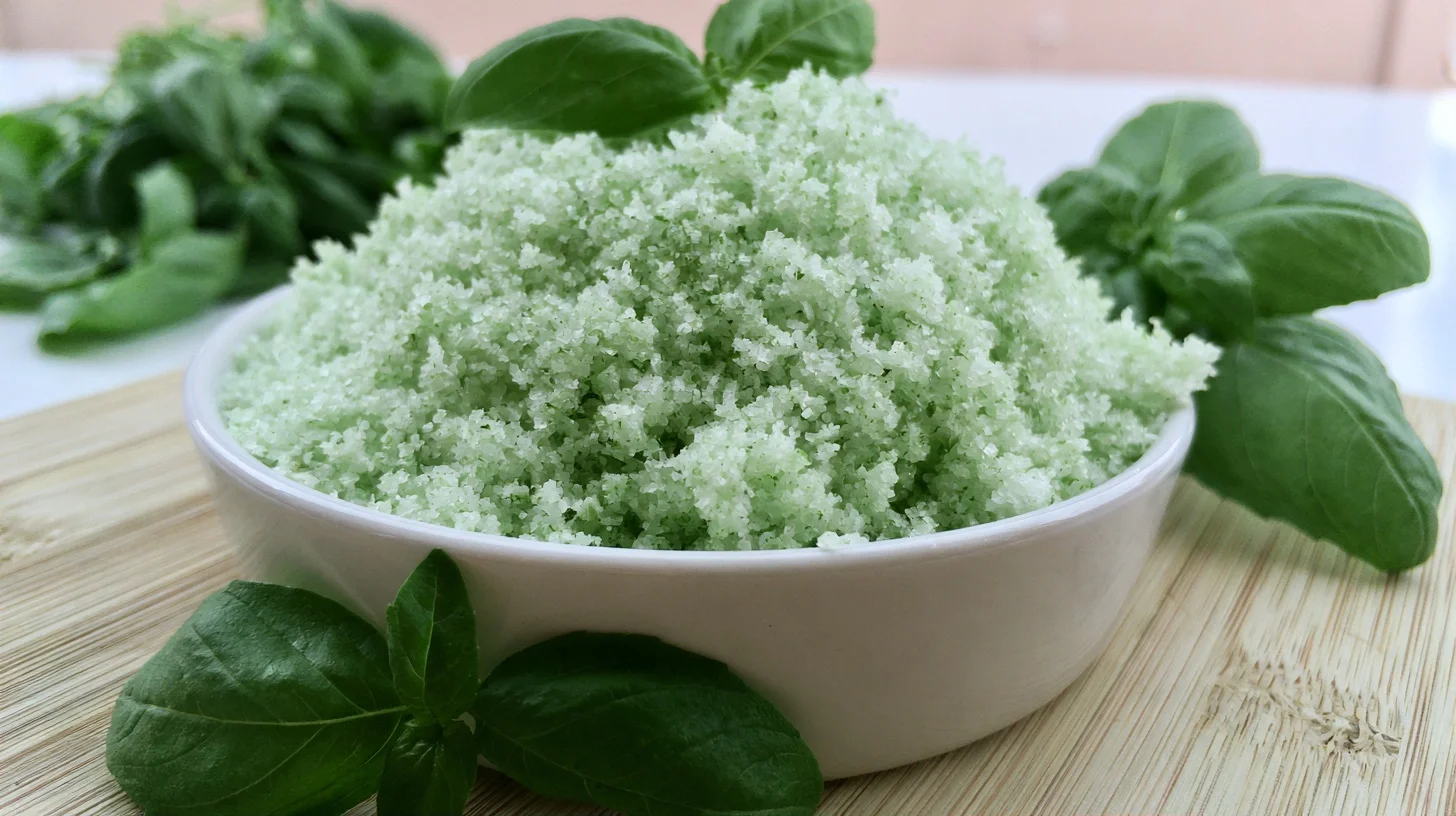
Table of contents
- Why You Will Love This basil salt recipe
- How to Make Basil Salt in Your Kitchen
- The Technique That Makes This Basil Salt Recipe Last Longer
- Creative Ways to Customize Your Basil Salt Recipe
- Understanding the Nutritional Benefits of Basil Salt
- Delicious Ways to Use Your Homemade Basil Salt
- Keeping Your Basil Salt Fresh for Months
- Frequently Asked Questions
Why You Will Love This basil salt recipe
- This recipe uses a tested 1:3 basil-to-salt ratio that prevents clumping and preserves vibrant green color for weeks.
- You can make a large batch in under 10 minutes and store it for up to three months without losing flavor.
- The finishing salt adds instant restaurant-quality flavor to simple dishes like scrambled eggs, pasta, and grilled fish.
- It’s an excellent way to preserve fresh basil when you have more than you can use before it wilts.
How to Make Basil Salt in Your Kitchen
Basil Salt
32
servings10
minutes0
minutes0
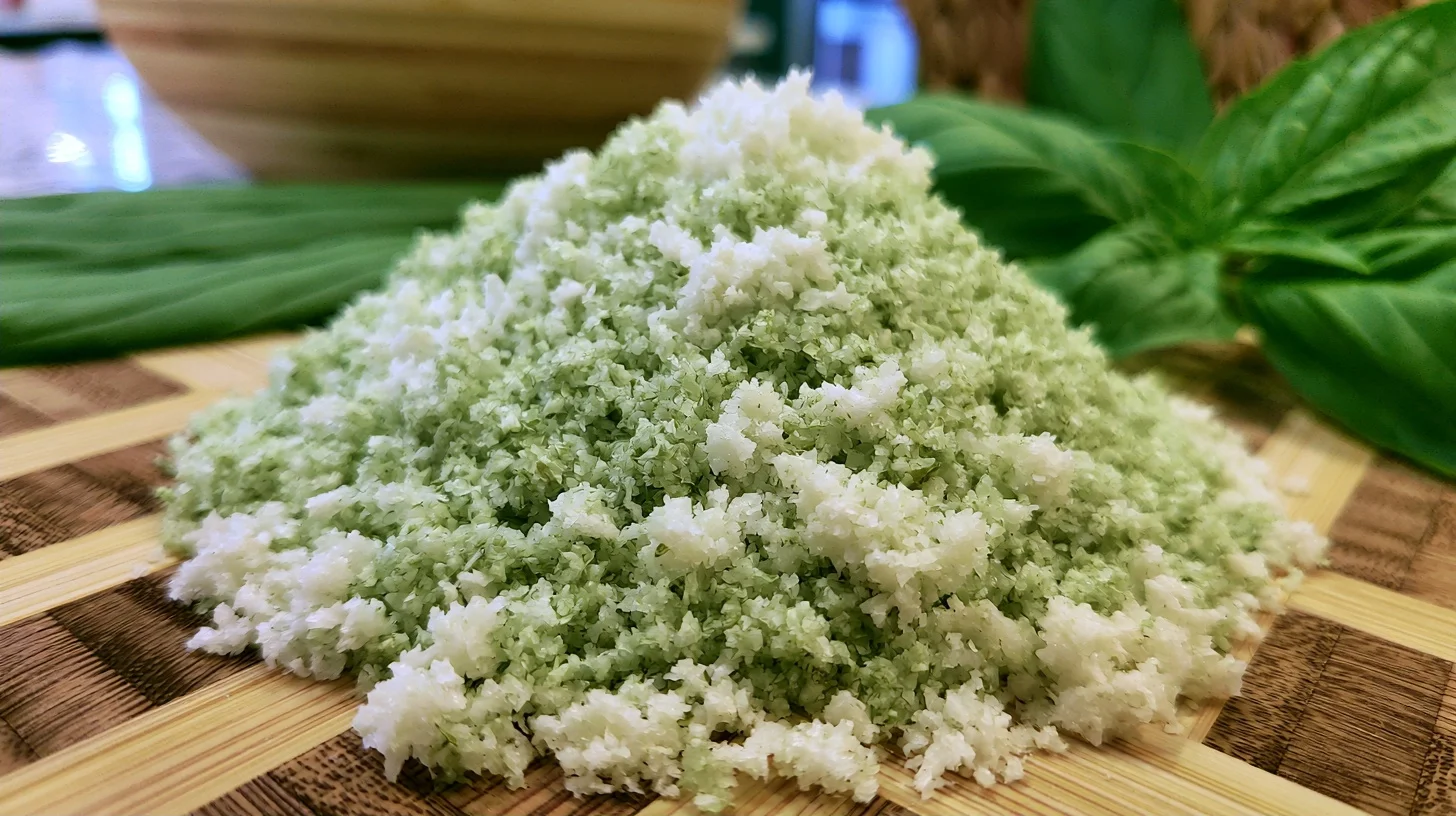
kcalThis homemade basil salt uses a tested 1:3 ratio of fresh basil to coarse sea salt for vibrant color and lasting flavor. Air-drying for 24 hours creates a free-flowing finishing salt that transforms everyday dishes into restaurant-quality meals.
Keep the screen of your device on
Ingredients
1 cup fresh basil leaves
3 cups coarse sea salt
1 teaspoon garlic powder
1 teaspoon red pepper flakes
2 tablespoons lemon zest
1 teaspoon dried oregano
1 teaspoon dried thyme
1 pinch black pepper
Directions
- Wash and dry the basil leaves thoroughly using a salad spinner, then pat them completely dry with paper towels. Any remaining moisture will cause the salt to clump and reduce shelf life.
- Combine the basil and salt in a food processor. Use a 1:3 ratio of basil to salt by volume for the best texture and flavor balance.
- Pulse the mixture 10 to 15 times in short bursts until the basil is finely chopped and evenly distributed. Avoid continuous blending, which can heat the mixture and darken the basil.
- Spread the basil salt in a thin, even layer on a parchment-lined baking sheet. This allows air to circulate and moisture to evaporate completely.
- Air-dry at room temperature for 24 hours, stirring the mixture every 6 to 8 hours. This step prevents mold and ensures the salt stays free-flowing.
- Transfer to an airtight container once completely dry. Store in a cool, dark place away from moisture and heat for up to three months.
Notes
- The ideal ratio of fresh basil to coarse salt is 1:3 by volume, which prevents clumping and preserves vibrant color.
- Air-drying for 24 hours produces better results than oven-drying, which can turn the basil brown and bitter.
- Use basil salt as a finishing salt rather than during cooking to preserve the bright basil flavor and aroma.
Nutrition Facts
- Serving Size: 1g
- Total number of serves: 32
- Calories: 0kcal
- Fat: 0g
- Carbohydrates: 0g
- Fiber: 0g
- Protein: 0g
Did you make this recipe?
Tag @therecipemasterblog on Instagram and hashtag it with #therecipemaster
Like this recipe?
Follow @therecipemasterblog on Pinterest
Follow us on Facebook!
Follow The Recipe Master on Facebook
The Technique That Makes This Basil Salt Recipe Last Longer
I’ve learned through trial and error that the drying method makes all the difference. In my testing, air-drying the basil-salt mixture for 24 hours produces better results than oven-drying, which can turn the basil brown and bitter. Here are my essential tips for perfect basil salt every time.
Choose the Right Salt
I recommend coarse sea salt or kosher salt for this recipe. The larger crystals absorb moisture from the basil more effectively than fine table salt. Fine salt can turn into a paste instead of staying granular, which makes it harder to sprinkle and store.
Dry Your Basil Properly First
The key ratio for basil salt is one part fresh basil leaves to three parts coarse salt by volume. However, you must wash and thoroughly dry your basil first. I use a salad spinner, then pat the leaves with paper towels until completely dry. Any excess moisture will cause clumping and reduce shelf life.
Process in Short Pulses
When blending the basil and salt together, use short pulses rather than continuous blending. This prevents the mixture from heating up, which can darken the basil. I pulse about 10 to 15 times until the basil is finely chopped and evenly distributed through the salt.
Spread and Air-Dry Completely
After processing, spread the basil salt in a thin layer on a parchment-lined baking sheet. Let it air-dry at room temperature for 24 hours, stirring occasionally. This step is crucial for preventing mold and ensuring the salt stays free-flowing. Fresh basil contains antioxidants and essential oils that are preserved when dried properly at room temperature.
Creative Ways to Customize Your Basil Salt Recipe
Once you master the basic technique, you can experiment with different herb combinations and flavor additions. I’ve created several variations that work beautifully for different cuisines and dishes.
Garlic Basil Salt
Add one teaspoon of garlic powder to the basic recipe for a savory finishing salt that’s perfect on popcorn, roasted potatoes, or garlic bread. The garlic enhances the basil without overpowering it, creating a balanced all-purpose seasoning.
Lemon Basil Salt
Mix in the zest of two lemons along with the basil for a bright, citrusy version. This variation is excellent on grilled fish, steamed vegetables, or fresh tomato salads. The lemon zest must be completely dry before mixing, or it will clump.
Spicy Basil Salt
Add one teaspoon of red pepper flakes to the mixture for a kick of heat. I use this version on pizza, pasta, and roasted chicken. It adds complexity without overwhelming the fresh basil flavor.
Italian Herb Salt
Combine basil with equal parts dried oregano and thyme for an Italian-inspired blend. This works wonderfully in tomato-based dishes and pairs beautifully with homemade basil pesto as a finishing touch on pasta.
Understanding the Nutritional Benefits of Basil Salt
Basil salt is essentially a sodium-based seasoning with minimal calories. One teaspoon contains approximately 2,300 milligrams of sodium, which is the same as regular salt. However, because the basil adds so much flavor, you may find yourself using less salt overall in your cooking.
The basil itself contributes negligible calories, fat, protein, and carbohydrates. What it does add are beneficial plant compounds including eugenol and linalool, which have anti-inflammatory properties. While you won’t consume large quantities of basil through this seasoning, every little bit contributes to your overall herb intake.
Delicious Ways to Use Your Homemade Basil Salt
I keep a small jar of basil salt on my counter because I reach for it constantly. Sprinkle it over scrambled eggs or avocado toast for breakfast, use it to season roasted vegetables or grilled meats for dinner, or rim a Bloody Mary glass for weekend brunch. The possibilities are endless once you have this versatile seasoning on hand.
My favorite way to use basil salt is as a finishing touch rather than during cooking. Sprinkle it on dishes just before serving to preserve the bright basil flavor and aroma. It’s particularly wonderful on fresh mozzarella and tomato salads, buttered corn on the cob, or simple pasta with olive oil.
Keeping Your Basil Salt Fresh for Months
Store your completely dried basil salt in an airtight glass jar or container away from direct sunlight and heat. I keep mine in a cool, dark pantry where it stays fresh for up to three months. The salt acts as a natural preservative, but moisture is the enemy of herb salts.
If you notice any clumping, it means moisture has gotten in. You can spread the salt on a baking sheet again and let it air-dry for a few hours to restore its texture. For longer storage, you can freeze basil salt for up to six months in a freezer-safe container. It won’t freeze solid because of the salt content, so you can scoop out what you need directly from the freezer.
Frequently Asked Questions
No, fresh basil is required for this recipe. Dried basil lacks the moisture needed to blend properly with the salt and won’t create the same vibrant color or fresh flavor. The whole point of basil salt is to preserve fresh herbs at their peak.
Properly dried and stored basil salt lasts up to three months at room temperature in an airtight container. Keep it away from moisture, heat, and direct sunlight. You can extend the shelf life to six months by storing it in the freezer.
The ideal ratio is one part fresh basil leaves to three parts coarse salt by volume. This ratio provides enough basil flavor without making the salt too moist, which would cause clumping and reduce shelf life.
Yes, you can make basil salt by hand. Finely chop the basil leaves with a sharp knife, then mix them thoroughly with the salt using a fork or your hands. The texture won’t be quite as uniform as processor-made basil salt, but it will still taste delicious.






Leave a Reply