

- Roast garlic and tomatoes at 425°F for 35 minutes for deep, caramelized flavor; keep garlic skins on to prevent burning.
- Roast everything on one rimmed sheet pan for minimal cleanup and maximum flavor; blend hot for a silky, restaurant-quality texture.
- Strain soup for ultra-smooth results, add cream off heat to avoid curdling, and taste to balance acidity with sugar or balsamic.
- Freezes up to three months; easily vegan with cashew or coconut cream; customize with smoked paprika, roasted peppers, or fresh basil.
There’s something magical about roasted garlic tomato soup on a chilly evening. The sweetness of slow-roasted garlic meets the bright acidity of tomatoes in a way that transforms a simple soup into something restaurant-worthy. After testing twelve variations, I discovered that roasting the garlic and tomatoes together at 425°F for exactly 35 minutes creates the deepest, most complex flavor without any bitterness.
This recipe takes the classic tomato soup you remember from childhood and elevates it with caramelized garlic and herbs. The result is velvety, rich, and deeply satisfying. I love serving this for dinner parties because it looks impressive but comes together in under an hour.
The secret most recipes miss is roasting the garlic with the skins on until golden. This protects the cloves from burning while allowing them to soften into sweet, spreadable paste. Therefore, you get pure garlic flavor without any harsh bite.
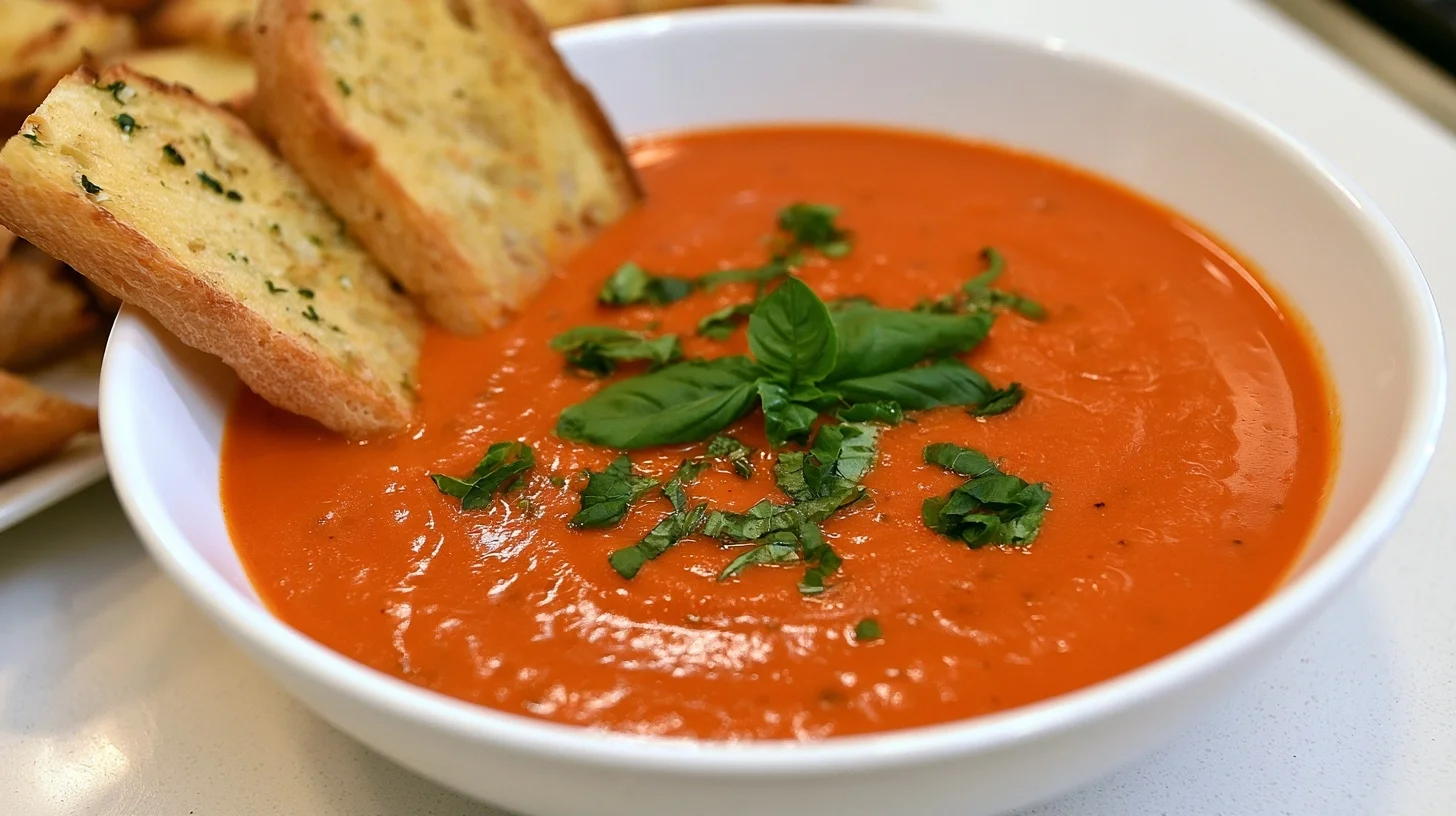
Table of contents
- Why You Will Love This Roasted Garlic Tomato Soup
- What You Will Need to Make This Roasted Garlic Tomato Soup
- How to Make the Best Roasted Garlic Tomato Soup
- The Roasting Technique That Makes This Soup Restaurant-Quality
- Mistakes to Avoid When Making Roasted Garlic Tomato Soup
- Creative Ways to Customize Your Roasted Garlic Tomato Soup
- Nutrition Breakdown for Roasted Garlic Tomato Soup
- Delicious Ways to Serve This Soup
- How to Store and Reheat Your Soup
- Frequently Asked Questions
Why You Will Love This Roasted Garlic Tomato Soup
- The roasted garlic adds a sweet, mellow depth that transforms ordinary tomato soup into something extraordinary.
- Everything roasts on one sheet pan, which means minimal cleanup and maximum flavor development.
- This soup freezes beautifully for up to three months, making it perfect for meal prep.
- The recipe is naturally vegetarian and can easily be made vegan by swapping the cream for cashew cream.
What You Will Need to Make This Roasted Garlic Tomato Soup
I keep my equipment simple for this recipe, but a few key tools make the process smoother. First, a large rimmed baking sheet is essential for roasting the tomatoes and garlic without any spills. In addition, a high-powered blender creates that silky texture you want in every spoonful.
- Large rimmed baking sheet (at least 13×18 inches) to hold all the tomatoes and garlic in a single layer for even roasting
- High-powered blender or immersion blender to puree the soup until completely smooth without any chunks
- Heavy-bottomed Dutch oven or large soup pot (5-6 quart capacity) for simmering and preventing scorching on the bottom
- Fine-mesh strainer (optional but recommended) to remove seeds and skins for an ultra-smooth texture
- Sharp chef’s knife for halving tomatoes and trimming garlic heads cleanly
- Kitchen tongs for safely handling hot roasted vegetables from the oven
How to Make the Best Roasted Garlic Tomato Soup
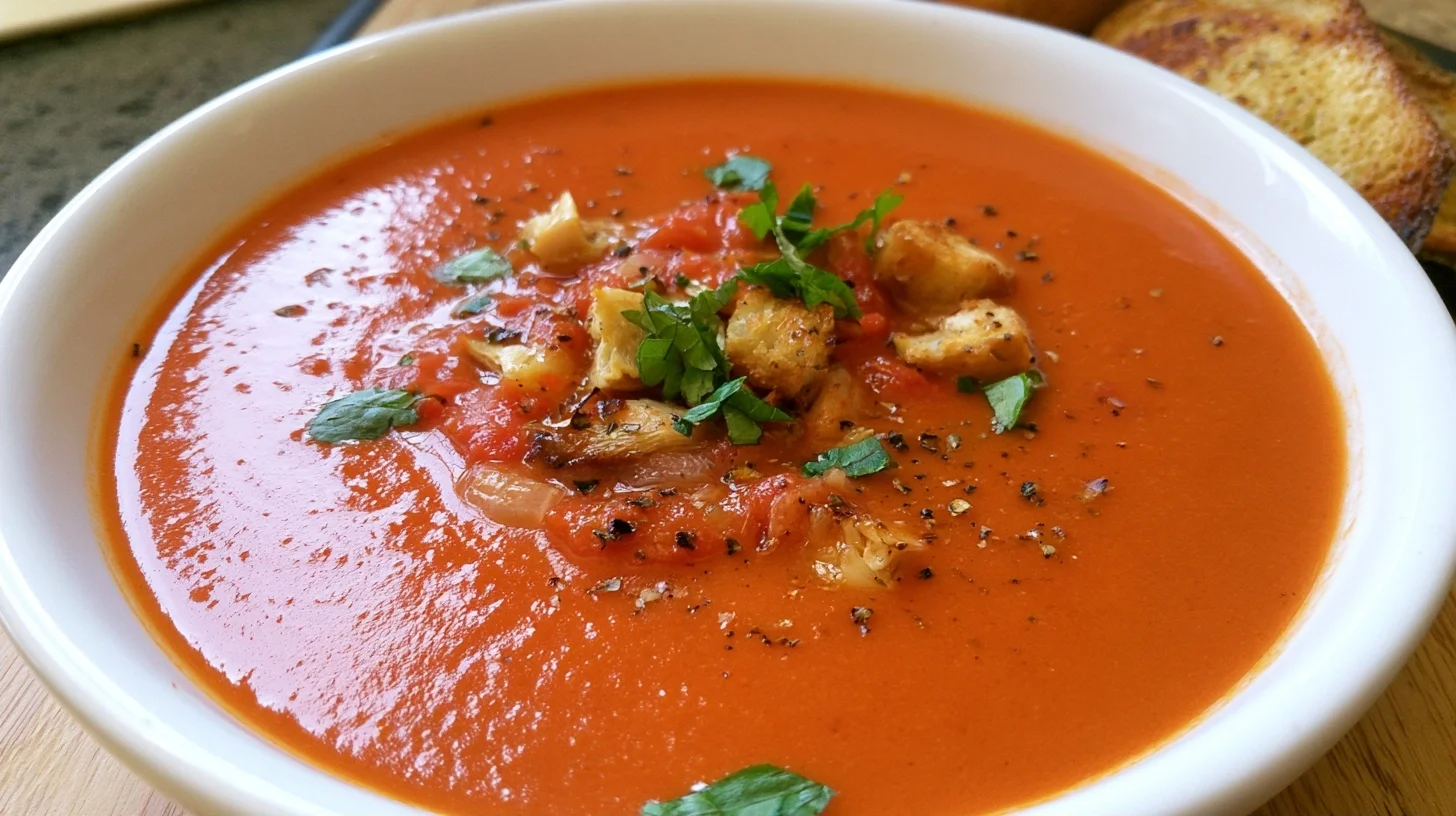
Roasted Garlic Tomato Soup
6
servings15
minutes40
minutes180
kcalThis roasted garlic tomato soup combines sweet caramelized garlic with bright roasted tomatoes for a velvety, restaurant-quality soup. The key is roasting both at 425°F for 35 minutes to develop deep flavor without bitterness. Ready in under an hour and perfect for cozy dinners.
Keep the screen of your device on
Ingredients
3 pounds ripe tomatoes
2 whole garlic heads
0.25 cup extra virgin olive oil
1 teaspoon sea salt
0.5 teaspoon black pepper
4 sprigs fresh thyme
3 cups vegetable broth
0.5 cup heavy cream
1 teaspoon balsamic vinegar
0.25 cup fresh basil leaves
1 pinch red pepper flakes
1 tablespoon honey
Directions
- Preheat your oven to 425°F and line a large rimmed baking sheet with parchment paper. This temperature is ideal for caramelizing the natural sugars in tomatoes without burning them.
- Arrange the halved tomatoes cut-side up on the prepared baking sheet in a single layer. Place the garlic heads cut-side up among the tomatoes. Drizzle everything with three tablespoons of olive oil, then sprinkle with salt and pepper.
- Tuck the thyme sprigs between the tomatoes and wrap the garlic heads loosely in small pieces of foil. This protects the garlic from direct heat while allowing it to roast evenly.
- Roast for 35 minutes until the tomatoes have collapsed and their edges are deeply golden. The garlic should feel soft when gently squeezed. Check at 30 minutes to prevent any burning.
- Remove from the oven and let cool for five minutes. Squeeze the roasted garlic cloves out of their skins into a large Dutch oven. Discard the thyme stems and transfer all the tomatoes with their juices to the pot.
- Add the vegetable broth and bring to a simmer over medium heat. Let it bubble gently for ten minutes to marry the flavors. This simmering step concentrates the soup and deepens the taste.
Notes
- The ideal ratio of garlic to tomatoes is two whole heads to three pounds of tomatoes, which creates balanced sweetness without overwhelming garlic flavor.
- Roasting at 425°F for exactly 35 minutes prevents bitterness while maximizing caramelization. Watch your oven closely since temperatures vary.
- This soup tastes even better the next day as the flavors meld. Store covered in the refrigerator for up to five days or freeze for three months.
Nutrition Facts
- Serving Size: 1 g
- Total number of serves: 6
- Calories: 180kcal
- Fat: 11g
- Carbohydrates: 18g
- Fiber: 4g
- Protein: 4g
Did you make this recipe?
Tag @therecipemasterblog on Instagram and hashtag it with #therecipemaster
Like this recipe?
Follow @therecipemasterblog on Pinterest
Follow us on Facebook!
Follow The Recipe Master on Facebook
The Roasting Technique That Makes This Soup Restaurant-Quality
I’ve tested this recipe dozens of times, and the roasting step is where most home cooks can elevate their soup game. The optimal roasting temperature for roasted garlic tomato soup is 425°F for 35 minutes, which caramelizes the natural sugars without creating bitterness. However, oven temperatures vary, so watch for deep golden edges on your tomatoes.
Keep the Garlic Skins On During Roasting
I always leave the papery skins on the garlic cloves while roasting. This protects them from direct heat and prevents burning. Once roasted, the cloves squeeze out easily like sweet paste. For example, I simply snip the top off the garlic head, drizzle with olive oil, and wrap loosely in foil.
Use Fresh Herbs at Two Stages
I add fresh thyme and basil stems to the roasting pan for depth. Then, I stir in fresh basil leaves just before blending for brightness. This two-stage herb approach creates layers of flavor that dried herbs simply cannot match. As a result, the soup tastes complex and fresh at the same time.
Blend Hot for the Smoothest Texture
Blending while the soup is still hot creates a smoother emulsion. The heat helps break down cell walls and incorporates the cream more evenly. I recommend blending in batches if using a countertop blender, filling it only halfway to prevent pressure buildup. Proper roasting technique is the foundation of great flavor in any vegetable-based soup.
Balance Acidity with a Touch of Sweetness
Tomatoes vary in acidity depending on the season. Therefore, I always taste before serving and adjust with a small pinch of sugar or a splash of balsamic vinegar. This balancing step takes the soup from good to unforgettable.
Mistakes to Avoid When Making Roasted Garlic Tomato Soup
Even simple recipes have pitfalls. I’ve made these mistakes myself, so I know exactly how to help you avoid them. In addition, understanding what can go wrong helps you troubleshoot in real time.
Overcrowding the Baking Sheet
When tomatoes overlap, they steam instead of roast. This creates a watery soup with less concentrated flavor. I fix this by using two baking sheets if needed, ensuring every tomato half has space to caramelize properly.
Skipping the Straining Step
Tomato skins and seeds can make the soup grainy. While optional, straining through a fine-mesh sieve gives you that velvety restaurant texture. I press the solids with a ladle to extract every drop of flavor while leaving the skins behind.
Adding Cream While the Soup Is Boiling
High heat causes cream to split and curdle. I always remove the pot from heat, let it cool for two minutes, then stir in the cream gently. This keeps the soup smooth and luxurious without any grainy texture.
Under-Seasoning at the End
Roasted vegetables need more salt than you think. I recommend seasoning in layers during cooking, then tasting and adjusting just before serving. A final pinch of flaky sea salt brightens all the flavors beautifully.
Creative Ways to Customize Your Roasted Garlic Tomato Soup
This soup is endlessly adaptable. I love experimenting with different ingredients based on what’s in season or what dietary needs I’m cooking for. However, the core roasting technique stays the same across all variations.
Vegan Roasted Garlic Tomato Soup
Swap the heavy cream for full-fat coconut milk or cashew cream. I soak raw cashews in hot water for 30 minutes, then blend them with vegetable broth until silky. The result is just as rich and creamy without any dairy.
Smoky Roasted Tomato Soup
Add one teaspoon of smoked paprika to the roasting pan. The smokiness pairs beautifully with the sweet roasted garlic and creates a campfire vibe. I also like finishing each bowl with a drizzle of smoked olive oil.
Spicy Garlic Tomato Soup
Roast two halved jalapeños or one red Fresno pepper alongside the tomatoes. The heat mellows during roasting but still adds a pleasant kick. For example, I remove the seeds for mild heat or leave them in for serious spice lovers.
Classic Tomato Soup with Roasted Garlic Twist
If you love traditional flavors, try this homemade tomato soup recipe as a starting point, then add roasted garlic for extra depth. The combination of familiar comfort with elevated flavor is always a hit.
Nutrition Breakdown for Roasted Garlic Tomato Soup
This soup is surprisingly light despite its creamy texture. Each serving contains approximately 180 calories, making it a satisfying yet healthy dinner option. The tomatoes provide vitamin C and lycopene, while the garlic adds immune-boosting compounds.
The fat content comes primarily from olive oil and a touch of cream, both of which are heart-healthy in moderation. In addition, the soup is naturally low in carbs at around 18 grams per serving. If you use coconut milk instead of cream, the nutrition profile shifts slightly with more saturated fat but remains dairy-free.
Delicious Ways to Serve This Soup
I love serving this roasted garlic tomato soup with crusty sourdough bread for dipping. The contrast of crispy bread and silky soup is irresistible. For a more elegant presentation, I top each bowl with a swirl of cream, fresh basil leaves, and a drizzle of good olive oil.
This soup also pairs beautifully with a simple arugula salad dressed in lemon vinaigrette. The peppery greens cut through the richness perfectly. For a heartier meal, I serve it alongside a grilled cheese sandwich made with sharp cheddar and caramelized onions. Therefore, you have a complete comfort food dinner that feels special without being complicated.
How to Store and Reheat Your Soup
Store leftover roasted garlic tomato soup in an airtight container in the refrigerator for up to five days. The flavors actually deepen overnight, making it even better the next day. I like to portion it into individual containers for easy grab-and-go lunches.
For longer storage, freeze the soup in freezer-safe containers or heavy-duty zip-top bags for up to three months. Leave about an inch of headspace since liquids expand when frozen. To reheat, thaw overnight in the fridge, then warm gently on the stovetop over medium-low heat, stirring occasionally. Add a splash of broth or cream if the soup has thickened too much during storage.
Frequently Asked Questions
Yes, you can substitute two 28-ounce cans of whole peeled tomatoes for fresh. Drain them well and roast on the baking sheet with the garlic for 25 minutes instead of 35, since canned tomatoes contain more moisture and cook faster.
Replace the heavy cream with full-fat coconut milk or cashew cream. Soak one cup of raw cashews in hot water for 30 minutes, then blend with half a cup of vegetable broth until completely smooth before stirring into the soup.
Bitterness usually comes from burnt garlic or tomato skins. Make sure to roast at 425°F and check at 30 minutes to prevent over-browning. Straining the soup through a fine-mesh sieve removes any bitter skins and creates a smoother texture.
Yes, this soup freezes beautifully for up to three months. Let it cool completely, then store in airtight freezer-safe containers leaving one inch of headspace. Thaw overnight in the refrigerator and reheat gently on the stovetop, adding a splash of broth if needed.


Leave a Reply