

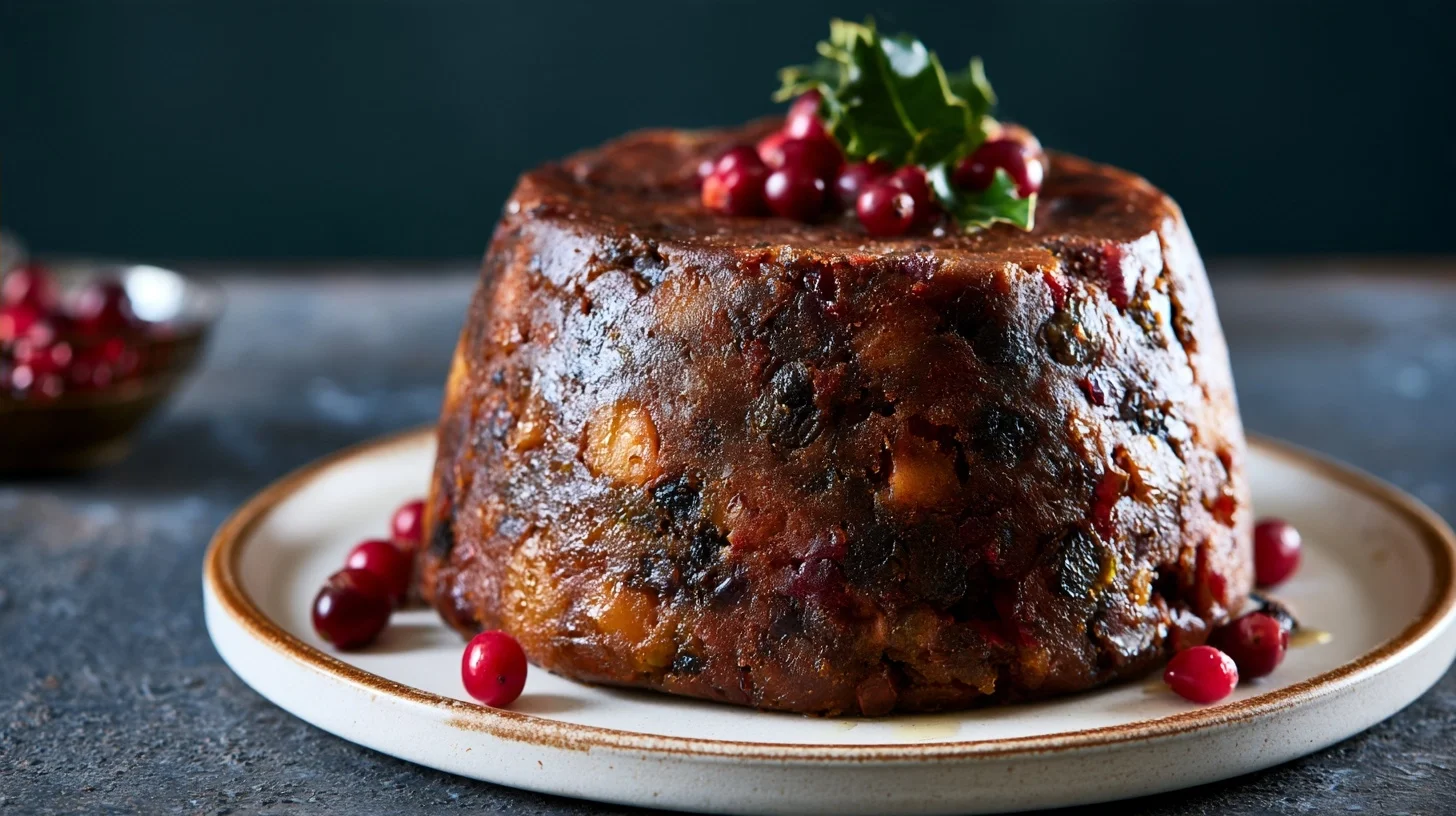
This Christmas pudding is a traditional British steamed dessert packed with dried fruit, warm spices, and a rich, dark sweetness. The pudding is dense and moist, with a deep molasses flavor and a texture that holds together when sliced.
The recipe takes 4 hours to steam and serves 8. Christmas pudding needs at least 4 weeks of aging before serving to develop its full flavor. It keeps for months when stored properly, making it the perfect make ahead dessert.
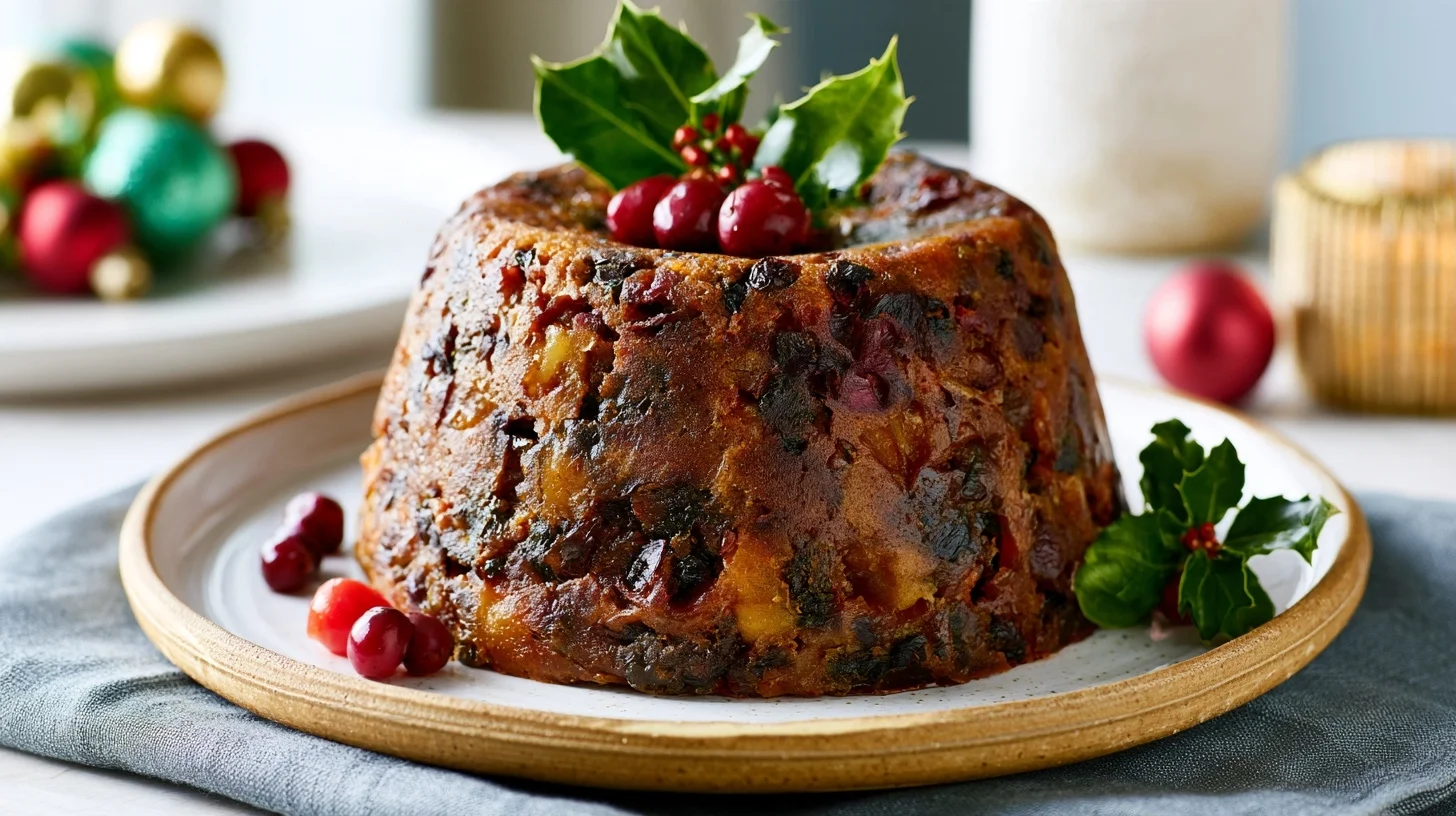
Table of contents
Why This Christmas Pudding Recipe Works
- Suet provides the traditional rich texture and helps the pudding stay moist through weeks of aging.
- Dark brown sugar and molasses create the deep color and caramel notes that define Christmas pudding flavor.
- Steaming for 4 hours at a gentle simmer cooks the pudding evenly without drying it out.
- The pudding recipe improves with age as the flavors meld and the alcohol preserves the fruit.
Christmas Pudding Recipe
Christmas Pudding Recipe
8
servings30
minutes4
hours485
kcalThis traditional British steamed dessert is packed with dried fruit, suet, and warm spices. The pudding takes 4 hours to steam and serves 8, and it needs at least 4 weeks of aging to develop its full rich flavor.
Keep the screen of your device on
Ingredients
3 cups mixed dried fruit
0.5 cup brandy or rum
1 cup suet
1 cup dark brown sugar
1.5 cups fresh breadcrumbs
0.75 cup all-purpose flour
2 teaspoons mixed spice
0.5 teaspoon salt
3 large eggs
0.25 cup molasses
1 tablespoon lemon zest
0.25 cup milk
Directions
- Soak the dried fruit in brandy or rum in a large bowl. Cover and let sit at room temperature for 12 to 24 hours. The fruit will absorb most of the liquid and plump up.
- Grease a 1.5 quart pudding basin thoroughly with butter, coating the bottom and sides. Cut a circle of parchment paper to fit the bottom and press it in.
- Combine the suet, brown sugar, breadcrumbs, flour, mixed spice, and salt in a large bowl. Stir until evenly mixed.
- Add the soaked fruit with any remaining liquid, the beaten eggs, molasses, lemon zest, and milk to the dry ingredients. Stir until everything is well combined and the batter is thick.
- Spoon the batter into the prepared basin. Smooth the top with the back of a spoon. Place a circle of parchment paper directly on the surface.
- Cover the basin with a large sheet of foil, pleated in the center to allow for expansion. Tie it tightly around the rim with kitchen string.
Notes
- Christmas pudding needs at least 4 weeks of aging after the first steaming to develop its full flavor and moist texture.
- If the center stays wet after 4 hours, the water boiled too hard. Return the pudding to the steamer and cook for 1 more hour at a gentle simmer.
- Christmas pudding keeps for 6 months wrapped in parchment and foil in a cool, dark place. Substitute cold grated butter for suet, but the texture will be lighter.
Nutrition Facts
- Serving Size: 1 g
- Total number of serves: 8
- Calories: 485kcal
- Fat: 18g
- Carbohydrates: 68g
- Net Carbs: 65g
- Fiber: 3g
- Protein: 6g
Did you make this recipe?
Tag @therecipemasterblog on Instagram and hashtag it with #therecipemaster
Like this recipe?
Follow @therecipemasterblog on Pinterest
Follow us on Facebook!
Follow The Recipe Master on Facebook
The sections below explain how to choose the right dried fruit, how to prepare the pudding for steaming, and what to do if the center stays wet.
Key Ingredients and Substitutions
A Christmas pudding recipe depends on a few ingredients that shape its texture and flavor.
- Suet: This is shredded beef or vegetable fat that stays solid at room temperature. It gives the pudding its traditional dense, moist crumb. Substitute cold grated butter, but the texture will be slightly lighter and less authentic.
- Mixed dried fruit: Raisins, currants, and sultanas make up the bulk of the pudding. Use any combination, but the total weight must stay at 3 cups. All raisins work, but the pudding will be less complex.
- Dark brown sugar: It adds moisture and a deep molasses flavor. Light brown sugar works, but the pudding will be paler and less rich.
- Brandy or rum: The alcohol preserves the fruit and adds flavor. Use orange juice for a non alcoholic version, but the pudding will not keep as long.
- Breadcrumbs: Fresh breadcrumbs give structure without heaviness. Use panko in a pinch, but the texture will be slightly coarser.
- Mixed spice: This British blend contains cinnamon, nutmeg, and cloves. Substitute 1 teaspoon cinnamon plus 1/4 teaspoon each nutmeg and allspice.
How to Get Christmas Pudding Right
Christmas pudding succeeds when you control the moisture and the steaming process.
- Soak the fruit overnight: Cover the dried fruit with brandy or rum and let it sit for 12 to 24 hours. The fruit absorbs the liquid and stays plump during steaming.
- Grease the basin thoroughly: Coat every surface of the pudding basin with butter. This prevents sticking and makes unmolding easier after the pudding cools.
- Cover the basin properly: Place a circle of parchment paper directly on the batter, then cover with a pleated sheet of foil. The pleat allows the pudding to expand. Tie it tightly with kitchen string.
- Keep the water at a gentle simmer: The water should come halfway up the side of the basin. Boiling water cooks the outside too fast and leaves the center raw. Check every 30 minutes and top up with boiling water as needed.
- Age the pudding for at least 4 weeks: Wrap the cooled pudding in fresh parchment and foil. Store it in a cool, dark place. Feed it with 2 tablespoons of brandy every week. The flavors deepen and the texture improves.
Reheating Before Serving
Steam the aged pudding for 2 hours before serving. The water should simmer gently, just as it did during the first steaming. Check the water level every 30 minutes. The pudding is ready when it is hot all the way through and a skewer inserted in the center comes out warm.
What Went Wrong
Why Is the Center Still Wet?
The water boiled instead of simmered, or the basin was too large. A rolling boil cooks the outside fast and leaves the center underdone. Return the pudding to the steamer and cook for 1 more hour at a gentle simmer. Next time, use a 1.5 quart pudding basin and keep the heat low enough that the water barely bubbles.
Why Did the Pudding Collapse?
The batter was too wet, or the pudding was unmolded while still hot. Too much liquid makes the structure weak. Let the pudding cool completely in the basin before turning it out. The fat solidifies as it cools and holds the shape. If the batter looks soupy before steaming, stir in 2 more tablespoons of breadcrumbs.
Why Is the Pudding Dry?
The water level dropped during steaming, or the pudding steamed too long. Dry heat turns the edges hard. Brush the pudding with brandy or rum to add moisture back. Next time, check the water every 30 minutes and add boiling water to keep it halfway up the basin. Do not steam longer than 4 hours on the first cook.
Serving Christmas Pudding
Serve Christmas pudding warm with brandy butter, hard sauce, or custard. The rich, dense pudding needs a creamy or boozy sauce to balance it. cranberry fluff adds a tart, fruity contrast on the side. For a traditional presentation, pour 3 tablespoons of warmed brandy over the pudding and light it at the table.
How to Store and Age Christmas Pudding
Christmas pudding keeps for 6 months when wrapped in parchment paper and foil and stored in a cool, dark place. Feed it with 2 tablespoons of brandy every 2 weeks for the first month. After aging, the pudding can be frozen for up to 1 year. Thaw it in the refrigerator overnight, then steam for 2 hours before serving.
The tradition of making Christmas pudding weeks in advance comes from the need to let the flavors mature. English Heritage’s history of Christmas pudding explains how the dish evolved from medieval porridge into the steamed dessert we know today. The alcohol acts as a preservative, so the pudding stays safe and actually improves with time.
Christmas Pudding Recipe FAQs
Yes, you can make Christmas pudding with cold grated butter instead of suet. Use the same amount, but the texture will be slightly lighter and less traditional.
The pudding is done when a skewer inserted in the center comes out clean after 4 hours of steaming. The top should feel firm and spring back when pressed lightly.
You can eat Christmas pudding right after steaming, but aging it for 4 weeks improves the flavor. The spices mellow and the fruit absorbs more alcohol during aging.
The white sauce is brandy butter or hard sauce. It is made from softened butter, powdered sugar, and brandy, beaten until light and fluffy. Serve it cold on the warm pudding.







Leave a Reply