

If you love the warm spices of fall baked into a soft, cake-like dessert, pumpkin bars are about to become your new favorite treat. These bars combine the comforting flavor of pumpkin pie with the ease of a sheet pan dessert, making them perfect for potlucks, holiday gatherings, or a simple weeknight indulgence. The key to exceptional pumpkin bars is balancing moisture without making them dense—a challenge that comes down to how you handle the pumpkin and eggs.
Unlike pumpkin pie, which requires a crust and careful baking to avoid curdling, pumpkin bars bake quickly and evenly in a single pan. The result is a tender, spiced cake topped with tangy cream cheese frosting that cuts through the sweetness beautifully. Whether you’re serving them at Thanksgiving or packing them in lunchboxes, these bars deliver all the flavor of pumpkin pie with far less effort.
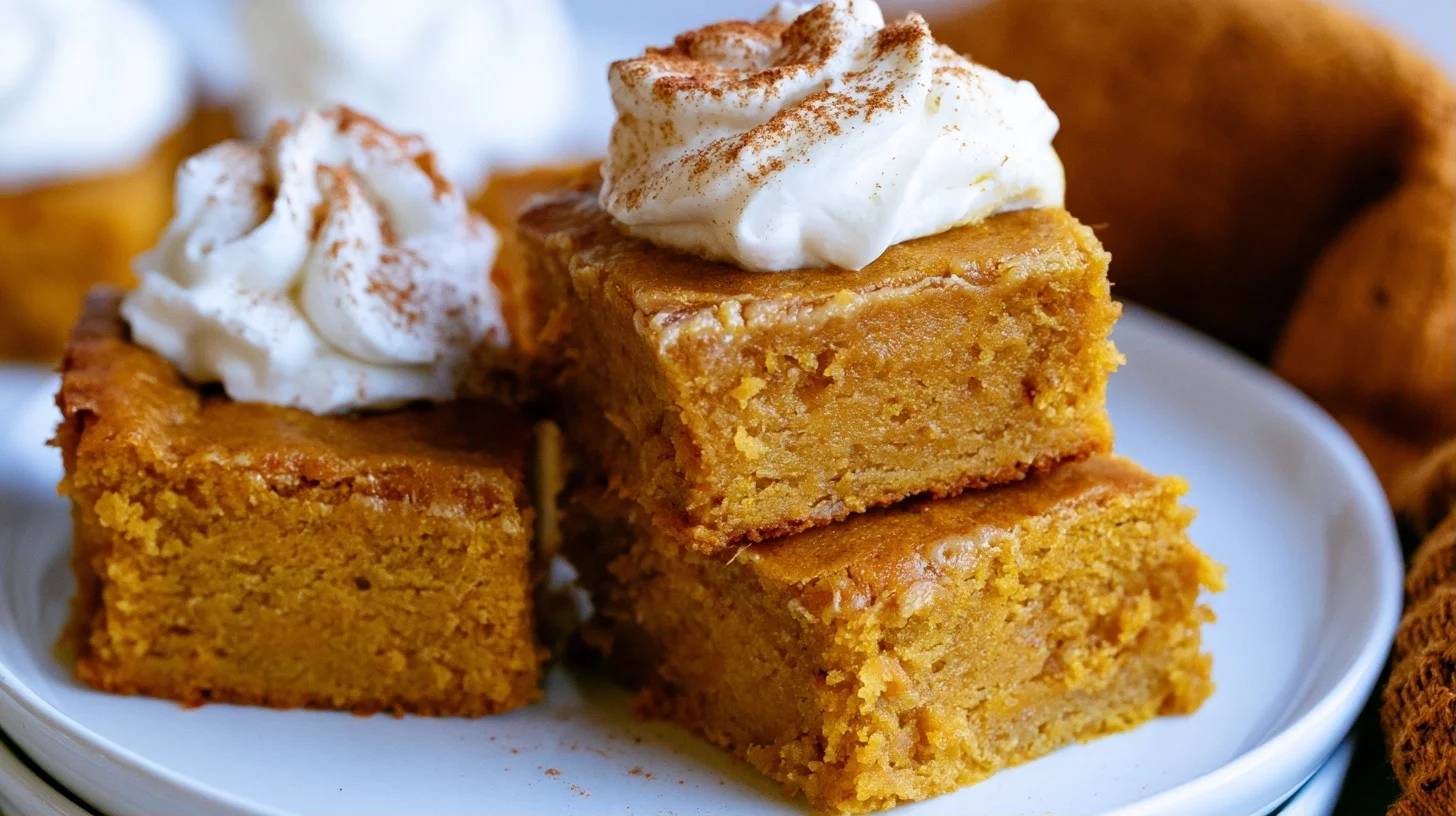
Table of contents
- Why You Will Love This Pumpkin Bars Recipe
- Essential Equipment for Perfect Pumpkin Bars
- How to Make Moist Pumpkin Bars Every Time
- Expert Tips for the Best Pumpkin Bars
- Common Mistakes That Ruin Pumpkin Bars
- Delicious Pumpkin Bar Variations
- Nutrition in Pumpkin Bars
- How to Serve Pumpkin Bars
- How to Store Pumpkin Bars
- Frequently Asked Questions
Why You Will Love This Pumpkin Bars Recipe
- Bakes in one pan and serves a crowd without the fuss of rolling dough or crimping crusts.
- The cream cheese frosting adds a tangy contrast that keeps the bars from tasting too sweet.
- These bars stay moist for days, making them ideal for advance preparation.
- The spice blend can be adjusted to suit your taste, from subtle warmth to bold cinnamon-forward flavor.
Essential Equipment for Perfect Pumpkin Bars
The right tools make a noticeable difference in how evenly these bars bake and how cleanly they release from the pan. Here’s what you’ll need:
- 9×13-inch baking pan: A metal pan conducts heat more evenly than glass, which helps prevent overbaking the edges while the center finishes.
- Parchment paper: Lining the pan with parchment that overhangs the sides allows you to lift the entire batch out for cleaner cutting.
- Electric mixer: Beating the eggs and sugar until light and fluffy incorporates air, which gives the bars their tender crumb.
- Wire cooling rack: Cooling the bars completely on a rack prevents condensation from forming on the bottom, which can make them soggy.
- Offset spatula: This makes spreading the cream cheese frosting evenly across the surface much easier than using a regular knife.
How to Make Moist Pumpkin Bars Every Time
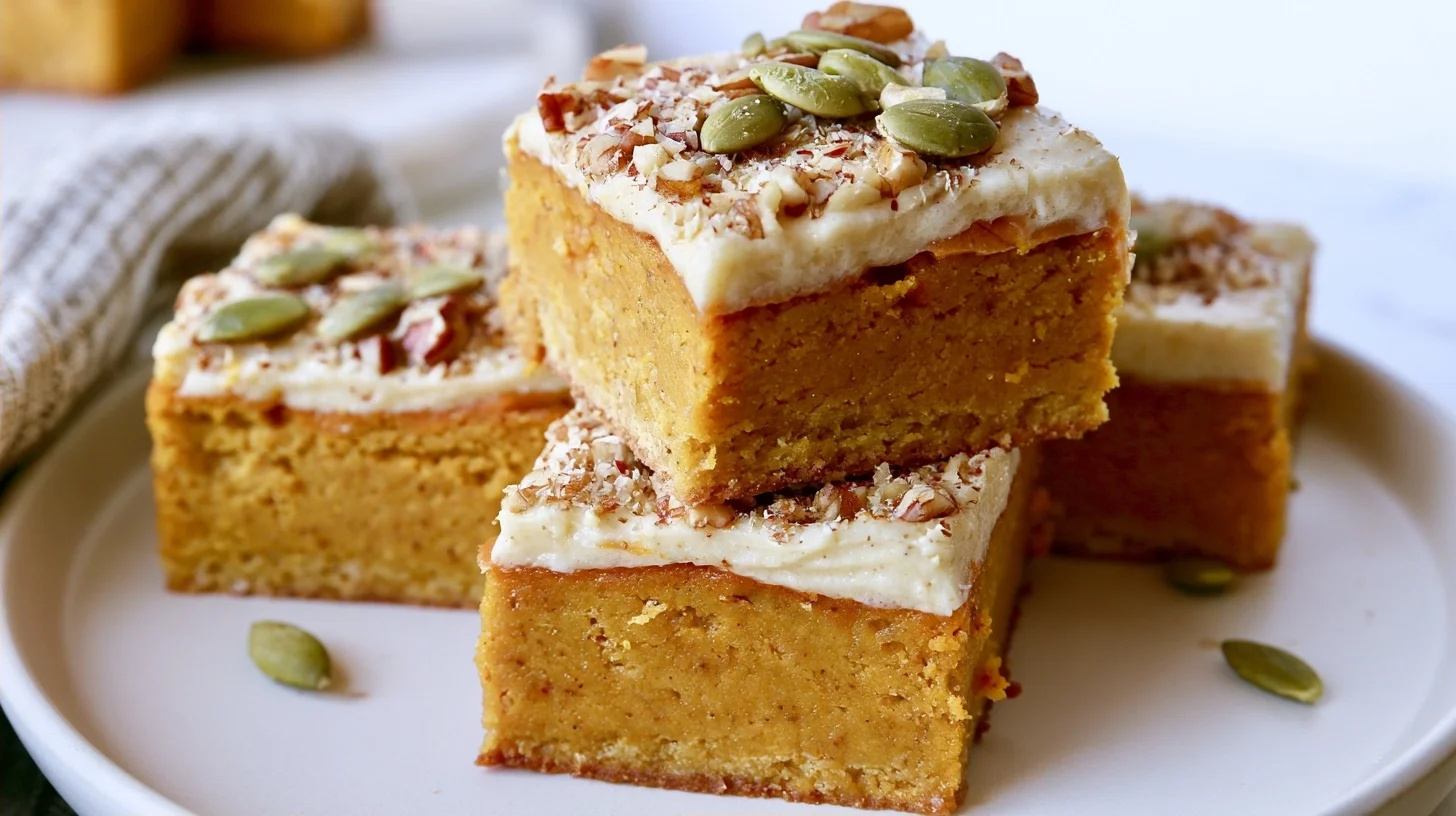
Pumpkin Bars with Cream Cheese Frosting
24
servings15
minutes25
minutes220
kcalThese pumpkin bars combine the warm spices of fall with a tender, moist crumb that stays fresh for days. The secret is beating the eggs and sugar until fluffy before adding the pumpkin, which creates a light texture instead of a dense one. Topped with tangy cream cheese frosting, they’re the perfect balance of sweet and spiced.
Keep the screen of your device on
Ingredients
2 cups all-purpose flour
2 teaspoons baking powder
1 teaspoon baking soda
2 teaspoons ground cinnamon
0.5 teaspoon ground nutmeg
0.5 teaspoon salt
4 large eggs
1.75 cups granulated sugar
1 cup vegetable oil
1 can pumpkin puree
8 ounces cream cheese
0.5 cup butter
Directions
- Preheat your oven to 350°F and line a 9×13-inch baking pan with parchment paper, leaving an overhang on two sides for easy removal. This step ensures the bars lift out cleanly without sticking.
- Whisk together the flour, baking powder, baking soda, cinnamon, nutmeg, and salt in a medium bowl. Set this aside while you prepare the wet ingredients.
- Beat the eggs and granulated sugar in a large bowl with an electric mixer on medium-high speed for about three minutes, until the mixture is pale, fluffy, and noticeably thicker. This step incorporates air, which keeps the bars light and tender.
- Add the oil and pumpkin puree to the egg mixture and beat until smooth and fully combined. The batter should be thick but pourable.
- Fold in the dry ingredients using a spatula, mixing just until the flour disappears. Overmixing at this stage will make the bars tough, so stop as soon as you no longer see streaks of flour.
- Pour the batter into the prepared pan and spread it evenly with a spatula. Tap the pan gently on the counter a few times to release any air bubbles.
Notes
- Pumpkin puree should be measured by spooning it into the measuring cup and leveling it off, not packing it in, to avoid adding too much moisture.
- If your bars turn out dense, you may have overmixed the batter after adding the flour or used too much pumpkin. Measure carefully and mix gently.
- Store pumpkin bars in an airtight container in the refrigerator for up to five days. They also freeze well for up to three months when wrapped tightly.
Nutrition Facts
- Serving Size: 1 g
- Total number of serves: 24
- Calories: 220kcal
- Fat: 10g
- Carbohydrates: 32g
- Fiber: 1g
- Protein: 3g
Did you make this recipe?
Tag @therecipemasterblog on Instagram and hashtag it with #therecipemaster
Like this recipe?
Follow @therecipemasterblog on Pinterest
Follow us on Facebook!
Follow The Recipe Master on Facebook
Expert Tips for the Best Pumpkin Bars
The difference between good pumpkin bars and exceptional ones comes down to a few key techniques that control moisture, texture, and flavor balance.
Use Canned Pumpkin Puree, Not Pumpkin Pie Filling
Canned pumpkin puree is unsweetened and unseasoned, which gives you complete control over the flavor and sweetness of the bars. Pumpkin pie filling contains added sugar and spices that will throw off the balance of the recipe, often resulting in bars that are too sweet and have a muddy spice profile. Always check the label to ensure you’re buying pure pumpkin.
Beat the Eggs and Sugar Until Light and Fluffy
This step is critical for creating a tender crumb. Beating the eggs and sugar for at least three minutes incorporates air, which helps the bars rise slightly and stay soft rather than dense. The mixture should become pale and noticeably thicker before you add the pumpkin. Skipping this step or rushing it will result in bars that feel heavy and compact.
Don’t Overmix the Batter After Adding Flour
Once the dry ingredients are added, mix just until the flour disappears. Overmixing develops gluten, which makes the bars tough and chewy instead of tender. Use a spatula to fold the flour in gently, scraping the bottom of the bowl to ensure everything is incorporated without overworking the batter.
Check for Doneness with a Toothpick
Pumpkin bars are done when a toothpick inserted into the center comes out with just a few moist crumbs attached. If the toothpick comes out wet with batter, bake for another three to five minutes and check again. Overbaking dries out the bars, so it’s better to check a few minutes early. The edges should pull away slightly from the pan, and the center should spring back lightly when pressed.
Let the Bars Cool Completely Before Frosting
Frosting warm bars will cause the cream cheese frosting to melt and slide off. Let the bars cool completely on a wire rack, which usually takes about an hour. If you’re in a hurry, you can refrigerate the pan for 20 minutes to speed up the process. The frosting will spread more smoothly and set properly on a cool surface.
For a different take on pumpkin desserts, try this pumpkin crunch recipe that layers pumpkin filling with a buttery pecan topping.
Common Mistakes That Ruin Pumpkin Bars
Even experienced bakers can run into trouble with pumpkin bars. Here are the most common problems and how to avoid them.
Using Too Much Pumpkin Puree
Adding extra pumpkin might seem like a good way to boost flavor, but it introduces too much moisture, which makes the bars dense and gummy. Stick to the exact amount called for in the recipe. If your bars turn out too wet, the most likely culprit is measuring the pumpkin incorrectly. Use a spoon to scoop the puree into a measuring cup and level it off with a knife rather than packing it in.
Overbaking the Bars
Pumpkin bars continue to cook slightly as they cool, so pulling them out when they’re just set prevents them from drying out. If the edges are pulling away from the pan and the center no longer jiggles, they’re done. Overbaked bars will be dry and crumbly, especially around the edges. Set a timer for the minimum baking time and check early.
Skipping the Parchment Paper
Greasing the pan alone doesn’t guarantee clean release, especially with a moist batter like this one. Parchment paper with overhanging edges allows you to lift the entire batch out of the pan before cutting, which results in cleaner edges and easier serving. If you don’t have parchment, use aluminum foil and grease it well.
Making the Frosting Too Thin
Cream cheese frosting should be spreadable but not runny. If your frosting is too thin, it will slide off the bars or soak into the surface. Make sure the butter and cream cheese are softened to room temperature, not melted. If the frosting is too soft, refrigerate it for 10 minutes before spreading. Adding powdered sugar gradually helps you control the consistency.
Delicious Pumpkin Bar Variations
These pumpkin bars are versatile and easy to customize based on your preferences or dietary needs.
Gluten-Free Pumpkin Bars
Replace the all-purpose flour with a gluten-free baking blend that includes xanthan gum. The texture will be nearly identical to the original. Avoid using single-ingredient flours like almond or coconut flour, as they don’t provide the same structure.
Dairy-Free Pumpkin Bars
Use coconut oil in place of butter in the bars, and make the frosting with dairy-free cream cheese and vegan butter. The bars will have a subtle coconut flavor, but it complements the pumpkin spices well. Make sure the coconut oil is melted and cooled slightly before mixing it into the batter.
Lower Sugar Pumpkin Bars
You can reduce the sugar in the bars by up to one-third without drastically affecting the texture. The bars will be less sweet, which allows the pumpkin and spice flavors to come forward more prominently. For the frosting, use less powdered sugar and add a splash of vanilla extract to enhance sweetness without extra sugar.
Add Chocolate Chips or Nuts
Folding in one cup of chocolate chips or chopped pecans adds texture and richness. Chocolate chips create pockets of melted chocolate throughout the bars, while pecans add a toasted crunch that pairs beautifully with the soft crumb. Stir them in gently after adding the flour.
Nutrition in Pumpkin Bars
Pumpkin bars are a dessert, but they do offer some nutritional benefits thanks to the pumpkin puree. Each bar contains a moderate amount of calories, primarily from the sugar and butter, but the pumpkin itself contributes fiber, vitamin A, and potassium. A typical serving contains around 200 to 250 calories, depending on the size of the slice and whether you include the cream cheese frosting.
The bars are relatively high in carbohydrates due to the flour and sugar, but they also provide a small amount of protein from the eggs. If you’re looking to reduce sugar, you can cut back on the amount in the batter without sacrificing too much texture. The cream cheese frosting is where most of the fat comes from, so using a thinner layer or skipping it entirely will lower the overall fat and calorie content.
For more ideas on seasonal pumpkin desserts, check out this collection of pumpkin desserts that go beyond traditional pie.
How to Serve Pumpkin Bars
Pumpkin bars are best served chilled or at room temperature, which allows the frosting to set properly and makes slicing easier. Cut them into squares or rectangles using a sharp knife, wiping the blade clean between cuts for the neatest edges. They pair beautifully with hot coffee, spiced chai, or a glass of cold milk.
For a more elegant presentation, dust the frosted bars with a light sprinkle of cinnamon or top each square with a candied pecan. They also work well as part of a dessert spread alongside apple crisp, pecan pie, or other fall favorites. If you’re serving them at a party, cut them into smaller bite-sized pieces to make them easier to eat while mingling.
How to Store Pumpkin Bars
Store pumpkin bars in an airtight container in the refrigerator for up to five days. The cream cheese frosting requires refrigeration to stay fresh, so don’t leave the bars out at room temperature for more than two hours. Layer parchment paper between stacked bars to prevent the frosting from smudging.
To freeze pumpkin bars, wrap individual pieces tightly in plastic wrap, then place them in a freezer-safe container or bag. They’ll keep for up to three months. Thaw the bars in the refrigerator overnight before serving. The texture and flavor hold up remarkably well after freezing, making them a great make-ahead option for holiday gatherings.
Frequently Asked Questions
Yes, you can use fresh pumpkin puree, but it must be cooked, pureed until smooth, and drained of excess liquid. Fresh pumpkin contains more water than canned, which can make the bars too wet and dense. Roast the pumpkin until very soft, puree it, then press it through a fine-mesh sieve or let it drain in a cheesecloth-lined colander for at least 30 minutes before measuring.
The bars are done when a toothpick inserted into the center comes out with just a few moist crumbs attached, not wet batter. The edges should pull away slightly from the pan, and the center should spring back lightly when pressed. Pumpkin bars continue to set as they cool, so avoid overbaking or they will become dry.
Yes, pumpkin bars are delicious without frosting. They have a moist, cake-like texture and plenty of spice flavor on their own. You can dust them with powdered sugar or drizzle them with a simple glaze made from powdered sugar and milk for a lighter topping.
Dense, gummy pumpkin bars usually result from too much pumpkin puree or not enough flour. Make sure you measure the pumpkin by spooning it into the measuring cup and leveling it off, rather than packing it in. Overmixing the batter after adding the flour can also create a dense texture by developing too much gluten.


Leave a Reply