

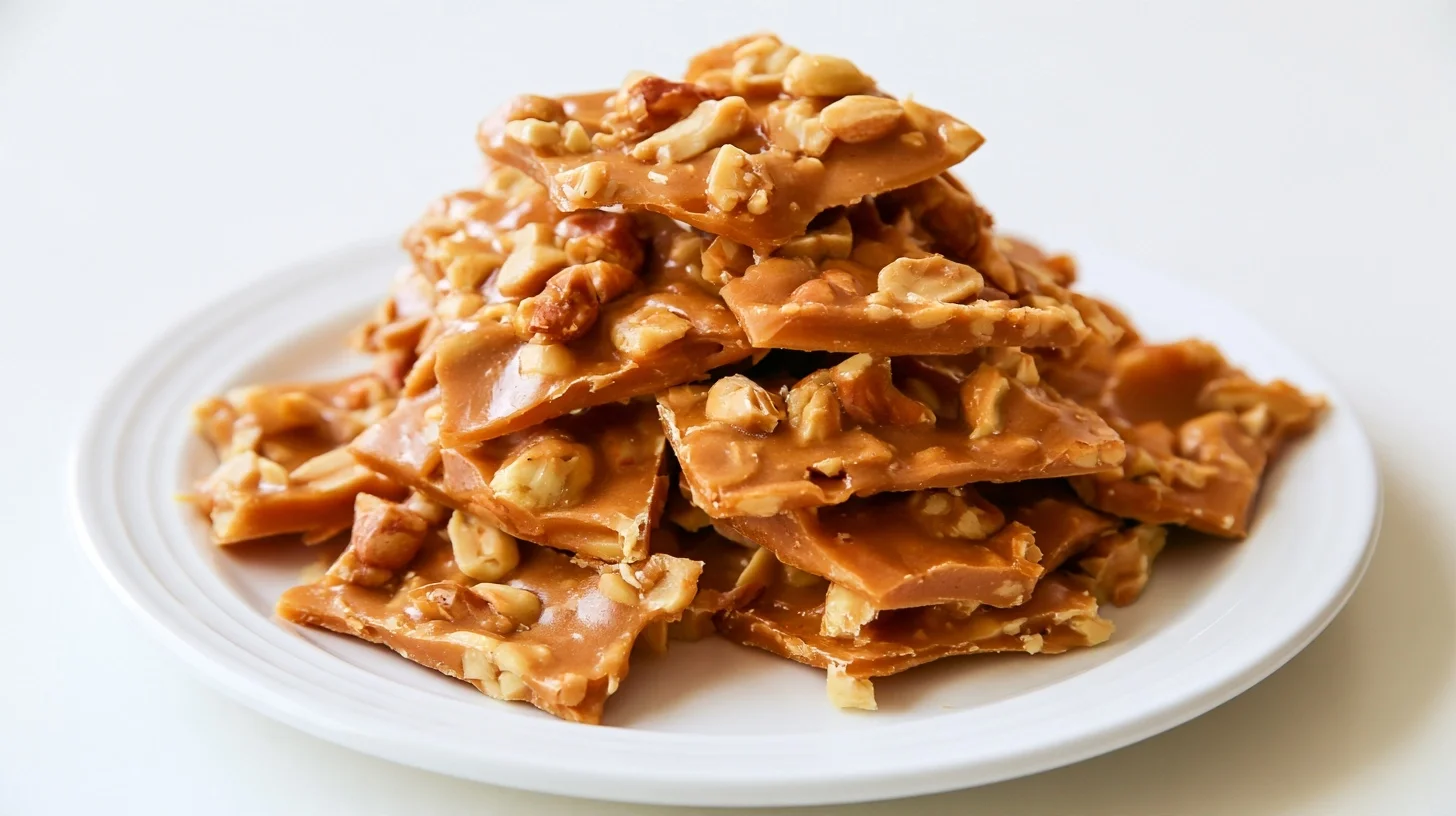
This peanut brittle recipe makes a thin, crisp candy with a buttery toffee flavor and roasted peanuts in every bite. The sugar mixture reaches 300°F to create the signature snap, and baking soda added at the end lightens the texture without making it chewy.
The recipe takes 30 minutes from start to finish and yields about 1 pound of brittle. Success depends on cooking the sugar to exactly 300°F, because lower temperatures produce soft candy and higher temperatures burn the sugar. The brittle keeps for 2 weeks in an airtight container at room temperature.
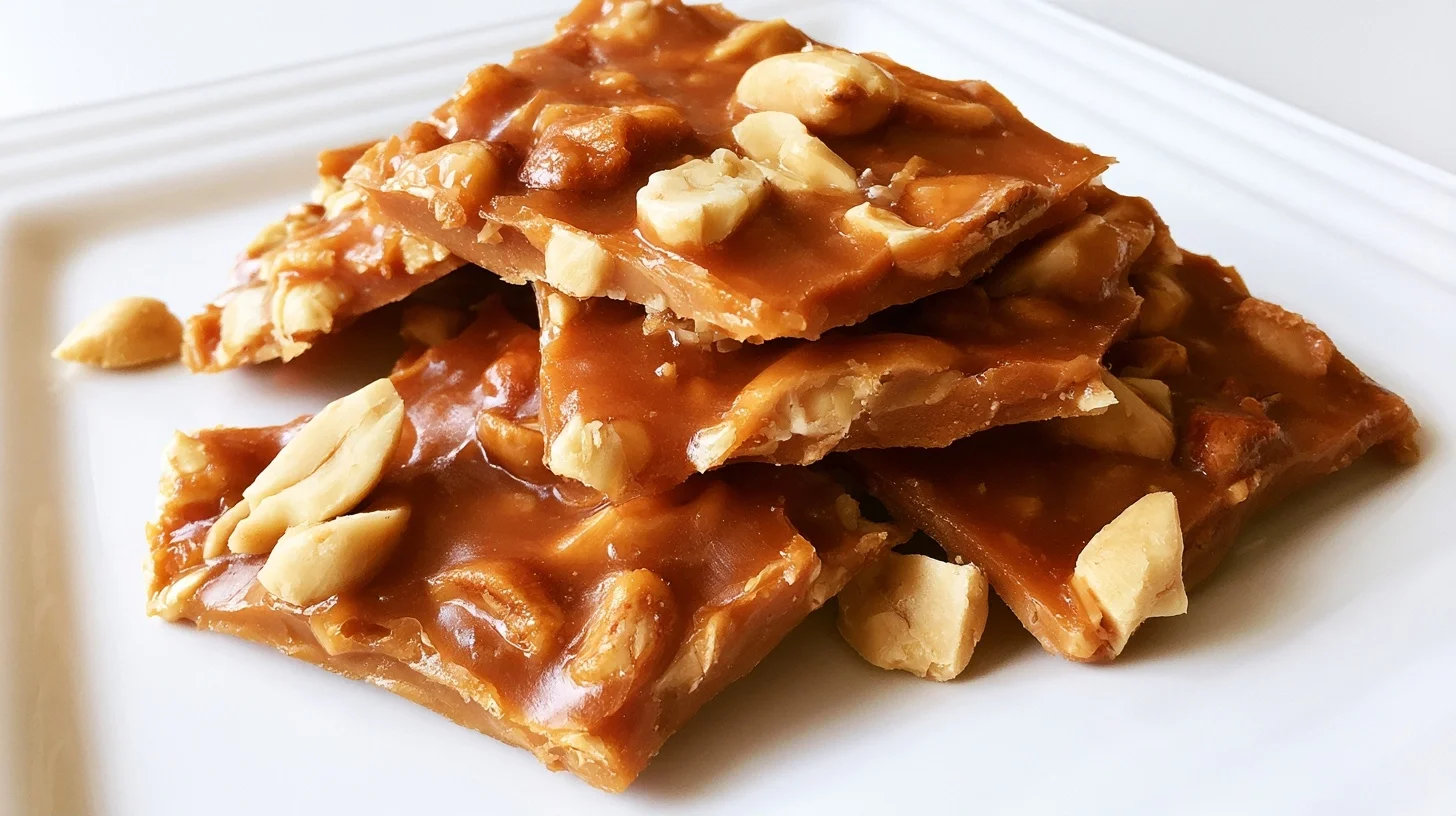
Table of contents
Why This Peanut Brittle Recipe Works
- Cooking the sugar to exactly 300°F creates the hard crack stage that gives peanut brittle its signature snap instead of a chewy texture.
- Adding butter at 280°F instead of at the beginning prevents the fat from separating during the long cooking time.
- Baking soda stirred in at the end creates tiny air bubbles that make the brittle easier to bite without softening it.
Peanut Brittle Recipe
Peanut Brittle Recipe
16
servings5
minutes20
minutes180
kcalThis peanut brittle is a thin, crisp candy with buttery toffee flavor and roasted peanuts throughout. The recipe takes 30 minutes total and uses a candy thermometer to reach the exact 300°F hard crack stage that creates the signature snap.
Keep the screen of your device on
Ingredients
2 cups granulated sugar
1 cup light corn syrup
0.5 cup water
2 cups raw peanuts
2 tablespoons butter
1 teaspoon vanilla extract
1 teaspoon baking soda
0.5 teaspoon salt
Directions
- Grease a large baking sheet with butter or cooking spray and set it aside. Line a second baking sheet with parchment paper as backup in case you need more space.
- Combine the sugar, corn syrup, and water in a heavy 3 quart saucepan over medium heat. Stir constantly until the sugar dissolves completely, about 3 to 4 minutes. The mixture will be clear with no visible sugar crystals.
- Clip a candy thermometer to the side of the pan with the bulb submerged in the liquid but not touching the bottom. Stop stirring and let the mixture boil without stirring until it reaches 280°F, about 12 to 15 minutes. The syrup will turn pale gold.
- Stir in the peanuts and butter at 280°F. Continue cooking, stirring occasionally, until the mixture reaches exactly 300°F and turns light amber, about 3 to 5 minutes. Watch closely because it goes from perfect to burned quickly.
- Remove the pan from heat immediately and quickly stir in the vanilla, baking soda, and salt. The mixture will foam and expand. Stir just until the baking soda is mixed in, about 5 seconds.
- Pour the hot mixture onto the prepared baking sheet immediately. Use a buttered metal spatula to spread it as thin as possible, about 1/4 inch thick. Work fast because it sets in under 2 minutes.
Notes
- The sugar must reach exactly 300°F to create hard, crisp peanut brittle instead of soft or chewy candy.
- If the brittle turns out sticky, the sugar did not reach 300°F. Return it to the pan and cook it to the correct temperature.
- Store peanut brittle for 2 weeks at room temperature in an airtight container with parchment between layers. Replace the peanuts with cashews or almonds for a different flavor, but add almonds 1 minute earlier because they are denser.
Nutrition Facts
- Serving Size: 1 g
- Total number of serves: 16
- Calories: 180kcal
- Fat: 6g
- Carbohydrates: 32g
- Fiber: 1g
- Protein: 3g
Did you make this recipe?
Tag @therecipemasterblog on Instagram and hashtag it with #therecipemaster
Like this recipe?
Follow @therecipemasterblog on Pinterest
Follow us on Facebook!
Follow The Recipe Master on Facebook
The sections below explain which ingredients affect the texture most, how to tell when the sugar reaches the right temperature, and what to do if the brittle turns out sticky or burned.
Key Ingredients and Substitutions
Four ingredients control whether peanut brittle turns out crisp or soft.
- Granulated sugar: creates the hard candy base when cooked to 300°F. Do not substitute brown sugar, which contains molasses that prevents the mixture from reaching hard crack stage and makes the brittle chewy instead of crisp.
- Raw peanuts: toast in the hot sugar and stay crunchy. Roasted salted peanuts work but add extra salt to the recipe, so reduce the added salt to 1/4 teaspoon. Peanuts provide protein and healthy fats, with about 7 grams of protein per ounce.
- Butter: adds richness and helps the brittle release from the pan. Margarine works but produces a slightly waxy texture and less flavor.
- Baking soda: reacts with the hot sugar to create carbon dioxide bubbles that lighten the texture. Omitting it makes dense, tooth-breaking brittle.
- Corn syrup: prevents sugar crystals from forming during cooking, which would make the brittle grainy. Honey can replace it but adds a floral flavor and makes the brittle slightly softer.
Candy Thermometer
A candy thermometer is essential for this recipe because the difference between 290°F and 310°F is the difference between chewy and burned. Clip it to the side of the pan with the bulb submerged in the sugar mixture but not touching the bottom. Without a thermometer, test by dropping a small amount of the mixture into ice water: at 300°F it forms hard, brittle threads that snap cleanly.
How to Make Peanut Brittle
Three steps decide whether the brittle turns out right.
- Cook without stirring: once the sugar dissolves, stop stirring and let the mixture boil undisturbed until it reaches 280°F, about 12 to 15 minutes. Stirring after the sugar dissolves causes crystals to form and makes the brittle grainy.
- Watch the color change: the mixture turns from clear to pale gold at 280°F, then deeper amber as it approaches 300°F. Remove it from heat the moment it reaches 300°F and turns light brown, because it continues cooking in the hot pan and will burn if left longer.
- Work fast after adding baking soda: the mixture foams and thickens within seconds of adding baking soda. Pour it onto the prepared pan immediately and spread it thin with a spatula, because it sets in under 2 minutes.
- Spread thin: pour the hot mixture onto a greased baking sheet and use a buttered spatula to spread it to about 1/4 inch thick. Thicker brittle is harder to bite and takes longer to cool.
- Cool completely before breaking: let the brittle sit at room temperature for 30 minutes until it is completely cool and hard. Breaking it while still warm causes it to shatter into dust instead of clean pieces.
What Went Wrong
Why Is the Brittle Sticky?
The sugar did not reach 300°F. Sticky or chewy peanut brittle means the mixture stopped between 250°F and 290°F, in the soft or firm ball stage instead of hard crack. Return the pan to medium heat and cook until the thermometer reads exactly 300°F. Next time, make sure your thermometer is accurate by testing it in boiling water, which should read 212°F at sea level.
Why Did the Sugar Crystallize?
Stirring after the sugar dissolved caused crystals to form. Grainy brittle happens when you stir the mixture during cooking or when undissolved sugar crystals on the side of the pan fall back into the syrup. Brush down the sides of the pan with a wet pastry brush at the start of cooking to dissolve any crystals. Once the sugar is fully dissolved and boiling, do not stir until you add the butter at 280°F.
Why Is the Brittle Burned?
The temperature went above 310°F or the mixture cooked too long. Burned brittle tastes bitter and turns dark brown or black. The sugar goes from perfect at 300°F to burned at 320°F in less than a minute. Pull the pan off the heat the instant the thermometer reaches 300°F. If your stove runs hot, start checking the color at 290°F and remove the pan when it turns light amber, even if the thermometer has not hit 300°F yet.
Peanut Brittle Variations
Cashew or Almond Brittle Recipe
Replace the peanuts with 2 cups of raw cashews or whole almonds. Cashews produce a sweeter, more buttery brittle. Almonds need 1 extra minute of cooking time after adding them because they are denser than peanuts.
Spiced Brittle
Stir 1/2 teaspoon of cinnamon or 1/4 teaspoon of cayenne pepper into the mixture with the baking soda. Cinnamon adds warmth without changing the texture. Cayenne gives a spicy finish that balances the sweetness.
Chocolate Drizzle
Melt 4 ounces of dark or milk chocolate and drizzle it over the cooled brittle. Let it set for 15 minutes before breaking into pieces. The chocolate adds richness but shortens the storage time to 1 week.
What to Serve With Peanut Brittle Recipe
Peanut brittle pairs well with coffee or hot chocolate because the bitterness balances the sweetness. It also works as a topping for vanilla ice cream or crushed into pieces and folded into whipped cream for a crunchy dessert layer. Buckeyes make another peanut based candy that uses the same ingredient pantry and works well on a holiday dessert tray alongside brittle.
How to Store Peanut Brittle
Peanut brittle keeps for 2 weeks at room temperature in an airtight container with parchment or wax paper between layers to prevent sticking. Do not refrigerate it, because moisture in the fridge makes the brittle sticky. The candy does not freeze well because thawing introduces condensation that ruins the crisp texture. Store it in a cool, dry place away from heat and humidity.
Make the brittle up to 2 weeks ahead for gift giving or holidays. Layer the pieces in a tin or jar with parchment between each layer. If the brittle becomes slightly sticky from humidity, spread the pieces on a baking sheet and warm them in a 200°F oven for 5 minutes to dry them out, then cool completely before storing again.
Peanut Brittle Recipe FAQs
Yes, but it is harder to get right. Test by dropping a bit of the hot mixture into ice water. At 300°F it forms hard, brittle threads that snap.
The sugar did not reach 300°F. Chewy brittle means it stopped between 250°F and 290°F. Cook it longer next time until the thermometer reads exactly 300°F.
Peanut brittle keeps for 2 weeks at room temperature in an airtight container. Do not refrigerate it because moisture makes it sticky.
Yes. Use roasted salted peanuts and reduce the added salt to 1/4 teaspoon. The brittle will be slightly saltier but still tastes good.





Leave a Reply