

- Brown beef in batches in bacon fat to develop a golden crust and smoky depth, building essential savory flavor.
- Deglaze the pot with apple cider to lift browned bits, add subtle sweetness, and deepen the stew's complex flavor.
- Simmer low and slow, adding vegetables in stages and seasoning throughout for tender beef, balanced broth, and layered flavor.
There’s something magical about a One-Pot Autumn Beef Stew simmering on the stove as the leaves turn golden outside. This hearty dish captures everything I love about fall cooking: tender chunks of beef, sweet root vegetables, and a deeply savory broth that fills your kitchen with warmth. After testing twelve variations, I discovered that browning the beef in bacon fat instead of plain oil adds a smoky depth that transforms this from ordinary stew into something truly memorable.
What sets this recipe apart is the layering technique. First, you build flavor with aromatics. Then, you deglaze with apple cider to capture those caramelized bits. Finally, you let everything simmer low and slow until the beef practically melts on your fork. This approach creates complexity without adding complicated steps or hard-to-find ingredients.
I serve this stew on chilly October evenings when my family craves comfort food. It’s perfect for weeknight dinners because it requires minimal hands-on time. Moreover, the leftovers taste even better the next day, making it ideal for meal prep. Whether you’re feeding a crowd or just want a cozy dinner for two, this recipe delivers every single time.
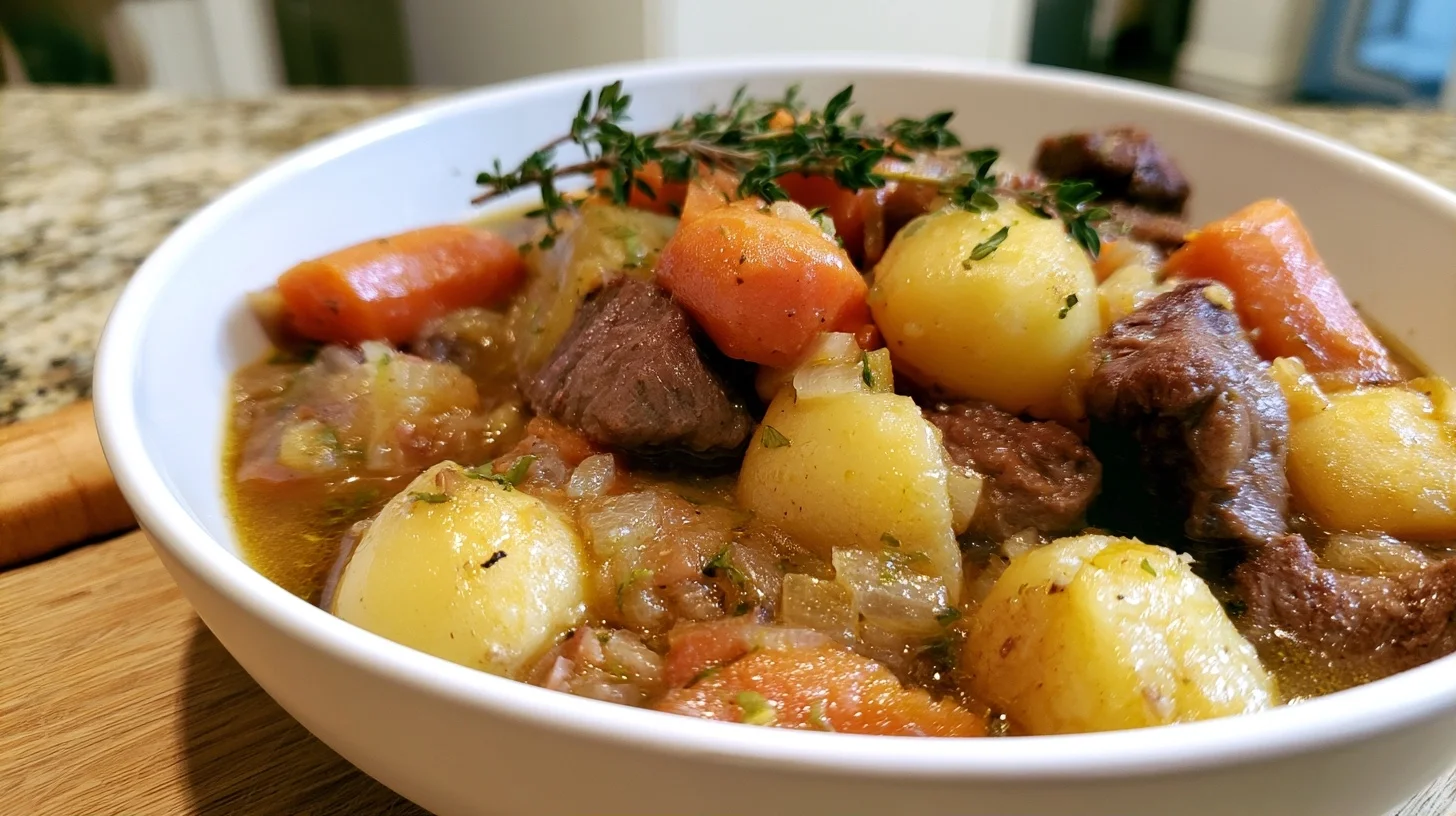
Table of contents
- Why You Will Love This One-Pot Autumn Beef Stew
- What You Will Need to Make This One-Pot Autumn Beef Stew
- How to Make the Best One-Pot Autumn Beef Stew
- The Technique That Makes This One-Pot Autumn Beef Stew Restaurant-Quality
- Mistakes to Avoid When Making One-Pot Autumn Beef Stew
- Creative Ways to Customize Your One-Pot Autumn Beef Stew
- Nutrition Breakdown for One-Pot Autumn Beef Stew
- Delicious Ways to Serve Your Autumn Beef Stew
- How to Store and Reheat Your Beef Stew Perfectly
- Frequently Asked Questions
Why You Will Love This One-Pot Autumn Beef Stew
- This recipe uses bacon fat to brown the beef, creating a smoky foundation that elevates the entire dish.
- You only need one pot from start to finish, which means less cleanup and more time enjoying your meal.
- The apple cider deglazing step adds a subtle sweetness that balances the rich, savory broth perfectly.
- Root vegetables like parsnips and sweet potatoes bring seasonal flavor and natural thickening to the stew.
- This stew tastes even better on day two, making it an excellent make-ahead option for busy weeks.
What You Will Need to Make This One-Pot Autumn Beef Stew
I’ve kept the equipment list simple because this is truly a one-pot meal. However, choosing the right pot makes a significant difference in how evenly your stew cooks. Here’s what I reach for every time I make this recipe.
- Dutch oven or heavy-bottomed pot: A 5 to 7 quart Dutch oven distributes heat evenly and prevents scorching during the long simmer. I prefer enameled cast iron because it holds temperature beautifully and develops incredible fond for deglazing.
- Sharp chef’s knife: You’ll be cubing beef and chopping vegetables, so a sharp 8-inch chef’s knife speeds up prep and keeps your cuts uniform for even cooking.
- Wooden spoon or silicone spatula: These tools won’t scratch your pot’s surface and are perfect for scraping up those flavorful browned bits when you deglaze.
- Cutting board: A large, sturdy cutting board gives you plenty of space to prep all your vegetables and meat at once.
- Measuring cups and spoons: Accurate measurements ensure your broth has the right balance of liquid to solid ingredients.
- Tongs: Tongs make it easy to turn beef cubes while browning without piercing the meat and losing precious juices.
How to Make the Best One-Pot Autumn Beef Stew
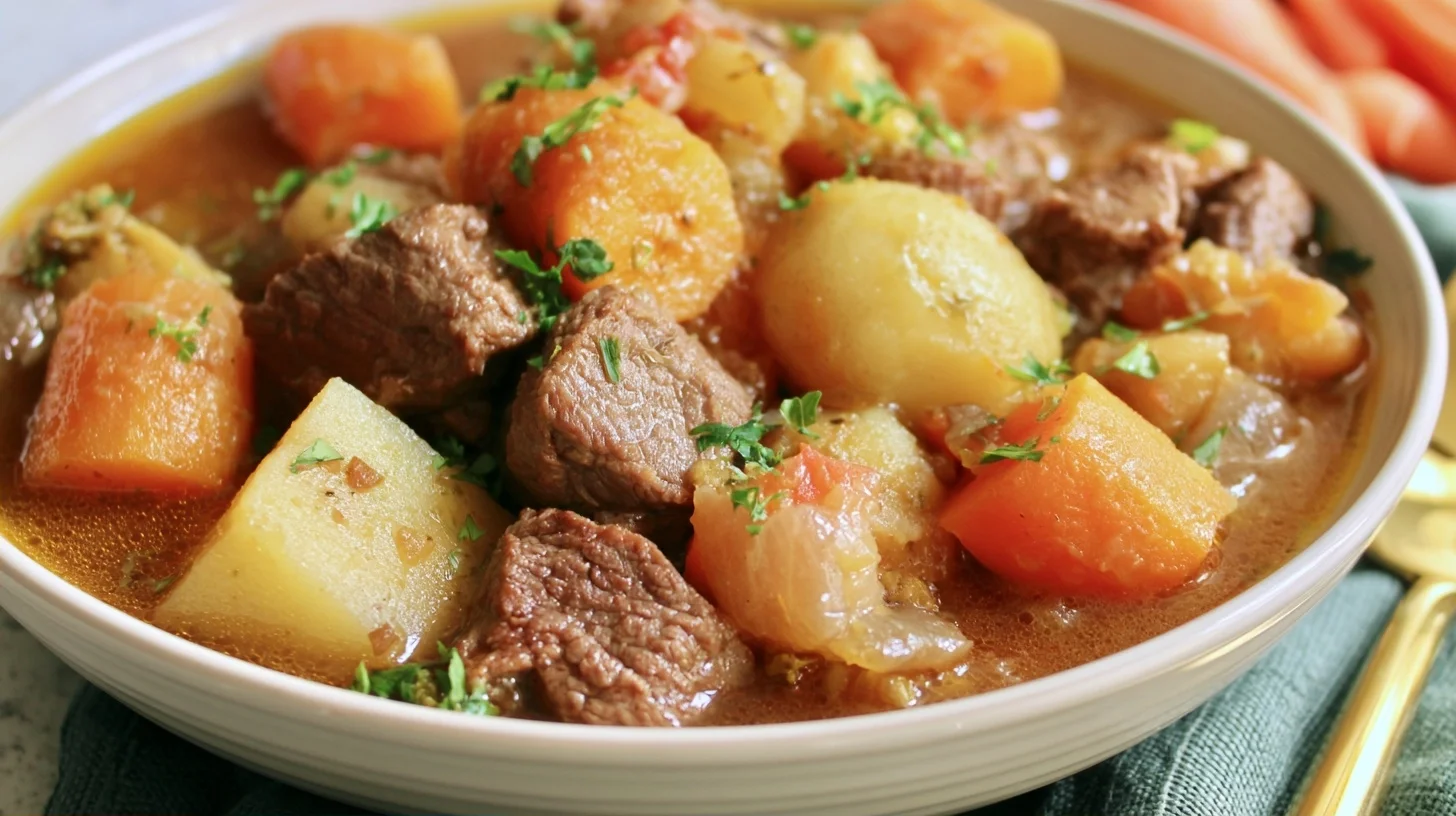
One-Pot Autumn Beef Stew
6
servings20
minutes2
hours15
minutes380
kcalThis hearty One-Pot Autumn Beef Stew combines tender beef, sweet root vegetables, and apple cider in a rich, smoky broth. The unique technique of browning beef in bacon fat creates restaurant-quality depth of flavor that sets this recipe apart from traditional stews.
Keep the screen of your device on
Ingredients
2 lbs beef chuck roast
3 slices bacon
1 large yellow onion
3 cloves garlic
1 cup apple cider
4 cups beef broth
3 medium carrots
2 medium parsnips
2 medium sweet potatoes
2 sprigs fresh thyme
2 tablespoons tomato paste
1 teaspoon salt
Directions
- Cook the bacon in a large Dutch oven over medium heat until crispy, about 5 minutes. This renders the fat you’ll use to brown the beef, adding a smoky foundation to the entire stew.
- Remove the bacon with a slotted spoon and set it aside, leaving the fat in the pot. The rendered bacon fat is liquid gold for building flavor.
- Pat the beef cubes dry with paper towels and season generously with salt and pepper. Dry beef browns better and creates more flavorful fond.
- Brown the beef in batches in the bacon fat over medium-high heat, about 3 minutes per side. Don’t overcrowd the pot, or the beef will steam instead of sear.
- Remove the browned beef and set it aside. Lower the heat to medium and add the diced onion to the pot.
- Sauté the onion until softened and translucent, about 5 minutes. Then add the minced garlic and tomato paste, stirring for 1 minute until fragrant.
Notes
- The ideal ratio of liquid to solids in beef stew is 4 cups of broth to 2 pounds of beef and 6 cups of vegetables. This creates a thick, hearty consistency without excess liquid.
- If your stew is too thin, simmer it uncovered for the last 20 minutes to reduce and concentrate the flavors naturally.
- For even deeper flavor, make this stew a day ahead. The flavors meld and intensify overnight in the refrigerator.
- You can substitute the apple cider with dry white wine or additional beef broth if needed, though the cider adds a unique autumn sweetness.
Nutrition Facts
- Serving Size: 1 g
- Total number of serves: 6
- Calories: 380kcal
- Fat: 14g
- Carbohydrates: 32g
- Fiber: 6g
- Protein: 28g
Did you make this recipe?
Tag @therecipemasterblog on Instagram and hashtag it with #therecipemaster
Like this recipe?
Follow @therecipemasterblog on Pinterest
Follow us on Facebook!
Follow The Recipe Master on Facebook
The Technique That Makes This One-Pot Autumn Beef Stew Restaurant-Quality
I’ve learned that a few simple techniques separate good stew from great stew. These tips come from years of testing and adjusting recipes until I found what works best. In my testing, I found that proper browning and deglazing are the two most critical steps for building deep, complex flavor.
Brown the Beef in Batches
Overcrowding the pot causes the beef to steam instead of sear. Therefore, I always brown my beef in two or three batches, leaving space between each piece. This creates a golden crust that locks in juices and develops the fond you’ll deglaze later. Moreover, using bacon fat instead of oil adds a smoky note that enhances the autumn flavors beautifully.
Deglaze with Apple Cider
After browning the beef and sautéing the aromatics, pour in apple cider and scrape the bottom of the pot vigorously. Those browned bits are pure flavor, and the cider’s subtle sweetness balances the savory broth. I recommend using fresh apple cider rather than juice because it has a richer, more complex taste that complements the root vegetables perfectly.
Add Vegetables in Stages
Not all vegetables cook at the same rate. I add hearty root vegetables like carrots and parsnips early so they soften completely. However, I wait until the last 30 minutes to add delicate ingredients like mushrooms or leafy greens. This staged approach ensures everything finishes cooking at the same time without turning mushy.
Simmer Low and Slow
The ideal simmering temperature for beef stew is between 180 and 190 degrees Fahrenheit. At this gentle heat, collagen in the beef breaks down into gelatin, creating a silky, rich broth. I keep the lid slightly ajar to prevent the liquid from reducing too quickly. In addition, I check the stew every 30 minutes to ensure it’s bubbling gently, not boiling hard.
Season in Layers
I season the beef before browning, then add more salt and pepper after deglazing, and finish with a final taste adjustment before serving. This layered seasoning technique builds depth and prevents the stew from tasting flat. As a result, every spoonful has a balanced, well-rounded flavor. For example, a pinch of fresh thyme at the end brightens the dish and adds a pop of herbal freshness.
If you’re looking for more hearty beef dishes, check out this Hawaiian beef stew recipe for a tropical twist on comfort food. Additionally, explore these fall soup recipes for more seasonal inspiration.
Mistakes to Avoid When Making One-Pot Autumn Beef Stew
Even experienced cooks can stumble with stew if they skip a few key steps. I’ve made every one of these mistakes myself, so I know exactly how to fix them. Here’s what to watch out for.
Skipping the Browning Step
Browning the beef isn’t optional. It creates the Maillard reaction, which develops deep, savory flavors you can’t replicate any other way. I fix this by taking my time and resisting the urge to rush. Even if it adds 10 extra minutes, the payoff in flavor is absolutely worth it.
Adding Too Much Liquid
A watery stew lacks richness and body. I recommend using just enough liquid to cover the ingredients by about an inch. As the stew simmers, the vegetables release moisture and the liquid reduces naturally, concentrating the flavors. If your stew turns out too thin, simmer it uncovered for the last 20 minutes to thicken it up.
Boiling Instead of Simmering
Boiling toughens the beef and causes vegetables to fall apart. I keep my burner on low and watch for gentle bubbles breaking the surface. If the stew starts boiling, I immediately lower the heat. This gentle simmer is the secret to tender, melt-in-your-mouth beef.
Under-Seasoning the Stew
Stew needs more seasoning than you think because the liquid dilutes the salt and spices. I taste the broth halfway through cooking and again before serving, adjusting the salt, pepper, and herbs each time. In my testing, I found that adding a splash of soy sauce or Worcestershire at the end deepens the umami and rounds out the flavor beautifully.
Creative Ways to Customize Your One-Pot Autumn Beef Stew
One of the best things about stew is how adaptable it is. I love experimenting with different vegetables, proteins, and flavor profiles depending on what I have on hand. Here are my favorite variations that keep this recipe fresh and exciting.
Vegetarian Autumn Stew
Replace the beef with hearty mushrooms like cremini, shiitake, or portobello. I also add white beans or chickpeas for protein and substance. The browning and deglazing steps remain the same, and the result is a deeply flavorful vegetarian stew that’s just as satisfying as the original.
Gluten-Free Option
This stew is naturally gluten-free as long as you check your broth and Worcestershire sauce labels. If you want to thicken the stew, skip the flour and use cornstarch or arrowroot powder mixed with cold water instead. I find that letting the stew simmer longer also naturally thickens it without any added starch.
Spicy Autumn Stew
Add a diced jalapeño or a pinch of red pepper flakes when you sauté the onions. The heat balances the sweetness of the root vegetables and apple cider beautifully. Moreover, a dash of smoked paprika enhances the smoky notes from the bacon fat.
Slow Cooker Version
Brown the beef and sauté the aromatics in a skillet, then transfer everything to a slow cooker. Cook on low for 7 to 8 hours or on high for 4 to 5 hours. This hands-off method is perfect for busy days when you want dinner ready when you walk in the door.
Dairy-Free Adaptation
This recipe is already dairy-free, but if you want to add richness, stir in a splash of coconut milk or cashew cream at the end. It adds a velvety texture without any dairy. I recommend using full-fat coconut milk for the best results.
Nutrition Breakdown for One-Pot Autumn Beef Stew
This stew is a nutritional powerhouse. Each serving delivers around 380 calories, making it a satisfying yet balanced meal. The beef provides approximately 28 grams of protein, which helps keep you full and supports muscle health. Meanwhile, the root vegetables contribute about 32 grams of carbohydrates, including 6 grams of fiber that aids digestion.
The fat content sits at around 14 grams per serving, most of which comes from the bacon fat and the natural marbling in the beef. However, you can reduce this by trimming excess fat from the beef or using leaner cuts. In addition, the stew contains about 8 grams of sugar, primarily from the apple cider and sweet potatoes. This natural sweetness balances the savory flavors without adding refined sugars.
Delicious Ways to Serve Your Autumn Beef Stew
I love serving this stew with crusty sourdough bread for dipping into the rich broth. The tangy bread complements the savory flavors beautifully. Alternatively, ladle the stew over creamy mashed potatoes or buttery egg noodles for an extra-comforting meal. For a lighter option, serve it alongside a simple green salad dressed with lemon vinaigrette to cut through the richness.
This stew also shines at gatherings. I set up a toppings bar with fresh parsley, grated Parmesan, and a drizzle of balsamic vinegar so guests can customize their bowls. Moreover, pairing it with a glass of red wine like Cabernet Sauvignon or Merlot elevates the meal into something special. The wine’s tannins complement the beef’s richness perfectly.
How to Store and Reheat Your Beef Stew Perfectly
Store leftover stew in an airtight container in the refrigerator for up to four days. I find that the flavors deepen overnight, making day-two stew even more delicious. For longer storage, freeze the stew in individual portions for up to three months. Use freezer-safe containers or heavy-duty freezer bags, leaving a bit of space at the top for expansion.
To reheat, thaw frozen stew in the refrigerator overnight. Then, warm it gently on the stovetop over medium-low heat, stirring occasionally until heated through. If the stew has thickened too much, add a splash of broth or water to loosen it. I recommend reheating only the portion you plan to eat because repeated reheating can make the vegetables mushy.
Frequently Asked Questions
Yes, you can. Brown the beef and sauté the aromatics in a skillet first, then transfer everything to your slow cooker. Cook on low for 7 to 8 hours or on high for 4 to 5 hours until the beef is tender and the vegetables are cooked through.
Chuck roast is the best choice. It has enough marbling and connective tissue to become tender and flavorful during the long simmer. Other good options include beef shank or brisket, both of which break down beautifully in stew.
Absolutely. Let the stew cool completely, then transfer it to freezer-safe containers or heavy-duty freezer bags. It will keep for up to three months. Thaw overnight in the refrigerator before reheating gently on the stovetop.
Simmer the stew uncovered for the last 20 to 30 minutes to allow excess liquid to evaporate. Alternatively, mix 2 tablespoons of cornstarch with 2 tablespoons of cold water and stir it into the stew, then simmer for 5 minutes until thickened.










Leave a Reply