

These Lemon Snowball Cookies are tender, buttery cookies rolled in powdered sugar with bright lemon flavor baked right in. The soft texture comes from cornstarch in the dough, and the citrus zing comes from both lemon zest and lemon juice.
The recipe takes 30 minutes total and makes 24 cookies. The dough chills for 15 minutes so the cookies hold their shape, and they keep for up to 5 days in an airtight container.

Table of contents
- Why This Lemon Snowball Cookie Recipe Works
- Lemon Snowball Cookies Recipe
- Key Ingredients and Substitutions
- How to Make Lemon Snowball Cookies
- Why Did the Cookies Spread?
- Lemon Snowball Cookies Variations
- What to Serve With Lemon Snowball Cookies
- How to Store Lemon Snowball Cookies
- Lemon Snowball Cookies FAQs
Why This Lemon Snowball Cookie Recipe Works
- Cornstarch replaces part of the flour to create a tender, melt-in-your-mouth texture that defines snowball cookies.
- Both lemon zest and juice go into the dough, so the lemon flavor comes through even after baking.
- Rolling the cookies in powdered sugar while still warm creates the signature snowy coating that sticks.
Lemon Snowball Cookies Recipe
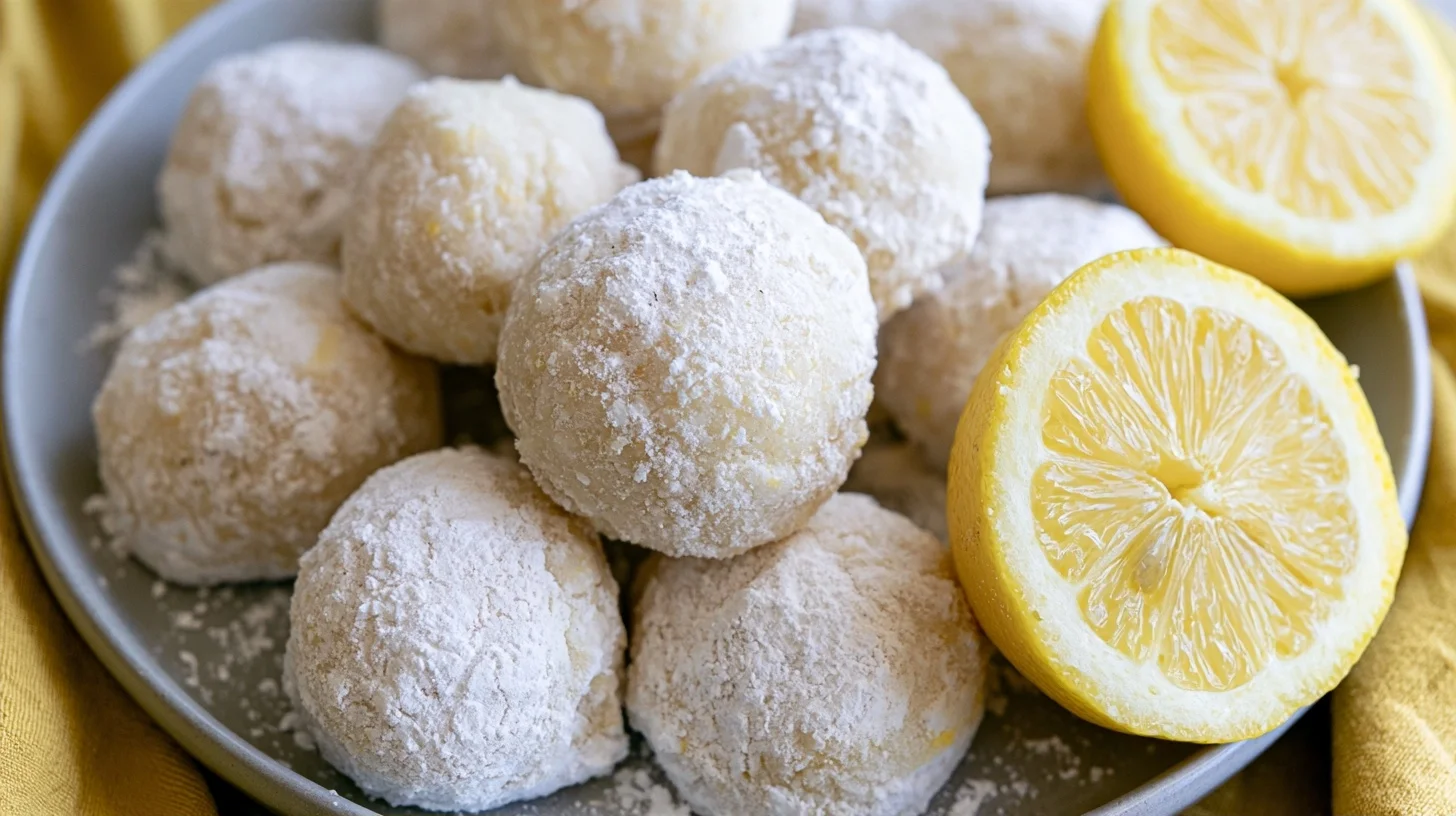
Lemon Snowball Cookies Recipe
24
servings15
minutes14
minutes110
kcalLemon Snowball Cookies are tender, buttery cookies with bright lemon flavor and a snowy powdered sugar coating. The recipe takes 30 minutes and makes 24 cookies, using cornstarch for the signature melt-in-your-mouth texture.
Keep the screen of your device on
Ingredients
1 cup butter
0.5 cup powdered sugar
1 tablespoon lemon zest
2 tablespoons fresh lemon juice
1 teaspoon vanilla extract
1.5 cups all-purpose flour
0.5 cup cornstarch
0.25 teaspoon salt
1 cup powdered sugar
Directions
- Beat the butter and powdered sugar in a large bowl with an electric mixer on medium speed for 2 minutes until light and fluffy. The mixture should look pale and hold soft peaks.
- Add the lemon zest, lemon juice, and vanilla and beat for 30 seconds until combined. The mixture may look slightly curdled from the lemon juice.
- Whisk the flour, cornstarch, and salt in a separate bowl. Add the dry ingredients to the butter mixture and mix on low speed just until no dry flour remains. Do not overmix or the cookies will be tough.
- Chill the dough in the refrigerator for 15 minutes. This firms the butter so the cookies hold their shape during baking.
- Preheat the oven to 350°F and line two baking sheets with parchment paper.
- Roll the dough into 1 inch balls using a small cookie scoop or your hands. Place them 2 inches apart on the prepared baking sheets.
Notes
- Chilling the dough for 15 minutes before shaping is essential for Lemon Snowball Cookies to hold their round shape and not spread flat during baking.
- If the powdered sugar coating slides off, the cookies were too cool when rolled. Warm them in a 200°F oven for 30 seconds, then roll immediately in fresh sugar.
- The cookies keep for 5 days at room temperature in an airtight container or freeze for up to 2 months. Lime juice can replace lemon juice with no other changes for lime snowball cookies.
Nutrition Facts
- Serving Size: 1 g
- Total number of serves: 24
- Calories: 110kcal
- Fat: 6g
- Carbohydrates: 13g
- Net Carbs: 13g
- Fiber: 0g
- Protein: 1g
Did you make this recipe?
Tag @therecipemasterblog on Instagram and hashtag it with #therecipemaster
Like this recipe?
Follow @therecipemasterblog on Pinterest
Follow us on Facebook!
Follow The Recipe Master on Facebook
The sections below cover which ingredients affect the texture, how to get the cookies to hold their shape, and what to do when the sugar coating slides off.
Key Ingredients and Substitutions
These ingredients control the texture and flavor of Lemon Snowball Cookies.
- Cornstarch: replaces 1/2 cup of the flour to create the delicate, crumbly texture. All-purpose flour alone makes the cookies denser. You can use tapioca starch in the same amount, but the texture will be slightly chewier.
- Lemon zest: carries the lemon oils that survive baking. Use fresh zest from 1 large lemon. Dried lemon peel has much less flavor and needs to be doubled.
- Lemon juice: adds the bright acidity that balances the sweetness. Bottled lemon juice works but tastes flatter. Lime juice can replace it for lime snowball cookies with no other changes.
- Butter: must be softened to room temperature so it creams properly. Cold butter will not incorporate the sugar, and the cookies will spread too much. Margarine can be substituted, but the flavor will be less rich.
- Powdered sugar: is used both in the dough and for coating. Granulated sugar in the dough makes the cookies spread and lose their snowball shape. For the coating, you need about 1 cup.
How to Make Lemon Snowball Cookies
Follow these steps to get the right texture and coating.
- Chill the dough for 15 minutes: after mixing. This firms the butter so the cookies hold their round shape. Skipping this step causes flat cookies.
- Roll the dough into 1 inch balls: using a small cookie scoop or your hands. Uniform size ensures even baking. Larger balls need 2 more minutes in the oven.
- Bake at 350°F for 12 to 14 minutes: until the bottoms are just golden. The tops stay pale. Overbaking dries out the delicate texture.
- Roll in powdered sugar while warm: as soon as you can handle the cookies, about 2 minutes after they come out. The warmth makes the sugar stick. Let them cool completely, then roll again for a thicker coating.
- Store in a single layer: for the first day. Stacking them while the sugar is still soft can cause the coating to clump. After 24 hours, you can stack them with parchment between layers.
Why Did the Cookies Spread?
Why Is the Sugar Coating Sliding Off?
The cookies were too cool when you rolled them. The sugar needs the warmth to stick. Roll them again while they are still warm from the oven, within 2 to 3 minutes of baking. If they have already cooled, you can warm them for 30 seconds in a 200°F oven, then roll immediately.
Why Are the Cookies Flat Instead of Round?
The dough was too warm or the butter was too soft. Chill the dough for 15 minutes before shaping. If your kitchen is very warm, chill the shaped balls on the baking sheet for 10 minutes before baking. This firms the butter so it does not melt too fast in the oven.
Why Do the Cookies Taste Bland?
The lemon zest was left out or the lemon juice was measured short. The zest carries most of the lemon flavor. Use a microplane to grate only the yellow part of the peel, not the white pith. Measure the full 2 tablespoons of juice. Bottled juice is weaker, so use fresh if possible.
Lemon Snowball Cookies Variations
Orange Snowball Cookies
Replace the lemon zest and juice with orange zest and juice in the same amounts. Orange is sweeter and less tart, so the cookies taste milder. Baking time stays the same.
Almond Lemon Snowball Cookies
Add 1/2 teaspoon almond extract to the dough along with the vanilla. The almond flavor pairs well with lemon. Do not add more than 1/2 teaspoon or the extract will overpower the citrus.
Gluten Free Snowball Cookies
Use a 1 to 1 gluten free flour blend in place of the all-purpose flour. Keep the cornstarch as written. The texture will be slightly more crumbly. Chill the dough for 20 minutes instead of 15.
I suggest you also try this Lemon blueberry Drizzle Teacake and if you want a complete zesty experience, make this Lemon and Tumeric Coconut water for a fresh snack!
What to Serve With Lemon Snowball Cookies
These cookies pair well with hot tea, coffee, or lemonade. They are light enough to serve after a heavy meal. For a cookie tray, pair them with chocolate crinkle cookies or gingerbread for color contrast. They also work well on a brunch table alongside fruit salad.
How to Store Lemon Snowball Cookies
Lemon Snowball Cookies keep for 5 days at room temperature in an airtight container. Layer them with parchment paper after the first day. They freeze well for up to 2 months in a freezer bag. Thaw at room temperature for 1 hour. The powdered sugar coating may absorb moisture in humid weather, so roll them in fresh sugar before serving if needed.
Lemon Snowball Cookies FAQs
Yes. Bake the cookies up to 2 days ahead and store them in an airtight container. Roll them in fresh powdered sugar just before serving for the best appearance.
Yes. Chilling the dough for 15 minutes firms the butter so the cookies hold their round shape. Without chilling, they spread flat in the oven.
Yes. Bottled lemon juice works, but fresh lemon juice tastes brighter. Use the same amount either way. The lemon zest is more important for flavor than the juice.
The dough was overmixed or too much cornstarch was added. Measure the cornstarch level with the top of the measuring cup. Mix the dough just until combined.









Leave a Reply