

- One pan method: sear chicken, caramelize onions in same skillet, deglaze, top with Gruyère, then bake for maximum flavor.
- Sear chicken first to build a golden crust and lock in juices; browned bits add deep savory flavor to the onions.
- Cook onions slowly over medium heat until jammy; deglaze with wine or broth and add a splash for brightness.
- Use a 12-inch oven-safe skillet and a meat thermometer; bake at 375°F until chicken reaches 165°F and cheese is bubbly.
- Flexible recipe: swap breasts for thighs, make dairy-free or low-carb, and serve with salads, roasted vegetables, or mashed potatoes.
If you’re craving the rich, savory flavors of French onion chicken recipe without spending hours in the kitchen, this one-pan version delivers all the caramelized onion sweetness, melted cheese, and tender chicken you love in under an hour. The secret is building deep flavor quickly by browning the chicken first, then letting the onions soften in the same pan to pick up every bit of savory goodness left behind.
This recipe transforms simple chicken breasts into a restaurant-quality meal by layering flavors the way classic French onion soup does—sweet caramelized onions, a splash of white wine or broth to deglaze, and a blanket of melted Gruyère cheese. The result is juicy chicken with a glossy, deeply flavored onion topping that tastes like it simmered all day.
What makes this approach especially practical is that everything happens in one skillet. You get the concentrated flavor of caramelized onions without the long stovetop watch, and the chicken stays moist because it finishes cooking gently in the oven under a layer of cheese.
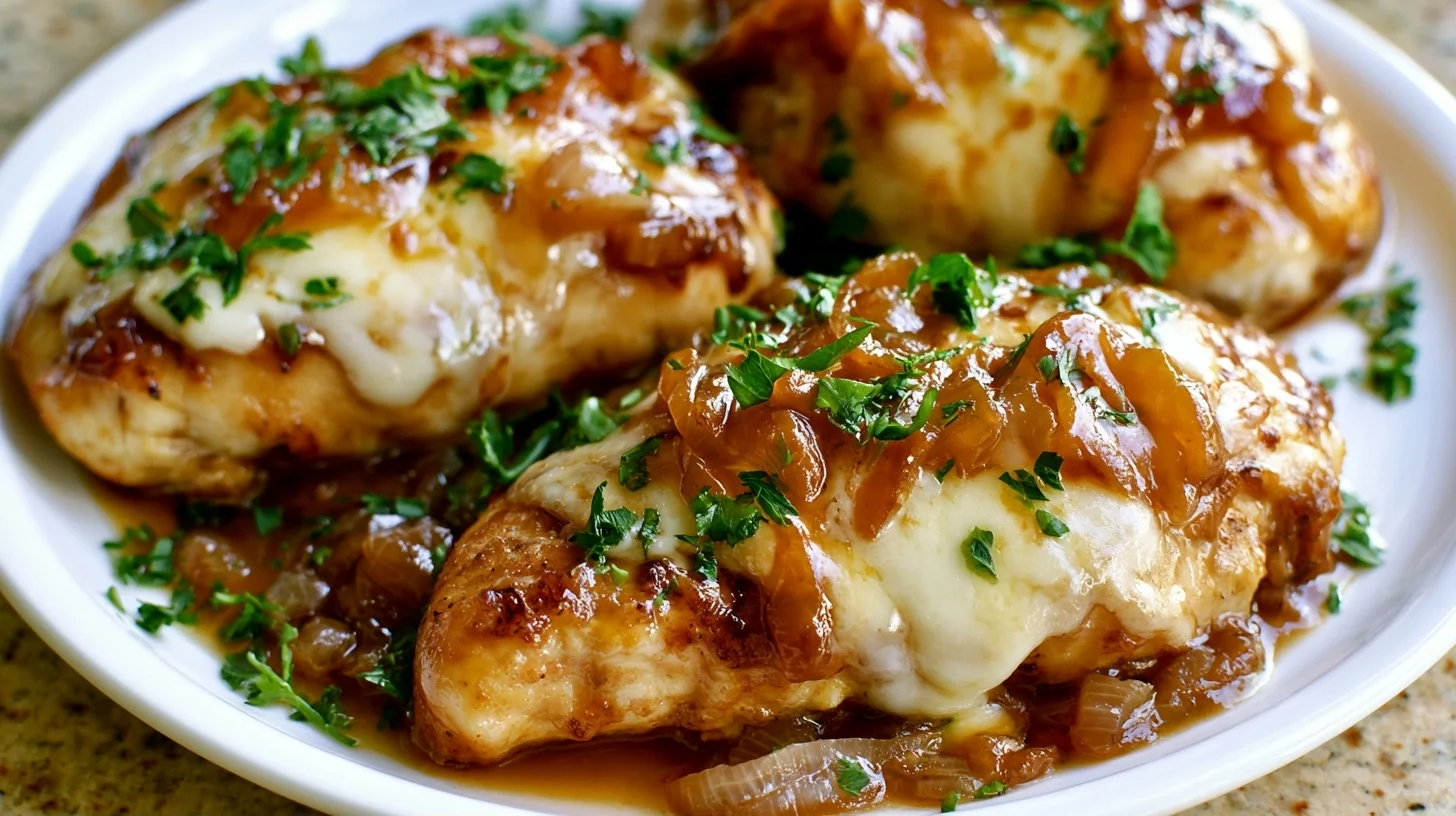
Table of contents
- Why You Will Love This French Onion Chicken
- Essential Equipment for French Onion Chicken
- How to Make French Onion Chicken That Stays Juicy
- Common Mistakes When Making French Onion Chicken Recipe
- Creative Variations for French Onion Chicken
- What Makes This French Onion Chicken Flavorful
- Best Side Dishes to Serve with French Onion Chicken Recipe
- How to Store and Reheat French Onion Chicken
- Frequently Asked Questions about French Onion Chicken Recipe
Why You Will Love This French Onion Chicken
- All the savory depth of French onion soup in a complete protein-centered meal.
- One skillet does all the work, from browning to baking, so cleanup is minimal.
- The onions caramelize quickly because they cook in the flavorful browned bits left by the chicken.
- Gruyère cheese melts beautifully over the chicken, creating a golden, bubbly topping.
- Ready in about 45 minutes, making it perfect for weeknight dinners that feel special.
Essential Equipment for French Onion Chicken
This recipe relies on a single oven-safe skillet to build flavor and finish the dish, so choosing the right pan makes a real difference in how evenly everything cooks.
- Large oven-safe skillet: A 12-inch cast iron or stainless steel skillet works best because it can handle high heat on the stovetop and then go directly into the oven. The wide surface area also helps the onions caramelize evenly.
- Meat thermometer: Checking the internal temperature ensures the chicken reaches 165°F without overcooking, which keeps it juicy under the cheese.
- Tongs: Flipping the chicken and stirring the onions is easier with tongs that give you control without tearing the meat.
- Sharp chef’s knife: Slicing onions thinly and evenly helps them cook at the same rate, so you don’t end up with some burnt and some still crunchy.
How to Make French Onion Chicken That Stays Juicy
French Onion Chicken
4
servings10
minutes35
minutes420
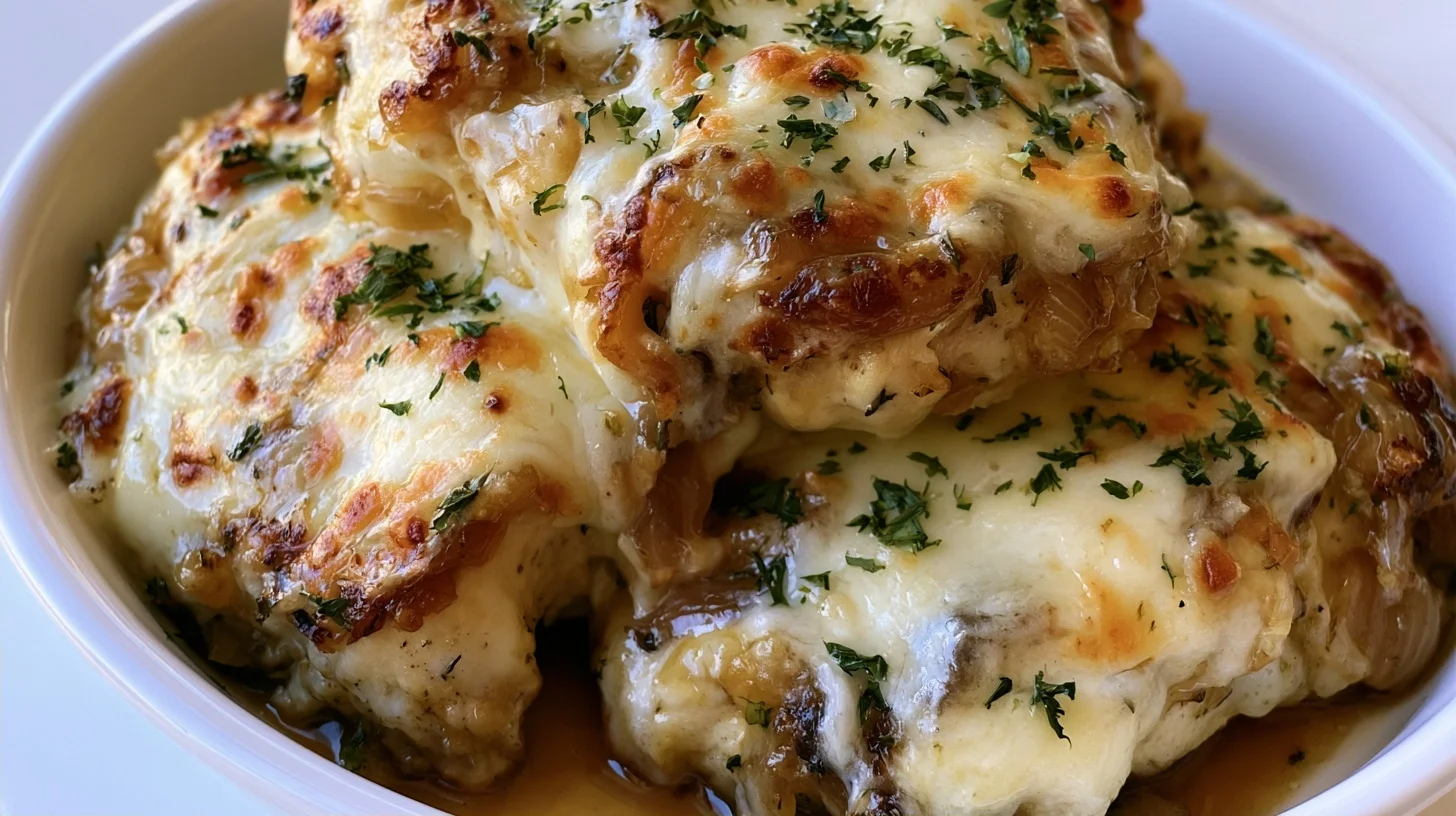
kcalThis French onion chicken combines tender, juicy chicken breasts with sweet caramelized onions and melted Gruyère cheese, all made in one skillet. The chicken is seared to lock in moisture, then baked under a blanket of onions and cheese for a dish that tastes like it took hours but comes together in about 45 minutes.
Keep the screen of your device on
Ingredients
4 boneless skinless chicken breasts
2 large yellow onions
1 cup Gruyère cheese
1 tablespoon olive oil
2 tablespoons butter
0.5 cup dry white wine
3 cloves garlic
1 teaspoon fresh thyme leaves
1 teaspoon salt
0.5 teaspoon black pepper
1 teaspoon balsamic vinegar
2 tablespoons fresh parsley
Directions
- Preheat the oven to 375°F. Pat the chicken breasts dry with paper towels and season both sides generously with half the salt and pepper. Removing surface moisture helps the chicken develop a golden crust instead of steaming.
- Heat the olive oil in a large oven-safe skillet over medium-high heat until it shimmers. Add the chicken breasts and sear for about 4 minutes per side, until golden brown but not cooked through. The chicken should release easily from the pan when it’s ready to flip. Transfer the chicken to a plate and set aside.
- Reduce the heat to medium and add the butter to the same skillet. Once melted, add the sliced onions and the remaining salt and pepper. Cook, stirring occasionally, for 10 to 12 minutes, until the onions are soft, golden, and caramelized. If the onions start to stick, add a splash of wine or broth to loosen them.
- Stir in the minced garlic and thyme during the last minute of cooking, until fragrant. Add the white wine or chicken broth and use a wooden spoon to scrape up any browned bits from the bottom of the pan. Let the liquid simmer for 2 to 3 minutes, until slightly reduced. If using balsamic vinegar, stir it in now for extra depth.
- Nestle the seared chicken breasts back into the skillet on top of the onions. Spoon some of the caramelized onions over each piece of chicken, then top each breast with a generous layer of shredded Gruyère cheese.
- Transfer the skillet to the preheated oven and bake for 15 to 20 minutes, until the chicken reaches an internal temperature of 165°F and the cheese is melted and bubbly. For a golden, slightly crispy cheese topping, switch the oven to broil for the last 2 minutes, watching closely to prevent burning.
Notes
- Patting the chicken dry before searing removes surface moisture, which helps the chicken develop a golden crust instead of steaming.
- Caramelizing the onions in the same skillet used to sear the chicken allows them to absorb the browned bits left behind, adding a rich, meaty depth to the dish.
- If you prefer a thicker sauce, simmer the wine or broth for an extra minute or two after deglazing the pan to reduce it further before adding the chicken back in.
- Store leftovers in an airtight container in the refrigerator for up to 3 days. Reheat in a 350°F oven, covered loosely with foil, for about 15 minutes to keep the chicken moist.
Nutrition Facts
- Serving Size: 1 g
- Total number of serves: 4
- Calories: 420kcal
- Fat: 20g
- Carbohydrates: 12g
- Fiber: 2g
- Protein: 45g
Did you make this recipe?
Tag @therecipemasterblog on Instagram and hashtag it with #therecipemaster
Like this recipe?
Follow @therecipemasterblog on Pinterest
Follow us on Facebook!
Follow The Recipe Master on Facebook
Sear the Chicken to Lock in Moisture
Browning the chicken on both sides before it goes into the oven creates a flavorful crust that helps keep the interior moist. The browned bits left in the pan also become the foundation for the onion topping, so don’t skip this step even if you’re in a hurry.
Pat the chicken breasts dry with paper towels before seasoning them. Surface moisture prevents a good sear, so removing it helps the chicken develop a golden crust instead of steaming. Season both sides generously with salt and black pepper, then heat the skillet over medium-high heat with a tablespoon of olive oil or butter.
Once the oil shimmers, add the chicken and let it cook undisturbed for about 4 minutes per side. You’re not cooking it through at this stage—just building color and flavor. The chicken should release easily from the pan when it’s ready to flip. If it sticks, give it another 30 seconds.
Caramelize the Onions in the Same Pan
After removing the chicken, add the sliced onions to the same skillet without wiping it out. The browned bits from the chicken dissolve into the onions as they cook, adding a savory depth that plain sautéed onions can’t match. This technique is what gives the dish its classic French onion soup character.
Cook the onions over medium heat, stirring occasionally, until they soften and turn golden brown. This usually takes about 10 to 12 minutes. If the onions start to stick or darken too quickly, lower the heat slightly and add a splash of broth or white wine to loosen them. The goal is a sweet, jammy texture with no raw crunch left.
Adding a teaspoon of sugar or balsamic vinegar during the last few minutes of cooking can help the onions caramelize faster and balance their natural sweetness. Stir in minced garlic during the final minute so it becomes fragrant without burning.
Layer the Chicken and Cheese Before Baking
Once the onions are caramelized, nestle the seared chicken breasts back into the skillet on top of the onions. Spoon some of the onions over each piece of chicken so they stay moist and absorb even more flavor as they bake. Then top each breast with a generous layer of shredded Gruyère cheese.
Gruyère melts smoothly and has a nutty, slightly sweet flavor that complements the onions beautifully. If you can’t find Gruyère, Swiss cheese or a combination of mozzarella and Parmesan works well. Avoid pre-shredded cheese if possible—it contains anti-caking agents that can make the melted topping grainy instead of smooth.
Transfer the skillet to a preheated 375°F oven and bake for 15 to 20 minutes, until the chicken reaches an internal temperature of 165°F and the cheese is melted and bubbly. If you want a golden, slightly crispy cheese topping, switch the oven to broil for the last 2 minutes, watching closely to prevent burning.
Common Mistakes When Making French Onion Chicken Recipe
Overcooking the Chicken During the Sear
Searing the chicken for too long before it goes into the oven can leave it dry and tough by the time the cheese melts. The stovetop sear is only meant to create color and flavor, not cook the chicken through.
Aim for about 4 minutes per side over medium-high heat. The chicken should have a golden-brown crust but still feel slightly firm in the center. It will finish cooking gently in the oven, which keeps it juicy. If you’re using thicker chicken breasts, consider pounding them to an even thickness so they cook at the same rate.
Rushing the Onions
Trying to speed up the onions by cooking them over high heat often results in burnt edges and a bitter flavor instead of the sweet, jammy texture you want. Caramelization happens when the natural sugars in the onions break down slowly, which requires moderate heat and patience.
Keep the heat at medium and stir the onions every few minutes. If they start to stick or darken too quickly, add a splash of broth or wine to deglaze the pan. The liquid will help lift the browned bits and keep the onions from burning. Properly caramelized onions should be soft, golden, and slightly sweet, with no raw crunch or charred spots.
Using Cold Chicken Straight from the Fridge
Placing cold chicken directly into a hot skillet causes uneven cooking because the outside sears before the inside has a chance to warm up. This often leads to a well-browned exterior and an undercooked center.
Let the chicken sit at room temperature for about 15 minutes before cooking. This small step helps the meat cook more evenly and reduces the risk of overcooking the outside while waiting for the center to reach 165°F. Pat the chicken dry again just before seasoning to remove any moisture that accumulated while it sat out.
Skipping the Deglazing Step
After searing the chicken, the pan will have browned bits stuck to the bottom. These bits, called fond, contain concentrated flavor that shouldn’t be wasted. If you add the onions without deglazing first, those flavors stay stuck to the pan instead of blending into the dish.
Pour in a splash of white wine, chicken broth, or even water after removing the chicken, and use a wooden spoon to scrape up the browned bits as the liquid simmers. This technique, called deglazing, adds depth to the onions and ensures nothing goes to waste. Let the liquid reduce slightly before adding the onions so the sauce doesn’t become too thin.
Creative Variations for French Onion Chicken
Dairy-Free French Onion Chicken Recipe
Skipping the cheese doesn’t mean losing flavor. After the chicken finishes baking, top it with extra caramelized onions and a drizzle of balsamic reduction for a glossy, tangy finish. You can also use a dairy-free cheese alternative, but choose one that melts smoothly rather than one that stays firm or separates.
Low-Carb French Onion Chicken
To reduce the carbs, use fewer onions and add sliced mushrooms to the pan. Mushrooms caramelize beautifully and add a savory, umami-rich flavor that complements the chicken without the natural sugars found in onions. This variation works especially well if you’re following a keto or low-carb eating plan.
French Onion Chicken Thighs
Swapping chicken breasts for bone-in, skin-on thighs adds richness and makes the dish more forgiving if you accidentally overcook it. Thighs stay juicy even at higher temperatures, and the skin crisps beautifully under the broiler. Sear the thighs skin-side down first to render the fat, then flip and proceed with the recipe as written. You may need to add a few extra minutes in the oven to ensure the thighs reach 175°F, which is the ideal temperature for dark meat.
Slow Cooker French Onion Chicken Recipe
For a hands-off version, sear the chicken and caramelize the onions as directed, then transfer everything to a slow cooker. Cook on low for 4 to 5 hours, then add the cheese during the last 15 minutes with the lid off so it melts without making the dish watery. This method works well if you want to prep the meal in the morning and come home to dinner ready.
What Makes This French Onion Chicken Flavorful
The key to this recipe’s deep, savory flavor is the combination of caramelized onions, deglazing liquid, and Gruyère cheese. Each element builds on the last, creating layers of taste that feel complex even though the ingredient list is short.
Caramelizing the onions in the same skillet used to sear the chicken allows them to absorb the browned bits left behind, which adds a rich, meaty depth. The onions also release their natural sugars as they cook, balancing the savory notes with a subtle sweetness. This is the same technique used in traditional French onion soup, where the onions are the star of the dish.
Deglazing the pan with white wine or broth lifts those flavorful browned bits and incorporates them into the sauce. The acidity from the wine also brightens the dish and cuts through the richness of the cheese, preventing the finished meal from feeling heavy. If you prefer not to use wine, chicken broth with a splash of white wine vinegar or lemon juice provides a similar effect.
Gruyère cheese melts smoothly and has a nutty, slightly sweet flavor that complements the onions without overpowering them. It also browns beautifully under the broiler, creating a golden, bubbly topping that looks as good as it tastes. If you want to pair this dish with another French-inspired recipe, try serving it alongside French onion beef and noodles for a complete comfort food spread.
Best Side Dishes to Serve with French Onion Chicken Recipe
This chicken is rich and savory, so it pairs best with sides that are light, fresh, or slightly acidic to balance the flavors. A simple green salad with a tangy vinaigrette cuts through the richness of the cheese and onions, while roasted vegetables like asparagus, green beans, or Brussels sprouts add a crisp, earthy contrast.
If you want a heartier side, garlic mashed potatoes or buttery egg noodles soak up the flavorful pan juices beautifully. A crusty baguette is also a great choice—use it to scoop up the caramelized onions and melted cheese left in the skillet.
For a low-carb option, serve the chicken over cauliflower rice or zucchini noodles. Both absorb the savory sauce without adding heaviness, and they keep the meal light while still feeling satisfying.
How to Store and Reheat French Onion Chicken
Store leftover chicken in an airtight container in the refrigerator for up to 3 days. The onions and cheese may soften as the dish sits, but the flavor remains rich and savory.
To reheat, place the chicken in an oven-safe dish, cover it loosely with foil, and warm it in a 350°F oven for about 15 minutes, or until heated through. This method keeps the chicken moist and prevents the cheese from drying out. If you’re reheating a single portion, the microwave works in a pinch—use 50% power and heat in 1-minute intervals to avoid overcooking the chicken.
Freezing this dish is possible but not ideal, as the cheese and onions can become watery when thawed. If you do freeze it, let it cool completely, then wrap each piece tightly in plastic wrap and store in a freezer-safe bag for up to 2 months. Thaw in the refrigerator overnight before reheating.
Frequently Asked Questions about French Onion Chicken Recipe
Yes, chicken thighs work beautifully in this recipe and stay juicy even if slightly overcooked. Use bone-in, skin-on thighs for the best flavor, sear them skin-side down first to render the fat, and bake until they reach an internal temperature of 175°F.
Swiss cheese is the closest substitute and melts just as smoothly. You can also use a combination of mozzarella for meltability and Parmesan for flavor. Avoid pre-shredded cheese if possible, as it contains anti-caking agents that can make the topping grainy.
Yes, use chicken broth to deglaze the pan instead. Add a splash of white wine vinegar or lemon juice to the broth to mimic the acidity that wine provides, which helps balance the richness of the cheese and onions.
The chicken is done when it reaches an internal temperature of 165°F in the thickest part. Use a meat thermometer for accuracy, as overcooking will dry out the chicken even under the layer of cheese and onions.





Leave a Reply