

- Creamy, custard-like center with golden, slightly crisp edges depends on balancing moisture and structure.
- Use both whole kernel and creamed corn plus cornbread mix for layered texture and subtle cake-like crumb.
- Drain whole kernel corn, use room temperature eggs and warm melted butter, and let batter rest five minutes.
- Bake at 350°F until edges are golden and center still slightly jiggly; it will finish setting as it cools.
- Store refrigerated up to four days or freeze three months; reheat gently in microwave or 300°F oven covered.
If you’re looking for a side dish that’s creamy, comforting, and always a crowd-pleaser, this corn casserole recipe delivers every time. It combines sweet corn kernels with a rich, custard-like base that bakes into a golden, slightly jiggly center with crisp edges. The secret is balancing moisture and structure so the casserole sets without drying out or turning soupy. This recipe uses a combination of whole kernel corn and creamed corn to create layers of texture, plus a hint of sweetness from cornbread mix that gives it a subtle cake-like crumb. It’s the kind of dish that holds its shape on the plate but stays soft and spoonable inside.
What makes this version especially reliable is the careful ratio of eggs to dairy, which creates a custard base that firms up during baking without becoming dense. The butter melts into the batter and creates pockets of richness, while the cornbread mix absorbs just enough liquid to thicken the casserole without making it heavy. The result is a side dish that works for weeknight dinners and holiday tables alike, with a texture that’s somewhere between cornbread dressing and a savory corn pudding.
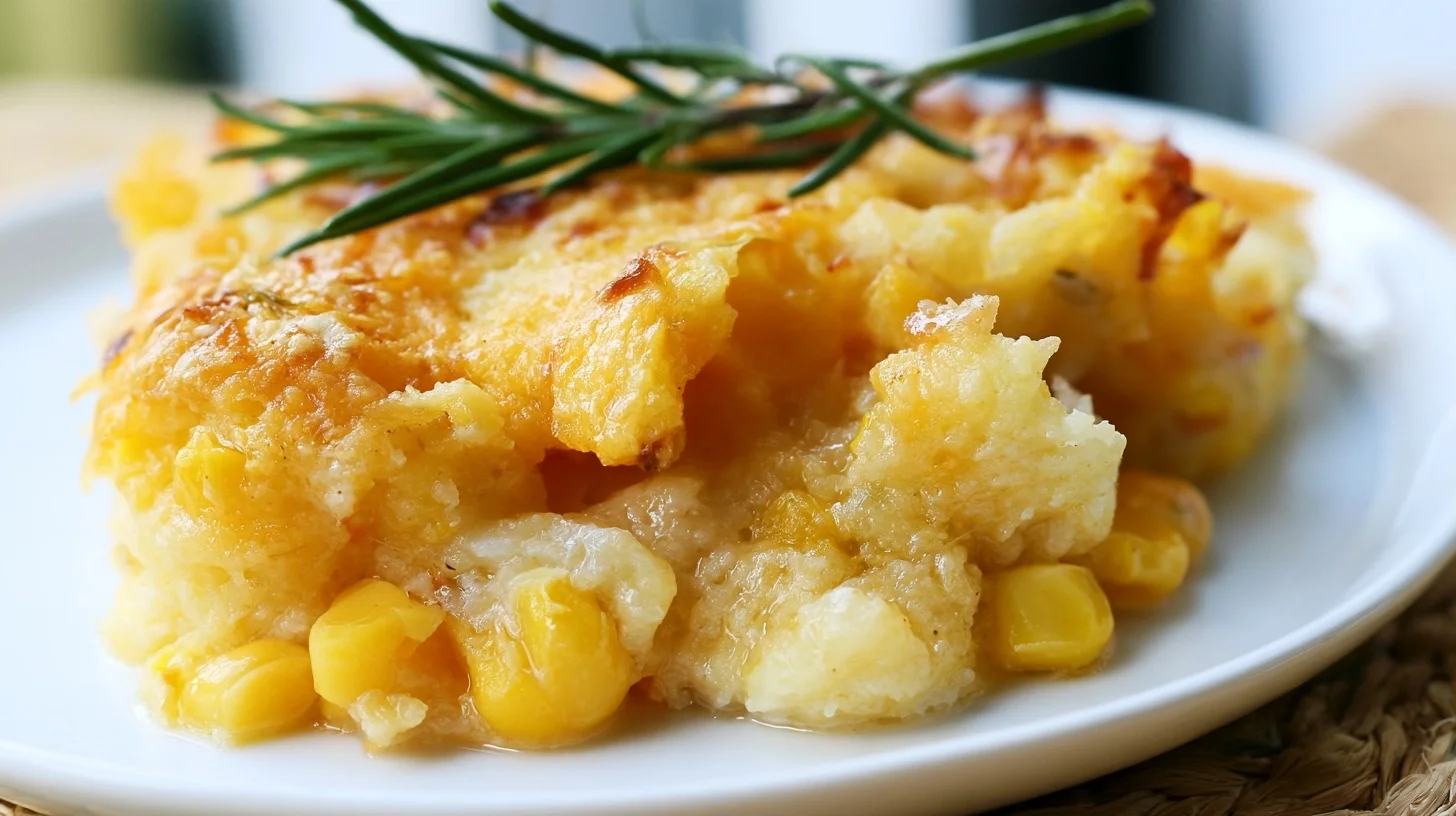
Table of contents
- Why You Will Love This Corn Casserole Recipe
- Essential Equipment for Making Corn Casserole
- How to Make Corn Casserole Recipe That Sets Perfectly
- Tips for the Best Corn Casserole Texture and Flavor
- Common Mistakes That Ruin Corn Casserole
- How to Customize Corn Casserole Recipe
- Nutritional Information for Corn Casserole Recipe
- What to Serve with Corn Casserole
- How to Store and Reheat Corn Casserole
- Frequently Asked Questions about Corn Casserole Recipe
Why You Will Love This Corn Casserole Recipe
- The texture stays creamy in the center with golden, slightly crisp edges that add contrast.
- It uses pantry-friendly ingredients and comes together in under 10 minutes of active prep time.
- The casserole holds its shape when scooped but remains soft and spoonable, making it easy to serve.
- It reheats beautifully without drying out, so leftovers taste just as good the next day.
Essential Equipment for Making Corn Casserole
You don’t need specialty tools to make this casserole, but using the right size baking dish and a reliable mixing bowl will make the process smoother and help the casserole bake evenly.
- 9×13-inch baking dish: This size allows the casserole to spread into an even layer that bakes through without the edges overcooking before the center sets.
- Large mixing bowl: You’ll need enough room to fold the wet and dry ingredients together without overmixing, which can make the texture dense.
- Whisk or wooden spoon: A whisk helps break up any clumps in the cornbread mix, while a wooden spoon is gentler for folding in the corn kernels.
- Measuring cups and spoons: Accurate measurements matter here because too much liquid will prevent the casserole from setting, and too little will make it dry.
How to Make Corn Casserole Recipe That Sets Perfectly

Corn Casserole
8
servings10
minutes45
minutes250
kcalThis corn casserole combines sweet corn kernels with a rich custard base that bakes into a creamy center with golden edges. The balance of whole kernel corn and creamed corn creates layers of texture, while the cornbread mix adds structure without making the casserole dense. It’s a reliable side dish that holds its shape when scooped but stays soft and spoonable inside.
Keep the screen of your device on
Ingredients
1 can whole kernel corn
1 can creamed corn
1 package corn muffin mix
1 cup sour cream
0.5 cup unsalted butter
2 large eggs
0.25 cup granulated sugar
0.5 teaspoon salt
0.25 teaspoon black pepper
Directions
- Preheat the oven to 350°F and lightly grease a 9×13-inch baking dish with butter or nonstick spray. This prevents the casserole from sticking and makes cleanup easier.
- Drain the whole kernel corn completely in a fine-mesh strainer, pressing gently with a spoon to remove excess liquid. Pat the kernels dry with a paper towel if they still look wet. This step prevents the casserole from becoming soupy.
- Whisk together the eggs, melted butter, sour cream, and sugar in a large mixing bowl until the mixture is smooth and the sugar has dissolved. The eggs and butter should be at similar temperatures to prevent clumping.
- Stir in the corn muffin mix, salt, and pepper until just combined, making sure no dry streaks remain. The batter should look slightly lumpy, which is normal and won’t affect the final texture.
- Fold in the drained whole kernel corn and creamed corn gently with a wooden spoon, mixing until the corn is evenly distributed throughout the batter. Avoid overmixing, which can make the casserole dense.
- Let the batter rest for 5 minutes to allow the cornbread mix to absorb some of the liquid. This thickens the batter slightly and helps the casserole set more reliably during baking.
Notes
- Draining the whole kernel corn thoroughly before mixing prevents the casserole from becoming soupy and helps it firm up during baking.
- The casserole is done when the edges are golden and the center still has a slight jiggle, as it will continue to set while cooling.
- Store leftovers in an airtight container in the refrigerator for up to four days, or freeze for up to three months. Reheat gently in the oven or microwave, adding a tablespoon of milk or sour cream if the texture looks dry.
Nutrition Facts
- Serving Size: 1 g
- Total number of serves: 8
- Calories: 250kcal
- Fat: 12g
- Carbohydrates: 30g
- Fiber: 3g
- Protein: 5g
Did you make this recipe?
Tag @therecipemasterblog on Instagram and hashtag it with #therecipemaster
Like this recipe?
Follow @therecipemasterblog on Pinterest
Follow us on Facebook!
Follow The Recipe Master on Facebook
Tips for the Best Corn Casserole Texture and Flavor
The most reliable way to get a casserole that’s creamy inside with golden edges is to drain the whole kernel corn thoroughly before mixing. Excess liquid from the canned corn dilutes the custard base and prevents the casserole from firming up during baking. Pat the kernels dry with a paper towel if they still look wet after draining. This step alone makes a noticeable difference in how the casserole holds together when you scoop it.
Use Room Temperature Eggs and Melted Butter
Cold eggs can cause the melted butter to seize and form clumps instead of blending smoothly into the batter. Let the eggs sit at room temperature for about 15 minutes before mixing, or place them in a bowl of warm water for five minutes. The melted butter should be warm but not hot, so it incorporates evenly without cooking the eggs when you whisk them together. This creates a smoother, more uniform batter that bakes into a cohesive texture.
Don’t Skip the Resting Time Before Baking
After you mix the batter, let it sit for five minutes before transferring it to the baking dish. This allows the cornbread mix to absorb some of the liquid, which thickens the batter slightly and helps the casserole set more reliably. If you skip this step, the batter may look too thin and take longer to firm up in the oven, which can lead to uneven baking.
Bake Until the Center Jiggles Slightly
The casserole is done when the edges are golden and the center still has a slight jiggle when you gently shake the pan. It will continue to set as it cools, so pulling it out when it looks almost done prevents the texture from becoming dry or rubbery. If the top starts to brown too quickly, tent the dish loosely with foil during the last 10 minutes of baking.
Add a Pinch of Sugar for Balance
A small amount of sugar enhances the natural sweetness of the corn and balances the richness of the butter and sour cream. If you prefer a less sweet casserole, you can reduce the sugar by half, but don’t eliminate it entirely because it also helps with browning and adds a subtle caramelized flavor to the edges. For more ideas on pairing bold flavors with creamy sides, try this hatch chili chicken enchiladas recipe that balances heat and richness beautifully.
Stir Gently to Avoid Overmixing
Overmixing the batter develops the gluten in the cornbread mix, which makes the casserole dense and cake-like instead of soft and custardy. Fold the ingredients together just until no dry streaks remain, then stop. The batter should look slightly lumpy, which is normal and won’t affect the final texture.
Common Mistakes That Ruin Corn Casserole
Using Too Much Liquid
Adding undrained canned corn or extra sour cream without adjusting the cornbread mix will leave you with a casserole that never fully sets. The excess moisture prevents the custard from firming up, so you end up with a soupy texture that pools on the plate. Always drain the whole kernel corn completely and measure the sour cream carefully. If the batter looks too thin after mixing, stir in an extra tablespoon of cornbread mix to help absorb the liquid.
Baking at Too High a Temperature
Baking corn casserole above 350°F causes the edges to overcook and dry out before the center has a chance to set. The high heat also makes the custard curdle, which creates a grainy texture instead of a smooth, creamy one. Stick to 350°F and resist the urge to speed up the process by raising the temperature. If your oven runs hot, use an oven thermometer to check the actual temperature and adjust accordingly.
Not Letting the Casserole Rest After Baking
Cutting into the casserole immediately after it comes out of the oven causes it to fall apart because the custard hasn’t had time to finish setting. Let it rest on the counter for at least 10 minutes before serving. During this time, the residual heat continues to firm up the center, and the casserole becomes easier to scoop cleanly. If you’re making it ahead, this resting period also makes reheating more successful because the structure is already stable.
Skipping the Butter in the Batter
Some recipes suggest reducing or omitting the butter to make the casserole lighter, but this sacrifices the richness and moisture that make the dish appealing. The butter also helps the edges brown and adds flavor that balances the sweetness of the corn. If you want to reduce fat, use half butter and half neutral oil like canola, but don’t eliminate the fat entirely or the casserole will taste bland and dry.
How to Customize Corn Casserole Recipe
Add Shredded Cheese for Extra Richness
Folding in one cup of shredded cheddar or Monterey Jack cheese makes the casserole even creamier and adds a savory note that balances the sweetness. Stir the cheese into the batter just before baking, or sprinkle it on top during the last 10 minutes so it melts into a golden layer. Sharp cheddar works especially well if you want a stronger flavor, while mild cheddar keeps the dish more neutral.
Make It Spicy with Jalapeños
Diced jalapeños add a mild heat that cuts through the richness without overwhelming the corn flavor. Use fresh jalapeños for a brighter taste, or canned for convenience. Remove the seeds and membranes if you want less heat, or leave them in for a spicier kick. About two tablespoons of diced jalapeños is enough to add flavor without making the casserole too hot for most palates.
Swap Sour Cream for Greek Yogurt
Greek yogurt works as a substitute for sour cream and adds a slight tang with a bit more protein. The casserole will be slightly less rich, but the texture remains creamy as long as you use full-fat yogurt. Avoid nonfat or low-fat versions because they can make the custard watery and prevent it from setting properly. The yogurt also makes the dish feel a bit lighter without sacrificing the soft, spoonable texture.
Use Fresh Corn Instead of Canned
If you have fresh corn, cut the kernels off three to four ears and use them in place of the canned whole kernel corn. Fresh corn has a brighter, sweeter flavor and a firmer texture that holds up well during baking. You’ll still need the creamed corn for moisture and structure, but swapping the whole kernels for fresh ones makes the casserole taste more seasonal and less processed.
Nutritional Information for Corn Casserole Recipe
Corn casserole is a moderately rich side dish that provides carbohydrates from the corn and cornbread mix, along with fat from the butter and sour cream. One serving typically contains around 250 calories, with about 12 grams of fat, 30 grams of carbohydrates, and 5 grams of protein. The casserole also provides about 3 grams of fiber from the corn, which helps with digestion and adds bulk to the dish. For more information on the nutritional benefits of corn, including its vitamin and mineral content, this resource offers a detailed breakdown.
The sugar content comes primarily from the natural sugars in the corn and the small amount of added sugar in the recipe, totaling about 8 grams per serving. If you’re watching sodium, keep in mind that canned corn and cornbread mix both contain salt, so the casserole can have around 400 milligrams of sodium per serving. Using low-sodium canned corn and reducing the added salt can help lower this number without affecting the flavor significantly.
What to Serve with Corn Casserole
Corn casserole works best alongside roasted or grilled proteins that have a savory, slightly charred flavor to contrast with the casserole’s sweetness. It pairs especially well with smoked brisket, roasted turkey, grilled chicken thighs, or baked ham. The creamy texture also complements dishes with crispy or crunchy elements, like fried chicken or pork chops with a seasoned crust.
For a complete holiday spread, serve the casserole with green beans, cranberry sauce, and mashed potatoes. The casserole’s richness balances lighter vegetable sides, and its soft texture contrasts nicely with crisp salads or roasted Brussels sprouts. It also works as part of a barbecue menu, where it can sit alongside coleslaw, baked beans, and cornbread without feeling redundant because the textures are different.
How to Store and Reheat Corn Casserole
Store leftover corn casserole in an airtight container in the refrigerator for up to four days. The casserole holds its texture well when chilled, and the flavors often taste even better the next day after they’ve had time to meld. To reheat, transfer a portion to a microwave-safe dish and heat on medium power in 30-second intervals, stirring between each interval to distribute the heat evenly. This prevents the edges from drying out while the center stays cold.
For larger portions, reheat the casserole in a 300°F oven. Cover the dish with foil to trap moisture, and bake for about 15 to 20 minutes, or until warmed through. If the casserole looks dry after reheating, stir in a tablespoon of milk or sour cream to restore the creamy texture. You can also freeze corn casserole for up to three months. Let it cool completely, then wrap it tightly in plastic wrap and foil before freezing. Thaw overnight in the refrigerator before reheating.
Frequently Asked Questions about Corn Casserole Recipe
Yes, you can assemble the casserole up to one day in advance, cover it tightly with plastic wrap, and refrigerate it until you’re ready to bake. Let it sit at room temperature for 15 minutes before baking, and add an extra 5 to 10 minutes to the baking time since it will be cold from the refrigerator.
The casserole turns out soupy when there’s too much liquid in the batter, usually from undrained canned corn or excess sour cream. Always drain the whole kernel corn completely and measure the wet ingredients carefully. If the batter looks too thin after mixing, stir in an extra tablespoon of cornbread mix to help it thicken.
Yes, you can substitute fresh corn kernels for the canned whole kernel corn. You’ll need about 2 cups of fresh kernels, which is roughly 3 to 4 ears of corn. The texture will be slightly firmer and the flavor brighter, but the casserole will still bake properly as long as you keep the creamed corn in the recipe.
The casserole is done when the edges are golden brown and the center has a slight jiggle when you gently shake the pan. It will continue to set as it cools, so don’t wait for the center to look completely firm in the oven. If you insert a knife into the center, it should come out mostly clean with just a few moist crumbs.







Leave a Reply