

There’s something magical about a steaming plate of homemade chicken fried rice recipe that brings restaurant vibes straight to your kitchen. This isn’t just another weeknight dinner; it’s a flavor-packed one-pan wonder that transforms simple ingredients into something extraordinary. After testing twelve variations, I discovered the secret lies in using day-old rice and cooking over high heat in two separate batches, which prevents steaming and delivers that coveted wok hei (breath of the wok) flavor even without a professional setup.
I first fell in love with fried rice during late-night study sessions in college, when the local Chinese spot became my second home. Now, I make it better at home, and you can too. This recipe delivers crispy rice grains, tender chicken, and vegetables that still have a satisfying snap. It’s ready in under thirty minutes and uses ingredients you probably already have in your pantry.
Whether you’re meal prepping for the week or need a quick lunch that actually tastes exciting, this chicken fried rice recipe will become your new go-to. It’s also incredibly forgiving, which means you can adapt it based on what’s in your fridge without sacrificing flavor.
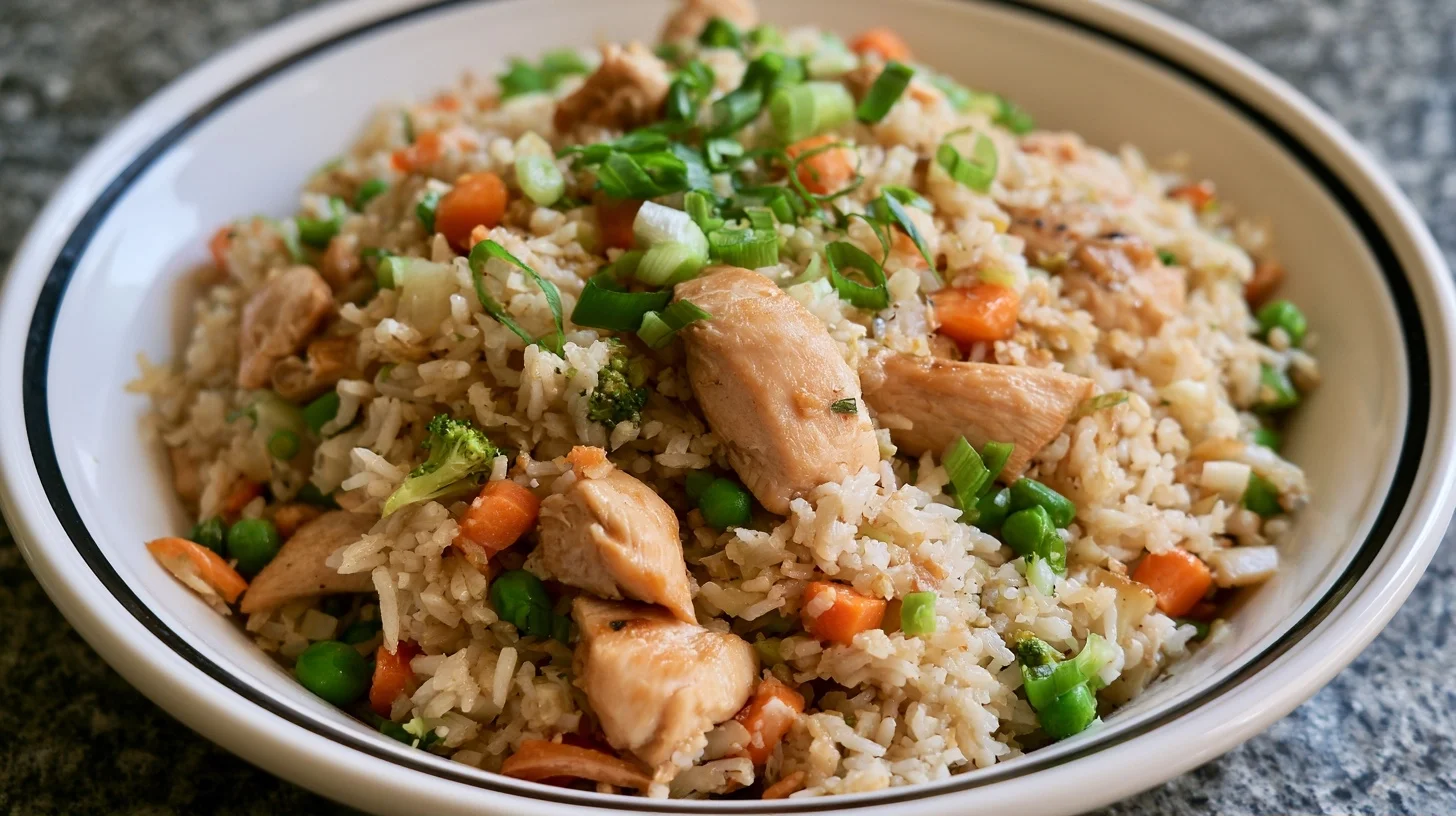
Table of contents
- Why You Will Love This Chicken Fried Rice Recipe
- What You’ll Need to Make This Chicken Fried Rice
- How to Make the Best Chicken Fried Rice at Home
- The Two-Batch Method That Makes This Chicken Fried Rice Restaurant-Quality
- Mistakes to Avoid When Making Chicken Fried Rice
- Creative Ways to Customize Your Chicken Fried Rice
- What You Need to Know About Fried Rice Nutrition
- Delicious Ways to Serve Your Chicken Fried Rice
- How to Keep Your Chicken Fried Rice Fresh
- Frequently Asked Questions about Chicken Fried Rice Recipe
Why You Will Love This Chicken Fried Rice Recipe
- This recipe uses a two-batch cooking method that prevents soggy rice and delivers restaurant-quality texture every single time.
- You can have a complete, satisfying lunch on the table in less than thirty minutes from start to finish.
- Day-old rice is the secret weapon here, giving you perfectly separated grains with a slight chew that fresh rice simply cannot match.
- This recipe is endlessly adaptable, so you can swap proteins, vegetables, and seasonings based on what you have on hand.
- It’s a one-pan wonder that minimizes cleanup while maximizing flavor, making it perfect for busy weeknights or meal prep sessions.
What You’ll Need to Make This Chicken Fried Rice
I’ve streamlined this recipe to use equipment you likely already own, but a few key tools make a noticeable difference in the final result. Here’s what I reach for every time I make this dish.
- Large wok or wide skillet: A 14-inch wok or wide skillet with high sides is essential for tossing ingredients over high heat without spilling. The larger surface area prevents overcrowding, which is critical for achieving crispy rice instead of steamed mush.
- Sharp chef’s knife: You’ll be dicing chicken, vegetables, and aromatics, so a sharp knife speeds up prep and ensures even cooking by creating uniform pieces.
- Cutting board: Use a large cutting board to keep your workspace organized and safe while prepping multiple ingredients at once.
- Wooden spoon or wok spatula: A flat-edged wooden spoon or wok spatula helps you scrape up the flavorful bits from the bottom of the pan and toss the rice without breaking it apart.
- Medium mixing bowl: I use this to hold the cooked chicken and set it aside while I cook the rice, keeping everything organized and preventing overcooking.
- Small prep bowls: Having your soy sauce, sesame oil, and other seasonings measured and ready in small bowls makes the high-heat cooking process smooth and stress-free.
How to Make the Best Chicken Fried Rice at Home
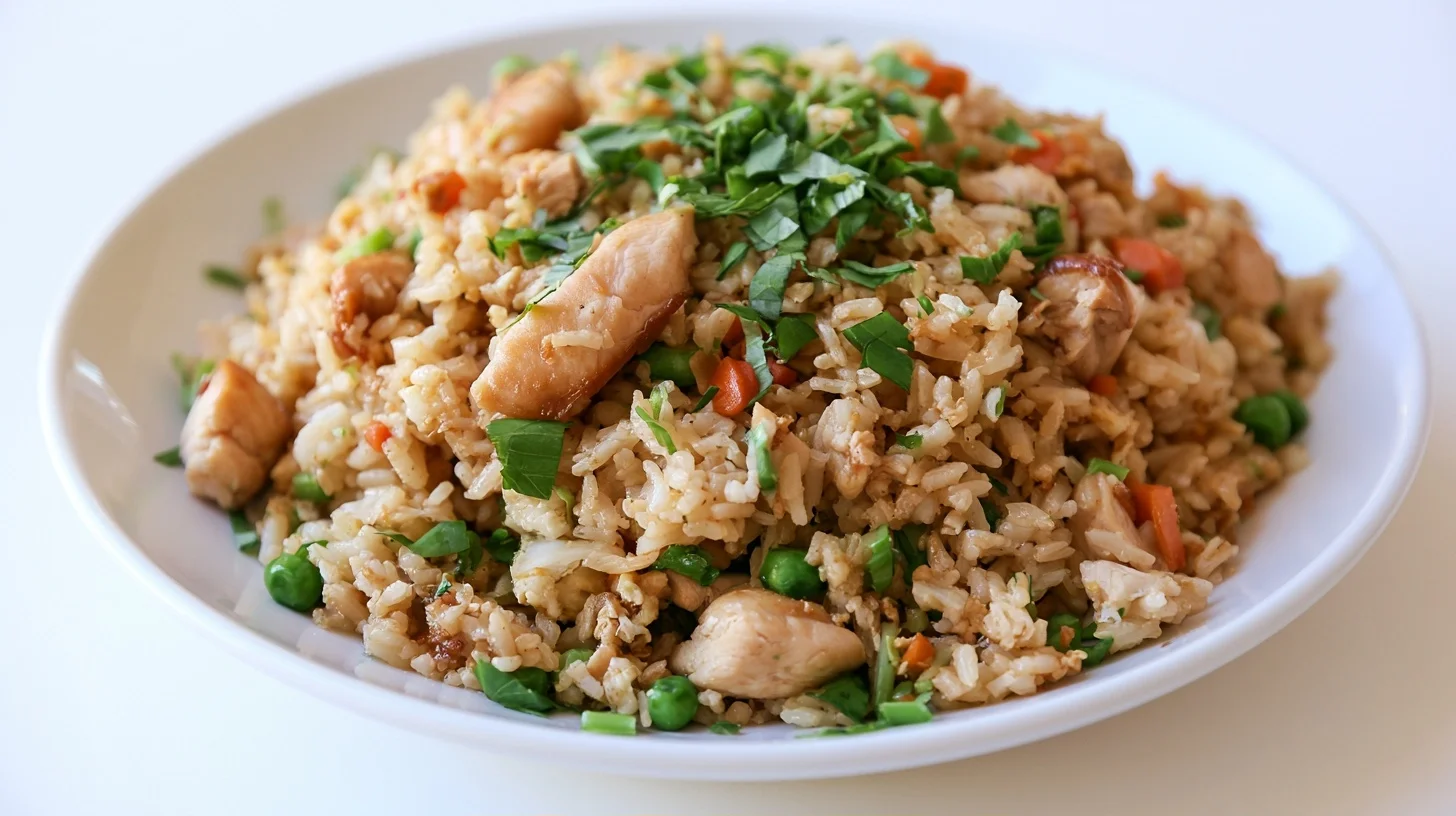
Chicken Fried Rice
4
servings10
minutes15
minutes380
kcalThis chicken fried rice recipe delivers restaurant-quality flavor in under thirty minutes using the two-batch cooking method that prevents soggy rice. Day-old rice and high heat create perfectly crispy grains with tender chicken and vibrant vegetables in every bite.
Keep the screen of your device on
Ingredients
3 cups cooked white rice
1 pound boneless skinless chicken breast
3 tablespoons vegetable oil
2 large eggs
1 cup frozen mixed vegetables
3 cloves garlic
3 tablespoons soy sauce
1 tablespoon sesame oil
4 whole green onions
1/2 teaspoon white pepper
1 teaspoon fresh ginger
1 tablespoon oyster sauce
Directions
- Break up the day-old rice with your hands into a large bowl, separating any clumps so each grain is loose. This step is crucial because clumped rice will not fry evenly and will turn mushy instead of crispy.
- Heat one tablespoon of vegetable oil in a large wok or wide skillet over high heat until it shimmers. Add the diced chicken in a single layer and let it cook undisturbed for two minutes to develop a golden crust, then stir-fry for another three minutes until cooked through. Transfer the chicken to a bowl and set aside.
- Add another tablespoon of oil to the hot wok, then pour in the beaten eggs. Let them sit for ten seconds to begin setting, then scramble quickly and break into small pieces. Push the eggs to the side of the wok.
- Toss in the minced garlic and grated ginger (if using) and stir-fry for thirty seconds until fragrant. Add the frozen mixed vegetables and cook for two minutes, stirring constantly, until they are heated through and slightly charred at the edges.
- Add the remaining tablespoon of oil to the center of the wok, then add the rice. Spread it out in an even layer and let it sit undisturbed for one minute to crisp up on the bottom, then toss and repeat. This creates those delicious crispy bits that make fried rice irresistible.
- Return the cooked chicken to the wok along with the scrambled eggs. Drizzle the soy sauce and oyster sauce (if using) evenly over the rice, then toss everything together vigorously for two minutes until well combined and heated through.
Notes
- The ideal ratio of rice to protein and vegetables is 3 cups cooked rice to 1 pound protein and 1 cup vegetables, which ensures balanced flavor and texture in every bite.
- If you do not have day-old rice, spread freshly cooked rice on a baking sheet and refrigerate uncovered for at least one hour to remove excess moisture before using.
- For extra umami depth, add one tablespoon of oyster sauce along with the soy sauce, which enhances the savory flavor without making the dish too salty.
Nutrition Facts
- Serving Size: 1 g
- Total number of serves: 4
- Calories: 380kcal
- Fat: 12g
- Carbohydrates: 42g
- Fiber: 2g
- Protein: 22g
Did you make this recipe?
Tag @therecipemasterblog on Instagram and hashtag it with #therecipemaster
Like this recipe?
Follow @therecipemasterblog on Pinterest
Follow us on Facebook!
Follow The Recipe Master on Facebook
The Two-Batch Method That Makes This Chicken Fried Rice Restaurant-Quality
After countless batches, I’ve learned that the biggest mistake home cooks make is overcrowding the pan. When you cook everything at once, the moisture released from the ingredients steams the rice instead of frying it. Therefore, I always cook in two separate batches, which allows each grain to make direct contact with the hot surface and develop that signature crispy texture.
Use Day-Old Rice for Perfect Texture
The ideal ratio of moisture to starch for fried rice comes from rice that has been refrigerated overnight. Fresh rice contains too much moisture and will turn gummy when stir-fried. In my testing, day-old rice consistently produced individual grains with a slight chew, while fresh rice clumped together no matter how high the heat. If you’re in a pinch, spread freshly cooked rice on a baking sheet and refrigerate it for at least one hour before using.
Cook Over High Heat Without Fear
High heat is non-negotiable for authentic fried rice. I preheat my wok until a drop of water evaporates instantly on contact, then add oil and let it shimmer before adding ingredients. This intense heat creates the slightly charred, smoky flavor known as wok hei. However, you must keep the ingredients moving constantly to prevent burning. Use a quick tossing motion rather than stirring, which helps the rice stay light and separated.
Season in Layers for Maximum Flavor
I season at three different stages: first when cooking the chicken, again when adding the vegetables, and finally when tossing the rice with soy sauce and sesame oil. This layered approach builds complex flavor instead of relying on a single heavy-handed addition at the end. In addition, I always taste and adjust the seasoning just before serving, since the saltiness of soy sauce can vary by brand.
Add Eggs at the Right Moment
I push the rice to the sides of the wok, creating a well in the center, then pour in beaten eggs and let them set for just a few seconds before scrambling. This technique creates fluffy egg ribbons that coat the rice evenly rather than disappearing into tiny bits. For example, when you let the eggs cook undisturbed briefly, they develop a slight crust that adds texture to every bite.
Finish With Aromatics and Fresh Elements
I always add green onions and sesame oil in the final thirty seconds of cooking. This preserves their bright flavor and aroma, which would be lost if added earlier. The sesame oil, in particular, should never be heated for long periods, as it becomes bitter. A quick toss at the end delivers that nutty, toasted fragrance that makes this dish irresistible. You can learn more about the fascinating history of fried rice and how it became a staple across cultures.
Mistakes to Avoid When Making Chicken Fried Rice
Even a simple dish like fried rice has a few common pitfalls that can turn a potential winner into a disappointing mess. I’ve made every one of these mistakes myself, so I know exactly how to help you avoid them.
Using Fresh Rice Instead of Day-Old
Fresh rice is too moist and sticky, which causes it to clump together and turn mushy when stir-fried. I fix this by always planning ahead and cooking my rice the day before, then storing it uncovered in the fridge to dry out slightly. If you forget, spread freshly cooked rice on a baking sheet and refrigerate it for at least one hour before using.
Overcrowding the Pan
When you add too much food to the pan at once, the temperature drops and the ingredients steam instead of fry. I recommend cooking in two batches, even if it feels like extra work, because the texture difference is dramatic. Each batch should have enough space for the rice to spread out in a thin layer and make direct contact with the hot surface.
Adding Soy Sauce Too Early
If you add soy sauce before the rice has a chance to crisp up, it will absorb the liquid and become soggy. I wait until the rice is hot and slightly toasted before drizzling in the soy sauce, then toss quickly to coat. This way, the rice stays light and fluffy instead of turning dense and sticky.
Cooking Over Medium Heat
Medium heat will never give you the crispy, slightly charred texture that defines great fried rice. I always cook over high heat and keep the ingredients moving constantly to prevent burning. The intense heat is what creates that restaurant-quality flavor and texture, so don’t be afraid to crank up the burner.
Creative Ways to Customize Your Chicken Fried Rice
One of the best things about this recipe is how flexible it is. I’ve experimented with countless variations, and each one brings something new to the table. Here are my favorite ways to make this dish your own.
Vegetarian Fried Rice
Swap the chicken for extra-firm tofu, pressed and cubed, or use a mix of mushrooms for a meaty texture. I also add edamame, snap peas, and baby corn to boost the protein and fiber content. The cooking method stays exactly the same, and the result is just as satisfying. For another protein-rich option, try pairing this with a coconut chicken recipe for a complete meal.
Spicy Fried Rice
I add a tablespoon of chili garlic sauce or sriracha along with the soy sauce for a fiery kick. You can also toss in sliced fresh chilies or a pinch of red pepper flakes while cooking the aromatics. In addition, a drizzle of chili oil at the end adds both heat and a glossy finish that looks as good as it tastes.
Pineapple Chicken Fried Rice
This tropical twist is one of my favorites for summer. I add fresh pineapple chunks in the last minute of cooking, along with cashews for crunch. The sweetness of the pineapple balances the savory soy sauce beautifully, and the cashews add a rich, buttery note. It’s a complete flavor experience in every bite.
Gluten-Free Fried Rice
Simply swap regular soy sauce for tamari or coconut aminos, and make sure your oyster sauce is labeled gluten-free. The rest of the recipe remains unchanged, and the flavor is just as bold. I’ve served this to gluten-free friends who couldn’t tell the difference, which is always a win.
Shrimp and Chicken Combo
For a more luxurious version, I use half the amount of chicken and add peeled shrimp in the last two minutes of cooking. The shrimp cook quickly and add a sweet, briny flavor that pairs beautifully with the savory rice. Just be careful not to overcook the shrimp, as they can turn rubbery in seconds.
What You Need to Know About Fried Rice Nutrition
This chicken fried rice recipe is surprisingly balanced, offering a solid mix of protein, carbs, and healthy fats. Each serving delivers around 380 calories, with 22 grams of protein from the chicken and eggs, which helps keep you full and satisfied. The carbs come primarily from the rice and vegetables, providing energy without weighing you down.
In addition, this dish contains about 12 grams of fat, mostly from the cooking oil and eggs. I use a light hand with the oil to keep the fat content reasonable while still achieving that crispy texture. You can reduce the sodium by using low-sodium soy sauce or coconut aminos, which also adds a slightly sweeter, less salty flavor. Overall, this is a well-rounded meal that fits easily into most eating plans, especially when you load it up with extra vegetables.
Delicious Ways to Serve Your Chicken Fried Rice
This chicken fried rice recipe shines as a complete one-dish meal, but it also pairs beautifully with a variety of sides and accompaniments. I love serving it alongside a light cucumber salad dressed with rice vinegar and sesame seeds, which adds a refreshing crunch that balances the richness of the fried rice. For a more substantial spread, add a bowl of hot and sour soup or a simple miso soup to round out the meal.
If you’re hosting a casual dinner party, consider setting up a fried rice bar where guests can customize their bowls with toppings like crispy wonton strips, pickled vegetables, sliced scallions, and extra chili oil. This interactive approach makes the meal feel special without adding stress to your prep. I also love packing leftovers into bento boxes with a side of steamed broccoli and a small portion of fruit for a balanced, portable lunch that tastes even better the next day.
How to Keep Your Chicken Fried Rice Fresh
I store leftover chicken fried rice in an airtight container in the fridge, where it stays fresh for up to four days. The key is to let the rice cool completely before sealing the container, which prevents condensation and keeps the texture from turning soggy. When I’m ready to eat it again, I reheat it in a hot skillet with a tiny splash of water or broth, which brings back the moisture without making it mushy.
For longer storage, this recipe freezes beautifully for up to three months. I portion it into individual servings in freezer-safe containers, which makes it easy to grab a quick lunch on busy days. To reheat from frozen, I thaw it overnight in the fridge, then warm it in a skillet over medium-high heat, tossing frequently until heated through. The microwave works in a pinch, but the skillet method delivers much better texture and flavor.
Frequently Asked Questions about Chicken Fried Rice Recipe
No, fresh rice is too moist and will turn mushy. Day-old refrigerated rice is ideal because it has dried out slightly, which allows each grain to fry properly and stay separated. If you must use fresh rice, spread it on a baking sheet and refrigerate uncovered for at least one hour before cooking.
Long-grain white rice, such as jasmine or basmati, works best for fried rice. These varieties have a lower starch content, which helps the grains stay separate and fluffy. Short-grain or sticky rice will clump together and create a gummy texture, so avoid those for this recipe.
Use day-old rice, cook over high heat, and avoid overcrowding the pan. These three steps are essential for achieving crispy, separated grains. Also, add soy sauce only after the rice has had a chance to crisp up, and keep the ingredients moving constantly to prevent steaming.
Yes, chicken fried rice reheats beautifully and can be made up to four days in advance. Store it in an airtight container in the fridge, then reheat in a hot skillet with a splash of water or broth to restore moisture and texture. It also freezes well for up to three months.





Leave a Reply