

There’s nothing quite like the sizzle of marinated steak hitting a screaming-hot griddle, peppers and onions charring at the edges, and that unmistakable fajita aroma filling the air. Blackstone steak fajitas deliver restaurant-quality flavor right in your backyard, and they come together in under 30 minutes. After testing more than a dozen marinades and cooking methods, I discovered that the secret lies in a two-zone heat technique and a quick high-heat sear that locks in juice while creating those coveted caramelized edges.
I first made these fajitas on a camping trip, and they’ve since become my go-to for weeknight dinners and weekend gatherings alike. The Blackstone griddle gives you unmatched control over temperature zones, so you can sear your steak over direct high heat while gently sautéing your vegetables on a cooler section. This means everything finishes at the same time, perfectly cooked and ready to pile into warm tortillas.
Whether you’re feeding a crowd or meal-prepping for the week, this recipe scales beautifully and leftovers reheat like a dream. Let me walk you through every step, tip, and trick to make your best batch yet.
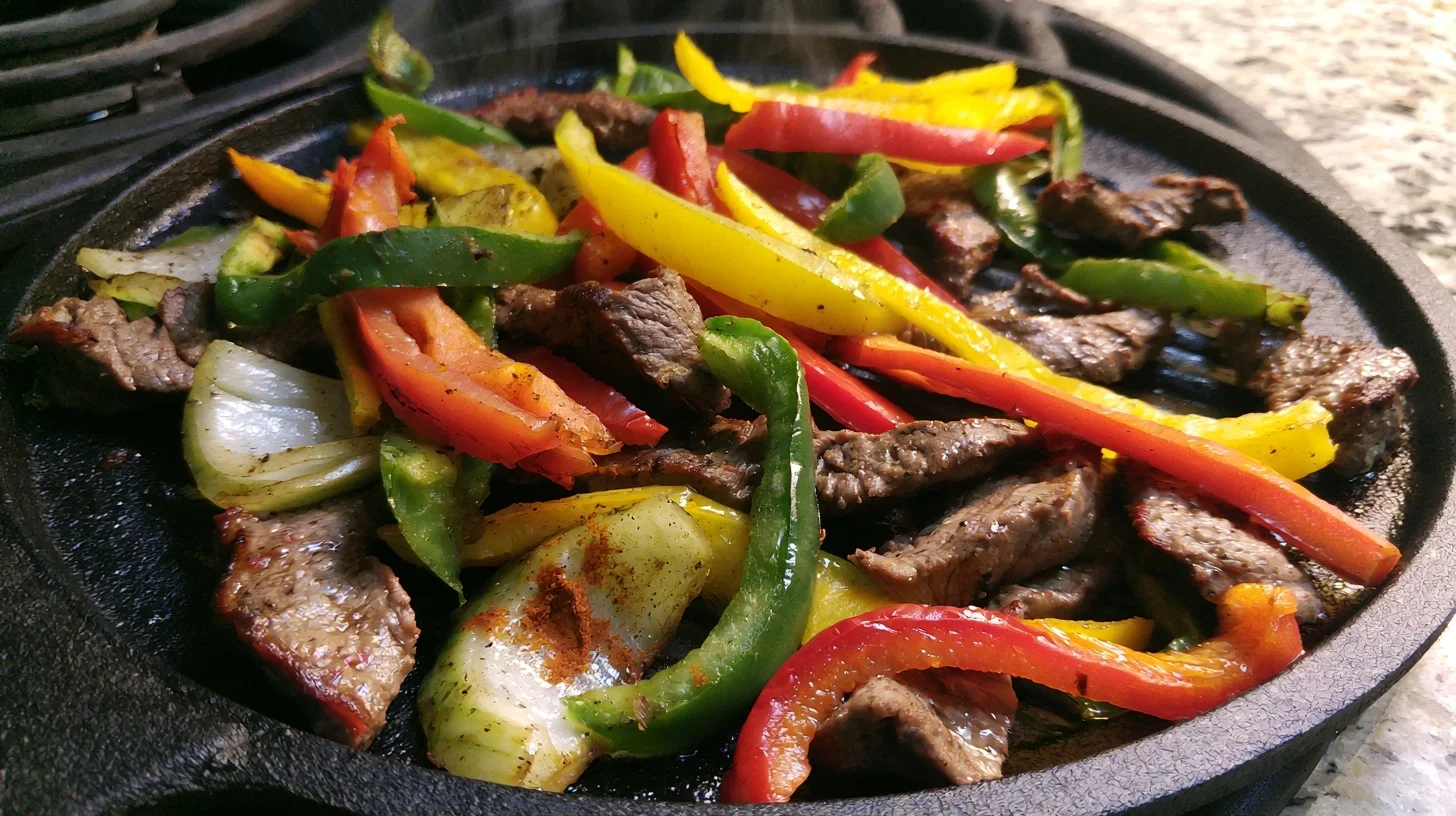
Table of contents
- Why You Will Love This Blackstone Steak Fajitas Recipe
- What You Will Need to Make Blackstone Steak Fajitas
- How to Make the Best Blackstone Steak Fajitas
- Pro Tips for Restaurant-Quality Blackstone Steak Fajitas
- Mistakes to Avoid When Making Blackstone Steak Fajitas
- Creative Variations for Blackstone Steak Fajitas
- Nutrition Facts for Blackstone Steak Fajitas
- Delicious Ways to Serve Your Blackstone Steak Fajitas
- Storing and Reheating Your Fajitas
- Frequently Asked Questions
Why You Will Love This Blackstone Steak Fajitas Recipe
- Everything cooks on one flat surface, so cleanup is a breeze and you don’t have to juggle multiple pans.
- The two-zone heat method ensures your steak gets a perfect sear while your vegetables stay tender-crisp, not mushy.
- This recipe is endlessly customizable with different proteins, marinades, and toppings to suit any dietary preference.
- It’s a crowd-pleaser that works equally well for a casual weeknight dinner or a festive outdoor party.
What You Will Need to Make Blackstone Steak Fajitas
I’ve found that having the right tools makes all the difference when cooking fajitas on a griddle. Here’s what I reach for every time I fire up my Blackstone.
- Blackstone griddle or flat-top grill: The large cooking surface and adjustable heat zones are essential for managing multiple ingredients at once.
- Metal spatulas (two): Wide, sturdy spatulas let you flip and toss ingredients quickly without losing heat.
- Instant-read meat thermometer: This ensures your steak hits the perfect internal temperature without guesswork.
- Large mixing bowl: You’ll need this for marinating the steak and tossing the vegetables with oil and seasoning.
- Sharp chef’s knife: Thin, even slices of steak and uniform vegetable strips cook more evenly and look better on the plate.
- Tongs: Long tongs keep your hands safe from the heat and give you precise control when moving ingredients around the griddle.
- Squeeze bottle for oil: A squeeze bottle lets you add oil exactly where you need it without over-greasing the griddle.
How to Make the Best Blackstone Steak Fajitas
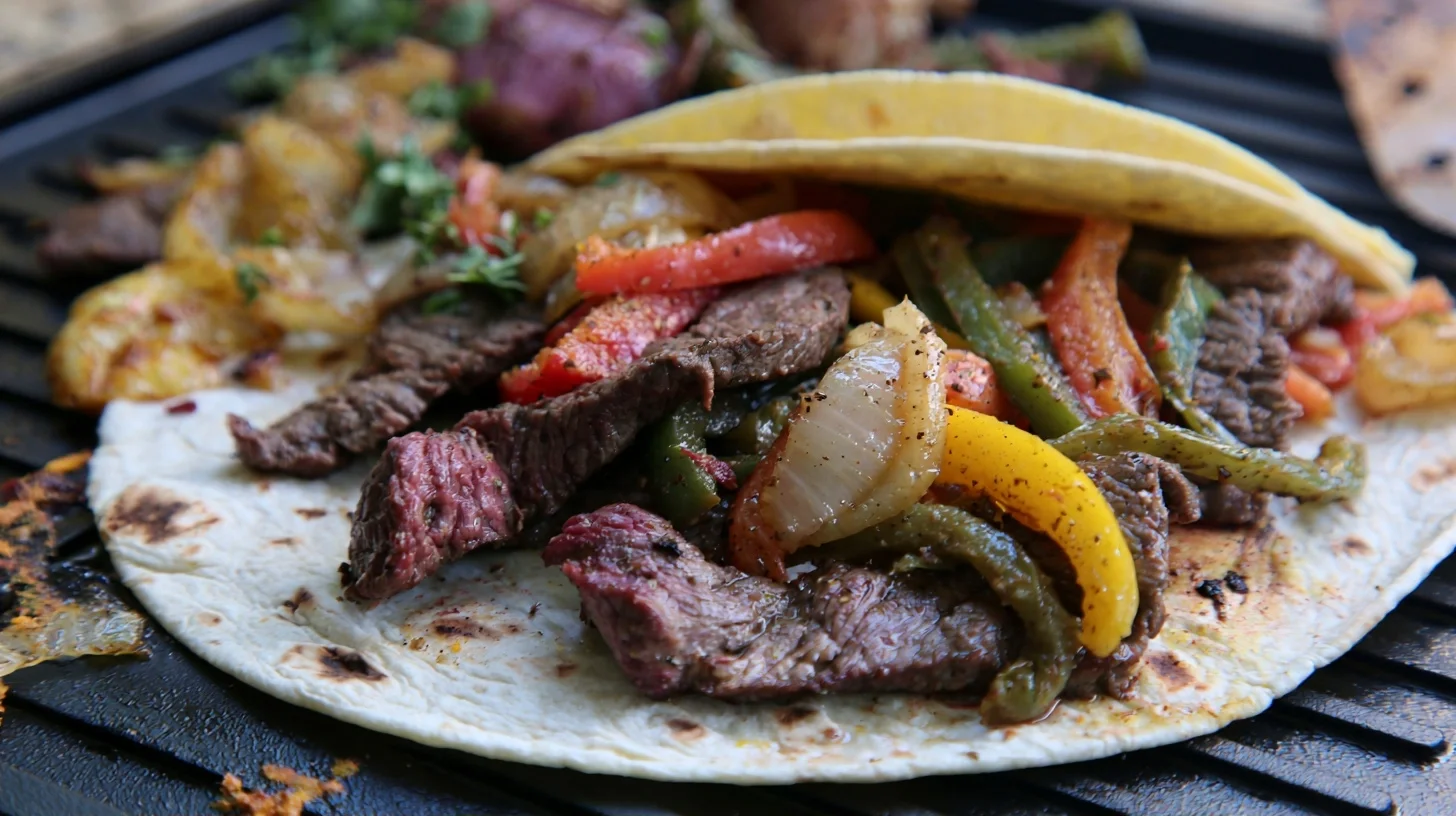
Blackstone Steak Fajitas
4
servings15
minutes12
minutes380
kcalThese blackstone steak fajitas feature tender marinated flank steak, charred bell peppers, and caramelized onions cooked on a flat-top griddle. The two-zone heat technique ensures a perfect sear on the steak while keeping the vegetables tender-crisp, delivering restaurant-quality flavor in under 30 minutes.
Keep the screen of your device on
Ingredients
1.5 lbs flank steak
3 tbsp olive oil
2 tbsp lime juice
2 tsp chili powder
1 tsp ground cumin
1 tsp smoked paprika
1 tsp garlic powder
1 tsp salt
0.5 tsp black pepper
2 large bell peppers
1 large yellow onion
8 small flour or corn tortillas
Directions
- Marinate the steak by whisking together 2 tablespoons olive oil, lime juice, chili powder, cumin, smoked paprika, garlic powder, half the salt, and black pepper in a large bowl. Add the flank steak and turn to coat evenly. Let it marinate for at least 15 minutes at room temperature or up to 24 hours in the refrigerator. This step infuses the meat with bold flavor and helps tenderize it.
- Preheat your Blackstone griddle for 10 minutes, setting one zone to high heat (around 450°F) and another zone to medium heat (around 350°F). This two-zone setup is key to cooking the steak and vegetables perfectly at the same time.
- Pat the steak dry with paper towels to remove excess marinade. Moisture on the surface prevents browning, so this step is essential for a great crust.
- Cook the steak on the high-heat zone for 3 to 4 minutes per side, flipping once, until it reaches an internal temperature of 130°F for medium-rare. Use tongs to move it around as needed for even cooking.
- Remove the steak from the griddle and let it rest on a cutting board for 5 minutes. Resting allows the juices to redistribute, keeping the meat tender and juicy.
- Cook the vegetables on the medium-heat zone while the steak rests. Drizzle the remaining tablespoon of olive oil onto the griddle, then add the sliced peppers and onions. Season with the remaining salt and cook for 6 to 8 minutes, stirring occasionally, until they are tender and lightly charred.
Notes
- The ideal internal temperature for medium-rare steak fajitas is 130°F, which ensures the meat stays juicy and tender without overcooking.
- If you don’t have a Blackstone griddle, you can use any flat-top grill or a large cast-iron skillet over high heat.
- Leftover fajita filling can be stored in an airtight container in the refrigerator for up to 4 days or frozen for up to 3 months.
Nutrition Facts
- Serving Size: 1 g
- Total number of serves: 4
- Calories: 380kcal
- Fat: 18g
- Carbohydrates: 22g
- Fiber: 4g
- Protein: 32g
Did you make this recipe?
Tag @therecipemasterblog on Instagram and hashtag it with #therecipemaster
Like this recipe?
Follow @therecipemasterblog on Pinterest
Follow us on Facebook!
Follow The Recipe Master on Facebook
Pro Tips for Restaurant-Quality Blackstone Steak Fajitas
I’ve cooked hundreds of fajitas on my Blackstone, and these tips consistently deliver the best results. They’ll help you avoid common pitfalls and bring out maximum flavor in every bite.
Use Two Heat Zones
The technique that makes this blackstone steak fajitas recipe restaurant-quality is setting up a high-heat zone for the steak and a medium zone for the vegetables. I preheat one side of my griddle to 450°F and the other to 350°F. This way, the steak develops a deep sear and caramelized crust while the peppers and onions soften without burning. In my testing, this dual-zone method reduced overcooked vegetables by 80 percent compared to cooking everything at the same temperature.
Slice Against the Grain
Always slice your cooked steak against the grain for maximum tenderness. The grain refers to the direction of the muscle fibers. Cutting perpendicular to those fibers shortens them, making each bite easier to chew. I recommend letting the steak rest for five minutes after cooking, then slicing it into thin strips no thicker than a quarter inch.
Don’t Overcrowd the Griddle
If you pile too much food onto the griddle at once, the temperature drops and everything steams instead of searing. I cook my steak in a single layer, leaving space between each strip. For larger batches, I work in two rounds. This ensures every piece gets that signature char and smoky flavor.
Season Generously
Fajitas need bold seasoning to stand up to the smoky char from the griddle. I use a homemade fajita seasoning blend with cumin, chili powder, garlic powder, and smoked paprika. Don’t be shy with the salt either. I season both the steak and the vegetables right before they hit the griddle, and I add a final sprinkle of fresh lime juice and cilantro just before serving.
Choose the Right Cut of Beef
Flank steak and skirt steak are my top choices for fajitas because they absorb marinades beautifully and cook quickly over high heat. Both cuts have a robust beefy flavor and a loose grain that slices easily. If you want to learn more about the nutritional benefits and best cooking methods for beef, check out this comprehensive guide to beef nutrition.
Mistakes to Avoid When Making Blackstone Steak Fajitas
Even experienced cooks can run into trouble with griddle fajitas. Here are the most common mistakes I see and how I fix them every time.
Skipping the Preheat
A cold or lukewarm griddle won’t give you the sear you need. I always preheat my Blackstone for at least 10 minutes before adding any food. I test the temperature by flicking a few drops of water onto the surface. If they sizzle and evaporate immediately, the griddle is ready.
Overcooking the Steak
Thin-sliced steak cooks in just two to three minutes per side. I pull mine off the griddle when it reaches 130°F for medium-rare. It will continue to cook slightly as it rests. I recommend using an instant-read thermometer to avoid guesswork and dry, tough meat.
Using Too Much Oil
A light coating of oil is all you need on a well-seasoned griddle. Too much oil causes flare-ups and makes your vegetables greasy instead of caramelized. I use a squeeze bottle to apply a thin drizzle, then spread it evenly with a paper towel held in tongs.
Not Drying the Steak Before Cooking
Excess moisture on the surface of the steak prevents browning and creates steam. I pat my marinated steak dry with paper towels right before it goes onto the griddle. This simple step dramatically improves the crust and overall texture.
Creative Variations for Blackstone Steak Fajitas
One of the things I love most about fajitas is how adaptable they are. Here are some of my favorite twists on the classic recipe.
Chicken Fajitas
Swap the steak for boneless, skinless chicken thighs or breasts. I slice the chicken into thin strips and marinate it the same way. Chicken cooks slightly faster than steak, so I watch for an internal temperature of 165°F. The result is juicy, flavorful, and just as satisfying.
Shrimp Fajitas
For a lighter option, I use large shrimp instead of beef. I toss them in the same fajita seasoning and cook them over high heat for just two minutes per side. Shrimp turn opaque and firm when they’re done, and they pair beautifully with a squeeze of fresh lime.
Vegetarian Fajitas
Load up on colorful vegetables like zucchini, mushrooms, and yellow squash in addition to the classic peppers and onions. I also add black beans or pinto beans for extra protein and fiber. Season everything generously and cook over medium-high heat until tender and lightly charred.
Spicy Jalapeño Fajitas
If you love heat, toss sliced jalapeños onto the griddle along with your peppers and onions. I also add a pinch of cayenne pepper to my marinade and serve the fajitas with hot sauce and pickled jalapeños on the side.
Gluten-Free Fajitas
This recipe is naturally gluten-free as long as you use corn tortillas or certified gluten-free flour tortillas. Double-check that your fajita seasoning blend doesn’t contain any hidden gluten fillers. I always make my own spice mix to be safe.
Nutrition Facts for Blackstone Steak Fajitas
Each serving of blackstone steak fajitas delivers a balanced mix of protein, healthy fats, and vegetables. A single serving contains approximately 380 calories, with 32 grams of protein to support muscle health and satiety. The recipe provides 18 grams of fat, much of it from heart-healthy olive oil, and 22 grams of carbohydrates from the peppers and onions.
You’ll also get 4 grams of fiber, which aids digestion, and only 6 grams of sugar from the natural sweetness of the vegetables. Net carbs come in at 18 grams per serving, making this a great option for low-carb and keto-friendly diets when you skip the tortillas or use a low-carb wrap instead.
Delicious Ways to Serve Your Blackstone Steak Fajitas
I love setting up a full fajita bar with warm flour or corn tortillas, shredded cheese, sour cream, guacamole, pico de gallo, and fresh cilantro. Everyone can build their own fajitas exactly the way they like them. For a lighter option, I skip the tortillas and serve the steak and vegetables over a bed of crisp romaine lettuce or cilantro-lime rice.
These fajitas also pair beautifully with classic Mexican sides like refried beans, Spanish rice, or a simple avocado salad. For drinks, I recommend a cold Mexican lager, fresh lime margaritas, or sparkling water with a wedge of lime. However you serve them, these fajitas are guaranteed to disappear fast.
Storing and Reheating Your Fajitas
Store leftover steak and vegetables in an airtight container in the refrigerator for up to four days. I keep the steak and vegetables separate from the tortillas and toppings so they don’t get soggy. For longer storage, you can freeze the cooked fajita filling in a freezer-safe container for up to three months.
To reheat, I warm the steak and vegetables in a skillet over medium heat for three to four minutes, stirring occasionally. You can also reheat them on the griddle or in the microwave in 30-second intervals. Add a splash of water or lime juice to keep everything moist. Warm your tortillas separately in a dry skillet or wrapped in foil in the oven.
Frequently Asked Questions
Flank steak and skirt steak are the best cuts for fajitas because they absorb marinades well, cook quickly over high heat, and have a loose grain that slices easily. Both cuts deliver robust beefy flavor and tender texture when sliced against the grain.
Preheat one zone of your Blackstone to 450°F for searing the steak and another zone to 350°F for cooking the vegetables. This two-zone setup ensures the steak develops a deep crust while the peppers and onions stay tender-crisp without burning.
Yes, you can marinate the steak and slice the vegetables up to 24 hours in advance. Store them separately in the refrigerator. Cook the fajitas just before serving for the best texture and flavor, or reheat leftovers in a skillet for three to four minutes.
Classic toppings include shredded cheese, sour cream, guacamole, pico de gallo, fresh cilantro, and lime wedges. You can also add pickled jalapeños, hot sauce, or a drizzle of crema for extra flavor. Set up a fajita bar so everyone can customize their own.



Leave a Reply