

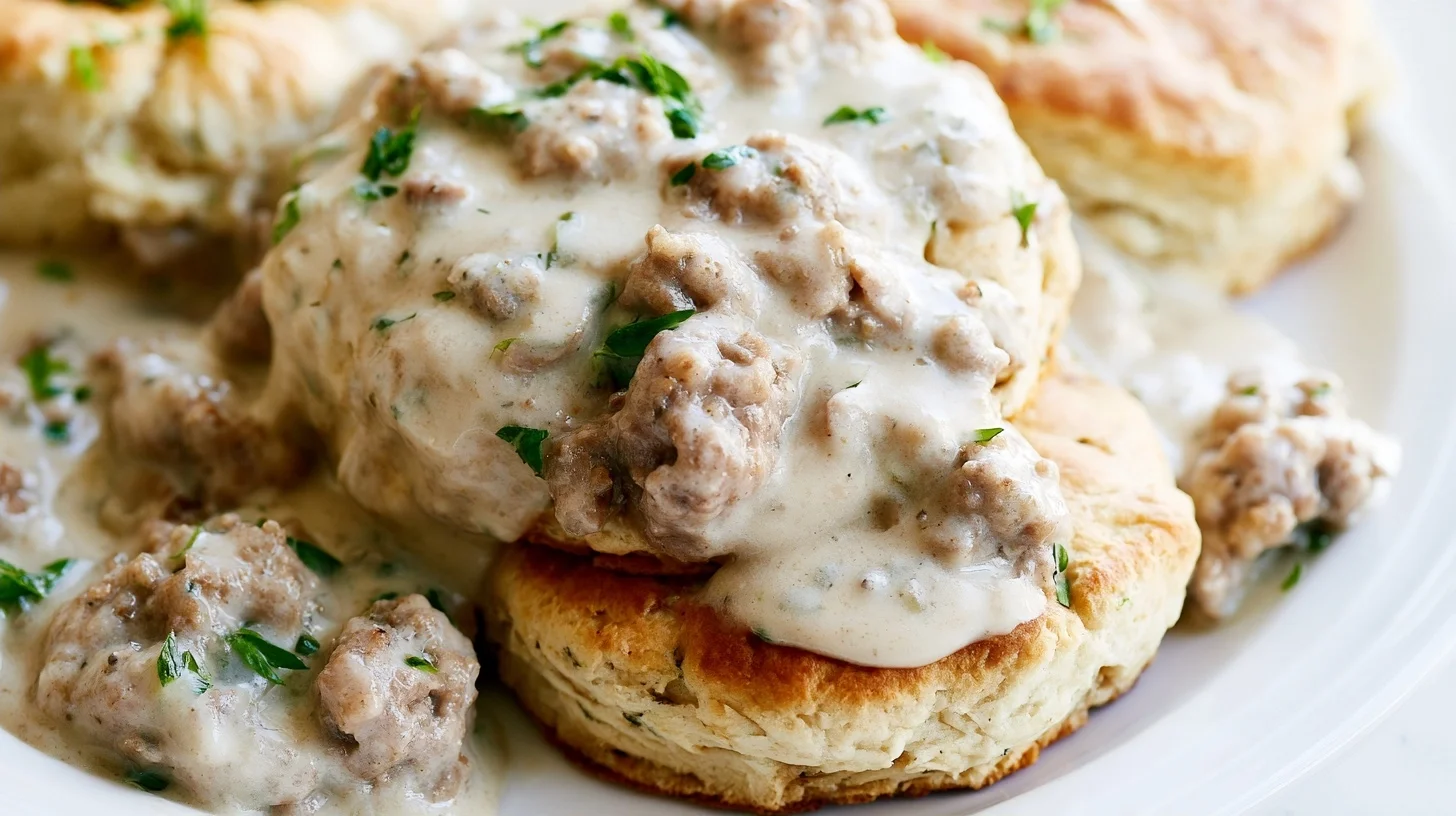
This sausage gravy recipe delivers a thick, peppery gravy made with crumbled breakfast sausage, flour, and milk in just 20 minutes. The gravy clings to biscuits without running off and has a deep savory flavor from browning the sausage and toasting the flour in the drippings.
The recipe takes 20 minutes from start to finish and makes 6 servings. The key is cooking the flour in the sausage fat for 2 minutes to eliminate any raw taste. The gravy thickens as it cools, so serve it right away or thin it with a splash of milk when reheating.

Table of contents
How to Make Sausage Gravy
Sausage Gravy Recipe
6
servings5
minutes15
minutes285
kcalSausage gravy is a thick, peppery white gravy made with crumbled breakfast sausage, flour, and whole milk. The recipe takes 20 minutes and makes 6 servings, with the key step being cooking the flour in the sausage fat for 2 minutes to eliminate raw flour taste.
Keep the screen of your device on
Ingredients
1 pound ground pork breakfast sausage
0.25 cup all-purpose flour
2.5 cups whole milk
1 teaspoon black pepper
0.25 teaspoon salt
Directions
- Brown the sausage in a large skillet over medium heat for 6 to 8 minutes, breaking it into small crumbles with a wooden spoon. Cook until no pink remains and the sausage is browned.
- Add the flour to the sausage and fat in the skillet. Stir constantly for 2 minutes until the flour smells nutty and turns one shade darker. This cooks out the raw flour taste.
- Pour in 1/2 cup of milk and whisk until the mixture is smooth and no lumps remain. Then add the remaining 2 cups of milk in a steady stream while whisking constantly.
- Bring the gravy to a simmer over medium heat, whisking frequently. Cook for 3 to 5 minutes until the gravy thickens and coats the back of a spoon.
- Stir in the black pepper and taste the gravy. Add salt only if needed, since most breakfast sausage is already salty. Serve the sausage gravy immediately over biscuits or toast.
Notes
- Sausage gravy continues to thicken as it cools, so stop cooking when it coats the back of a spoon but still pours easily.
- If lumps form, pour the gravy through a fine mesh strainer into a clean pan and reheat it over medium-low heat.
- Store leftover gravy for 3 to 4 days in an airtight container in the refrigerator. Reheat with 2 to 4 tablespoons of milk to thin it back to the right consistency. Turkey sausage works as a substitute but produces less fat, so add 1 tablespoon of butter.
Nutrition Facts
- Serving Size: 1 g
- Total number of serves: 6
- Calories: 285kcal
- Fat: 20g
- Carbohydrates: 11g
- Net Carbs: 11g
- Fiber: 0g
- Protein: 14g
Did you make this recipe?
Tag @therecipemasterblog on Instagram and hashtag it with #therecipemaster
Like this recipe?
Follow @therecipemasterblog on Pinterest
Follow us on Facebook!
Follow The Recipe Master on Facebook
The sections below cover the best sausage types for this gravy recipe, how to fix lumps if they form, and the exact milk temperature that prevents breaking.
Key Ingredients and Substitutions
These ingredients control the texture and flavor of sausage gravy.
- Breakfast sausage: Use ground pork breakfast sausage with sage and black pepper for traditional flavor. Turkey sausage works but produces less fat, so add 1 tablespoon of butter. Italian sausage makes the gravy too fennel forward.
- All-purpose flour: The flour thickens the milk and creates body. Use exactly 1/4 cup for 2 1/2 cups of milk. More flour makes the gravy pasty. Less leaves it thin.
- Whole milk: Whole milk gives the gravy richness and a creamy mouthfeel. 2% milk works but tastes thinner. Heavy cream makes it too thick and rich for most biscuits.
- Black pepper: Sausage gravy needs 1 teaspoon of coarsely ground black pepper for the sharp bite that defines it. White pepper works but lacks visual contrast.
Tips for Perfect Sausage Gravy Recipe
These steps prevent the most common failures in a sausage gravy recipe.
- Brown the sausage completely: Cook the sausage over medium heat for 6 to 8 minutes until no pink remains. The browned bits on the pan bottom add deep savory flavor to the gravy.
- Toast the flour: Stir the flour into the sausage and fat and cook for 2 minutes. The mixture should smell nutty and turn one shade darker. This step cooks out the raw flour taste.
- Add milk slowly: Pour in 1/2 cup of milk first and whisk until smooth. Then add the rest in a steady stream while whisking. This prevents lumps from forming.
- Simmer to thicken: Once all the milk is in, bring the gravy to a simmer and cook for 3 to 5 minutes. It will thicken as it bubbles gently. Sausage gravy continues to thicken off the heat, so stop when it coats the back of a spoon.
- Season at the end: Taste the gravy after it thickens and add salt only if needed. Most breakfast sausage is salty enough on its own.
What Went Wrong?
Why Is the Gravy Lumpy?
Lumps form when flour clumps in the milk. This happens when you add all the milk at once or the pan is too hot. Whisk in the first 1/2 cup of milk until completely smooth before adding more. If lumps form, pour the gravy through a fine mesh strainer into a clean pan and reheat.
Why Is the Gravy Too Thin?
Thin gravy means the flour did not have enough time to activate or the ratio is off. Simmer the gravy for 2 more minutes to let it thicken. If it is still thin, whisk 1 tablespoon of flour with 2 tablespoons of cold milk in a small bowl and stir it into the simmering gravy. Cook for 2 minutes more.
Why Does the Gravy Taste Pasty?
A pasty taste means the flour was not cooked long enough in the fat. The flour needs 2 full minutes over medium heat to toast and lose its raw flavor. If the gravy already tastes pasty, simmer it for 5 more minutes to cook the flour further. Next time, cook the flour until it smells nutty before adding milk.
How to Change It
Spicy Sausage Gravy Recipe
Use hot breakfast sausage instead of regular and add 1/4 teaspoon of cayenne pepper with the black pepper. The gravy will have a sharp heat that builds with each bite.
Mushroom Sausage Gravy
Sauté 1 cup of sliced mushrooms in the sausage fat before adding the flour. The mushrooms add earthy flavor and extra texture. Cook them for 4 minutes until they release their liquid and brown.
Herbed Sausage Gravy
Stir in 1 tablespoon of fresh chopped sage or thyme after the gravy thickens. Fresh herbs brighten the rich gravy without changing the texture.
What to Serve With Sausage Gravy
Sausage gravy is traditionally served over split buttermilk biscuits for breakfast. It also works over toast, English muffins, or fried chicken cutlets. For a full Southern breakfast, serve it with scrambled eggs and hash browns. If you want a rich brown gravy for mashed potatoes instead, try this copycat Popeyes gravy recipe that uses a dark roux.
How to Store and Reheat Sausage Gravy
Sausage gravy keeps for 3 to 4 days in the refrigerator in an airtight container. The gravy will thicken as it cools. Reheat it in a saucepan over medium-low heat, whisking in 2 to 4 tablespoons of milk to bring it back to the right consistency. Stir frequently to prevent scorching. The gravy takes 5 minutes to heat through.
Sausage gravy freezes well for up to 3 months in a freezer safe container. Thaw it overnight in the refrigerator before reheating. Whisk in extra milk as you reheat because the gravy separates slightly when frozen. For more tips on making smooth pan gravies, see this guide to gravy basics that covers flour ratios and troubleshooting.
Sausage Gravy Recipe FAQs
Yes. Make the gravy up to 2 days ahead and refrigerate it in an airtight container. Reheat it in a saucepan over medium-low heat and whisk in 2 to 4 tablespoons of milk to thin it back to the right consistency.
Ground pork breakfast sausage with sage and black pepper is best. It has the right fat content and seasoning. Italian sausage has too much fennel. Turkey sausage works but produces less fat, so add 1 tablespoon of butter.
Simmer the gravy for 2 more minutes to let the flour activate. If it is still thin, whisk 1 tablespoon of flour with 2 tablespoons of cold milk and stir it into the simmering gravy. Cook for 2 minutes.
Yes. 2% milk works but the gravy will taste thinner and less rich. The texture will still be correct. Do not use skim milk because it lacks enough fat to create a creamy gravy.







Leave a Reply