

This dal makhani recipe delivers the rich, creamy texture and deep flavor of the Punjabi classic made with whole black lentils (urad dal) and kidney beans slow simmered in butter, cream, and tomatoes. The finished dish is thick, velvety, and warming without being heavy.
The recipe takes 8 hours of soaking plus 2 hours of cooking and serves 6. The long, slow simmer on low heat is what transforms the lentils into a creamy consistency without needing to mash them, and dal makhani keeps for up to 5 days in the refrigerator, making it ideal for meal prep.
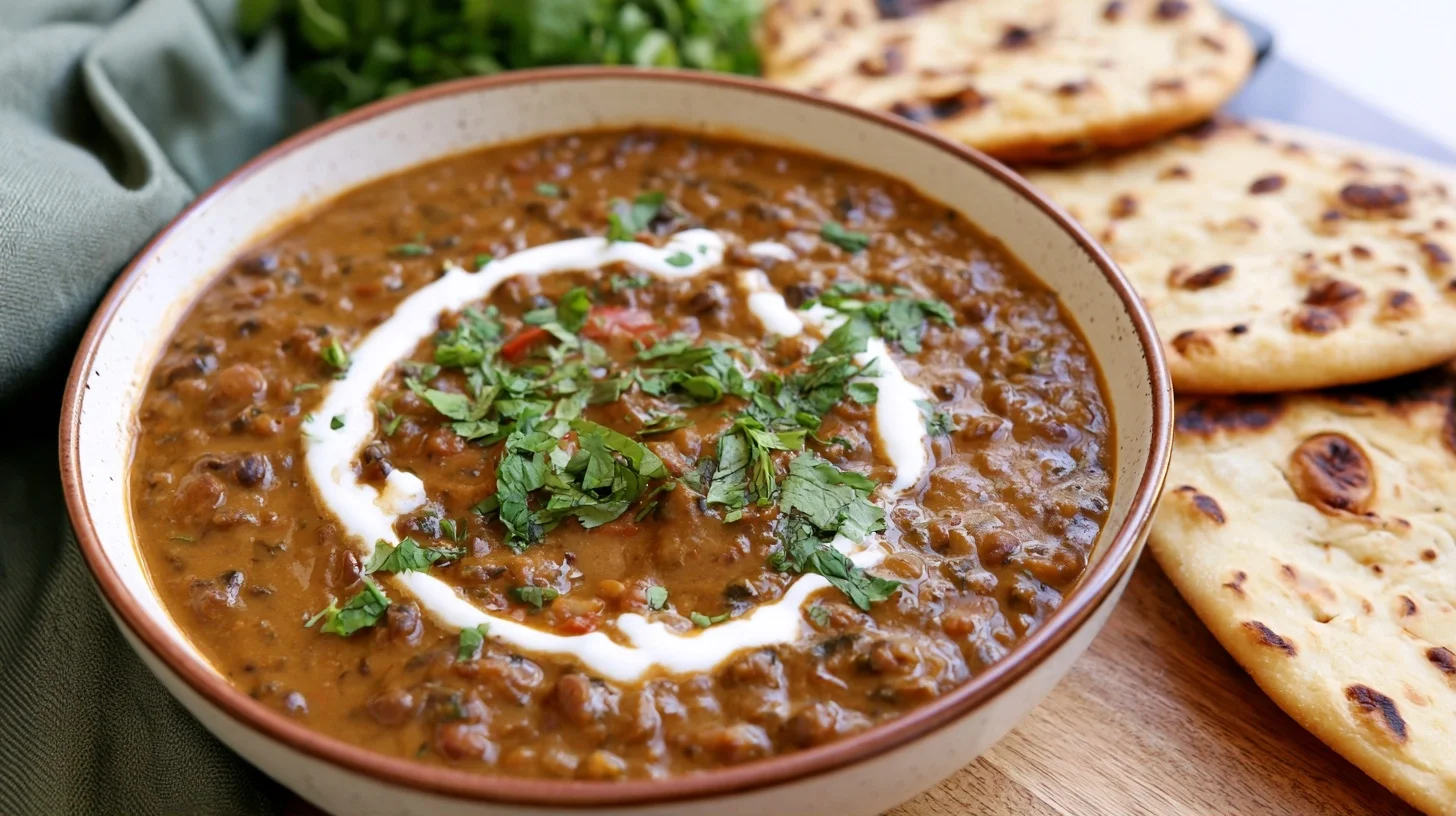
Table of contents
Why This Dal Makhani Works
- Soaking the whole urad dal and rajma for 8 hours cuts the cooking time in half and produces lentils that hold their shape while becoming tender.
- Simmering the dal makhani on low heat for 90 minutes after pressure cooking develops the signature creamy texture without adding flour or cornstarch.
- Adding butter in two stages, half during cooking and half at the end, gives you the rich flavor and glossy finish that defines restaurant style dal makhani.
- Tempering whole spices in ghee before adding the tomato base builds layers of flavor that cannot be achieved with ground spices alone.
Dal Makhani Recipe
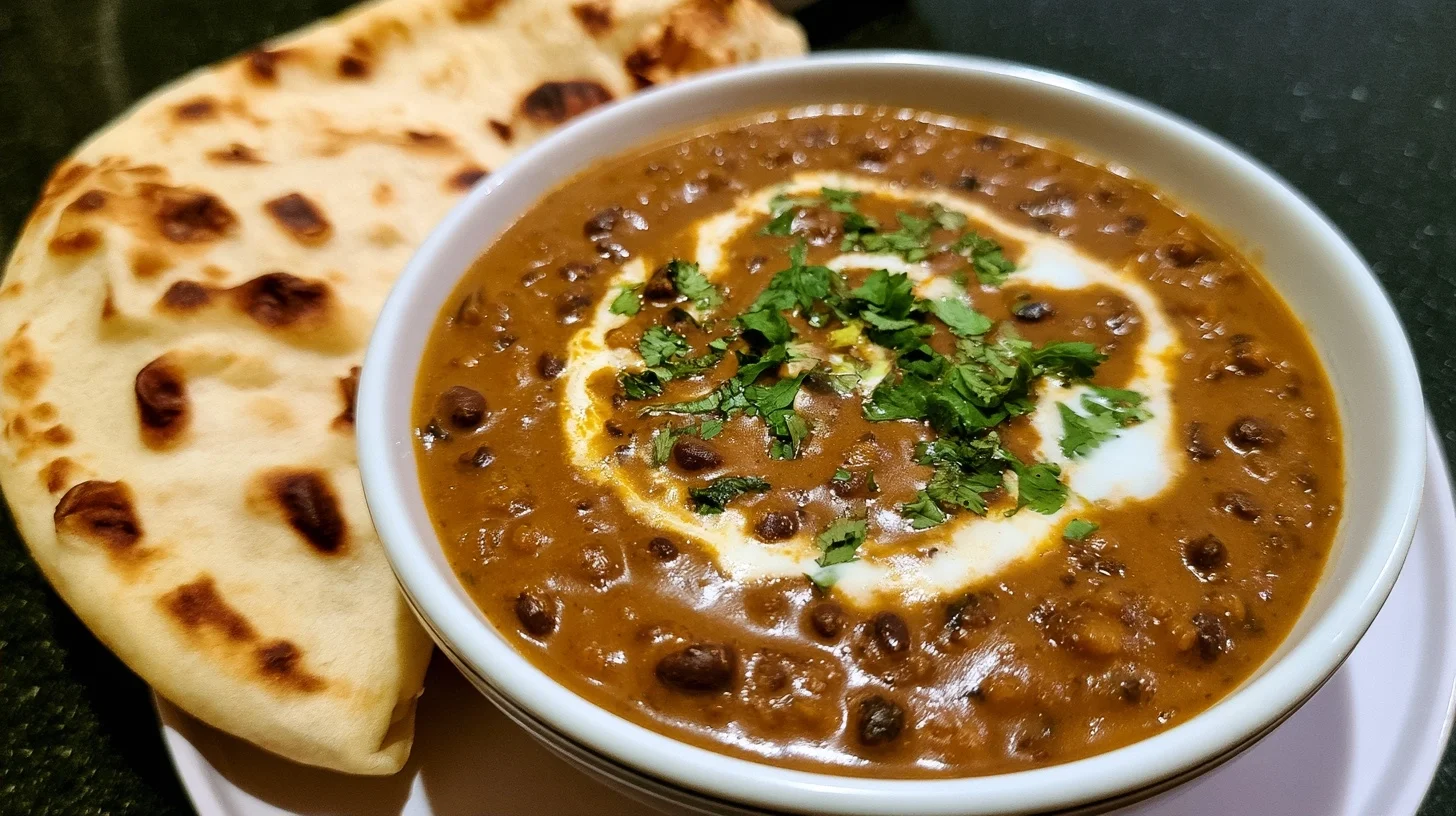
Dal Makhani Recipe
6
servings15
minutes2
hours320
kcalDal makhani is a rich, creamy Punjabi dish made with whole black lentils and kidney beans slow simmered in butter, cream, and aromatic spices until thick and velvety. The recipe takes 8 hours for soaking plus 2 hours of cooking, serves 6, and requires a long, low simmer to develop the signature creamy texture without any thickeners.
Keep the screen of your device on
Ingredients
1 cup whole black urad dal (black gram)
0.25 cup dried kidney beans (rajma)
4 tablespoons butter
1 tablespoon ghee or vegetable oil
1 teaspoon cumin seeds
1 medium onion
1 tablespoon ginger garlic paste
1 cup tomato puree
1 teaspoon kashmiri chili powder
0.5 teaspoon ground coriander
0.5 teaspoon garam masala
0.5 cup heavy cream
Directions
- Drain and rinse the soaked lentils and beans, then add them to a pressure cooker with 3 cups of water. Pressure cook on high for 20 minutes, then allow natural pressure release for 10 minutes. The lentils should be completely soft and easily mashed between your fingers.
- Open the pressure cooker and mash about one quarter of the cooked lentils against the side of the pot with the back of a spoon to release starch and thicken the gravy. Set aside.
- Heat the ghee in a large heavy bottomed pot over medium heat until shimmering, about 1 minute. Add the cumin seeds and let them sizzle for 10 seconds until fragrant and darkened slightly.
- Add the chopped onion and cook, stirring frequently, for 5 to 7 minutes until the onion is soft and golden brown at the edges. The onion should smell sweet and caramelized.
- Stir in the ginger garlic paste and cook for 1 minute until the raw smell disappears and the paste is lightly browned. Stir constantly to prevent burning.
- Add the tomato puree, kashmiri chili powder, ground coriander, and garam masala. Cook for 8 to 10 minutes, stirring occasionally, until the tomato mixture thickens, darkens to a deep red, and the oil begins to separate from the sides. This step builds the base flavor of the dal.
Notes
- Dal makhani needs 60 to 90 minutes of low heat simmering after pressure cooking to develop its signature creamy texture, so do not rush this step or the dal will be thin and watery.
- If your dal turns out grainy, it means the lentils were not soaked long enough or were cooked at too high a heat. Add half a cup of water and simmer covered for another 30 minutes on the lowest heat, then mash a portion of the lentils to release more starch.
- Dal makhani keeps for 4 to 5 days in the refrigerator in an airtight container and tastes better the next day as the flavors deepen. Add a splash of water or milk when reheating as the dal thickens when cold. For substitutions, replace heavy cream with coconut cream for a dairy free version, but expect a faint coconut flavor and a slightly thinner texture.
Nutrition Facts
- Serving Size: 1 g
- Total number of serves: 6
- Calories: 320kcal
- Fat: 18g
- Carbohydrates: 28g
- Fiber: 8g
- Protein: 12g
Did you make this recipe?
Tag @therecipemasterblog on Instagram and hashtag it with #therecipemaster
Like this recipe?
Follow @therecipemasterblog on Pinterest
Follow us on Facebook!
Follow The Recipe Master on Facebook
Key Ingredients for Dal Makhani
Each ingredient in this dal makhani recipe plays a specific role in building the dish’s texture and flavor.
- Whole black urad dal (black gram): This is the foundation of dal makhani and gives the dish its earthy flavor and creamy body when simmered long enough. Split urad dal or other lentils will not produce the same thick, velvety texture. Look for whole urad with the black skin intact.
- Rajma (kidney beans): The kidney beans add a slight sweetness and a contrasting texture to the softer lentils. Canned kidney beans can be used but should be added in the last 30 minutes of simmering. They are already cooked, which will make the dal slightly less creamy.
- Butter: Butter is not just a fat here but a defining flavor, which is why the dish is called makhani (buttery). Ghee can replace half the butter for a nuttier taste. But using only ghee or oil makes the dal taste lighter and less indulgent.
- Heavy cream: Cream gives dal makhani its signature richness and pale brown color. Half and half can be used for a lighter version, but the dal will be thinner and less silky. Coconut cream works for a dairy free version but adds a faint coconut flavor.
- Tomato puree: Fresh tomato puree adds acidity and body to the gravy. Canned crushed tomatoes work but may make the dal slightly chunkier. And tomato paste is too concentrated and will overpower the lentils unless diluted with water.
- Ginger garlic paste: This paste forms the aromatic base of the gravy and balances the richness of the butter and cream. Freshly ground paste has a brighter flavor than store bought. But jarred paste works if you reduce the amount by one third to account for its stronger taste.
How to Make the Recipe Turn Out Right
These techniques control the texture and flavor of dal makhani and prevent the most common mistakes.
- Soak the lentils and beans for 8 hours or overnight. Soaking softens the skins and reduces the cooking time from 3 hours to about 90 minutes. And it helps the lentils cook evenly so you do not end up with some that are mushy and others that are still firm.
- Simmer on the lowest heat setting after pressure cooking. Dal makhani needs 60 to 90 minutes of gentle simmering to break down the starches and create a creamy, unified gravy. High heat will cause the dal to stick to the bottom and burn, leaving a bitter taste.
- Stir every 10 to 15 minutes during the simmer. Stirring prevents the lentils from settling and scorching on the bottom of the pot. And it helps the dal thicken evenly. You will notice the color darken and the texture turn glossy as the butter and cream emulsify into the lentils.
- Add the cream in the last 10 minutes. Adding cream too early can cause it to separate and look curdled, especially if the dal is boiling. Stir the cream in gently once the dal has thickened and the heat is low, and let it warm through without boiling.
- Mash a few spoonfuls of dal against the side of the pot. This releases more starch into the gravy and makes the dal thicker and creamier without adding flour. Mash about one quarter of the cooked lentils after the initial pressure cooking, before you start the long simmer.
Making Dal Makhani in an Instant Pot
Pressure cook the soaked lentils and beans with water on high pressure for 25 minutes, then natural release for 15 minutes. Open the lid, switch to saute mode, and add the tempered spices, tomato puree, butter, and cream. Simmer on saute mode for 30 to 40 minutes, stirring every 10 minutes, until the dal is thick and creamy. The Instant Pot version is faster but produces a slightly less rich flavor than the stovetop method because the shorter simmer does not caramelize the sugars in the tomatoes and butter as deeply.
What Went Wrong With Your Dal Makhani
Why Is My Dal Makhani Watery?
Watery dal makhani happens when the lentils have not simmered long enough for the starches to thicken the gravy. Or when too much water was added at the start. To fix a watery batch, continue simmering uncovered on low heat for another 20 to 30 minutes, stirring frequently, until the liquid reduces and the dal coats the back of a spoon. Next time, use a ratio of 3 cups water to 1 cup combined lentils and beans. And plan for at least 60 minutes of simmering after pressure cooking.
Why Did My Dal Makhani Turn Out Grainy?
Grainy dal makhani results from lentils that were not soaked long enough or were cooked at too high a heat. Which causes the skins to toughen before the insides soften. If your dal is already cooked but grainy, add half a cup of water and simmer covered for another 30 minutes on the lowest heat. Then mash a portion of the lentils to release more starch. For the next batch, soak the lentils for a full 8 hours and keep the heat low during the entire simmer so the lentils break down gradually.
Why Does My Dal Makhani Taste Bland?
Bland dal makhani usually means the spices were not tempered properly in hot ghee or butter. Or not enough salt was added at the end. Tempering releases the essential oils in cumin, coriander, and garam masala. Which cannot happen if the fat is not hot enough or if the spices are added directly to the watery dal. To fix bland dal, heat 2 tablespoons of ghee in a small pan until shimmering. Then, add half a teaspoon each of cumin seeds and kashmiri chili powder. And let them sizzle for 10 seconds, and pour the mixture over the finished dal. Taste and add salt in quarter teaspoon increments until the flavors sharpen.
How to Change Dal Makhani Recipe
Vegan Dal Makhani
Replace the butter with vegan butter or coconut oil and use full fat coconut cream instead of heavy cream. The dal will have a faint coconut flavor and a slightly thinner texture. But the spices and long simmer still produce a rich, satisfying dish. Add an extra tablespoon of vegan butter at the end to restore some of the glossy finish.
Lighter Dal Makhani
Cut the butter to 2 tablespoons and replace the heavy cream with plain Greek yogurt stirred in at the very end off the heat to prevent curdling. The dal will be tangier and less rich, with about half the fat and 100 fewer calories per serving. The texture will be slightly thinner but still creamy if you simmer the lentils long enough to release their starches.
Spicier Dal Makhani Recipe
Double the amount of kashmiri chili powder to 2 teaspoons and add one finely chopped green chili with the ginger garlic paste. Kashmiri chili adds color and mild heat, while the green chili brings a sharper, fresher heat. Add the green chili early in the cooking process so its flavor mellows and integrates into the gravy.
What to Serve With Dal Makhani
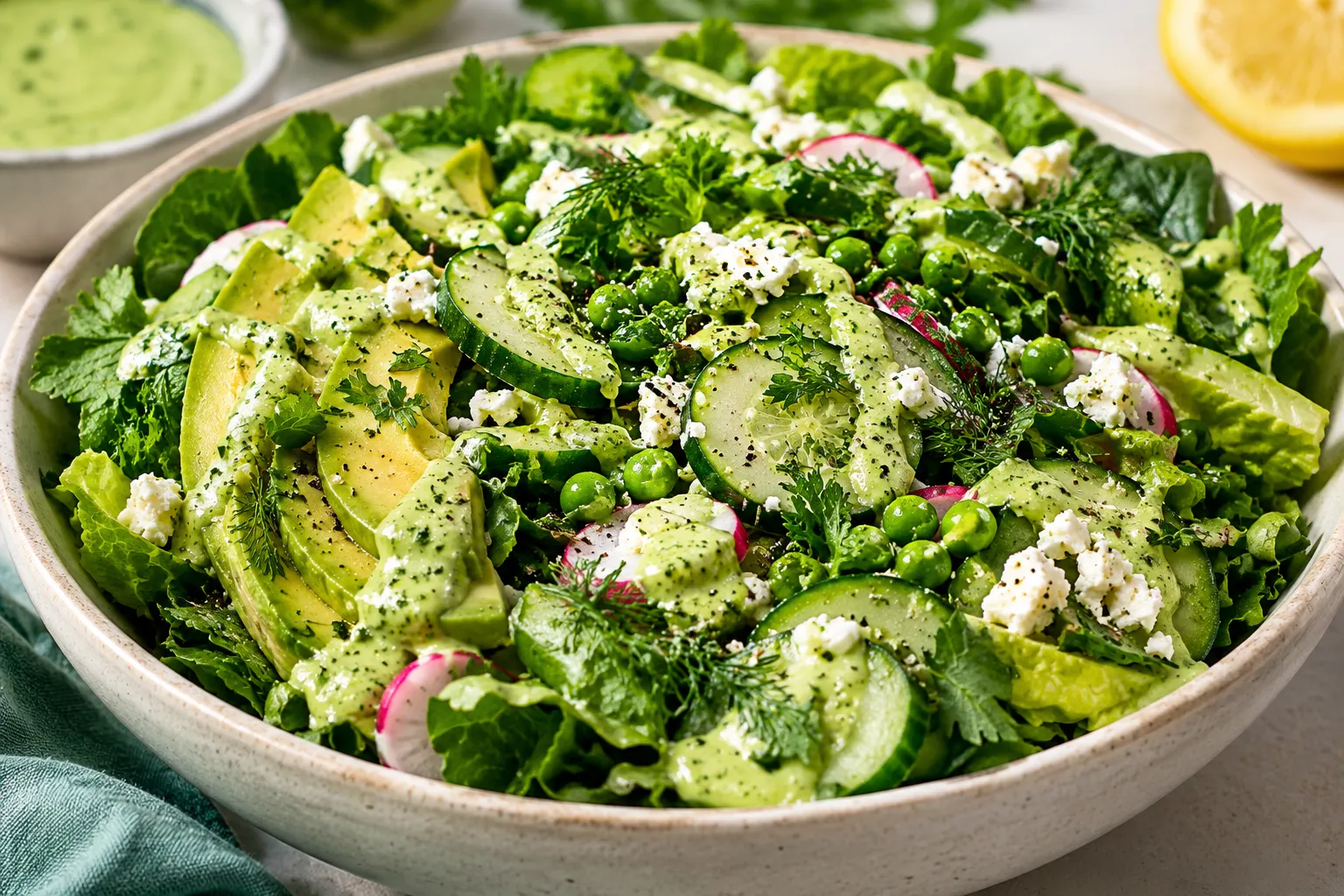
Dal makhani is traditionally served with naan bread or steamed basmati rice, which soak up the rich gravy. Jeera rice (cumin scented rice) and roti are also common pairings. A side of pickled onions, cucumber raita, or a simple green salad with lemon juice balances the richness of the dal and adds a fresh, acidic contrast.
How to Store and Reheat Dal Makhani
Dal makhani keeps for 4 to 5 days in the refrigerator in an airtight container and actually tastes better the next day as the flavors deepen. The dal will thicken as it cools, so add a splash of water or milk when reheating. Reheat on the stovetop over low heat for 5 to 7 minutes, stirring frequently, or in the microwave in 1 minute intervals at 50 percent power.
Dal makhani freezes well for up to 3 months in a freezer safe container, but the cream may separate slightly when thawed. Thaw overnight in the refrigerator, then reheat on the stovetop and whisk in an extra tablespoon of cream or butter to bring the texture back. Do not freeze dal makhani that has already been reheated once, as the lentils will turn mushy.
FAQs
Yes, you can make dal makhani in a regular pot. You can by simmering the soaked lentils and beans in 4 cups of water for 2 to 2.5 hours on low heat until they are completely soft, then proceeding with the recipe as written. Check the water level every 30 minutes and add more if the lentils start to dry out before they are tender.
Dal makhani is made with whole black urad dal and kidney beans simmered with butter and cream for a rich, thick gravy, while dal tadka uses yellow split lentils (toor or moong dal) finished with a tempering of ghee and spices for a lighter, thinner consistency. Dal makhani takes much longer to cook and has a creamy texture, whereas dal tadka is ready in 30 minutes and has a brothier texture.
Skipping the soak will add at least 1 hour to the cooking time and may result in unevenly cooked lentils with tough skins. If you are short on time, use a quick soak method by boiling the lentils and beans for 5 minutes, then letting them sit covered off the heat for 1 hour before draining and proceeding with the recipe.
Dal makhani turns out not creamy when the lentils have not simmered long enough on low heat to break down and release their starches, or when not enough of the cooked lentils were mashed to thicken the gravy. Continue simmering for another 20 to 30 minutes, mash a portion of the lentils against the side of the pot, and stir frequently to help the dal thicken.






Leave a Reply