

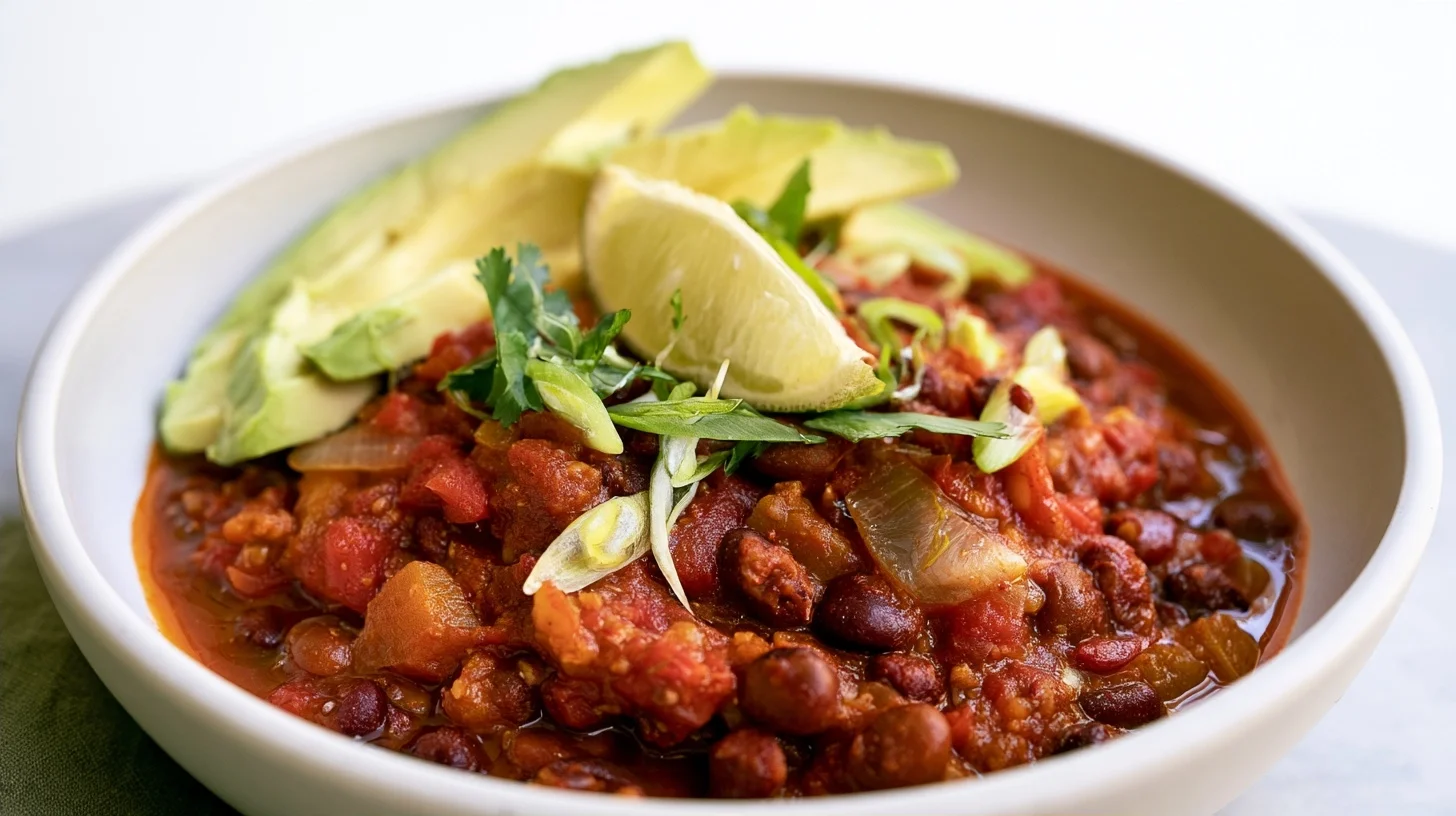
This vegetarian chili recipe builds deep, savory flavor in under an hour using black beans, kidney beans, and a blend of spices that caramelize with the tomatoes and peppers. The result is a thick, hearty chili with layers of smokiness and heat, no meat required.
The recipe takes 45 minutes from start to finish and serves 6. Sautéing the onions, peppers, and spices together for 5 minutes before adding the tomatoes creates a flavor base that makes vegetarian chili taste as rich and complex as versions made with ground beef. The chili thickens as it simmers and keeps for up to 5 days in the refrigerator.
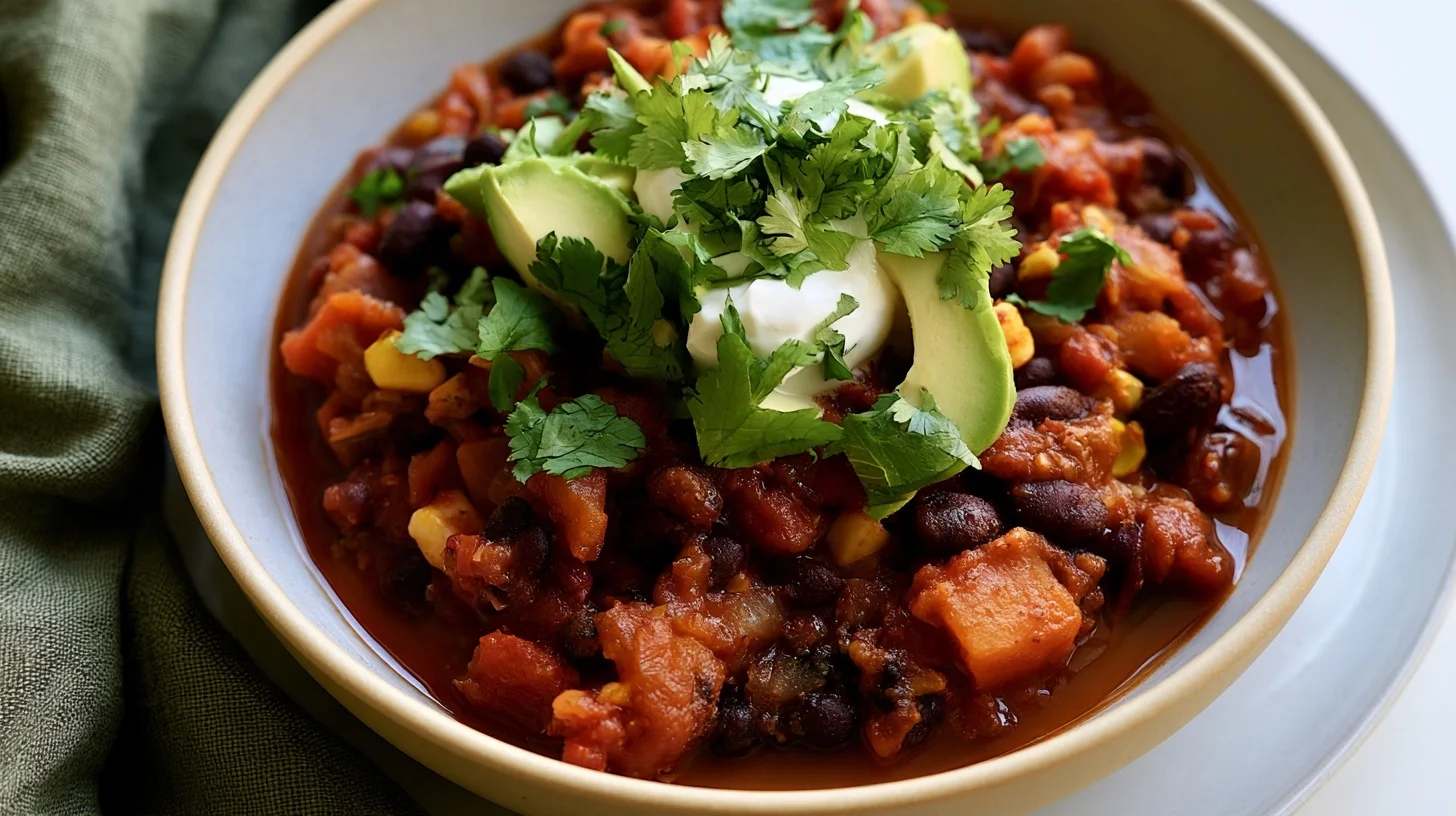
Table of contents
Why This Vegetarian Chili Recipe Works
- Sautéing the chili powder, cumin, and smoked paprika in oil for 90 seconds blooms their essential oils and intensifies the smoky depth that vegetarian chili recipes depend on for a meaty flavor without meat.
- Using two types of beans, black and kidney, provides contrasting textures and a fuller protein profile than a single bean variety.
- A 20 minute simmer after adding the tomatoes allows the liquid to reduce by one third, concentrating the flavors and creating a thick consistency that clings to a spoon.
Vegetarian Chili Recipe
Vegetarian Chili Recipe
6
servings15
minutes30
minutes245
kcalThis vegetarian chili uses black beans, kidney beans, and a blend of toasted spices to create a thick, hearty dish with smoky, savory depth. The recipe takes 45 minutes from start to finish, serves 6, and relies on blooming the spices in oil before adding the tomatoes to build rich flavor without meat.
Keep the screen of your device on
Ingredients
2 tablespoons olive oil
1 large yellow onion
1 large red bell pepper
3 cloves garlic
2 tablespoons chili powder
1 tablespoon ground cumin
1 teaspoon smoked paprika
1 can black beans
1 can kidney beans
1 can crushed tomatoes
1 cup vegetable broth
1 teaspoon salt
Directions
- Heat the oil in a large pot or Dutch oven over medium heat for 1 minute until it shimmers.
- Add the onion and bell pepper and cook for 5 minutes, stirring occasionally, until the onion is translucent and the pepper has softened.
- Stir in the garlic, chili powder, cumin, and smoked paprika and cook for 90 seconds, stirring constantly, until the spices darken slightly and become very fragrant. This blooms the spices and prevents a raw flavor.
- Add the black beans, kidney beans, crushed tomatoes, vegetable broth, and salt and stir to combine. Bring the mixture to a boil over medium high heat, about 3 minutes.
- Reduce the heat to medium low and simmer uncovered for 20 minutes, stirring every 5 minutes and scraping the bottom of the pot, until the chili has thickened and the liquid has reduced by about one third. The chili should coat the back of a spoon.
- Remove the pot from the heat and let the chili rest for 5 minutes. Taste and add more salt in 1/4 teaspoon increments if needed, then serve.
Notes
- Blooming the spices in oil for 90 seconds before adding the tomatoes intensifies their flavor and creates the smoky depth that makes vegetarian chili taste rich without meat.
- If the chili is too watery, simmer it uncovered over medium heat for an additional 10 minutes, stirring frequently, until it reaches the desired thickness.
- The chili keeps for 5 days in the refrigerator in an airtight container and freezes well for up to 3 months. For a spicier version, add 1 diced jalapeño with the bell pepper or stir in 1/4 teaspoon of cayenne pepper during the spice bloom.
Nutrition Facts
- Serving Size: 1 g
- Total number of serves: 6
- Calories: 245kcal
- Fat: 6g
- Carbohydrates: 38g
- Fiber: 12g
- Protein: 12g
Did you make this recipe?
Tag @therecipemasterblog on Instagram and hashtag it with #therecipemaster
Like this recipe?
Follow @therecipemasterblog on Pinterest
Follow us on Facebook!
Follow The Recipe Master on Facebook
This vegetarian chili recipe delivers bold flavor through proper spice blooming and a careful simmer. The sections below cover the key ingredients, the techniques that prevent watery or bland results, and how to adjust the heat level or swap beans based on what you have on hand.
Key Ingredients for Vegetarian Chili
This vegetarian chili recipe relies on a few ingredients that build the flavor base and determine the final texture.
- Chili powder: provides the primary earthy, mildly spicy flavor. Use 2 tablespoons for a balanced heat. Substitute ancho chili powder for a sweeter, fruitier note, or add cayenne if you want more kick.
- Smoked paprika: adds the smoky depth that mimics the richness of meat. Regular paprika works but loses the smokiness, making the chili taste flatter.
- Black beans and kidney beans: create a hearty texture and absorb the spices during the simmer. Pinto beans or cannellini beans can replace either type, but the chili will be lighter in color and slightly creamier.
- Crushed tomatoes: form the liquid base and thicken as they cook down. Diced tomatoes work but produce a chunkier, less cohesive sauce. Fire roasted tomatoes add an extra layer of char and smoke.
- Bell peppers: contribute sweetness and body. Use red or yellow for a milder flavor, or substitute poblano peppers for a gentle heat and a deeper green color.
- Vegetable broth: extends the liquid and seasons the chili from within. Low sodium broth is best so you can control the salt level. Substitute water if needed, but add an extra 1/2 teaspoon of salt to compensate.
How to Make Vegetarian Chili Turn Out Right
Getting this vegetarian chili recipe right comes down to timing the spice bloom, controlling the simmer, and tasting for seasoning at the end.
- Bloom the spices first: heat the chili powder, cumin, and smoked paprika in the oil with the onions and peppers for 90 seconds, stirring constantly. You will smell the spices intensify and see them darken slightly. This step unlocks the oils and prevents a raw, dusty flavor in the finished chili.
- Simmer uncovered for 20 minutes: once you add the tomatoes, broth, and beans, bring the mixture to a boil, then reduce the heat to medium low. The surface should show gentle bubbles, not a rolling boil. The liquid will reduce by about one third, and the chili will coat the back of a spoon when ready.
- Stir every 5 minutes: this prevents the beans and tomatoes from sticking to the bottom of the pot and scorching. Scrape the bottom with a wooden spoon each time.
- Taste and adjust salt at the end: the chili needs 1 teaspoon of salt during cooking, but the final amount depends on your broth and canned beans. Taste after the simmer and add salt in 1/4 teaspoon increments until the flavors pop.
- Let it rest for 5 minutes off the heat: the chili thickens further as it cools slightly, and the flavors meld. Serve it immediately after resting, or cool it completely and refrigerate for even deeper flavor the next day.
Slow Cooker Method
To make vegetarian chili in a slow cooker, sauté the onions, peppers, and spices in a skillet for 5 minutes as directed, then transfer them to the slow cooker with the remaining ingredients. Cook on low for 6 to 7 hours or on high for 3 to 4 hours. The chili will be slightly thinner than the stovetop version, so if you prefer a thicker consistency, remove the lid during the last 30 minutes on high.
What Went Wrong With Your Vegetarian Chili
Why Is My Vegetarian Chili Watery?
Watery chili happens when the simmer is too gentle or the lid is left on. The liquid needs to evaporate and concentrate during the 20 minute simmer, which requires an uncovered pot and a steady, visible bubble. If your chili is already watery, raise the heat to medium and simmer uncovered for an additional 10 minutes, stirring frequently. Next time, check that the heat is high enough to see small bubbles breaking the surface throughout the simmer.
Why Does My Vegetarian Chili Taste Bland?
Bland chili results from skipping the spice bloom or undersalting. If the spices go straight into the liquid without toasting in oil first, they never develop their full flavor. To fix bland chili, stir in an additional 1/2 teaspoon of chili powder, 1/4 teaspoon of cumin, and a pinch of smoked paprika, then simmer for 5 more minutes. Taste and add salt in small increments until the flavors sharpen. For next time, always bloom the spices with the vegetables before adding any liquid.
Why Did My Chili Burn on the Bottom?
Burning happens when the heat is too high or the chili is not stirred often enough. Tomatoes and beans settle and scorch quickly over medium high heat. If you catch it early and only the very bottom layer is affected, transfer the unburned chili to a clean pot without scraping the scorched layer. If the burnt flavor has spread throughout, the batch cannot be saved. Prevent it by keeping the heat at medium low during the simmer and stirring every 5 minutes, scraping the bottom each time.
Ways to Change Vegetarian Chili
Spicy Vegetarian Chili
Add 1 diced jalapeño with the bell peppers and increase the chili powder to 3 tablespoons. Stir in 1/4 teaspoon of cayenne pepper during the spice bloom for a sharper, lingering heat. The chili will be noticeably spicier but still balanced by the tomatoes and beans.
Three Bean Vegetarian Chili
Replace 1 can of black beans with 1 can of pinto beans, drained and rinsed. The chili will have a lighter color and a slightly creamier texture. All other ingredients and cooking times remain the same.
Smoky Chipotle Chili
Stir in 1 to 2 tablespoons of minced chipotle peppers in adobo sauce along with the crushed tomatoes. This adds both smoke and heat, so reduce the smoked paprika to 1/2 teaspoon to avoid an overpowering smoky flavor. The chili will be spicier and have a deeper, more complex heat.
What to Serve With Vegetarian Chili
Vegetarian chili pairs well with cornbread, which soaks up the thick sauce, or over a baked potato for a filling meal. Top each bowl with shredded cheddar cheese, sour cream, diced avocado, or chopped cilantro. Tortilla chips or a simple green salad with lime vinaigrette balance the richness. If you want a heartier side, try Wendy’s chili recipe, which uses ground beef and offers a different take on the same comforting dish.
How to Store Vegetarian Chili
Vegetarian chili keeps for 5 days in the refrigerator in an airtight container. Let it cool completely before sealing to prevent condensation. The chili freezes well for up to 3 months in a freezer safe container or heavy duty freezer bags, portioned into single servings if desired. Thaw overnight in the refrigerator, then reheat on the stovetop over medium heat for 8 to 10 minutes, stirring occasionally, until heated through to 165°F. Add a splash of vegetable broth or water if the chili has thickened too much during storage. The flavor improves after a day in the refrigerator as the spices continue to meld.
FAQs
Yes, vegetarian chili tastes even better the next day as the spices meld. Make it up to 2 days ahead, cool it completely, and store it in the refrigerator in an airtight container. Reheat on the stovetop over medium heat for 8 to 10 minutes, adding a splash of broth if it has thickened.
Black beans and kidney beans are the most common choices because they hold their shape during the simmer and provide contrasting textures. Pinto beans, cannellini beans, or chickpeas also work, but the chili will have a different color and a slightly creamier or firmer bite.
To thicken vegetarian chili, simmer it uncovered over medium heat for an additional 10 minutes, stirring frequently. You can also mash 1 cup of the beans against the side of the pot with a spoon and stir them back in, which releases starch and thickens the sauce naturally.
Yes, this vegetarian chili recipe is naturally gluten free as long as you check that your chili powder and vegetable broth do not contain gluten. Most pure spices and broths are gluten free, but always read labels to be certain.
Yes, substitute 2 pounds of fresh tomatoes, peeled, seeded, and crushed, for the canned crushed tomatoes. Fresh tomatoes produce a brighter, slightly thinner chili, so you may need to simmer it for an extra 5 to 10 minutes to reach the same thick consistency.









Leave a Reply