

- Use the correct wet-to-dry ratio so the oatmeal bakes tender and sliceable; too much liquid makes it soggy, too little makes it dry.
- Use old-fashioned rolled oats and an egg (or flax egg) for structure; quick oats or no egg lead to mushy or crumbly results.
- Let baked oatmeal cool at least 10 minutes; check the edges for doneness so slices firm up without overbaking.
This pumpkin baked oatmeal brings together warm spices, creamy pumpkin puree, and tender oats in a dish that bakes into a soft, sliceable breakfast with a lightly set texture. It’s the kind of recipe that works equally well for a weekday make-ahead meal or a weekend brunch, and it reheats beautifully without turning dry or rubbery. The pumpkin adds natural moisture and a subtle sweetness that means you can use less added sugar than you’d expect. You’ll end up with a dish that holds its shape when sliced but stays tender inside, with a hint of caramelization along the edges where the oats meet the pan.
What makes this version particularly reliable is the balance between wet and dry ingredients. Too much liquid and the oatmeal turns mushy; too little and it bakes up dry and crumbly. The ratio here creates a texture that’s somewhere between a baked oatmeal bar and a soft oatmeal casserole, firm enough to cut into squares but still spoonable if you prefer.
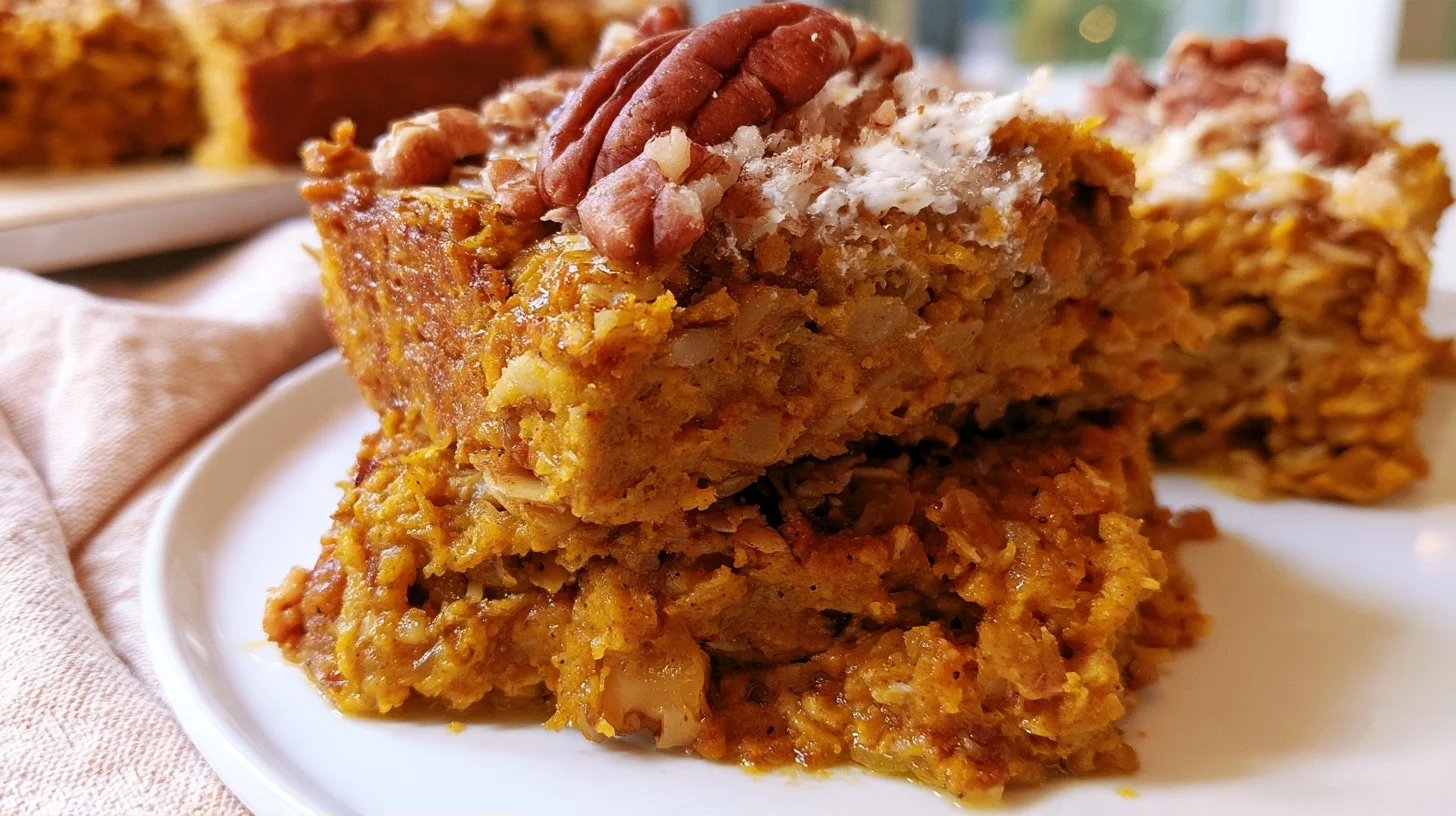
Table of contents
- Why You Will Love This Pumpkin Baked Oatmeal
- What You Need to Make Pumpkin Baked Oatmeal
- How to Make Pumpkin Baked Oatmeal That Holds Together
- How to Get the Right Texture Every Time
- Common Mistakes That Ruin Pumpkin Baked Oatmeal
- Ways to Customize Your Pumpkin Baked Oatmeal
- Nutrition in Pumpkin Baked Oatmeal
- How to Serve Pumpkin Baked Oatmeal
- How to Store and Reheat Pumpkin Baked Oatmeal
- Frequently Asked Questions
Why You Will Love This Pumpkin Baked Oatmeal
- The pumpkin puree keeps the oatmeal moist for days without making it soggy or heavy.
- It slices cleanly into portable squares that hold together during reheating, making it practical for meal prep.
- The spice blend creates a warm, lightly sweet flavor without relying on excessive sugar or artificial sweeteners.
- You can customize the texture by adjusting the baking time—shorter for a softer, spoonable result, longer for firmer slices.
What You Need to Make Pumpkin Baked Oatmeal
This recipe relies on a few key pieces of equipment that directly affect the texture and baking time.
- 8×8-inch baking dish: This size creates the right thickness for sliceable squares. A 9×13-inch pan will spread the batter too thin and result in a drier, crispier texture.
- Mixing bowl: A medium bowl works well for combining the wet and dry ingredients without creating a mess.
- Whisk: Useful for breaking up any clumps in the pumpkin puree and ensuring the eggs are fully incorporated.
- Measuring cups and spoons: Accurate measurements matter here because the ratio of liquid to oats determines whether the finished dish is too dry or too wet.
How to Make Pumpkin Baked Oatmeal That Holds Together
Pumpkin Baked Oatmeal
6
servings10
minutes30
minutes210
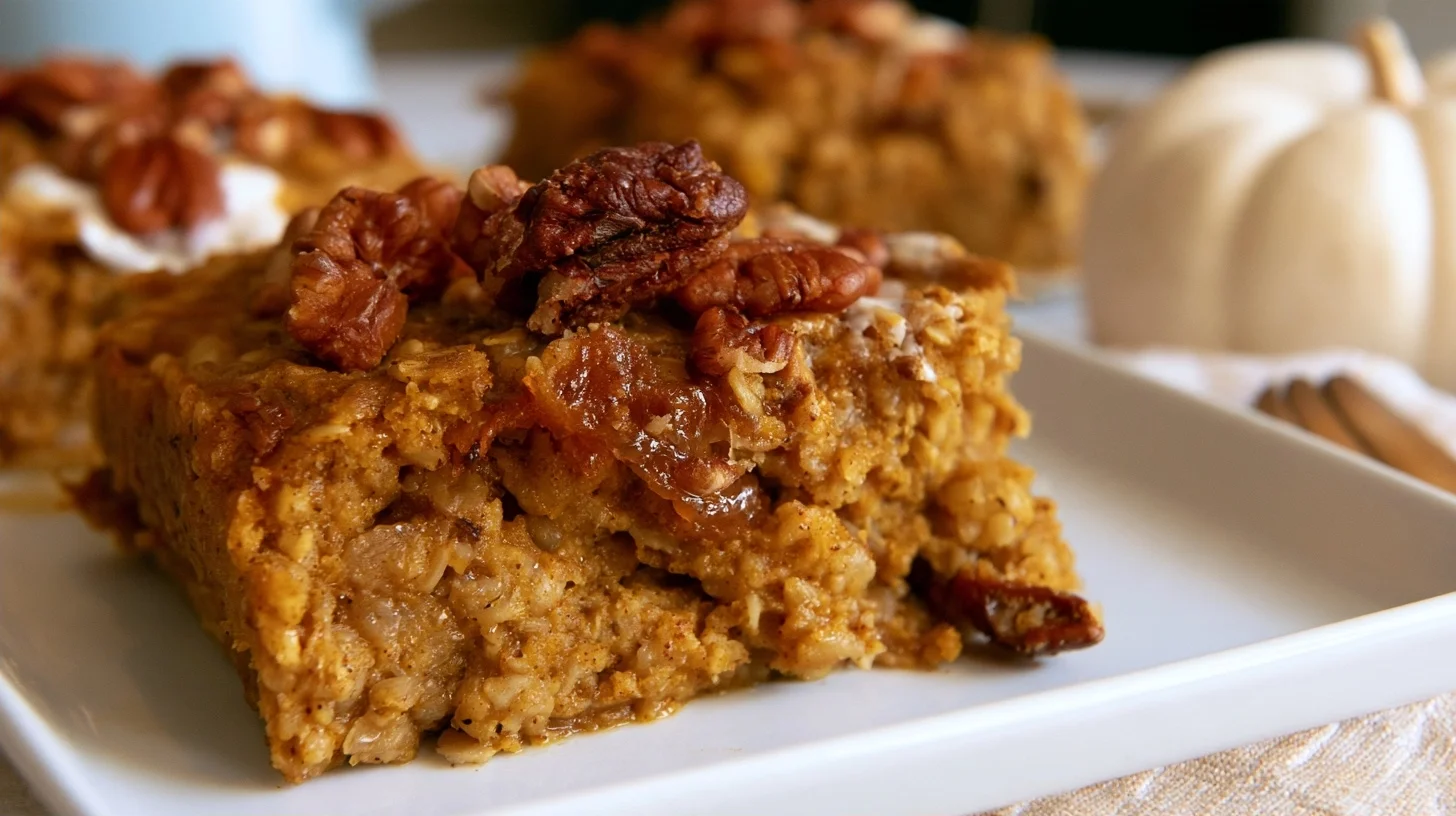
kcalThis pumpkin baked oatmeal combines tender oats, creamy pumpkin puree, and warm spices into a dish that slices cleanly and reheats beautifully. The key is using old-fashioned rolled oats and letting the dish cool for at least 10 minutes after baking so the starches can set properly.
Keep the screen of your device on
Ingredients
2 cups old-fashioned rolled oats
1 cup pumpkin puree
1 cup milk
1 large egg
0.25 cup maple syrup
1 teaspoon cinnamon
0.5 teaspoon vanilla extract
0.25 teaspoon nutmeg
0.25 teaspoon ginger
0.5 teaspoon baking powder
0.25 teaspoon salt
0.25 cup chopped pecans
Directions
- Preheat your oven to 350°F and grease an 8×8-inch baking dish with butter or line it with parchment paper, leaving an overhang on two sides for easy removal.
- Whisk together the pumpkin puree, milk, egg, maple syrup, and vanilla extract in a medium bowl until smooth and no streaks of egg remain.
- Add the oats, cinnamon, nutmeg, ginger, baking powder, and salt to the wet ingredients and stir until everything is evenly combined. The batter should be thick but pourable.
- Pour the mixture into the prepared baking dish and spread it into an even layer. If using pecans, sprinkle them on top now.
- Bake for 30 to 35 minutes, until the edges pull away from the sides of the pan and the center still has a slight jiggle when you shake the dish. The top should look set but not cracked.
- Let the baked oatmeal cool in the pan for at least 10 minutes before slicing. This cooling time allows the starches to set, which makes the oatmeal firm enough to cut into clean squares.
Notes
- Letting the baked oatmeal cool for at least 10 minutes after baking allows the starches in the oats to fully set, which firms up the structure and prevents crumbling when sliced.
- If your pumpkin puree is very thick, add an extra tablespoon or two of milk to loosen the batter. The batter should be thick but pourable, similar to a thick pancake batter.
- Store cooled slices in an airtight container in the refrigerator for up to 5 days, or freeze individual slices wrapped in plastic wrap for up to 3 months. Reheat in the microwave for 45 to 60 seconds or in a 300°F oven for 10 minutes.
Nutrition Facts
- Serving Size: 1g
- Total number of serves: 6
- Calories: 210kcal
- Fat: 5g
- Carbohydrates: 36g
- Fiber: 4g
- Protein: 6g
Did you make this recipe?
Tag @therecipemasterblog on Instagram and hashtag it with #therecipemaster
Like this recipe?
Follow @therecipemasterblog on Pinterest
Follow us on Facebook!
Follow The Recipe Master on Facebook
How to Get the Right Texture Every Time
The key to a pumpkin baked oatmeal that slices cleanly without crumbling is letting it cool for at least 10 minutes after baking. This allows the starches in the oats to fully set, which firms up the structure. If you try to cut it while it’s still hot, the center will be too soft and the edges will fall apart.
Use Old-Fashioned Rolled Oats, Not Quick Oats
Old-fashioned rolled oats absorb liquid more slowly than quick oats, which gives the dish a firmer, more structured texture. Quick oats will turn mushy and lose their shape during baking, resulting in a softer, porridge-like consistency. If you only have quick oats, reduce the milk by about 2 tablespoons to compensate for their faster absorption rate.
Don’t Skip the Egg
The egg acts as a binder that holds the oats together once they bake. Without it, the oatmeal will be too loose and won’t slice cleanly. If you need an egg-free version, a flax egg (1 tablespoon ground flaxseed mixed with 3 tablespoons water, left to sit for 5 minutes) works, but the texture will be slightly more crumbly.
Let the Pumpkin Puree Come to Room Temperature
Cold pumpkin puree straight from the can can cause the batter to seize up slightly when mixed with the egg, creating small clumps that don’t fully incorporate. Letting it sit out for 10 to 15 minutes before mixing ensures a smoother, more evenly textured batter. You can also microwave it for about 15 seconds to take the chill off.
Check Doneness by the Edges, Not the Center
The edges of the baked oatmeal should pull away slightly from the sides of the pan and look lightly golden. The center will still jiggle a little when you shake the pan, but it will firm up as it cools. If you bake it until the center is completely set, the edges will be overdone and dry. For more guidance on perfecting the texture of baked oatmeal, the same principles apply across different flavor variations.
Common Mistakes That Ruin Pumpkin Baked Oatmeal
Using Too Much Liquid
Adding extra milk or pumpkin puree in an attempt to make the oatmeal more moist will backfire. The oats can only absorb so much liquid, and the excess will pool at the bottom of the pan, creating a soggy layer that never fully bakes. Stick to the recipe’s measurements, and if you want a creamier texture, add a dollop of yogurt or a drizzle of cream when serving instead.
Skipping the Parchment Paper or Greasing
Even in a nonstick pan, baked oatmeal can stick stubbornly to the corners and edges. Lining the pan with parchment paper or greasing it thoroughly with butter or oil ensures clean removal and makes cleanup easier. If you use parchment, leave a little overhang on two sides so you can lift the entire slab out of the pan before slicing.
Overbaking Until the Top Cracks
If the top of the oatmeal develops deep cracks, it’s been in the oven too long. The surface dries out faster than the interior, and once it cracks, the texture becomes dense and dry throughout. Pull it out as soon as the edges are set and the center still has a slight wobble. The residual heat will finish the cooking as it cools.
Not Adjusting for Different Pumpkin Puree Brands
Some brands of canned pumpkin are thicker and drier than others. If your puree is very thick and paste-like, add an extra tablespoon or two of milk to loosen the batter. If it’s watery, reduce the milk slightly. The batter should be thick but pourable, similar to a thick pancake batter.
Ways to Customize Your Pumpkin Baked Oatmeal
Make It Dairy-Free
Swap the milk for any unsweetened plant-based milk such as almond, oat, or coconut milk. Oat milk is the closest match in texture and creates a similarly creamy result. Coconut milk will add a subtle coconut flavor that pairs well with the pumpkin and spices.
Add Protein Powder
Stir in 1 to 2 scoops of vanilla or unflavored protein powder to increase the protein content. Reduce the oats by about 2 tablespoons to keep the texture from becoming too dense. Protein powder can make the oatmeal slightly drier, so you may need to add an extra tablespoon of milk.
Stir In Nuts or Seeds
Chopped pecans, walnuts, or pepitas add crunch and healthy fats. Fold them into the batter before baking, or sprinkle them on top halfway through baking so they toast without burning. About a third of a cup is enough to add texture without overwhelming the dish.
Try a Different Sweetener
Maple syrup works in place of honey or brown sugar, though it will make the oatmeal slightly softer because of its higher water content. Coconut sugar or date sugar can replace granulated sugar for a less refined option. If you’re using a liquid sweetener, reduce the milk by 1 tablespoon to maintain the right consistency.
Nutrition in Pumpkin Baked Oatmeal
This recipe provides a balanced mix of complex carbohydrates from the oats, fiber from the pumpkin, and protein from the egg and milk. Each serving contains around 210 calories, making it a moderate-calorie breakfast that’s filling without being heavy. The fiber content, at about 4 grams per serving, helps with digestion and keeps you satisfied longer. The fat content is relatively low unless you add nuts or use full-fat milk, which will increase the richness and calorie count slightly.
Pumpkin is naturally rich in beta-carotene, which the body converts to vitamin A, supporting immune function and eye health. According to research on the benefits of oats, they also provide important minerals like manganese and phosphorus, as well as antioxidants that support heart health. The sugar content can be adjusted based on your preference, but even with a modest amount of added sweetener, the natural sweetness of the pumpkin reduces the need for excess sugar.
How to Serve Pumpkin Baked Oatmeal
Serve warm slices with a drizzle of maple syrup or a spoonful of Greek yogurt for extra creaminess and protein. A sprinkle of toasted pecans or a handful of fresh berries adds texture and brightness. If you prefer a richer breakfast, a small pat of butter or a dollop of almond butter melts into the warm oatmeal and adds satisfying richness.
For a more dessert-like presentation, top with a swirl of whipped cream and a dusting of cinnamon. It also pairs well with a hot cup of coffee or chai tea, which echoes the warm spices in the oatmeal. If you’re serving it for brunch, consider pairing it with savory items like scrambled eggs or turkey sausage to balance the sweetness. You can also crumble it over yogurt for a parfait-style breakfast, or pack it cold for an on-the-go snack.
How to Store and Reheat Pumpkin Baked Oatmeal
Store cooled slices in an airtight container in the refrigerator for up to 5 days. The oatmeal stays moist and doesn’t dry out, making it ideal for meal prep. To reheat, microwave individual slices for 45 to 60 seconds, or warm them in a 300°F oven for about 10 minutes. Adding a splash of milk before reheating helps restore moisture if the oatmeal has firmed up in the fridge.
For longer storage, freeze individual slices wrapped in plastic wrap and placed in a freezer-safe bag for up to 3 months. Thaw overnight in the refrigerator, then reheat as usual. Freezing doesn’t significantly change the texture, and the oatmeal reheats well without becoming rubbery or mushy. If you’re reheating from frozen, microwave for 1 to 2 minutes, checking halfway through.
Frequently Asked Questions
No, steel-cut oats won’t work in this recipe because they require much longer cooking times and more liquid to soften. They’ll stay hard and chewy even after the standard baking time. Stick with old-fashioned rolled oats for the best texture.
Yes, you can replace the egg with a flax egg by mixing 1 tablespoon ground flaxseed with 3 tablespoons water and letting it sit for 5 minutes. The texture will be slightly more crumbly and less cohesive, but it will still hold together well enough to slice.
This usually happens when there’s not enough liquid or the oatmeal was overbaked. Make sure you’re measuring the milk and pumpkin puree accurately, and pull the dish out of the oven when the center still has a slight jiggle. It will firm up as it cools.
Yes, double the ingredients and bake in a 9×13-inch pan. The baking time will increase by about 5 to 10 minutes, so check for doneness by looking for set edges and a slightly jiggly center. Let it cool for at least 15 minutes before slicing.





Leave a Reply