

- Roast tomatoes first to concentrate sweetness, add subtle smokiness, and prevent a watery, flat soup.
- Add fresh basil at the end or blend right before serving to keep its bright, aromatic flavor.
- Sauté onions and garlic gently; use broth instead of water for depth, and avoid adding cream too early to prevent curdling.
- Blend safely after cooling, store in the fridge up to five days or freeze three months, and reheat gently adding cream when warming.
There’s something undeniably comforting about a bowl of tomato basil soup recipe that brings together the bright acidity of ripe tomatoes and the aromatic sweetness of fresh basil. This soup is more than just a simple weeknight meal, it’s a versatile base that can be made creamy or brothy, rustic or refined, depending on your preference. The key to a truly flavorful version lies in roasting the tomatoes first, which concentrates their natural sugars and deepens the overall flavor without adding extra ingredients.
Unlike canned versions that rely heavily on cream and sugar to balance metallic notes, this recipe uses fresh or fire-roasted tomatoes, garlic, and a touch of butter to create a naturally sweet and savory base. The result is a soup that tastes clean, bright, and satisfying without feeling heavy. Whether you’re serving it alongside a grilled cheese sandwich or enjoying it on its own with crusty bread, this tomato basil soup delivers comfort in every spoonful.
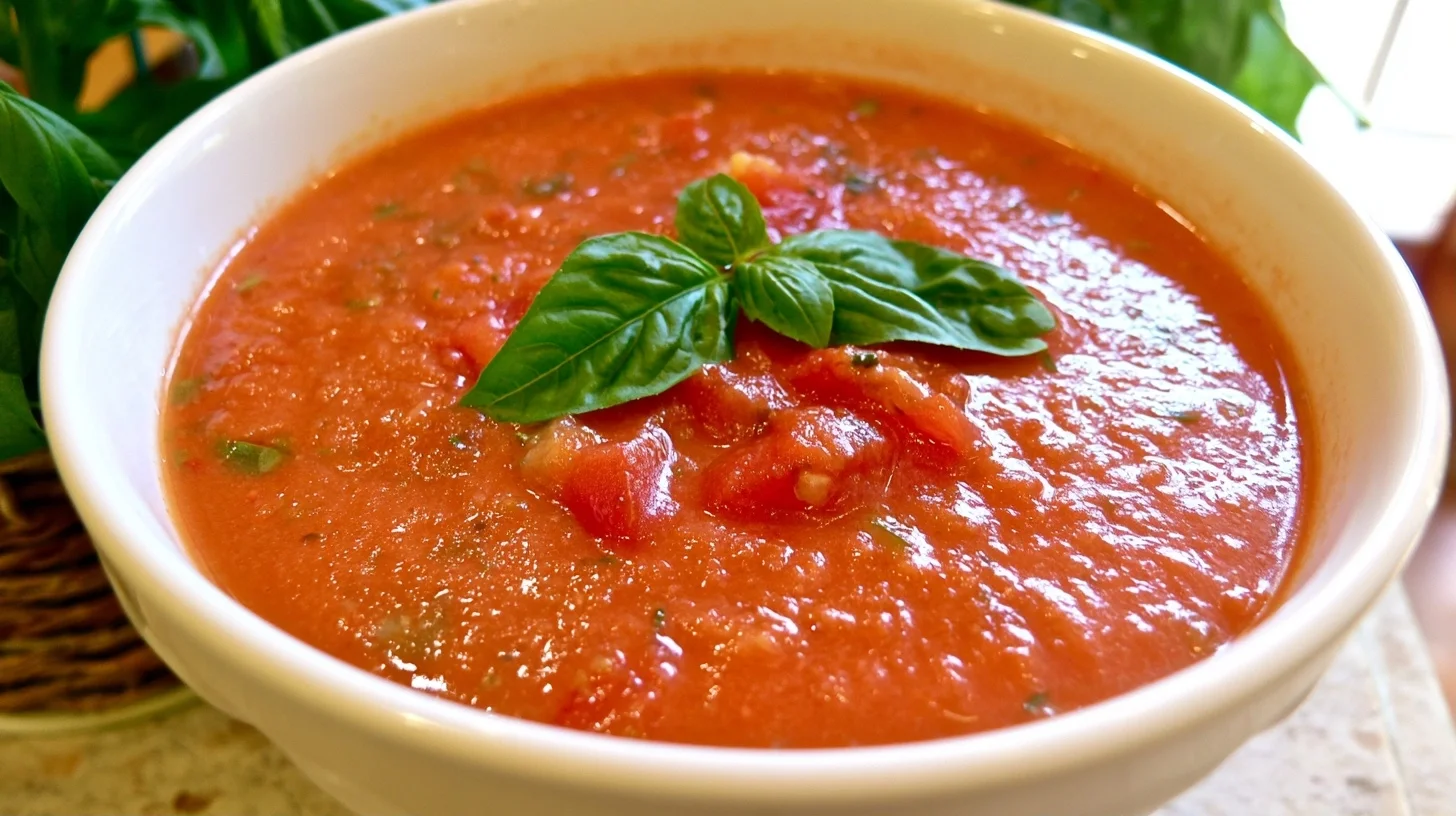
Table of contents
- Why You Will Love This Tomato Basil Soup Recipe
- Essential Equipment for Making Tomato Basil Soup
- How to Make the Best Tomato Basil Soup Recipe from Scratch
- How to Get Rich, Balanced Flavor in Every Batch
- Common Mistakes That Ruin Tomato Basil Soup
- Easy Ways to Customize Your Tomato Basil Soup
- What Makes This Tomato Basil Soup Nutritious
- How to Serve Tomato Basil Soup Recipe
- How to Store and Reheat Tomato Basil Soup
- Frequently Asked Questions about Tomato Basil Soup Recipe
Why You Will Love This Tomato Basil Soup Recipe
- Roasting the tomatoes first brings out their natural sweetness and eliminates the need for added sugar.
- Fresh basil is added at the end to preserve its bright, aromatic flavor instead of becoming bitter.
- The soup can be blended smooth or left slightly chunky depending on your texture preference.
- It comes together in about 45 minutes and stores beautifully for meal prep.
Essential Equipment for Making Tomato Basil Soup
This soup doesn’t require specialty tools, but a few key pieces of equipment will make the process smoother and help you achieve the best texture.
- Rimmed baking sheet: Needed for roasting the tomatoes evenly without juices spilling over.
- Large Dutch oven or heavy-bottomed pot: Provides even heat distribution and prevents scorching during simmering.
- Immersion blender or high-speed blender: An immersion blender allows you to blend directly in the pot, while a countertop blender creates the smoothest texture.
- Fine-mesh strainer (optional): Use this if you want an ultra-smooth, restaurant-style consistency by removing seeds and skins.
How to Make the Best Tomato Basil Soup Recipe from Scratch
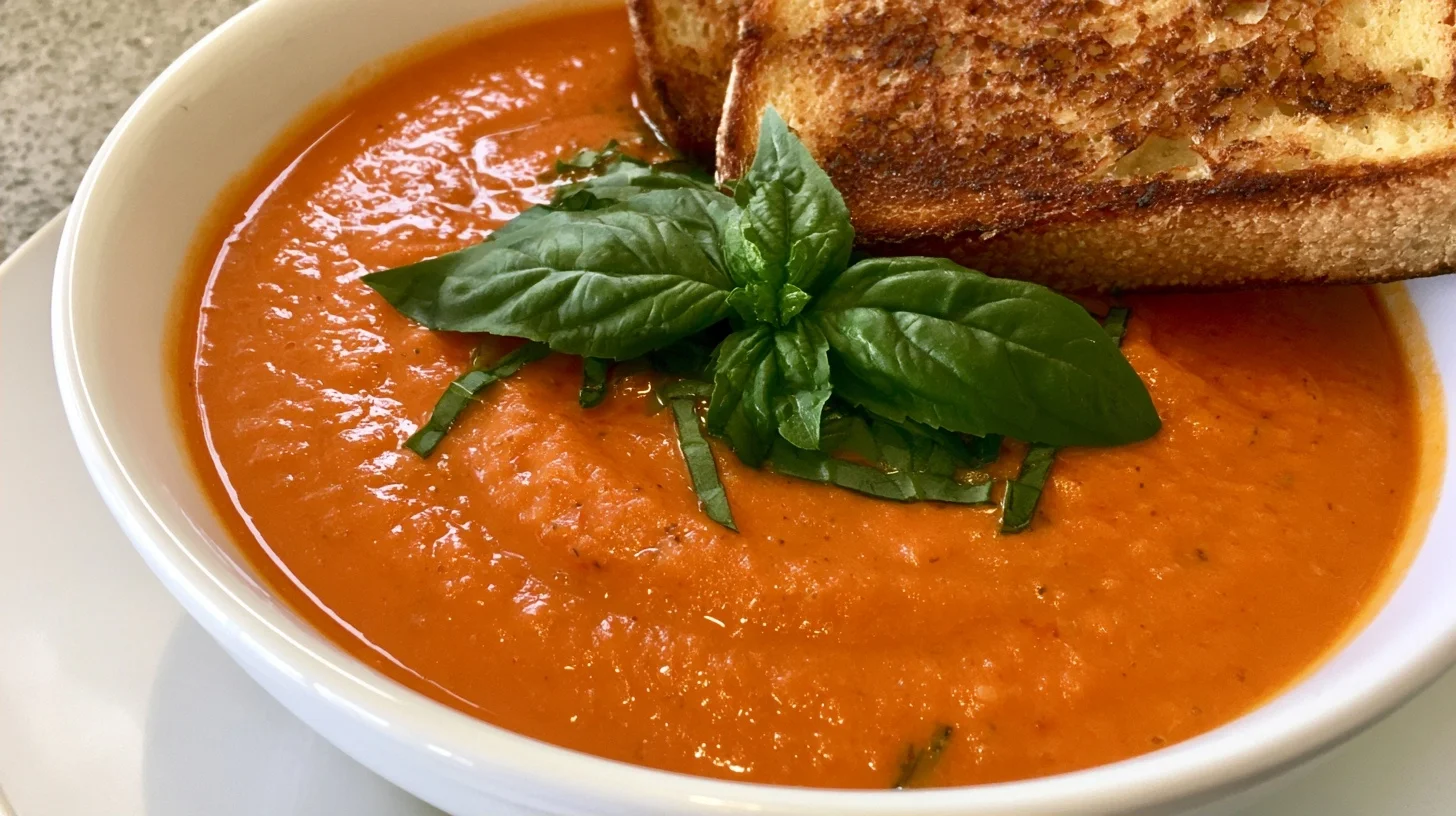
Tomato Basil Soup
6
servings15
minutes30
minutes180
kcalThis tomato basil soup combines roasted tomatoes with fresh basil and aromatic garlic to create a naturally sweet and vibrant flavor. The roasting step caramelizes the tomatoes and eliminates the need for added sugar, while the fresh basil is added at the end to preserve its bright, herbaceous notes.
Keep the screen of your device on
Ingredients
3 lbs ripe tomatoes
3 tablespoons olive oil
1 medium yellow onion
4 cloves garlic
3 cups vegetable broth
1 cup fresh basil leaves
0.5 cup heavy cream
2 tablespoons butter
1 teaspoon salt
0.5 teaspoon black pepper
1 teaspoon sugar
0.25 teaspoon red pepper flakes
Directions
- Preheat your oven to 400°F and line a rimmed baking sheet with parchment paper. If using fresh tomatoes, toss the halved tomatoes with 2 tablespoons of olive oil, salt, and pepper, then spread them cut-side up on the baking sheet. Roast for 25 to 30 minutes until the edges begin to char and the tomatoes have softened. This step concentrates the natural sugars and adds depth to the soup.
- Heat the remaining tablespoon of olive oil and butter in a large Dutch oven or heavy-bottomed pot over medium heat. Add the diced onion and cook for 5 to 7 minutes, stirring occasionally, until the onion becomes translucent and soft. The butter adds richness while the olive oil prevents it from burning.
- Add the minced garlic and cook for 1 minute, stirring constantly, until fragrant but not browned. Browning the garlic will make it bitter, so keep the heat moderate and stir frequently.
- Add the roasted tomatoes (or canned tomatoes with their juices) and vegetable broth to the pot. Bring the mixture to a simmer, then reduce the heat to medium-low and cook for 15 minutes to allow the flavors to meld. The tomatoes should break down slightly during this time.
- Remove the pot from the heat and stir in the fresh basil leaves. Let the soup cool for 5 minutes before blending. This cooling step is important for safety and prevents steam pressure from building up in the blender.
- Blend the soup using an immersion blender directly in the pot, or transfer it in batches to a countertop blender. Blend until smooth, or leave it slightly chunky if you prefer more texture. If using a countertop blender, fill it only halfway and hold the lid down with a folded towel.
Notes
- Roasting the tomatoes at 400°F for 25 to 30 minutes caramelizes their natural sugars and eliminates the need for added sugar in most cases.
- If the soup tastes too acidic after blending, stir in a pinch of sugar or a small pat of butter to balance the flavors.
- Store cooled soup in an airtight container in the refrigerator for up to 5 days, or freeze for up to 3 months. If freezing, leave out the cream and add it fresh when reheating.
Nutrition Facts
- Serving Size: 1g
- Total number of serves: 6
- Calories: 180kcal
- Fat: 12g
- Carbohydrates: 15g
- Fiber: 4g
- Protein: 4g
Did you make this recipe?
Tag @therecipemasterblog on Instagram and hashtag it with #therecipemaster
Like this recipe?
Follow @therecipemasterblog on Pinterest
Follow us on Facebook!
Follow The Recipe Master on Facebook
How to Get Rich, Balanced Flavor in Every Batch
The most important step in making tomato basil soup that tastes vibrant and full-bodied is roasting the tomatoes before adding them to the pot. Roasting caramelizes the natural sugars in the tomatoes and reduces excess moisture, which prevents the soup from tasting watery or flat.
Roast the Tomatoes First for Deeper Flavor
Toss halved tomatoes with olive oil, salt, and pepper, then roast them at 400°F for 25 to 30 minutes until the edges begin to char slightly. This step concentrates the tomato flavor and adds a subtle smokiness that you can’t achieve by simply simmering raw tomatoes. If you’re short on time, fire-roasted canned tomatoes are a solid alternative, but fresh roasted tomatoes will always deliver the brightest flavor.
Sauté Aromatics Until Soft and Fragrant
Cook diced onion and minced garlic in butter or olive oil over medium heat until the onion turns translucent and the garlic becomes fragrant but not browned. This creates a savory base that balances the acidity of the tomatoes. Browning the garlic will make it bitter, so keep the heat moderate and stir frequently.
Add Basil at the End to Keep It Bright
Fresh basil loses its vibrant flavor and turns bitter when cooked for too long. Stir in whole basil leaves or torn pieces during the last few minutes of simmering, or blend them in just before serving. This preserves the herb’s aromatic oils and keeps the soup tasting fresh rather than dull. For a more intense basil flavor, consider adding a small handful of basil when blending and garnishing with a few fresh leaves on top.
Use Broth Instead of Water for More Depth
Vegetable or chicken broth adds a layer of savory complexity that water simply can’t provide. If you prefer a lighter soup, use a low-sodium broth so you can control the salt level as the soup reduces. For a richer, creamier texture without dairy, try blending in a small amount of cashew cream or coconut milk at the end.
Common Mistakes That Ruin Tomato Basil Soup
Using Underripe or Flavorless Tomatoes
Tomatoes are the star of this soup, so using pale, out-of-season tomatoes will result in a bland, watery base. If fresh tomatoes aren’t at their peak, use high-quality canned whole or fire-roasted tomatoes instead. Canned San Marzano tomatoes are a reliable choice because they’re picked and processed at peak ripeness, which preserves their natural sweetness and acidity.
Blending the Soup While It’s Too Hot
If you’re using a countertop blender, blending boiling soup can cause the lid to pop off due to steam pressure, creating a dangerous mess. Let the soup cool for at least 5 minutes before blending, and fill the blender only halfway. Hold the lid down with a folded towel and start on the lowest speed, gradually increasing to avoid splattering.
Adding Cream Too Early or Over High Heat
If you’re making a creamy version, add heavy cream or half-and-half after the soup has been blended and removed from high heat. Adding cream while the soup is boiling can cause it to curdle or separate, especially if the soup is very acidic. Stir the cream in gently over low heat and warm it through without returning to a boil.
Skipping the Final Seasoning Adjustment
Tomatoes vary in acidity and sweetness depending on the variety and season, so the soup may need a final adjustment before serving. Taste the soup after blending and add a pinch of sugar if it’s too acidic, a squeeze of lemon juice if it tastes flat, or more salt if the flavors aren’t coming through. A small pat of butter stirred in at the end can also round out the flavors and add richness.
Easy Ways to Customize Your Tomato Basil Soup
Make It Creamy Without Dairy
For a dairy-free version that’s still rich and velvety, blend in half a cup of raw cashews that have been soaked in hot water for 15 minutes, or use full-fat coconut milk. Both options add body and creaminess without altering the tomato-forward flavor. Coconut milk will add a subtle sweetness, so taste and adjust seasoning accordingly.
Add Roasted Red Peppers for Sweetness
Roasted red peppers complement the tomatoes beautifully and add a mild, smoky sweetness. Add one or two whole roasted peppers to the pot before blending. This variation works especially well if you’re using canned tomatoes and want to boost the roasted flavor.
Stir in White Beans for Extra Protein
Adding a can of drained and rinsed white beans turns this soup into a more filling meal without changing the flavor profile. Stir them in after blending and simmer for a few minutes to heat through. The beans absorb the soup’s flavor and add a creamy texture that pairs well with the tomatoes.
Make It Spicy with Red Pepper Flakes
For a version with a little heat, add a pinch of red pepper flakes when sautéing the garlic. The oil will carry the spice throughout the soup, giving it a subtle kick that balances the sweetness of the tomatoes. Start with a small amount and adjust to taste.
What Makes This Tomato Basil Soup Nutritious
This soup is naturally low in calories and high in vitamins A and C, both of which support immune function and skin health. Tomatoes are rich in lycopene, an antioxidant that becomes more bioavailable when tomatoes are cooked, especially with a small amount of fat like olive oil or butter. Fresh basil contributes additional antioxidants and has anti-inflammatory properties, making this soup as nourishing as it is delicious.
If you’re looking to increase the protein content, serve the soup with a side of roasted garlic bread or stir in white beans as mentioned above. For more information on the health benefits of basil, you can explore this detailed guide on basil’s nutritional properties.
How to Serve Tomato Basil Soup Recipe
This soup is a classic pairing with grilled cheese sandwiches, but it also works beautifully as a starter for a larger meal. Serve it with a drizzle of good olive oil, a sprinkle of freshly grated Parmesan, and a few torn basil leaves for a restaurant-quality presentation. For a lighter option, pair it with a simple arugula salad dressed with lemon and olive oil.
If you’re serving it as a main course, consider topping each bowl with croutons, a dollop of pesto, or a swirl of cream. The soup also pairs well with crusty sourdough, focaccia, or garlic bread for dipping.
How to Store and Reheat Tomato Basil Soup
Store cooled soup in an airtight container in the refrigerator for up to 5 days. The flavors will continue to develop as it sits, so it often tastes even better the next day. If you’ve added cream, the soup may separate slightly when stored, but a quick stir while reheating will bring it back together.
To freeze, let the soup cool completely and transfer it to freezer-safe containers, leaving about an inch of space at the top for expansion. Freeze for up to 3 months. If you plan to freeze the soup, consider leaving out the cream and adding it fresh when reheating. Thaw overnight in the refrigerator, then reheat gently on the stovetop over medium-low heat, stirring occasionally.
Frequently Asked Questions about Tomato Basil Soup Recipe
Yes, you can use canned tomatoes instead of fresh. Use high-quality whole or fire-roasted canned tomatoes for the best flavor, especially when fresh tomatoes are out of season. Canned San Marzano tomatoes are a reliable choice because they’re picked at peak ripeness and have a naturally sweet, balanced flavor.
Add heavy cream, half-and-half, or a dairy-free alternative like coconut milk or cashew cream after blending the soup. Stir the cream in over low heat to prevent curdling, and avoid bringing the soup back to a boil once the cream is added. For extra richness, stir in a tablespoon of butter at the end.
Tomatoes are naturally acidic, and the level varies by variety and ripeness. If your soup tastes too acidic, add a pinch of sugar or a small pat of butter to balance the flavors. You can also stir in a pinch of baking soda, which neutralizes acidity, but use it sparingly as too much can affect the taste.
Yes, tomato basil soup freezes well for up to 3 months. Let the soup cool completely before transferring it to freezer-safe containers, leaving about an inch of space at the top for expansion. If you plan to freeze the soup, leave out the cream and add it fresh when reheating to prevent separation.


Leave a Reply