

- Choose sugar or pie pumpkins, not carving pumpkins, for sweeter, thicker flesh and better flavor.
- Roast pumpkin cut-side down until completely tender to concentrate flavor and reduce moisture for optimal texture.
- Let roasted pumpkin cool, scoop flesh, blend in batches until smooth; strain if puree is too watery.
- Store in airtight container refrigerated up to one week or freeze portions up to three months.
- Use puree in pies, breads, soups, sauces, or swap half fats in baking; high in vitamin A and fiber.
If you’ve ever bought a can of pumpkin puree and wondered whether you could make it from scratch, the answer is a resounding yes. Making your own pumpkin puree recipe at home is easier than you might think, and the result is smoother, fresher, and more flavorful than anything you’ll find on a grocery store shelf. All you need is a sugar pumpkin, an oven, and about an hour of mostly hands-off time. The puree you make can be used in pies, soups, breads, muffins, or even stirred into oatmeal for a seasonal breakfast.
Homemade pumpkin puree has a naturally sweet, earthy flavor that canned versions sometimes lack. Because you control the roasting process, you also control the moisture content, which means your puree won’t be watery or overly thick. This makes a noticeable difference in baked goods, where too much moisture can lead to dense, soggy results.
Once you try making it yourself, you’ll notice the difference in texture and taste. It’s also a great way to use up whole pumpkins after decorating or carving season, especially the smaller sugar pumpkins that are bred specifically for cooking.
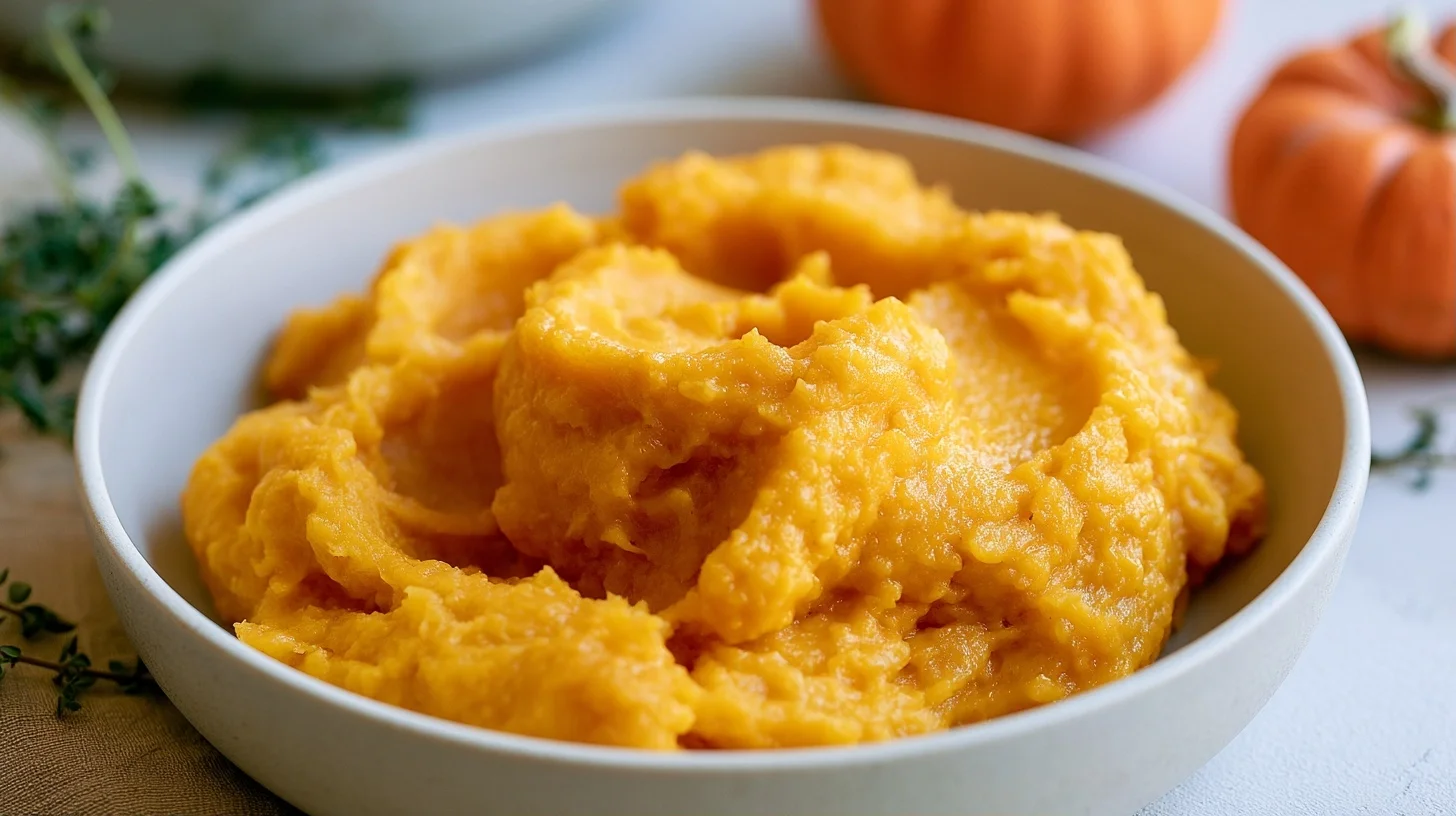
Table of contents
- Why You Will Love This Pumpkin Puree Recipe
- What You’ll Need to Make Pumpkin Puree Recipe
- How to Make Smooth Pumpkin Puree From Scratch
- How to Get the Best Texture in Your Pumpkin Puree
- Common Mistakes When Making Pumpkin Puree
- Ways to Use Homemade Pumpkin Puree Recpie
- Nutritional Benefits of Pumpkin Puree
- How to Serve Pumpkin Puree Recipe
- How to Store Homemade Pumpkin Puree
- Frequently Asked Questions about Pumpkin Puree Recipe
Why You Will Love This Pumpkin Puree Recipe
- You control the texture and moisture level, which makes a real difference in baking.
- The roasted flavor is deeper and more naturally sweet than canned puree.
- It freezes beautifully, so you can make a big batch and use it all season long.
- No added preservatives or fillers, just pure pumpkin.
What You’ll Need to Make Pumpkin Puree Recipe
This recipe requires very little in terms of equipment, but the right tools make the process smoother and safer.
- Sharp chef’s knife: Cutting through a raw pumpkin requires a sturdy blade and a stable cutting board.
- Rimmed baking sheet: The pumpkin releases moisture as it roasts, so a sheet with edges prevents spills.
- Parchment paper or silicone mat: This prevents sticking and makes cleanup easier.
- Spoon or ice cream scoop: For scraping out the seeds and stringy pulp before roasting.
- Blender or food processor: A high-speed blender gives the smoothest puree, but a food processor works well too.
- Fine-mesh strainer (optional): If your puree turns out watery, straining it for 20 minutes removes excess liquid.
How to Make Smooth Pumpkin Puree From Scratch
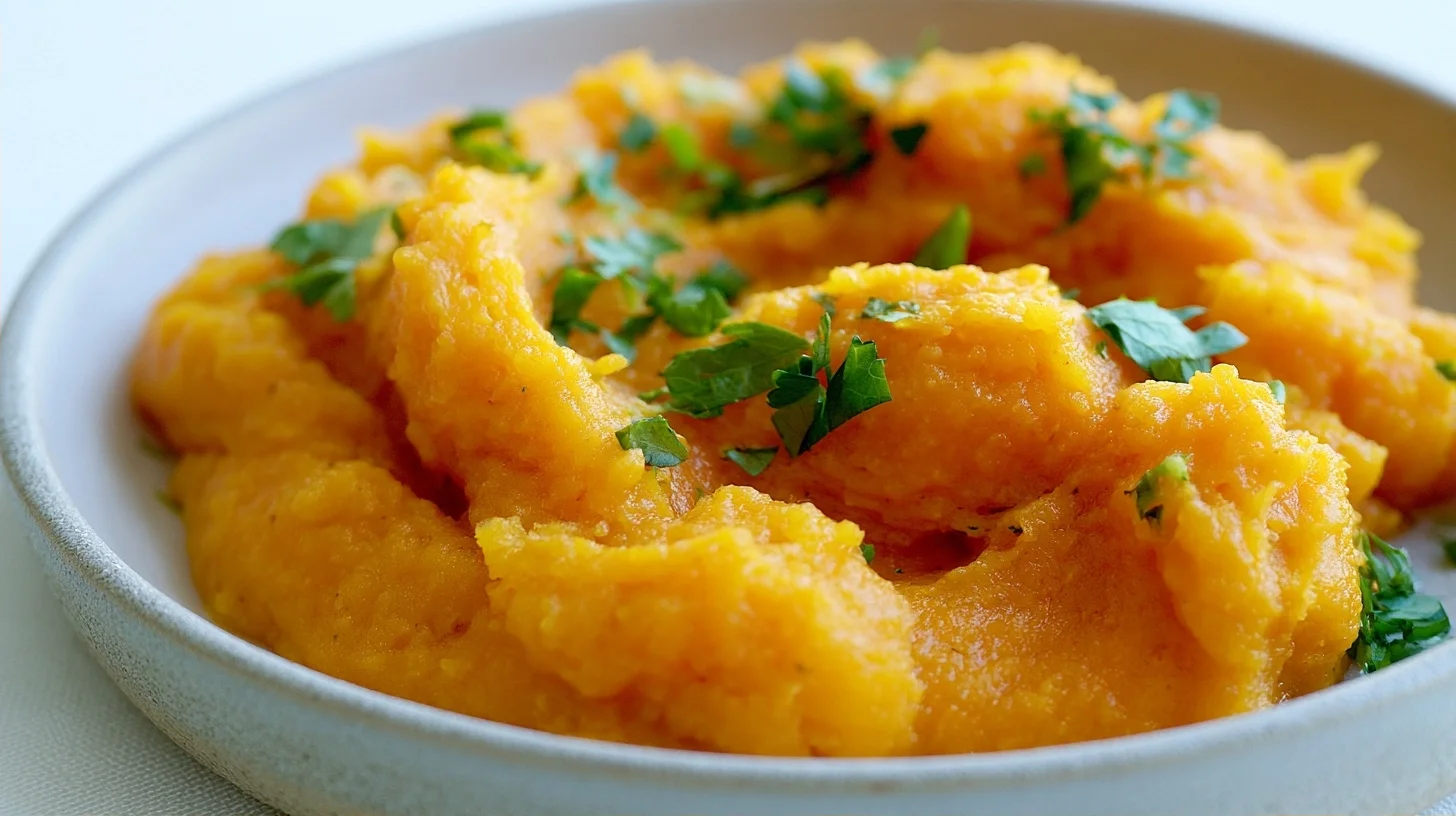
Homemade Pumpkin Puree
8
servings10
minutes50
minutes42
kcalThis homemade pumpkin puree is smooth, naturally sweet, and easy to make with just one sugar pumpkin. Roasting the pumpkin concentrates the flavor and gives you better control over the texture than canned versions. Use it in pies, soups, breads, or any recipe that calls for pumpkin puree.
Keep the screen of your device on
Ingredients
1 sugar pumpkin
1 tablespoon olive oil
1 pinch salt
1 tablespoon water
1 teaspoon cinnamon
0.5 teaspoon nutmeg
0.25 teaspoon ginger
0.25 teaspoon cloves
Directions
- Preheat your oven to 400°F and line a rimmed baking sheet with parchment paper. This prevents sticking and makes cleanup easier.
- Cut the pumpkin in half from stem to bottom using a sharp chef’s knife. Apply steady pressure and work slowly, as raw pumpkins can be tough to cut through.
- Scoop out the seeds and stringy pulp using a sturdy spoon or ice cream scoop. Save the seeds for roasting if you like, but remove all the fibrous strands from the flesh.
- Place the pumpkin halves cut-side down on the prepared baking sheet. This allows the flesh to steam slightly while roasting, which keeps it moist and tender.
- Roast for 45 to 55 minutes, or until the flesh is completely soft when pierced with a fork. Larger pumpkins may take a bit longer, so use tenderness as your guide.
- Remove from the oven and let cool for about 10 minutes. This makes the pumpkin easier to handle and prevents steam buildup in the blender.
Notes
- Roasting the pumpkin cut-side down concentrates the natural sugars and reduces moisture, which results in a thicker, more flavorful puree than boiling or steaming.
- If your puree is too thick, thin it with a tablespoon or two of water. If it’s too thin, strain it through cheesecloth or a fine-mesh strainer for 20 to 30 minutes.
- Store pumpkin puree in the refrigerator for up to one week or freeze it in portion-sized containers for up to three months. Ice cube trays work well for small portions.
Nutrition Facts
- Serving Size: 1g
- Total number of serves: 8
- Calories: 42kcal
- Fat: 0g
- Carbohydrates: 10g
- Fiber: 3g
- Protein: 1g
Did you make this recipe?
Tag @therecipemasterblog on Instagram and hashtag it with #therecipemaster
Like this recipe?
Follow @therecipemasterblog on Pinterest
Follow us on Facebook!
Follow The Recipe Master on Facebook
How to Get the Best Texture in Your Pumpkin Puree
The key to a smooth, usable puree is roasting the pumpkin until it’s completely tender and then blending it thoroughly. Roasting concentrates the flavor and reduces moisture, which is why it’s the preferred method over boiling or steaming.
Choose the Right Pumpkin
Sugar pumpkins, also called pie pumpkins, are smaller and sweeter than carving pumpkins. They have thicker flesh and less water content, which makes them ideal for pureeing. Look for pumpkins that feel heavy for their size and have firm, unblemished skin. Avoid large jack-o’-lantern pumpkins, which are bred for size rather than flavor and tend to be stringy and bland.
Roast Cut-Side Down
Placing the pumpkin halves cut-side down on the baking sheet allows the flesh to steam slightly while roasting, which keeps it moist without making it soggy. The skin acts as a natural barrier, trapping heat and helping the flesh cook evenly. This method also caramelizes the sugars slightly, which deepens the flavor.
Let It Cool Before Blending
Hot pumpkin flesh blends more easily, but it also releases steam that can build pressure in a blender. Let the roasted pumpkin cool for about 10 minutes before scooping out the flesh. This makes it safer to handle and easier to scrape cleanly from the skin.
Blend in Batches if Needed
Overfilling a blender can result in uneven pureeing. Work in smaller batches and blend on high speed for at least 30 seconds per batch. If the puree looks grainy, blend it longer. A food processor works too, but it may require a bit more scraping down the sides to get a completely smooth consistency.
Strain if It’s Too Watery
Some pumpkins naturally contain more water than others. If your puree looks thin or soupy, line a fine-mesh strainer with cheesecloth or a clean kitchen towel, pour the puree in, and let it drain over a bowl for 20 to 30 minutes. This step isn’t always necessary, but it’s useful if you’re planning to use the puree in recipes where excess moisture would be a problem, like pie filling or quick breads.
Common Mistakes When Making Pumpkin Puree
Using the Wrong Type of Pumpkin
Carving pumpkins are watery, stringy, and bland. They’re bred for size and shelf life, not flavor. If you use one, your puree will be thin and tasteless no matter how long you roast it. Stick with sugar pumpkins or other cooking varieties like kabocha or butternut squash if you can’t find pie pumpkins.
Not Roasting Long Enough
Undercooked pumpkin is firm and difficult to blend smoothly. The flesh should be completely soft when pierced with a fork. If it’s still firm after 45 minutes, give it another 10 to 15 minutes. Roasting times vary depending on the size and thickness of the pumpkin, so use tenderness as your guide rather than the clock.
Skipping the Seed Removal Step
Leaving seeds or stringy pulp in the pumpkin halves before roasting can make your puree gritty and fibrous. Use a sturdy spoon or ice cream scoop to scrape out all the seeds and as much of the stringy interior as possible. It only takes a few extra minutes and makes a noticeable difference in the final texture.
Blending Without Checking Consistency
Some batches of pumpkin puree come out thicker than others, and some come out thinner. Always check the consistency before using it in a recipe. If it’s too thick, you can thin it with a tablespoon or two of water. If it’s too thin, strain it as described earlier. This small adjustment can prevent baking failures later.
Ways to Use Homemade Pumpkin Puree Recpie
Once you’ve made your puree, the possibilities are endless. Use it in classic pumpkin pie, swirl it into cheesecake batter, or fold it into pancake or waffle batter for a seasonal breakfast. It also works beautifully in savory dishes like creamy pumpkin dips, soups, pasta sauces, and risottos.
Pumpkin puree can replace some of the fat in baked goods, adding moisture and a subtle sweetness. Try substituting half the oil or butter in muffin or quick bread recipes with an equal amount of puree. It won’t work in every recipe, but it’s a useful trick for adding nutrition and flavor without sacrificing texture.
Nutritional Benefits of Pumpkin Puree
Pumpkin puree is naturally low in calories and high in fiber, which makes it a filling addition to meals and snacks. It’s also an excellent source of vitamin A, thanks to its high beta-carotene content. One cup of pumpkin puree provides more than 200% of the daily recommended intake of vitamin A, which supports eye health, immune function, and skin health.
Pumpkin also contains potassium, which helps regulate blood pressure, and smaller amounts of vitamin C, vitamin E, and iron. Because it’s naturally low in sugar and fat, it’s a nutrient-dense ingredient that works well in both sweet and savory dishes. For more on the health benefits of pumpkin, including its seeds, this resource offers a detailed breakdown.
How to Serve Pumpkin Puree Recipe
Pumpkin puree is incredibly versatile. Stir it into oatmeal or yogurt for a quick breakfast boost. Use it as a base for creamy soups by blending it with vegetable broth, garlic, and a splash of cream. Mix it into mashed potatoes for a subtly sweet side dish, or use it as a pizza sauce base topped with caramelized onions, goat cheese, and fresh herbs.
For dessert, fold pumpkin puree into whipped cream or mascarpone for a simple mousse, or layer it with graham crackers and cream cheese for no-bake pumpkin parfaits. It also works well in smoothies, especially when combined with banana, cinnamon, and a handful of spinach.
How to Store Homemade Pumpkin Puree
Store pumpkin puree in an airtight container in the refrigerator for up to one week. For longer storage, freeze it in portion-sized containers or ice cube trays. Once frozen, transfer the cubes to a freezer bag and store for up to three months. This makes it easy to thaw only what you need for a single recipe.
Label each container with the date and the amount so you know exactly how much you have on hand. Thaw frozen puree in the refrigerator overnight or microwave it in short bursts, stirring between each interval to ensure even heating.
Frequently Asked Questions about Pumpkin Puree Recipe
No, you should use sugar pumpkins or pie pumpkins. Carving pumpkins are watery and lack flavor, which results in a thin, bland puree that doesn’t work well in recipes.
The flesh should be completely soft when pierced with a fork. If it still feels firm, roast it for another 10 to 15 minutes. Roasting times vary depending on the size and thickness of the pumpkin.
Yes, pumpkin puree freezes very well. Store it in airtight containers or freeze it in ice cube trays for easy portioning. It will keep in the freezer for up to three months.
Pumpkin puree is just cooked, blended pumpkin with no added ingredients. Pumpkin pie filling is puree that already contains sugar, spices, and sometimes thickeners. You cannot substitute one for the other in recipes.





Leave a Reply