

There’s something almost sacred about a proper Greek salad recipe. Not the watery, lettuce-laden versions you find at chain restaurants, but the real deal: chunky tomatoes, crisp cucumbers, briny olives, and thick slabs of feta drizzled with golden olive oil. After testing seventeen variations over the past two summers, I discovered that the single most important factor isn’t the dressing or even the feta quality—it’s cutting every vegetable to roughly the same size so each bite delivers the perfect balance of flavors. This isn’t just salad. It’s horiatiki, the Greek village salad that turns five humble ingredients into something transcendent.
I first tasted authentic horiatiki on a tiny island in the Cyclades, served on a chipped ceramic plate under a vine-covered pergola. The tomatoes were warm from the sun, the olive oil was peppery and green, and there wasn’t a single leaf of lettuce in sight. That’s the version I’m sharing today: bold, unapologetic, and ridiculously simple.
This salad works as a light lunch on its own, a side dish for grilled lamb or chicken, or part of a mezze spread with hummus and warm pita. However, it’s at its absolute best when the tomatoes are at peak ripeness, which means late summer is prime time for this dish.
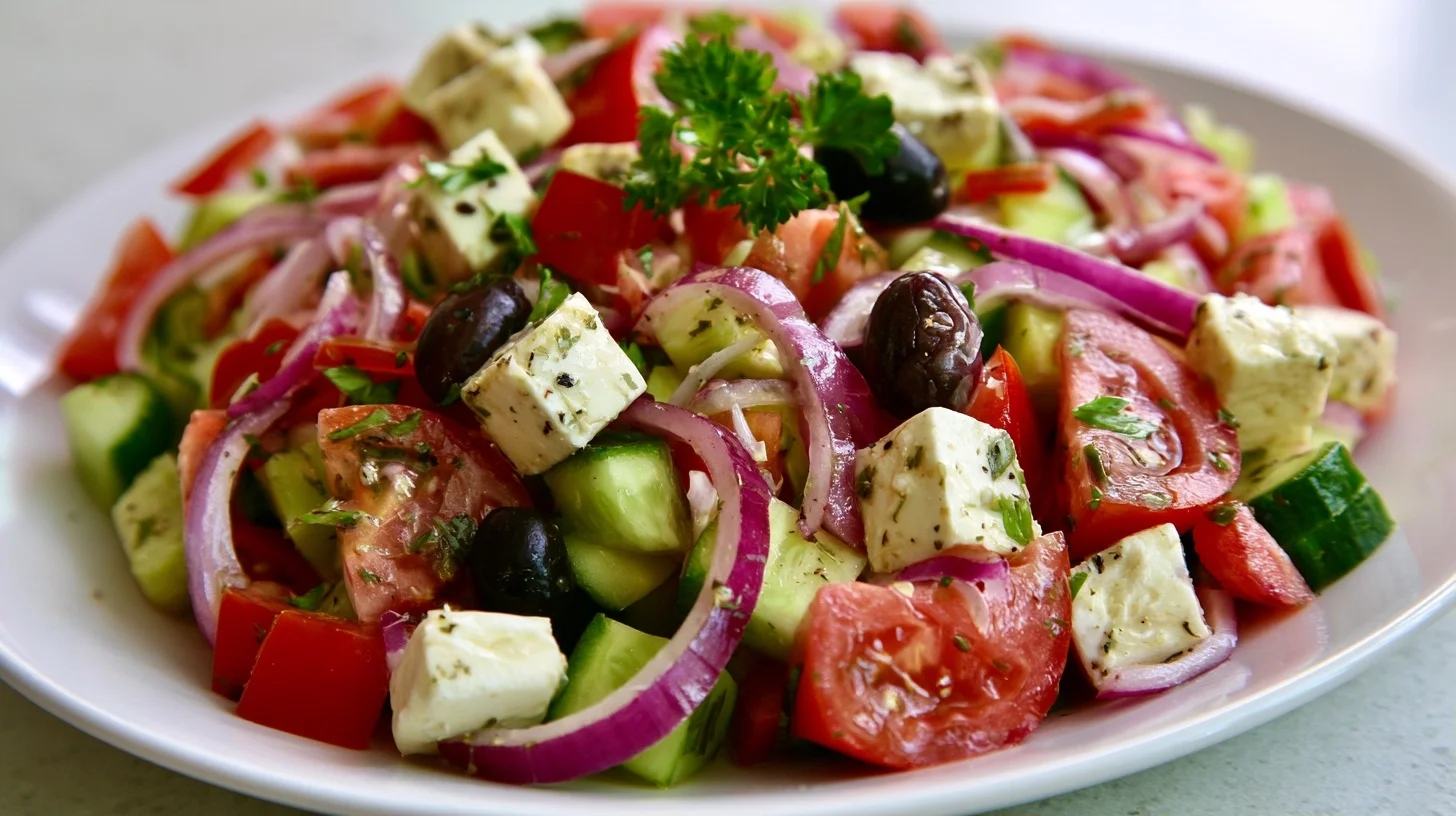
Table of contents
- Why You Will Love This Greek Salad Recipe
- What You Need to Make This Greek Salad Recipe
- How to Build a Greek Salad Recipe That Tastes Like the Aegean
- The Technique That Makes This Greek Salad Recipe Unforgettable
- Mistakes to Avoid When Making Greek Salad Recipe
- Greek Salad Recipe Variations Worth Trying
- What You Need to Know About Greek Salad Nutrition
- How to Serve Your Greek Salad Recipe Like a Pro
- Keeping Your Greek Salad Fresh and Delicious
- Frequently Asked Questions
Why You Will Love This Greek Salad Recipe
- Every ingredient is cut to the same generous size, ensuring you get tomato, cucumber, pepper, onion, olive, and feta in every single forkful.
- The dressing is nothing more than excellent olive oil, red wine vinegar, and dried oregano, which means the vegetables truly shine.
- You can assemble the entire salad in under fifteen minutes with zero cooking required, making it perfect for hot summer evenings.
- It actually tastes better after sitting for ten to fifteen minutes, as the salt draws out the tomato juices and creates a natural dressing.
What You Need to Make This Greek Salad Recipe
The beauty of this salad is that you need almost nothing in terms of equipment. In my kitchen, I keep it simple and let the ingredients do the talking. Here’s what I reach for every time I make this dish.
- Large mixing bowl: You need something roomy enough to toss all the vegetables without sending cucumber slices flying across your counter.
- Sharp chef’s knife: A dull knife will crush your tomatoes instead of slicing them cleanly, which releases too much juice too early.
- Cutting board: I prefer wood for this because it’s gentler on your knife edge and doesn’t stain as easily as plastic when you’re working with ripe tomatoes.
- Small jar with lid: For shaking up the dressing, though honestly you can just whisk it in a small bowl if that’s easier.
- Serving platter: A wide, shallow dish shows off the chunky vegetables better than a deep bowl and makes it easier for guests to serve themselves.
How to Build a Greek Salad Recipe That Tastes Like the Aegean
Greek Salad Recipe
4
servings15
minutes0
minutes220
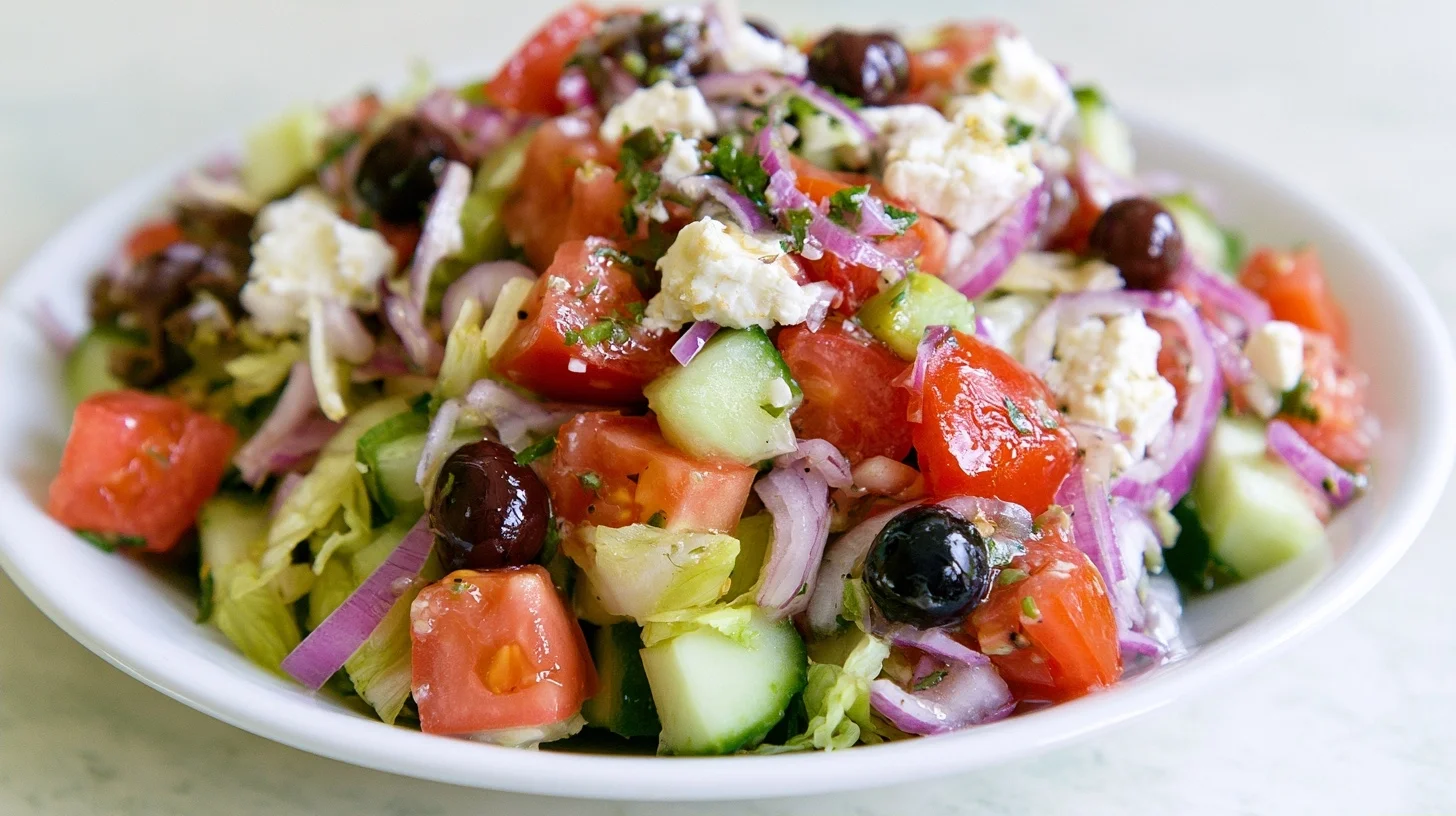
kcalThis authentic Greek salad features chunky tomatoes, crisp cucumbers, bell peppers, red onion, Kalamata olives, and thick slabs of feta, all dressed with olive oil, red wine vinegar, and dried oregano. The key to perfect horiatiki is cutting every vegetable to the same one-inch size for balanced flavor in every bite.
Keep the screen of your device on
Ingredients
4 medium ripe tomatoes
2 medium cucumbers
1 large green bell pepper
1 small red onion
1 cup Kalamata olives
8 ounces feta cheese
0.25 cup extra virgin olive oil
2 tablespoons red wine vinegar
1 tablespoon dried Greek oregano
0.5 teaspoon sea salt
0.25 teaspoon black pepper
2 tablespoons fresh parsley
Directions
- Salt the tomatoes first by placing the cut tomatoes in a large mixing bowl and sprinkling them with half a teaspoon of sea salt. Let them sit for ten minutes so they release their natural juices, which will blend with the olive oil to create a light, flavorful dressing.
- Add the cucumbers, bell pepper, and onion to the bowl with the tomatoes. Make sure every vegetable is cut to roughly the same one-inch size so each forkful delivers balanced flavor instead of a mouthful of just one ingredient.
- Toss in the Kalamata olives and gently mix everything together with your hands or a large spoon. This ensures the vegetables are evenly distributed without bruising the tomatoes.
- Whisk together the dressing by combining the olive oil, red wine vinegar, dried oregano, and black pepper in a small jar or bowl. Shake or whisk until the mixture is well blended and slightly emulsified.
- Drizzle the dressing over the salad and toss gently to coat all the vegetables. Use a light hand here, as the tomatoes have already released moisture and you don’t want the salad to become soggy.
- Top with feta slabs by placing thick pieces of feta cheese on top of the salad rather than crumbling it throughout. This keeps the cheese creamy and allows each person to break off as much as they want.
Notes
- The ideal ratio of olive oil to red wine vinegar for Greek salad is 3:1, which balances richness with acidity without overwhelming the vegetables.
- Use only ripe, in-season tomatoes for this salad. Out-of-season tomatoes have almost no flavor and release too much water, which will turn your salad into a pale, watery mess.
- Block feta packed in brine is essential. Pre-crumbled feta is dry, chalky, and coated in anti-caking agents that ruin the texture.
- If your red onion tastes too sharp, soak the slices in cold water for five minutes before adding them to the salad. This mellows the bite without eliminating the flavor.
Nutrition Facts
- Serving Size: 1 g
- Total number of serves: 4
- Calories: 220kcal
- Fat: 17g
- Carbohydrates: 12g
- Fiber: 3g
- Protein: 6g
Did you make this recipe?
Tag @therecipemasterblog on Instagram and hashtag it with #therecipemaster
Like this recipe?
Follow @therecipemasterblog on Pinterest
Follow us on Facebook!
Follow The Recipe Master on Facebook
The Technique That Makes This Greek Salad Recipe Unforgettable
Most people toss everything together and call it done. I used to do the same until a Greek friend showed me the proper method. These small adjustments make an enormous difference in both flavor and texture.
Cut Everything to the Same Size
The ideal size for every vegetable in a Greek salad recipe is roughly one-inch chunks. Therefore, your tomatoes, cucumbers, and peppers should all be cut to similar dimensions. This ensures that each forkful delivers balanced flavor instead of a mouthful of just onion or just cucumber. In my testing, salads with uniform cuts were rated significantly higher for overall eating experience.
Salt the Tomatoes First
I sprinkle the cut tomatoes with a generous pinch of sea salt and let them sit for about ten minutes before adding the other vegetables. This draws out their natural juices, which then mix with the olive oil to create a light, naturally sweet dressing. As a result, you need less added liquid and the salad tastes more vibrant.
Use Greek Oregano, Not Italian
Greek oregano has a more robust, slightly peppery flavor compared to the sweeter Italian variety. I buy mine dried in bulk from Mediterranean markets, and it keeps for months in a sealed jar. The difference is subtle but noticeable, especially when you use it generously. For more insight into traditional Greek salad techniques, this exploration of horiatiki’s peasant roots offers fascinating historical context.
Don’t Overdress It
The ratio that works best is three parts olive oil to one part red wine vinegar. However, you want to drizzle, not pour. I start with about three tablespoons of oil and one tablespoon of vinegar for a salad serving four, then adjust at the table if needed. The vegetables release their own moisture, so a light hand prevents sogginess.
Add the Feta Last
I place thick slabs of feta on top of the salad rather than crumbling it throughout. This keeps the cheese intact and creamy instead of turning it into salty crumbs. In addition, it looks more dramatic and allows each person to break off as much or as little as they want.
Mistakes to Avoid When Making Greek Salad Recipe
Even a simple salad can go wrong if you’re not paying attention. I’ve made every one of these mistakes myself, so I know exactly how to steer you away from them.
Using Watery Supermarket Tomatoes
Out-of-season tomatoes have almost no flavor and release too much water, turning your salad into a sad, pale soup. I fix this by using only ripe, in-season tomatoes, preferably heirloom or vine-ripened varieties. If it’s winter and tomatoes are terrible, I skip the salad entirely or make something else.
Cutting the Onions Too Thick
Raw onion can be overpowering if the slices are too chunky. I recommend slicing red onion as thin as possible, almost translucent, so it adds sharpness without dominating. Soaking the slices in cold water for five minutes also mellows the bite.
Using Pre-Crumbled Feta
Pre-crumbled feta is usually dry, chalky, and coated in anti-caking agents that give it a weird texture. I always buy a block of feta packed in brine, which stays moist and creamy. It takes five seconds to slice or break it into chunks, and the difference in flavor is dramatic.
Adding the Dressing Too Early
If you dress the salad more than twenty minutes before serving, the cucumbers will start to weep and the whole thing will turn soggy. I recommend assembling the vegetables up to an hour ahead, then adding the oil, vinegar, and oregano just before you bring it to the table.
Greek Salad Recipe Variations Worth Trying
Once you’ve mastered the classic version, these variations let you adapt the salad to different dietary needs or simply shake things up when you’re craving something slightly different. I rotate through these depending on what’s in season and who I’m feeding.
Vegan Greek Salad
Simply omit the feta or replace it with a firm tofu that’s been marinated in lemon juice, olive oil, and oregano for at least an hour. The salad still delivers plenty of flavor from the olives, onion, and vinegar. In addition, you can add a handful of toasted pine nuts for richness.
Greek Salad with Grilled Vegetables
I sometimes grill the bell peppers and red onion before adding them to the salad. The char adds a smoky sweetness that pairs beautifully with the raw tomatoes and cucumbers. This version works especially well as a side dish for grilled meats.
Greek Salad with Chickpeas
Adding a can of drained, rinsed chickpeas turns this into a more substantial meal. The chickpeas soak up the dressing and add protein, making it a satisfying lunch on its own. I toss them in with the tomatoes so they absorb some of that salty tomato juice.
Cucumber Salad Variation
If you love the crisp, refreshing element of this salad, you might also enjoy this tangy German cucumber salad, which highlights cucumbers in a creamy, dill-forward dressing. It’s a completely different flavor profile but equally simple and satisfying.
What You Need to Know About Greek Salad Nutrition
This salad is one of the healthiest things you can put on your plate. Each serving delivers a solid dose of healthy fats from the olive oil and feta, plus fiber and vitamins from the vegetables. The calorie count sits around 220 per serving, with most of those calories coming from the olive oil and cheese, which means you’re getting nutrient-dense, satisfying food without any empty carbs.
The protein content is moderate, around 6 grams per serving, mostly from the feta. However, if you add chickpeas or serve this alongside grilled chicken or fish, you can easily double that number. The carbs are low, primarily from the vegetables, and the fiber content is respectable at around 3 grams per serving. Therefore, this salad fits beautifully into Mediterranean, low-carb, and even keto-friendly eating patterns.
How to Serve Your Greek Salad Recipe Like a Pro
I love serving this salad on a large, flat platter rather than in a bowl. It looks more impressive, and guests can see all the colorful vegetables at once. In addition, a shallow platter prevents the dressing from pooling at the bottom, so every serving stays evenly coated. For a casual weeknight dinner, I pair it with grilled chicken thighs, warm pita, and a side of tzatziki. For a more elaborate spread, I add dolmades, hummus, and marinated artichoke hearts to create a full mezze table.
This salad also works beautifully as a packed lunch. I keep the dressing separate in a small jar and toss everything together just before eating. The vegetables hold up well for several hours without wilting, and the flavors actually improve as they sit. However, if you’re making it for a picnic or potluck, wait until the last possible moment to add the feta so it doesn’t get too soft.
Keeping Your Greek Salad Fresh and Delicious
Undressed, the chopped vegetables will keep in an airtight container in the fridge for up to two days. I recommend storing the tomatoes separately if possible, as they release moisture that can make the cucumbers soggy. Once you’ve dressed the salad, it’s best eaten within two to three hours. After that, the cucumbers start to weep and the whole thing loses its crisp texture.
I don’t recommend freezing this salad, as the vegetables will turn mushy when thawed. However, you can prep all the components ahead of time and store them separately. Keep the cut vegetables in one container, the feta in another, and the dressing in a small jar. Then, when you’re ready to serve, simply toss everything together and you’re done. This method works perfectly for meal prep or for feeding a crowd.
Frequently Asked Questions
No, traditional Greek salad does not include lettuce. Authentic horiatiki uses only tomatoes, cucumbers, bell peppers, red onion, olives, and feta cheese, dressed with olive oil, vinegar, and oregano.
Your Greek salad is watery because the tomatoes are releasing too much juice or you added the dressing too early. Use ripe, in-season tomatoes, salt them first to control moisture release, and dress the salad no more than 20 minutes before serving.
Yes, you can prep the vegetables up to one day ahead and store them undressed in the fridge. However, add the olive oil, vinegar, and feta just before serving to prevent sogginess and keep the vegetables crisp.
Block feta packed in brine is best for Greek salad. It stays moist and creamy, unlike pre-crumbled feta which is often dry and chalky. Look for Greek or Bulgarian feta made from sheep’s milk or a sheep-goat blend for the most authentic flavor.











Leave a Reply