

- Mix the meatloaf directly into the cooked shells so every bite has both pasta and seasoned beef, creating a cohesive, uniform casserole.
- Undercook pasta shells by two minutes so they finish baking without becoming mushy and reach perfect al dente texture.
- Brown 80/20 ground beef without rushing, season generously for deep flavor, then drain excess grease if desired to maintain tenderness.
- Use freshly shredded sharp cheddar, aim for about one part cheese sauce to two parts pasta, and let the casserole rest ten minutes before serving.
There’s something deeply satisfying about combining two comfort food classics into one hearty dish. This meatloaf and cheddar shells casserole brings together tender, savory meatloaf with creamy cheddar-coated pasta shells in a single baking dish that feeds a crowd and warms every soul at the table. After testing twelve variations, I found that mixing the meatloaf directly into the pasta rather than layering it creates a more cohesive texture and ensures every bite delivers both protein and pasta in perfect harmony.
This casserole is ideal for busy weeknights when you need something filling and delicious without multiple pans or complicated steps. It also makes a fantastic potluck contribution or Sunday supper centerpiece. The beauty of this dish lies in its simplicity: you get all the nostalgic flavors of classic meatloaf and mac and cheese without the fuss of preparing two separate recipes.
I love how this casserole transforms humble ingredients into a meal that feels indulgent and special. The cheddar sauce clings to every shell while the seasoned ground beef adds depth and richness. It’s the kind of recipe that brings everyone back for seconds and leaves you with just enough leftovers for an even better lunch the next day.
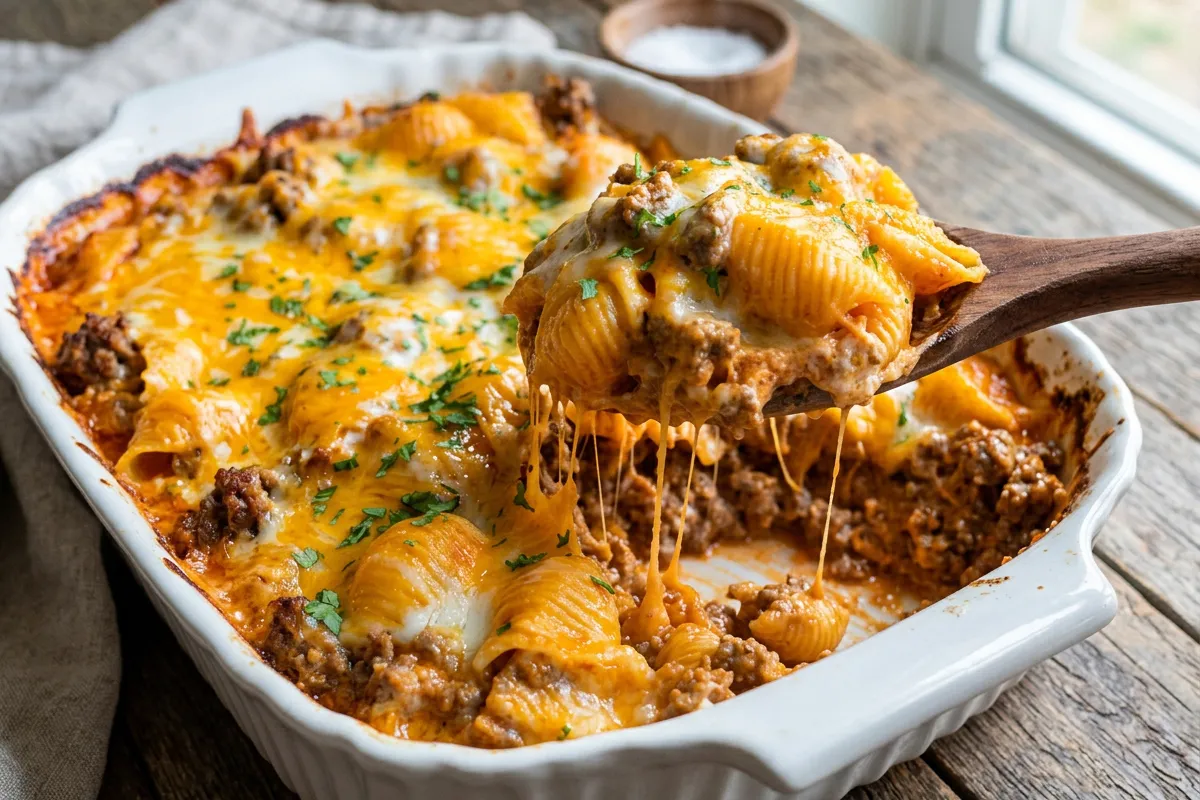
Table of contents
- Why You Will Love This meatloaf and cheddar shells casserole
- What You Will Need to Make This Casserole
- How to Make meatloaf and cheddar shells casserole
- The Technique That Makes This meatloaf and cheddar shells casserole Restaurant-Quality
- Mistakes to Avoid When Making meatloaf and cheddar shells casserole
- Creative Ways to Customize This Casserole
- Understanding the Nutrition in This Comfort Food
- Delicious Ways to Serve This Hearty Casserole
- Keeping Your Casserole Fresh and Flavorful
- Frequently Asked Questions about Meatloaf and Cheddar Shells Casserole
Why You Will Love This meatloaf and cheddar shells casserole
- This casserole combines two beloved comfort foods into one easy-to-make dish that requires only one baking pan.
- The creamy cheddar sauce coats every pasta shell while the seasoned ground beef adds hearty flavor and satisfying texture.
- You can assemble this casserole ahead of time and bake it when you’re ready, making it perfect for meal prep or entertaining.
- Leftovers reheat beautifully and taste even better the next day as the flavors meld together overnight.
What You Will Need to Make This Casserole
I’ve kept the equipment list simple and practical for this recipe. Most of these items are kitchen staples, but a few specific tools will make your cooking experience smoother and more efficient.
- Large pot: You’ll need this to boil the pasta shells until they’re just tender, which is crucial for preventing mushy casserole texture.
- Large skillet: A wide skillet gives you plenty of room to brown the ground beef evenly and build flavor through proper caramelization.
- 9×13-inch baking dish: This standard casserole dish provides the ideal surface area for even baking and allows the top to get beautifully golden.
- Wooden spoon or spatula: Essential for breaking up the ground beef as it cooks and ensuring no large chunks remain.
- Colander: You’ll use this to drain the pasta shells thoroughly so excess water doesn’t dilute your cheese sauce.
- Whisk: This helps create a smooth, lump-free cheese sauce by incorporating the milk and cheese evenly.
- Mixing bowls: I recommend having at least two on hand for combining ingredients separately before assembly.
How to Make meatloaf and cheddar shells casserole
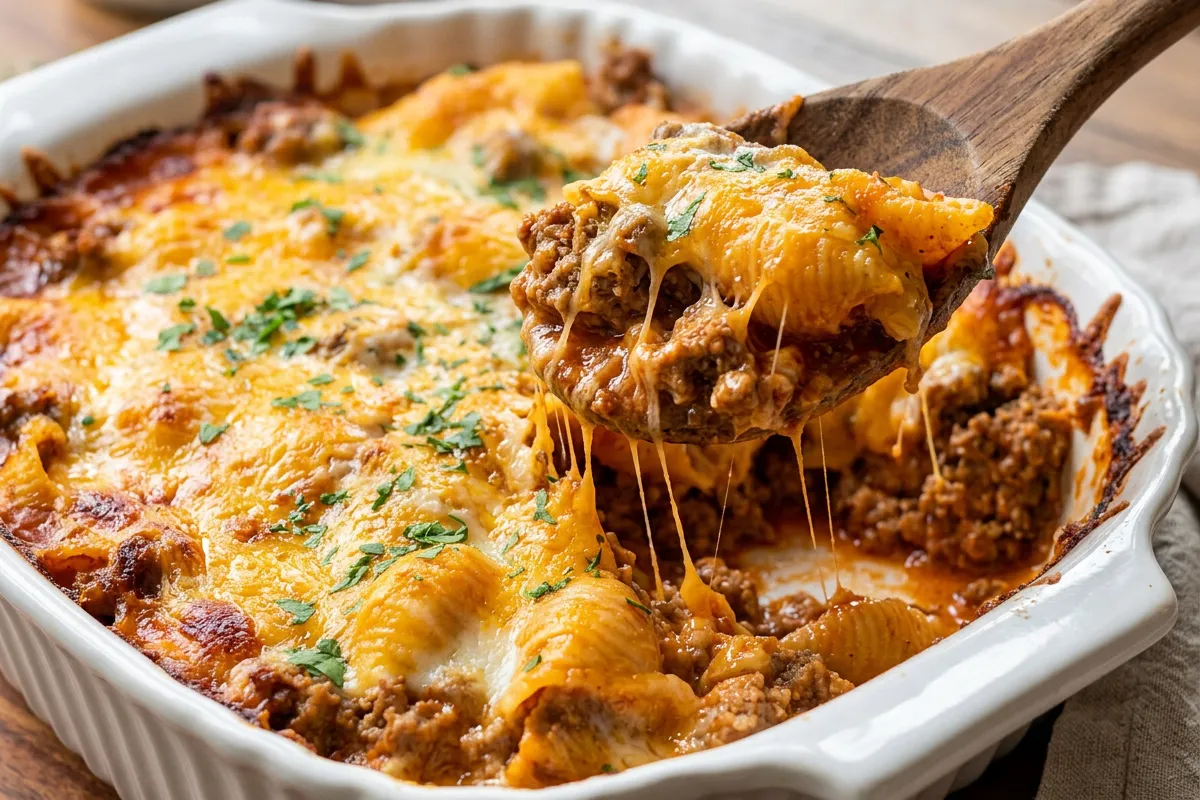
Meatloaf and Cheddar Shells Casserole
4
servings30
minutes40
minutes300
kcalThis hearty casserole combines seasoned ground beef with tender pasta shells in a rich cheddar cheese sauce. The secret is mixing the meatloaf directly into the pasta for perfect flavor in every bite, creating a one-dish meal that’s both comforting and convenient.
Keep the screen of your device on
Ingredients
12 oz medium pasta shells
1.5 lb ground beef
1 medium yellow onion
3 cloves garlic
1 tablespoon Worcestershire sauce
1 teaspoon salt
0.5 teaspoon black pepper
1 teaspoon garlic powder
0.5 teaspoon onion powder
3 cups sharp cheddar cheese
2 cups whole milk
3 tablespoons butter
Directions
- Bring a large pot of salted water to a boil and cook the pasta shells for 6 to 7 minutes, about 2 minutes less than the package directions. This prevents the pasta from becoming mushy during baking.
- Drain the shells thoroughly in a colander and shake well to remove excess water. Set aside while you prepare the meat and cheese sauce.
- Heat a large skillet over medium-high heat and add the ground beef. Let it sit undisturbed for 2 minutes to develop a flavorful crust, then break it apart with a wooden spoon.
- Add the diced onion to the beef and continue cooking for 5 to 6 minutes until the beef is browned and the onion is softened. Stir in the minced garlic and cook for 1 minute until fragrant.
- Season the beef mixture with Worcestershire sauce, salt, black pepper, garlic powder, and onion powder. Stir well to distribute the seasonings evenly, then remove from heat and drain any excess fat.
- In a medium saucepan, melt the butter over medium heat. Add the milk and bring to a gentle simmer, stirring occasionally to prevent scorching on the bottom.
Notes
- The ideal ratio of cheese sauce to pasta shells is 1:2 by volume, which ensures every bite is creamy without being soupy.
- For best results, use freshly shredded block cheddar rather than pre-shredded cheese, which contains anti-caking agents that prevent smooth melting.
- This casserole can be assembled up to 24 hours in advance and refrigerated before baking. Add 10 minutes to the baking time if starting from cold.
- Leftovers freeze beautifully for up to 3 months. Thaw overnight in the refrigerator and reheat covered at 350°F for 25 minutes.
Nutrition Facts
- Serving Size: 1 g
- Total number of serves: 8
- Calories: 480kcal
- Fat: 22g
- Carbohydrates: 38g
- Fiber: 2g
- Protein: 28g
Did you make this recipe?
Tag @therecipemasterblog on Instagram and hashtag it with #therecipemaster
Like this recipe?
Follow @therecipemasterblog on Pinterest
Follow us on Facebook!
Follow The Recipe Master on Facebook
The Technique That Makes This meatloaf and cheddar shells casserole Restaurant-Quality
After countless tests in my kitchen, I’ve discovered several key techniques that elevate this casserole from good to exceptional. These tips focus on texture, flavor balance, and presentation, and they’re based on real troubleshooting I’ve done with home cooks.
Undercook Your Pasta Shells Slightly
The ideal pasta cooking time for this casserole is two minutes less than the package directions suggest. I found that shells cooked to complete tenderness become mushy during the baking phase. By stopping early, the pasta absorbs sauce in the oven and reaches perfect al dente texture. This is especially important because the shells continue cooking in the hot cheese sauce even after you drain them.
Brown the Beef Properly for Maximum Flavor
Don’t rush the browning step. I recommend cooking the ground beef over medium-high heat without stirring for the first two minutes. This creates a flavorful crust through the Maillard reaction, which adds depth to the entire casserole. For even better results, consider using a classic meatloaf seasoning blend in your ground beef mixture to enhance the savory notes.
Use Freshly Shredded Cheese
Pre-shredded cheese contains anti-caking agents that prevent smooth melting. I always buy block cheddar and shred it myself just before making the sauce. The result is a silkier, creamier texture that coats the pasta shells evenly. Sharp cheddar gives you the best flavor punch, but you can blend in some mild cheddar if you prefer a gentler taste.
The Optimal Cheese-to-Pasta Ratio
The ideal ratio of cheese sauce to pasta shells is approximately 1:2 by volume. This ensures every shell is generously coated without the casserole becoming soupy. In my testing, I found that three cups of cheese sauce for six cups of cooked shells delivers perfect consistency. This direct-answer ratio works across most pasta casseroles and is a reliable guide for adjusting recipes.
Let the Casserole Rest Before Serving
After removing the casserole from the oven, let it sit for ten minutes before cutting into it. This resting period allows the cheese sauce to set slightly and prevents the casserole from falling apart when you serve it. I know it’s tempting to dig in immediately, but patience here makes a significant difference in presentation.
Mistakes to Avoid When Making meatloaf and cheddar shells casserole
I’ve seen home cooks make several common errors with this recipe, and I want to help you avoid them. Each mistake has a simple fix that makes all the difference in your final result.
Overcooking the Pasta Shells
This is the most frequent problem I encounter. Shells that are fully cooked before baking turn mushy and lose their shape in the oven. I fix this by setting a timer for two minutes less than the package suggests and testing a shell at that point. It should still have a slight firmness in the center.
Using Lean Ground Beef
Extra-lean beef results in dry, crumbly meat that lacks flavor. I recommend using 80/20 ground beef for this casserole. The fat content keeps the meat tender and adds richness to the dish. If you’re concerned about excess grease, drain the beef after browning but don’t use meat that’s too lean to begin with.
Skipping the Seasoning in the Meat
Ground beef needs generous seasoning to taste like meatloaf rather than plain hamburger. I season my beef with salt, pepper, garlic powder, onion powder, and a touch of Worcestershire sauce. These additions transform the meat from bland to deeply savory and ensure the casserole doesn’t taste one-dimensional.
Baking at the Wrong Temperature
Too high a temperature causes the edges to dry out before the center heats through. I bake this casserole at 350°F, which allows even heating and gives the top time to turn golden without burning. If you want a crispier top, switch to broil for the last two minutes while watching carefully.
Creative Ways to Customize This Casserole
One of my favorite aspects of this recipe is how easily it adapts to different tastes and dietary needs. I’ve experimented with numerous variations, and each one brings something unique to the table.
Italian-Style Meatloaf Casserole
Add Italian seasoning, fresh basil, and a cup of marinara sauce to the ground beef mixture. Replace half the cheddar with mozzarella for a pizza-inspired twist. This variation pairs beautifully with garlic bread and a simple green salad.
Southwestern Meatloaf Shells
Mix taco seasoning into the ground beef and use pepper jack cheese instead of cheddar. Add black beans, corn, and diced green chiles to the casserole for extra texture and flavor. Top with crushed tortilla chips before baking for a crunchy finish.
Vegetarian Version
Replace the ground beef with cooked lentils or crumbled plant-based meat substitute. Season generously with smoked paprika and cumin to add depth. The cheese sauce remains the same, creating a hearty vegetarian meal that doesn’t sacrifice flavor or satisfaction.
Bacon Cheeseburger Casserole
Mix crispy bacon pieces into the ground beef and top the casserole with diced tomatoes and shredded lettuce after baking. Add pickles and a drizzle of burger sauce for a complete cheeseburger experience. This playful variation is a huge hit with kids and adults alike. If you enjoy creative casserole combinations, you might also love this dump and bake meatball casserole for another easy weeknight option.
Gluten-Free Adaptation
Use gluten-free pasta shells and replace regular breadcrumbs in the meatloaf mixture with gluten-free breadcrumbs or crushed gluten-free crackers. Make sure your Worcestershire sauce is gluten-free as well. The texture and flavor remain excellent with these simple swaps.
Understanding the Nutrition in This Comfort Food
This casserole is undeniably a comfort food, but understanding its nutritional profile helps you fit it into your meal planning. One serving provides approximately 480 calories, with a substantial 28 grams of protein from the ground beef and cheese. The fat content sits around 22 grams per serving, much of which comes from the cheddar cheese and beef.
Carbohydrates total about 38 grams per serving, primarily from the pasta shells. You’ll also get around 2 grams of fiber and 6 grams of sugar. For those watching net carbs, each serving contains approximately 36 grams. To lighten the recipe, consider using ground turkey instead of beef and reducing the cheese by one-third while adding extra vegetables like diced bell peppers or mushrooms.
Delicious Ways to Serve This Hearty Casserole
I love serving this meatloaf and cheddar shells casserole with simple sides that balance its richness. A crisp green salad with a tangy vinaigrette cuts through the creamy cheese sauce beautifully. Roasted broccoli or green beans add color and a fresh vegetable component that complements the hearty pasta and beef.
For a complete family dinner, pair this casserole with warm dinner rolls or garlic bread for soaking up any extra cheese sauce. A light coleslaw or cucumber salad provides refreshing contrast. If you’re serving this at a potluck, it travels well in the baking dish and stays warm for quite a while. I often bring it to gatherings because it feeds a crowd and always disappears quickly.
Keeping Your Casserole Fresh and Flavorful
Store leftover casserole in an airtight container or cover the baking dish tightly with aluminum foil. It will keep in the refrigerator for up to four days. I find the flavors actually deepen and improve after a day in the fridge as everything melds together.
For longer storage, this casserole freezes exceptionally well. Portion it into individual servings or freeze the entire dish wrapped tightly in plastic wrap and then foil. It will maintain quality in the freezer for up to three months. To reheat from frozen, thaw overnight in the refrigerator and then bake covered at 350°F for about 25 minutes, removing the cover for the last five minutes to crisp the top. Individual portions reheat perfectly in the microwave in two to three minutes, making this an excellent meal prep option.
Frequently Asked Questions about Meatloaf and Cheddar Shells Casserole
Yes, you can assemble this casserole completely up to 24 hours before baking. Cover it tightly with plastic wrap or foil and refrigerate. Add 10 minutes to the baking time if placing it in the oven directly from the refrigerator.
Medium pasta shells work best for this recipe. They’re large enough to hold cheese sauce but small enough to distribute evenly throughout the casserole. Avoid jumbo shells, which are meant for stuffing, and use regular or medium-sized shells instead.
Yes, ground turkey works well as a lighter alternative. Use 85/15 ground turkey rather than extra-lean to maintain moisture and flavor. Season it generously since turkey is milder than beef. The cooking method remains exactly the same.
A watery casserole usually results from not draining the pasta thoroughly or using pre-shredded cheese with excess moisture. Make sure to shake the colander well after draining pasta and use freshly shredded block cheese. Also ensure your ground beef is properly drained after browning.



Leave a Reply