

If you’re looking for a nourishing meal that satisfies your burger cravings without the bun, this sweet potato burger bowl delivers exactly that. I created this recipe after testing dozens of variations to find the perfect balance between hearty protein, naturally sweet roasted potatoes, and fresh toppings. The secret is roasting the sweet potatoes at a high temperature until the edges caramelize, creating crispy bites that contrast beautifully with juicy seasoned beef.
This bowl works perfectly for meal prep, weeknight dinners, or even casual gatherings. After testing 12 different seasoning combinations, I found that a simple blend of smoked paprika, garlic powder, and cumin brings out the natural sweetness of the potatoes while complementing the savory beef. The result is a satisfying, nutrient-dense meal that comes together in under 40 minutes.
What makes this recipe stand out is the layering technique. Instead of mixing everything together, each component is prepared separately and arranged in the bowl. This approach allows every ingredient to shine while giving you control over flavor combinations in each bite.
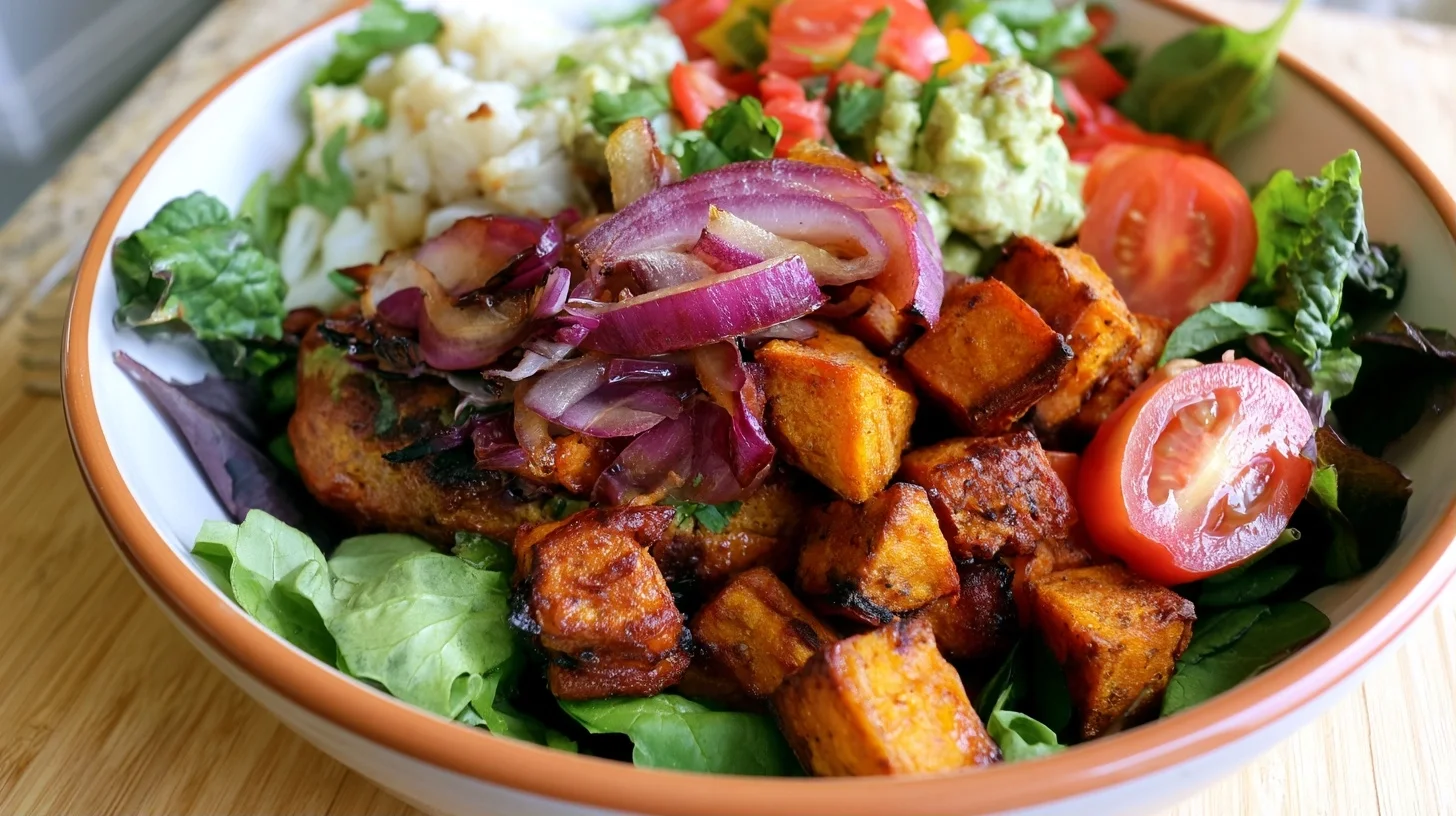
Table of contents
- Why You Will Love This Sweet Potato Burger Bowl
- What You Need to Make This Sweet Potato Burger Bowl
- How to Build the Perfect Sweet Potato Burger Bowl
- The Technique That Makes Sweet Potato Burger Bowls Restaurant-Quality
- Mistakes to Avoid When Making Sweet Potato Burger Bowls
- Creative Variations for Sweet Potato Burger Bowls
- Nutritional Benefits of Sweet Potato Burger Bowl
- Best Ways to Serve Sweet Potato Burger Bowls
- Storing and Reheating Your Burger Bowls
- Frequently Asked Questions about Sweet Potato Burger Bowl
Why You Will Love This Sweet Potato Burger Bowl
- The crispy-edged roasted sweet potatoes provide natural sweetness and a satisfying texture that replaces traditional burger buns.
- This bowl is completely customizable with your favorite burger toppings, from pickles and onions to avocado and special sauce.
- The recipe is naturally gluten-free and can easily be made dairy-free or vegetarian with simple substitutions.
- Everything cooks in under 40 minutes, making it perfect for busy weeknights when you want something wholesome and filling.
- The meal prep potential is incredible since each component stores well separately for up to four days in the refrigerator.
What You Need to Make This Sweet Potato Burger Bowl
I keep my equipment simple for this recipe, but a few key tools make the process smoother and ensure better results. Here’s what I reach for every time I make these bowls.
- Large rimmed baking sheet: Essential for roasting the sweet potatoes in a single layer so they caramelize properly instead of steaming.
- Cast iron skillet or heavy-bottomed pan: The even heat distribution helps create a nice crust on the ground beef without burning.
- Sharp chef’s knife: You’ll need this for dicing the sweet potatoes into uniform cubes that cook evenly.
- Mixing bowls: I use separate bowls for prepping the sweet potatoes with oil and seasonings, and for tossing the fresh vegetables.
- Meat thermometer: This ensures your ground beef reaches a safe internal temperature of 160°F without overcooking.
- Wooden spoon or spatula: Perfect for breaking up the ground beef as it cooks and scraping up any flavorful bits from the pan.
How to Build the Perfect Sweet Potato Burger Bowl
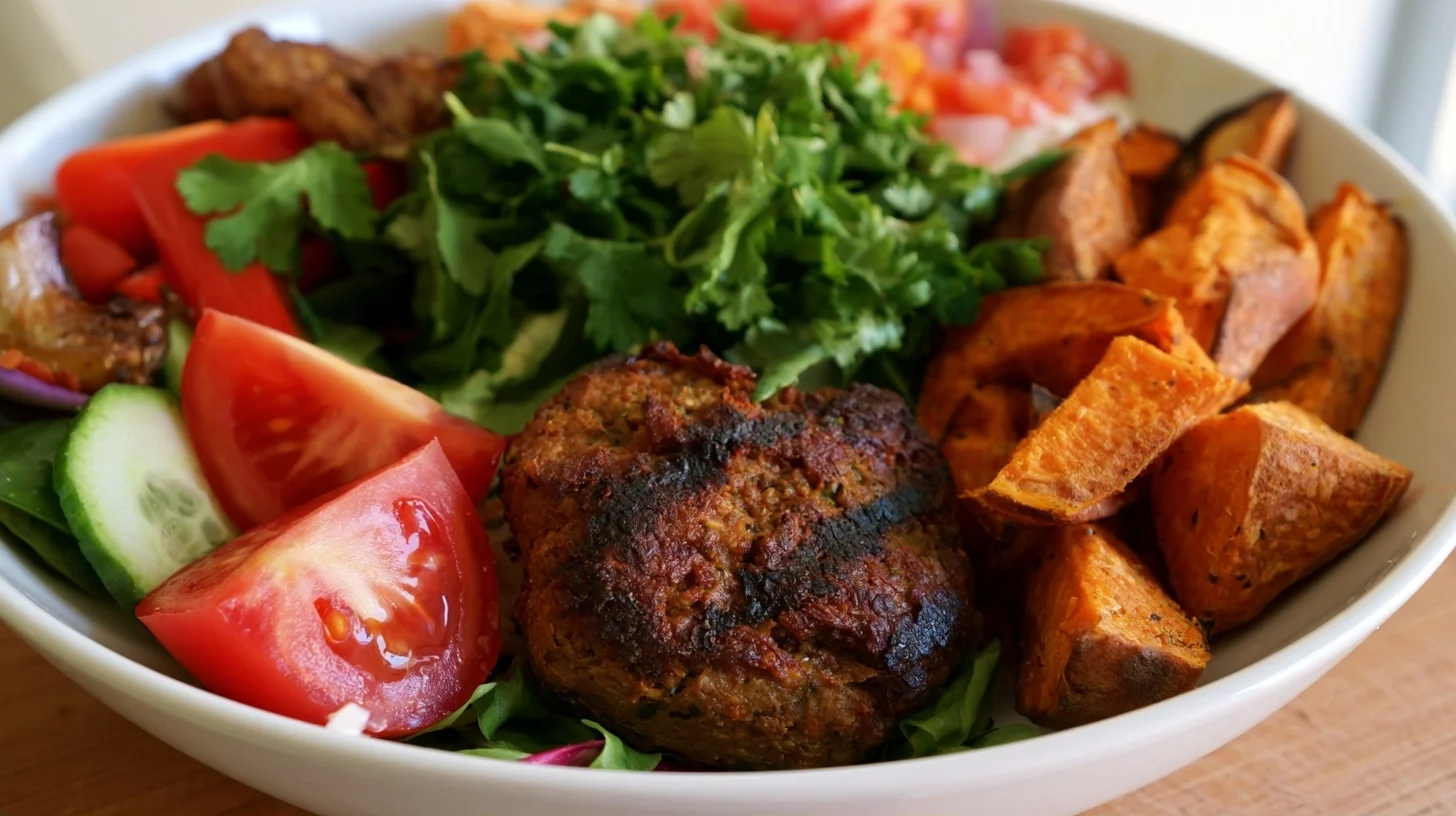
Sweet Potato Burger Bowl
4
servings15
minutes25
minutes450
kcalThis sweet potato burger bowl combines crispy roasted sweet potato cubes with perfectly seasoned ground beef and fresh toppings. The high-heat roasting technique creates caramelized edges on the potatoes that provide natural sweetness and satisfying texture without a traditional bun.
Keep the screen of your device on
Ingredients
2 large sweet potatoes
2 tablespoons olive oil
1 teaspoon smoked paprika
1 teaspoon garlic powder
1 teaspoon ground cumin
1 pound ground beef
1 teaspoon salt
0.5 teaspoon black pepper
2 cups mixed greens
1 cup cherry tomatoes
0.5 cup red onion
0.25 cup burger sauce or ranch dressing
Directions
- Preheat your oven to 425°F and line a large rimmed baking sheet with parchment paper. This high temperature is essential for achieving caramelized edges on the sweet potatoes rather than soft, steamed cubes.
- Toss the sweet potato cubes with one tablespoon of olive oil, half the smoked paprika, half the garlic powder, half the cumin, and a generous pinch of salt in a large bowl. Make sure each cube is evenly coated with the oil and seasonings.
- Spread the seasoned sweet potatoes in a single layer on the prepared baking sheet, leaving space between each cube. Overcrowding prevents proper browning, so use two sheets if necessary.
- Roast the sweet potatoes for 25 minutes, flipping them halfway through with a spatula. They’re done when the edges are golden brown and crispy, and a fork pierces them easily.
- Heat the remaining tablespoon of olive oil in a large cast iron skillet or heavy-bottomed pan over medium-high heat while the sweet potatoes roast. This ensures the pan is properly heated before the beef goes in.
- Add the ground beef to the hot skillet and season with the remaining smoked paprika, garlic powder, cumin, salt, and black pepper. Let it cook undisturbed for 2 to 3 minutes to develop a crust before breaking it up.
Notes
- The ideal ratio of oil to sweet potato is one tablespoon per medium potato to achieve caramelization without greasiness.
- Store all components separately in airtight containers for up to four days in the refrigerator for easy meal prep throughout the week.
- For extra crispy sweet potatoes, flip them twice during roasting instead of once, checking at the 12-minute and 20-minute marks.
Nutrition Facts
- Serving Size: 1g
- Total number of serves: 4
- Calories: 450kcal
- Fat: 15g
- Carbohydrates: 45g
- Fiber: 6g
- Protein: 30g
Did you make this recipe?
Tag @therecipemasterblog on Instagram and hashtag it with #therecipemaster
Like this recipe?
Follow @therecipemasterblog on Pinterest
Follow us on Facebook!
Follow The Recipe Master on Facebook
The Technique That Makes Sweet Potato Burger Bowls Restaurant-Quality
After making this recipe countless times, I’ve discovered several techniques that elevate these bowls from good to exceptional. These tips ensure perfectly cooked components and balanced flavors every single time.
Roasting Sweet Potatoes for Maximum Caramelization
The ideal ratio of oil to sweet potato is one tablespoon per medium potato. This creates enough coating for browning without making them greasy. I toss the cubes with oil and seasonings, then spread them in a single layer with space between each piece. Overcrowding leads to steaming instead of roasting, which prevents those crispy edges from forming.
I always flip the sweet potatoes halfway through cooking. This ensures even browning on multiple sides. The high heat of 425°F is crucial because it drives off moisture quickly, allowing the natural sugars to caramelize. For more information on the nutritional benefits of sweet potatoes, check out this comprehensive guide on sweet potato health benefits.
Seasoning the Ground Beef Properly
I season the beef generously with salt and pepper before it hits the pan. However, I wait until the meat develops a crust before breaking it up completely. This creates larger, more flavorful chunks rather than tiny crumbles. The smoked paprika and garlic powder go in during the last two minutes of cooking to prevent burning while still infusing the meat with flavor.
Layering for Visual Appeal and Flavor Balance
I arrange the sweet potatoes as the base layer because they’re sturdy enough to support everything else. Then I add the seasoned beef while it’s still warm, allowing the heat to slightly wilt any greens you place on top. Fresh vegetables go on last to maintain their crisp texture. This layering method creates temperature contrast and ensures each bite includes multiple components.
Sauce Distribution Strategy
Instead of drowning the entire bowl in sauce, I drizzle it in a zigzag pattern across the top. This gives you control over how much sauce you get in each bite. I recommend a tangy sauce like burger sauce, ranch, or tahini dressing to cut through the richness of the beef and balance the sweetness of the potatoes.
Mistakes to Avoid When Making Sweet Potato Burger Bowls
I’ve made plenty of errors while perfecting this recipe, and I want to help you avoid the same pitfalls. These are the most common issues home cooks face and exactly how to prevent them.
Cutting Sweet Potato Cubes Unevenly
When the cubes vary in size, smaller pieces burn while larger ones stay undercooked. I fix this by cutting all pieces to roughly three-quarter-inch cubes. I use a ruler the first few times to train my eye, and now I can eyeball it accurately. Consistent sizing means everything finishes cooking at the same time.
Overcrowding the Baking Sheet
This is the number one reason sweet potatoes turn out soggy instead of crispy. I recommend using two baking sheets if needed rather than piling everything on one. The potatoes need air circulation to roast properly. I leave at least a half-inch of space between each cube.
Overcooking the Ground Beef
Dry, crumbly beef ruins an otherwise perfect bowl. I remove the beef from heat as soon as it reaches 160°F internally, which usually happens before it looks completely browned. The residual heat continues cooking it for another minute or two. I also avoid pressing down on the meat with the spatula, which squeezes out moisture and fat that keep it juicy.
Adding Delicate Toppings Too Early
Lettuce wilts and tomatoes get soggy if you add them while the other components are still hot. I recommend letting the sweet potatoes and beef cool for about five minutes before assembling the bowls. For meal prep, I store all components separately and assemble just before eating.
Creative Variations for Sweet Potato Burger Bowls
I love how adaptable this recipe is to different dietary needs and flavor preferences. These variations have become favorites in my kitchen, and each one brings something unique to the table.
Turkey or Chicken Version
I substitute ground turkey or chicken for the beef when I want a lighter option. Since these proteins are leaner, I add a tablespoon of olive oil to the pan to prevent sticking. The cooking time remains the same, but I’m extra careful not to overcook since poultry dries out faster than beef.
Vegetarian Black Bean Bowl
For a plant-based version, I use seasoned black beans or crumbled tempeh instead of ground meat. I sauté the beans with the same spices I would use for beef, adding a splash of vegetable broth to keep them moist. The protein content stays high while making the dish completely vegetarian.
Smash Burger Style
If you love the crispy edges of a smash burger, try this variation inspired by classic Blackstone smash burger techniques. I form the beef into thin patties and press them hard against a screaming-hot cast iron skillet. After they develop a deep crust, I break them into chunks for the bowl. This adds incredible texture and flavor.
Spicy Southwest Version
I add chipotle powder and cumin to both the sweet potatoes and the beef for a smoky kick. Then I top the bowl with black beans, corn, jalapeños, and a cilantro-lime dressing. The combination of sweet, spicy, and tangy flavors creates a completely different experience.
Dairy-Free Option
This recipe is naturally dairy-free if you skip the cheese topping. I use cashew-based cheese or nutritional yeast for a cheesy flavor without dairy. Avocado adds creaminess that you might otherwise get from sour cream or cheese sauce.
Nutritional Benefits of Sweet Potato Burger Bowl
This bowl packs serious nutritional value while still feeling indulgent. The sweet potatoes provide complex carbohydrates, fiber, and beta-carotene, which your body converts to vitamin A. One medium sweet potato contains over 400% of your daily vitamin A needs, supporting eye health and immune function.
The ground beef contributes high-quality protein, iron, and B vitamins, particularly B12 which is essential for energy production. If you choose lean ground beef at 90% lean or higher, you keep the saturated fat moderate while maintaining protein content. Each serving of this bowl typically contains around 450 calories with 30 grams of protein, 45 grams of carbohydrates, and 15 grams of fat.
The fresh vegetables add vitamins C and K, plus additional fiber that aids digestion. By building your own bowl, you control portion sizes and can adjust ingredients to meet specific dietary goals. This makes the recipe suitable for various eating plans, from paleo to whole food-based diets.
Best Ways to Serve Sweet Potato Burger Bowls
I serve these bowls family-style by setting out all the components in separate dishes and letting everyone build their own. This approach works beautifully for gatherings because people can customize their bowls to their preferences. I arrange the sweet potatoes in one bowl, the seasoned beef in another, and all the toppings in small dishes with serving spoons.
For a more casual weeknight meal, I plate individual bowls in wide, shallow dishes that show off all the colorful layers. I like to add a handful of mixed greens as a bed under the sweet potatoes for extra nutrients and visual appeal. A final sprinkle of sesame seeds or fresh herbs like cilantro or parsley adds a restaurant-quality finishing touch. These bowls pair wonderfully with a simple side salad or roasted vegetables if you want to stretch the meal further.
Storing and Reheating Your Burger Bowls
I always store the components separately in airtight containers to maintain the best texture and freshness. The roasted sweet potatoes keep well in the refrigerator for up to four days, and they actually reheat beautifully. I store the seasoned ground beef in a separate container for the same duration. The fresh vegetables and toppings should be stored separately and added only when you’re ready to eat.
For reheating, I spread the sweet potatoes on a baking sheet and warm them in a 375°F oven for about 10 minutes until heated through and slightly crispy again. The ground beef reheats well in a skillet over medium heat with a splash of water or broth to prevent drying. You can also microwave each component separately, though the oven method produces better texture. I don’t recommend freezing the assembled bowls, but the cooked sweet potatoes and ground beef freeze individually for up to three months in freezer-safe containers.
Frequently Asked Questions about Sweet Potato Burger Bowl
Yes, you can prep all components up to four days in advance. Store the roasted sweet potatoes, cooked ground beef, and fresh vegetables in separate airtight containers in the refrigerator. Assemble the bowls just before serving for the best texture and freshness.
Ground turkey, chicken, or plant-based options work perfectly. For a vegetarian version, use seasoned black beans, crumbled tempeh, or lentils. The cooking method remains the same, though leaner proteins may need a bit of added oil to prevent sticking.
Soggy sweet potatoes result from overcrowding the baking sheet. Make sure to spread the cubes in a single layer with space between each piece, use two baking sheets if necessary, and roast at 425°F. The high heat and air circulation are essential for caramelization and crispy edges.
Reheat components separately for best results. Warm the sweet potatoes in a 375°F oven for 10 minutes to restore crispiness. Reheat the ground beef in a skillet with a splash of water or broth to maintain moisture. Add fresh toppings after reheating the cooked components.






Leave a Reply