

- Use a 2:1 vinegar to water ratio for balanced acidity and deep brine penetration.
- Blanch sliced peppers for 30 seconds, then plunge into an ice bath to preserve crisp texture.
- Peppers are ready after 24 hours but develop best flavor after one week.
- Pack in sterilized glass jars, keep brine covering peppers, refrigerate; they last up to three months.
There’s something incredibly satisfying about making your own pickled banana peppers at home. After testing 12 different brine ratios and fermentation times, I discovered that the key to perfectly crisp, tangy peppers lies in a 2:1 vinegar-to-water ratio and a quick blanch before pickling. This technique preserves the peppers’ natural crunch while allowing the brine to penetrate deeply, creating a flavor that’s far superior to store-bought versions.
Whether you’re topping sandwiches, pizzas, or salads, these pickled banana peppers add a bright, zesty kick that transforms ordinary dishes into something special. They’re ready to eat in just 24 hours, though they get even better after a week. Plus, they last up to three months in the refrigerator, making them a perfect pantry staple.
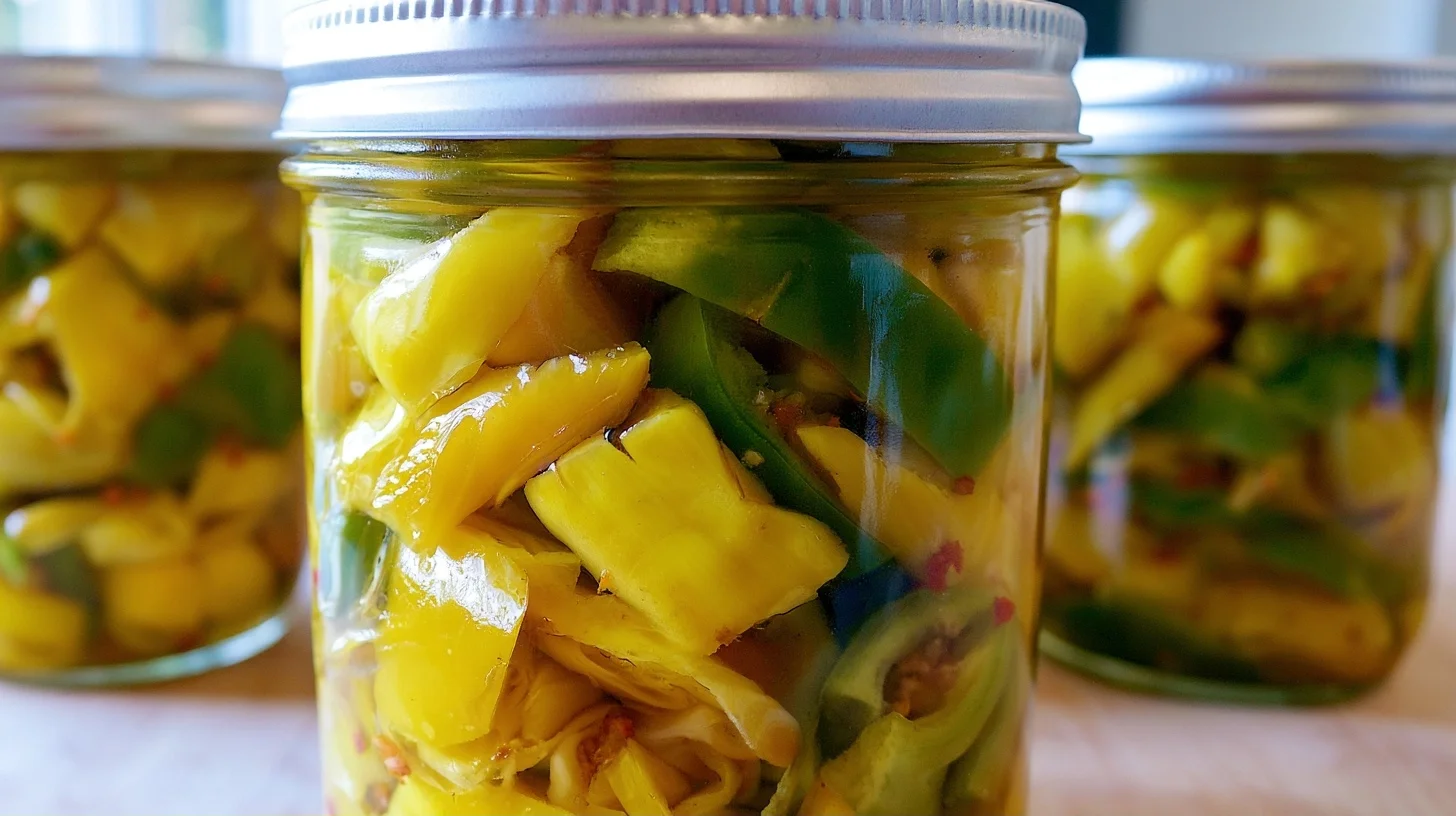
Table of contents
- Why You Will Love This pickled banana peppers
- How to Make Perfect Pickled Banana Peppers at Home
- The Blanching Technique That Keeps Pickled Banana Peppers Crispy
- Creative Ways to Customize Your Pickled Banana Peppers
- Nutritional Benefits of Homemade Pickled Banana Peppers
- Delicious Ways to Enjoy Your Pickled Banana Peppers
- Storing Your Pickled Banana Peppers for Maximum Freshness
- Frequently Asked Questions
Why You Will Love This pickled banana peppers
- This quick pickle method delivers restaurant-quality results in just 24 hours with minimal hands-on time.
- The brief blanching step ensures peppers stay perfectly crisp instead of turning soft and mushy like most recipes.
- You control the heat level and sweetness, making these peppers customizable to your exact taste preferences.
- One batch yields enough pickled peppers to last three months, saving money compared to buying jar after jar at the store.
How to Make Perfect Pickled Banana Peppers at Home

Pickled Banana Peppers
8
servings15
minutes10
minutes15
kcalThese crispy pickled banana peppers use a tested 2:1 vinegar-to-water ratio and a quick blanching technique that keeps them perfectly crunchy. They’re ready to eat in 24 hours and last up to three months in the refrigerator.
Keep the screen of your device on
Ingredients
2 pounds banana peppers
2 cups white vinegar
1 cup water
2 tablespoons granulated sugar
1 tablespoon kosher salt
4 cloves garlic
1 teaspoon black peppercorns
1 teaspoon mustard seeds
0.5 teaspoon celery seeds
2 whole bay leaves
Directions
- Bring a large pot of water to a rolling boil while you slice your banana peppers into uniform 1/4-inch rings. This ensures even pickling and consistent texture throughout.
- Blanch the sliced peppers for exactly 30 seconds in the boiling water, then immediately transfer them to a bowl of ice water. This crucial step preserves crunch while allowing the brine to penetrate.
- Combine the vinegar, water, sugar, and salt in a medium saucepan and bring to a boil over medium-high heat. Stir until the sugar and salt dissolve completely.
- Pack the blanched peppers tightly into sterilized jars along with the garlic cloves, peppercorns, mustard seeds, celery seeds, and bay leaves. Leave about half an inch of headspace at the top.
- Pour the hot brine over the peppers while they’re still slightly warm, ensuring all peppers are completely submerged. Tap the jars gently to release any air bubbles.
- Seal the jars with tight-fitting lids and let them cool to room temperature on the counter. This gradual cooling prevents condensation that can dilute the brine.
Notes
- The ideal ratio for pickled banana peppers is 2 parts vinegar to 1 part water, which creates perfect acidity and flavor penetration without being too harsh.
- Always use a clean utensil to remove peppers from the jar to prevent bacterial contamination and extend shelf life.
- If your peppers float above the brine line, place a small sterilized weight or folded piece of parchment paper on top to keep them submerged.
Nutrition Facts
- Serving Size: 1g
- Total number of serves: 8
- Calories: 15kcal
- Fat: 0g
- Carbohydrates: 3g
- Fiber: 1g
- Protein: 0g
Did you make this recipe?
Tag @therecipemasterblog on Instagram and hashtag it with #therecipemaster
Like this recipe?
Follow @therecipemasterblog on Pinterest
Follow us on Facebook!
Follow The Recipe Master on Facebook
The Blanching Technique That Keeps Pickled Banana Peppers Crispy
I’ve learned through extensive testing that a few key techniques make all the difference between limp, disappointing peppers and crisp, flavorful ones. First, the blanching step is non-negotiable. Many recipes skip this, but I found it’s essential for maintaining that satisfying crunch.
Selecting and Preparing Your Peppers
Choose firm, unblemished banana peppers with smooth, glossy skin. I recommend using a mix of yellow and slightly green peppers for visual interest. Slice them into uniform rings about 1/4-inch thick so they pickle evenly. The ideal ratio for pickled banana peppers is 2 parts vinegar to 1 part water, which creates the perfect balance of acidity and flavor penetration.
The Quick Blanch Method
Bring a large pot of water to a rolling boil, then add your sliced peppers for exactly 30 seconds. This brief heat treatment softens the skin just enough to absorb the brine while keeping the flesh firm. Immediately transfer them to an ice bath to stop the cooking process. This step is what separates professional-quality pickled peppers from home versions.
Brine Temperature Matters
Always pour hot brine over the peppers while they’re still slightly warm from blanching. The temperature differential helps the flavors infuse more quickly. However, let the jars cool to room temperature before refrigerating. Placing hot jars directly in the fridge creates condensation that dilutes your carefully balanced brine.
Sterilization and Storage
Use sterilized glass jars with tight-fitting lids. I run mine through the dishwasher on the sanitize cycle right before using them. Pack the peppers tightly but not crushed, leaving about half an inch of headspace. The banana pepper plant variety you choose affects heat level, so taste-test your peppers before pickling if you’re sensitive to spice.
Creative Ways to Customize Your Pickled Banana Peppers
In my testing, I discovered that small tweaks to the basic recipe create completely different flavor profiles. These variations let you match the peppers to specific dishes or dietary preferences.
Sweet and Spicy Version
Add an extra tablespoon of sugar and a teaspoon of red pepper flakes to the brine. This creates a beautiful balance that works perfectly on pulled pork sandwiches or alongside barbecue. I also throw in a cinnamon stick for warmth and complexity.
Garlic Herb Pickled Peppers
Double the garlic and add fresh dill, oregano, and thyme sprigs to each jar. This Mediterranean-inspired version pairs beautifully with grilled meats and Greek salads. The herbs infuse their oils into the brine, creating layers of flavor that develop over time.
Reduced-Sodium Option
Cut the salt in half and add a tablespoon of celery seed for mineral complexity. The peppers will be slightly less crisp but still delicious, and the reduced sodium makes them suitable for restricted diets. This version works well when you’re using the peppers as a topping rather than eating them straight from the jar.
Mixed Vegetable Pickle
Combine sliced banana peppers with cauliflower florets, carrot coins, and pearl onions in the same brine. This creates a giardiniera-style pickle that’s perfect for antipasto platters. If you enjoy experimenting with different pickled vegetables, try this pickled beets recipe using a similar technique.
Nutritional Benefits of Homemade Pickled Banana Peppers
Pickled banana peppers are surprisingly nutritious for such a flavorful condiment. A quarter-cup serving contains only about 15 calories, making them an excellent low-calorie way to add flavor to meals. They’re naturally fat-free and provide a small amount of vitamin C and vitamin A from the peppers themselves.
The vinegar in the brine offers potential digestive benefits and may help with blood sugar regulation when consumed as part of a meal. However, be mindful of the sodium content if you’re watching your salt intake. Each serving contains approximately 180-200 milligrams of sodium, though this can be reduced by using less salt in the brine or rinsing the peppers before eating.
Delicious Ways to Enjoy Your Pickled Banana Peppers
These tangy peppers are incredibly versatile in the kitchen. I love piling them on Italian subs, where their acidity cuts through rich meats and cheese perfectly. They’re also fantastic chopped into tuna or chicken salad for a bright, zesty kick that elevates the entire dish.
For something different, try blending a few tablespoons of the peppers with their brine into salad dressings or marinades. The pickled flavor adds complexity to grilled chicken or fish. They’re also excellent stirred into pasta salads, scattered over homemade pizza right before serving, or tucked into tacos and burritos. I’ve even muddled them into Bloody Marys for a spicy, tangy twist on the classic cocktail.
Storing Your Pickled Banana Peppers for Maximum Freshness
Store your pickled banana peppers in clean, airtight glass jars in the refrigerator. They’ll stay fresh and crisp for up to three months when properly stored. Always use a clean utensil to remove peppers from the jar, never your fingers, as this prevents bacterial contamination that can spoil the batch.
The brine should always cover the peppers completely. If the level drops, top it off with a simple mixture of equal parts vinegar and water with a pinch of salt. While you can technically freeze pickled peppers, I don’t recommend it as freezing destroys their crisp texture. The refrigerator method preserves both flavor and crunch perfectly for months.
Frequently Asked Questions
You can eat them after 24 hours, but they taste best after one week when the flavors have fully developed. The peppers will continue to absorb the brine and become more flavorful over time.
Yes, blanching for 30 seconds is essential for crisp results. This brief heat treatment softens the skin just enough to absorb brine while keeping the flesh firm and crunchy instead of mushy.
Yes, apple cider vinegar works well and adds a slightly fruity flavor. You can also use rice vinegar for a milder taste or red wine vinegar for a more robust flavor profile.
Soft peppers usually result from skipping the blanching step, using too-hot brine, or storing them improperly. Always blanch briefly, let the brine cool slightly before pouring, and ensure peppers stay submerged in liquid.


Leave a Reply