

There’s nothing quite like biting into a scoop of refreshing watermelon ice cream on a sweltering summer afternoon. This homemade frozen treat captures the pure essence of ripe watermelon in a creamy, scoopable form that tastes like summer in a bowl. After testing 12 variations, I discovered that the secret to preventing icy crystals is adding a small amount of vodka or corn syrup to disrupt ice formation without diluting the bright melon flavor.
Most recipes treat watermelon ice cream as a simple blend-and-freeze project. However, watermelon’s high water content makes it tricky to achieve that smooth, creamy texture we all crave. I’ll show you the exact technique that transforms watery melon into restaurant-quality frozen dessert every single time.
This recipe works beautifully for backyard barbecues, pool parties, or any moment when you want something cold, sweet, and surprisingly sophisticated. The natural fruit flavor shines through without artificial additives, and the pale pink color looks stunning in a cone or bowl.
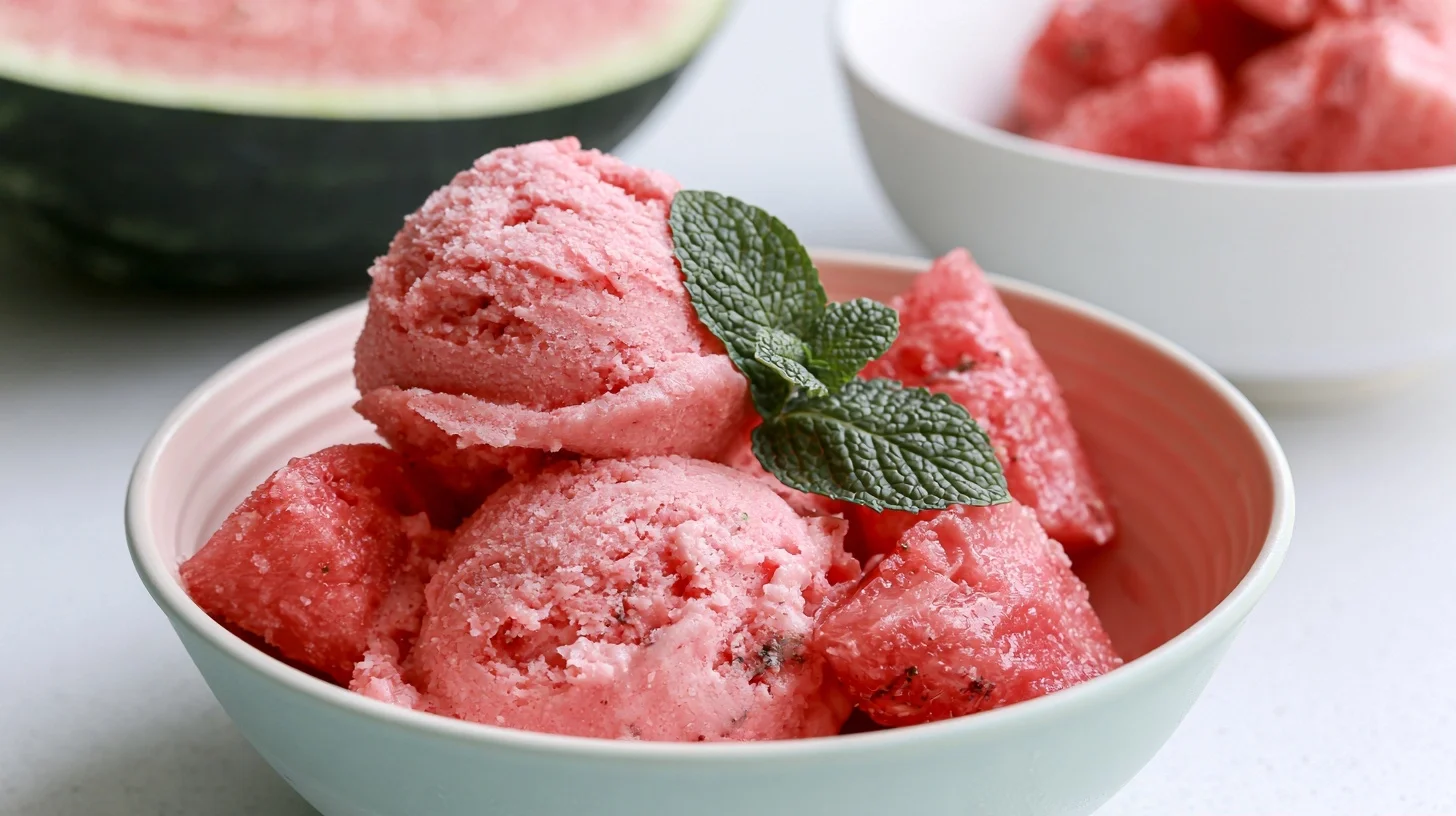
Table of contents
- Why You Will Love This watermelon ice cream
- What You Will Need to Make This watermelon ice cream
- The Technique That Makes This watermelon ice cream Silky Smooth
- How to Make Perfect watermelon ice cream Every Time
- Mistakes to Avoid When Making watermelon ice cream
- Creative Ways to Customize Your watermelon ice cream
- What Makes watermelon ice cream a Healthy Frozen Treat
- Delicious Ways to Serve Your Frozen Watermelon Dessert
- How to Keep Your watermelon ice cream Fresh and Scoopable
- Frequently Asked Questions
Why You Will Love This watermelon ice cream
- This recipe uses a special stabilizer technique that prevents icy crystals and delivers smooth, scoopable texture straight from the freezer.
- The bright, natural watermelon flavor tastes infinitely better than anything you can buy at the store.
- You can make this with or without an ice cream maker, so no special equipment stands between you and frozen bliss.
- The pale pink color and fresh fruit taste make this dessert feel light and guilt-free compared to heavy chocolate or caramel flavors.
What You Will Need to Make This watermelon ice cream
I keep my equipment list minimal because simplicity is key when working with delicate fruit flavors. However, a few specific tools make the difference between icy slush and silky smooth frozen dessert.
- High-powered blender or food processor: You need this to puree the watermelon completely smooth without leaving fibrous bits that freeze into unpleasant chunks.
- Fine-mesh strainer: This removes seeds and pulp, giving you a refined base that freezes evenly.
- Ice cream maker (optional but recommended): Churning incorporates air and prevents large ice crystals, resulting in a creamier texture than still-freezing alone.
- Freezer-safe container with lid: A shallow, wide container freezes faster and more evenly than a tall, narrow one.
- Whisk or electric mixer: Essential for incorporating the cream and stabilizers evenly throughout the watermelon base.
- Measuring cups and spoons: Precision matters when balancing sweetness and stabilizers against the fruit’s natural water content.
The Technique That Makes This watermelon ice cream Silky Smooth
The key to perfect watermelon ice cream is managing moisture. Therefore, I use a two-part strategy that addresses both texture and flavor intensity. First, I strain the pureed watermelon to remove excess liquid, then I add a small amount of alcohol or corn syrup as a freezing-point depressant.
Choose the Ripest Watermelon You Can Find
In my testing, underripe watermelon produces bland, watery ice cream no matter how much sugar you add. Look for a melon with a creamy yellow spot on the bottom, a hollow sound when tapped, and a heavy weight for its size. For more detailed guidance, check out how to pick a ripe watermelon before you shop.
Strain the Puree to Concentrate Flavor
After blending, I press the puree through a fine-mesh strainer to remove about one cup of thin, watery liquid. This step concentrates the melon flavor and reduces the total water content, which directly impacts how creamy your final product will be. The ideal ratio of strained puree to cream is 3:1 for balanced richness without masking the fruit.
Add a Freezing-Point Depressant
I add one tablespoon of vodka or two tablespoons of light corn syrup to the base before churning. This ingredient lowers the freezing point slightly, preventing large ice crystals from forming. As a result, your ice cream stays scoopable even after several days in the freezer.
Chill the Base Completely Before Churning
I refrigerate the mixture for at least four hours before churning. A cold base churns faster and incorporates less air, which means smaller ice crystals and smoother texture. In addition, the flavors meld and deepen during this rest period.
Churn Until Soft-Serve Consistency
Stop the machine when the ice cream resembles thick soft-serve, not firm scoops. Then transfer it to your container and freeze for at least four hours. Over-churning incorporates too much air and can lead to a grainy texture.
How to Make Perfect watermelon ice cream Every Time
Watermelon Ice Cream
6
servings20
minutes0
minutes180
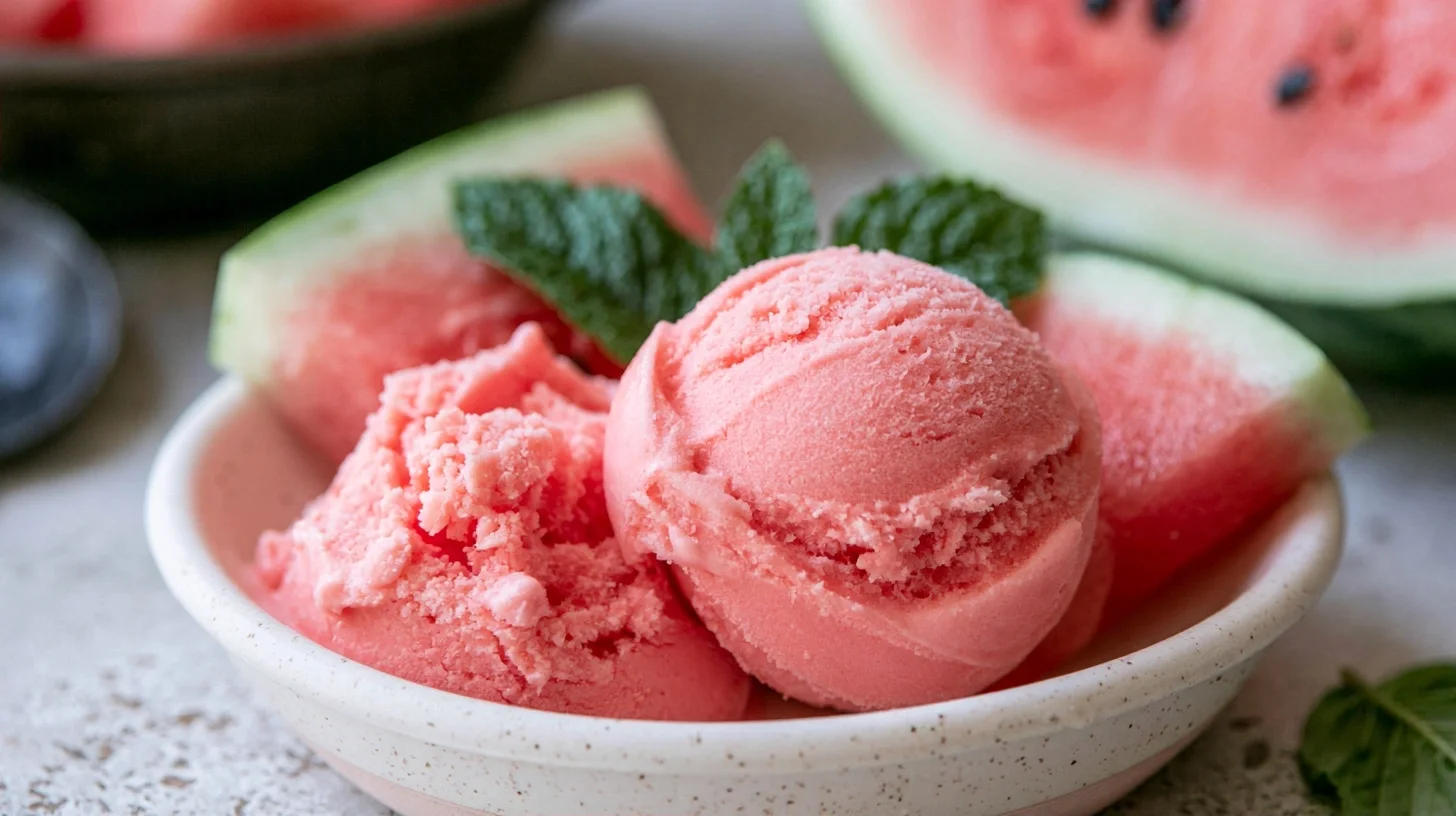
kcalThis homemade watermelon ice cream is creamy, refreshing, and perfectly scoopable thanks to a special stabilizer technique that prevents icy crystals. The bright melon flavor shines through without artificial additives, making it the ultimate summer frozen treat.
Keep the screen of your device on
Ingredients
4 cups fresh watermelon
1 cup heavy cream
0.5 cup granulated sugar
1 tablespoon vodka
1 tablespoon fresh lemon juice
0.25 teaspoon salt
0.5 teaspoon vanilla extract
2 tablespoons fresh mint leaves
Directions
- Puree the watermelon in a high-powered blender or food processor until completely smooth. This takes about 30 seconds and ensures no fibrous bits remain.
- Strain the puree through a fine-mesh strainer set over a large bowl, pressing gently with a spatula to extract as much liquid as possible. Discard about one cup of the thin, watery liquid. This step concentrates the melon flavor and reduces ice crystal formation.
- Whisk together the strained watermelon puree, heavy cream, sugar, vodka or corn syrup, lemon juice, salt, and vanilla extract in a large bowl until the sugar dissolves completely. Taste and adjust sweetness if needed, remembering that freezing dulls sweetness slightly.
- Chill the base in the refrigerator for at least four hours or overnight. A cold base churns faster and produces smoother ice cream with smaller ice crystals.
- Churn the mixture in your ice cream maker according to the manufacturer’s instructions, usually about 20 to 25 minutes, until it reaches soft-serve consistency. If you don’t have an ice cream maker, pour the base into a shallow container and freeze, stirring vigorously every 30 minutes for three hours.
- Transfer the ice cream to a freezer-safe container, pressing parchment paper directly onto the surface to prevent ice crystals. Freeze for at least four hours until firm enough to scoop. Let it sit at room temperature for five minutes before serving for the easiest scooping.
Notes
- The ideal ratio of strained watermelon puree to heavy cream is 3:1 for balanced richness without masking the fruit flavor.
- Adding one tablespoon of vodka or two tablespoons of corn syrup lowers the freezing point slightly, preventing large ice crystals and keeping the ice cream scoopable even after several days in the freezer.
- Always choose a ripe watermelon with a creamy yellow spot on the bottom, a hollow sound when tapped, and a heavy weight for its size. Underripe melons produce bland, watery ice cream.
- For a dairy-free version, substitute full-fat coconut milk or cashew cream for the heavy cream. The texture will be slightly lighter but still creamy and delicious.
Nutrition Facts
- Serving Size: 1 g
- Total number of serves: 6
- Calories: 180kcal
- Fat: 8g
- Carbohydrates: 26g
- Fiber: 1g
- Protein: 2g
Did you make this recipe?
Tag @therecipemasterblog on Instagram and hashtag it with #therecipemaster
Like this recipe?
Follow @therecipemasterblog on Pinterest
Follow us on Facebook!
Follow The Recipe Master on Facebook
Mistakes to Avoid When Making watermelon ice cream
Even with a simple recipe, a few common missteps can ruin your batch. I’ve made every one of these mistakes myself, so I know exactly how to steer you away from them.
Skipping the Straining Step
If you skip straining, your ice cream will freeze into a block of icy shards instead of creamy scoops. The extra water dilutes flavor and creates large ice crystals. I fix this by always pressing the puree through a fine-mesh strainer, even when I’m in a hurry.
Using Underripe or Overripe Watermelon
Underripe melon tastes bland and produces pale, flavorless ice cream. Overripe melon turns mushy and ferments quickly, giving your dessert an off taste. I recommend choosing a melon that smells sweet at the stem end and feels firm but not rock-hard.
Adding Too Much Sugar
Watermelon is naturally sweet, so adding too much sugar makes the ice cream cloying and prevents proper freezing. I taste the strained puree first, then add sugar gradually until it tastes slightly sweeter than I want the final product to be, since freezing dulls sweetness.
Not Chilling the Base Before Churning
Warm or room-temperature bases take forever to churn and often result in icy texture. I always chill my base for at least four hours, and preferably overnight, before I start the ice cream maker.
Creative Ways to Customize Your watermelon ice cream
Once you master the base recipe, you can play with flavors and textures to suit your mood or dietary needs. I love experimenting with add-ins and substitutions that keep the bright melon flavor front and center.
Dairy-Free Watermelon Sorbet
Skip the heavy cream entirely and use full-fat coconut milk or cashew cream instead. The result is a lighter, more intensely fruity frozen treat that still has a creamy mouthfeel. This version is naturally vegan and works beautifully for guests with dietary restrictions.
Watermelon Mint Chip
Add a handful of fresh mint leaves to the blender when you puree the watermelon, then fold in dark chocolate chips during the last minute of churning. The mint brightens the fruit flavor, and the chocolate adds a satisfying crunch.
Boozy Watermelon Margarita Ice Cream
Replace the vodka with tequila and add a tablespoon of fresh lime juice plus a pinch of salt. This adult version tastes like a frozen margarita with a fruity twist. Serve it in a salt-rimmed glass for a fun summer party dessert.
Watermelon Feta Swirl
Crumble a small amount of feta cheese and swirl it into the ice cream just before freezing. The salty, tangy cheese contrasts beautifully with the sweet melon. For more creative watermelon ideas, try watermelon fries as a playful side dish.
Gluten-Free and Naturally Sweet
This recipe is naturally gluten-free as written. However, if you want to reduce added sugar, try using a ripe, extra-sweet melon and cutting the sugar in half. You can also substitute honey or agave nectar for granulated sugar.
What Makes watermelon ice cream a Healthy Frozen Treat
Compared to traditional ice cream loaded with egg yolks and heavy cream, watermelon ice cream offers a lighter nutritional profile. Each serving delivers about 180 calories, 8 grams of fat, 26 grams of carbs, and 2 grams of protein. The majority of those carbs come from natural fruit sugars, not refined sweeteners.
Watermelon itself is rich in vitamins A and C, plus lycopene, a powerful antioxidant linked to heart health. Therefore, this dessert gives you a dose of beneficial nutrients alongside the indulgence. In addition, the high water content keeps you hydrated, which is especially welcome on hot summer days.
Delicious Ways to Serve Your Frozen Watermelon Dessert
I love serving watermelon ice cream in chilled bowls topped with a sprinkle of flaky sea salt and fresh mint leaves. The salt amplifies the melon’s natural sweetness, and the mint adds a cool, aromatic finish. For a more elegant presentation, scoop the ice cream into hollowed-out watermelon halves and serve them as edible bowls at your next cookout.
You can also layer it with whipped cream and crushed graham crackers to create a frozen parfait. Another fun idea is to sandwich a scoop between two thin sugar cookies for a handheld summer treat. However you serve it, make sure your bowls or cones are cold so the ice cream doesn’t melt too quickly.
How to Keep Your watermelon ice cream Fresh and Scoopable
Store your watermelon ice cream in an airtight, freezer-safe container with a piece of parchment paper pressed directly onto the surface. This prevents ice crystals from forming on top. It will keep in the freezer for up to two weeks, although the texture is best within the first five days.
Because of the fruit’s high water content, this ice cream hardens more than custard-based varieties. Therefore, I recommend letting it sit at room temperature for about five minutes before scooping. This softens it just enough to make serving easy without melting the entire batch.
Frequently Asked Questions
Yes, you can. Pour the chilled base into a shallow container and freeze it, stirring vigorously every 30 minutes for the first 3 hours to break up ice crystals. The texture will be slightly less creamy than churned ice cream, but still delicious.
Icy texture happens when there is too much water in the base or when the mixture is not churned properly. Strain your watermelon puree to remove excess liquid, add a freezing-point depressant like vodka or corn syrup, and make sure your base is completely chilled before churning.
It lasts up to two weeks in an airtight container. However, the texture is best within the first five days because fruit-based ice creams tend to harden and develop ice crystals over time.
Yes, frozen watermelon works well and can actually make the process faster. Thaw it slightly before blending, then strain and proceed with the recipe as written. The texture may be slightly less vibrant in color, but the flavor will still be delicious.







Leave a Reply