
- Ready in 35 minutes, one skillet weeknight recipe that sears meatballs and builds a buttery, lemony pan sauce.
- Grate lemon zest into the meat and use fresh lemon juice in the sauce so every bite stays bright and zesty.
- Sear meatballs until deeply golden to create crust and fond, then deglaze with broth and lemon for a glossy herb sauce.
- Use 93% lean turkey, panko, egg, fresh Parmesan, and parsley; chill briefly and use a thermometer for juicy, perfectly cooked meatballs.
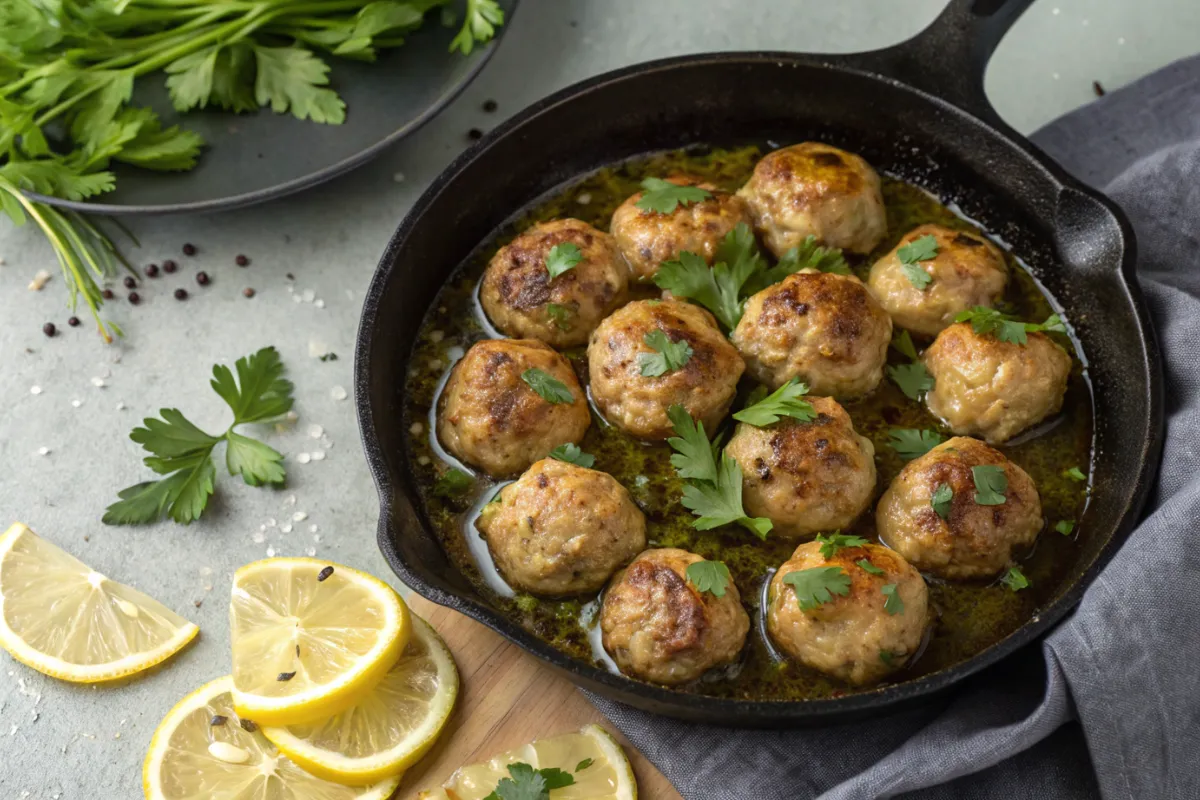
These turkey meatballs with lemon herb sauce are tender, packed with garlic and fresh herbs, and finished in a buttery pan sauce bright enough to wake up the whole table. Weeknight-friendly and endlessly versatile, this is the ground turkey recipe that finally earns its spot in your regular rotation.
This post contains affiliate links. As an Amazon Associate, we earn from qualifying purchases. This means we may earn a small commission if you purchase through our links, at no extra cost to you.
5 Reasons This Will Become Your Weeknight Go-To
- Ready in 35 minutes, start to finish, no marinating, no babysitting
- One skillet, which means the pan sauce builds on the browned meatball bits for incredible flavor
- High protein, lean, and lighter than beef meatballs without sacrificing a drop of satisfaction
- Endlessly versatile: serve over pasta, rice, grain bowls, or stuffed in a pita
- Meal-prep approved: meatballs freeze beautifully and reheat in minutes
How These Turkey Meatballs Found Their Way Into My Kitchen
I’ll be honest with you: for a long time, turkey meatballs were my backup plan. The dish I made when I forgot to thaw beef, when I was trying to eat a little lighter, when I convinced myself I was fine with “pretty good.” They were always fine. Never exciting.
That changed the first time I made a proper pan sauce instead of just spooning something from a jar on top. I seared the meatballs in a cast iron skillet until they had a real crust, pulled them out, and deglazed the pan with a splash of chicken broth and fresh lemon juice. The browned bits lifted right off the bottom and folded into this glossy, bright, herb-studded sauce that smelled like a restaurant kitchen in the south of France. I put the meatballs back in, spooned it all over them, and stood at the stove eating directly from the pan before I even plated anything.
The other thing that transformed this recipe: lemon zest in the meat itself. Not just in the sauce. Zesting a lemon directly into the meatball mixture means every single bite has that citrus lift baked in, not just the parts that get sauced. Combined with parsley, garlic, and a little Parmesan to bind it all together, these meatballs have a flavor that ground turkey simply does not have on its own. I tested this at least a dozen times, tweaking the herb ratios and the sauce balance, and this is the version I keep coming back to.
Ingredients: A Few Notes Before You Start
- Ground turkey (1 lb, 93% lean): The sweet spot is 93% lean. Extra-lean (99%) dries out fast because there’s not enough fat to keep the meatballs juicy as they cook. According to the USDA FoodData Central, a 3-oz serving of 93% lean ground turkey delivers about 22 grams of protein, it’s genuinely nutritious, not just a beef substitute.
- Panko breadcrumbs: Panko is lighter and crispier than regular breadcrumbs, which keeps the interior of the meatball tender rather than dense. Regular breadcrumbs work in a pinch.
- Parmesan cheese (freshly grated): Acts as a binder and adds a quiet salty, umami depth. Pre-grated works but freshly grated melts better into the mix.
- Egg: Your binding agent. Without it, turkey meatballs fall apart. Don’t skip it, and don’t try to substitute a flax egg here.
- Fresh parsley: The workhorse herb in both the meatball and the sauce. Flat-leaf (Italian) parsley has more flavor than curly. Chop it finely so it distributes evenly.
- Lemon (zest + juice): You need both. The zest goes into the meatball mixture for built-in brightness. The juice goes into the sauce for that sharp, clean finish. Use fresh, not bottled.
- Garlic (4 cloves): 2 go into the meatballs, 2 go into the sauce. Fresh garlic only, please. Pre-minced garlic in a jar won’t give you the same punch.
- Butter (unsalted): The base of the lemon herb pan sauce. It creates that silky, restaurant-quality texture as it emulsifies with the lemon juice and broth.
- Chicken broth (low-sodium): Deglazes the pan and builds out the sauce. Low-sodium is important here because the Parmesan and pan fond already carry salt.
- Dried oregano + fresh thyme: Oregano adds a Mediterranean earthiness; thyme brings a subtle floral note. Fresh thyme is ideal but dried thyme (use half the amount) works fine.
How to Make Turkey Meatballs with Lemon Herb Sauce
Step 1: Mix and Shape the Meatballs
In a large bowl, combine the ground turkey, panko, Parmesan, egg, 2 cloves of minced garlic, lemon zest, most of the chopped parsley (save some for finishing), oregano, salt, and pepper. Mix with clean hands just until combined. Overmixing compacts the proteins and toughens the meatballs, so a light touch is everything here.
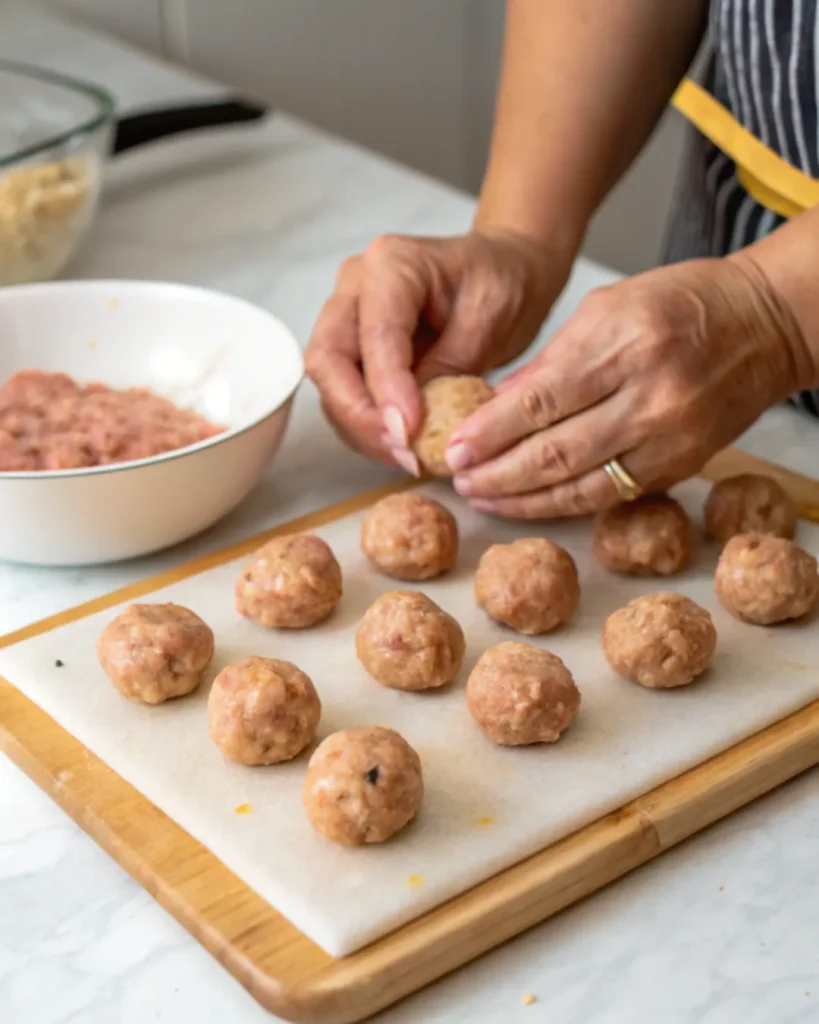
Scoop and roll into golf-ball-sized meatballs, about 1.5 tablespoons of meat each. You should get roughly 18 to 20 meatballs. For perfectly even sizing, a cookie scoop is your best tool. Place the rolled meatballs on a plate, and if you have 15 minutes to chill them in the fridge, do it. A quick rest helps them hold their shape in the pan.
Step 2: Sear the Meatballs
Heat 2 tablespoons of olive oil in a large oven-safe skillet (cast iron is ideal) over medium-high heat. When the oil shimmers, add the meatballs in a single layer, don’t overcrowd. Work in batches if needed. Sear for 3 to 4 minutes per side until deeply golden. You’re not cooking them through yet; you’re building flavor and a crust that the sauce will cling to. The sizzle should be confident and loud.
Remove the meatballs to a plate once browned on all sides.
Step 3: Build the Lemon Herb Sauce
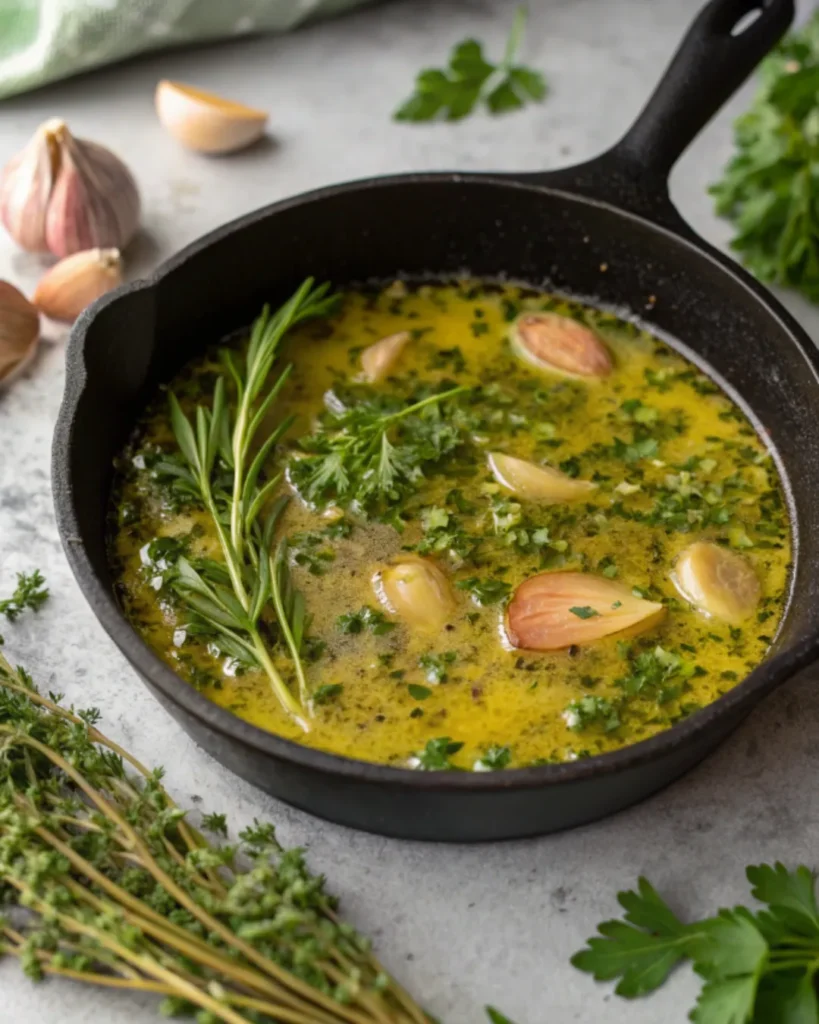
Reduce the heat to medium. Add the butter to the same skillet. Once it melts and foams slightly, add the remaining 2 cloves of garlic and sauté for about 60 seconds until fragrant, don’t let it brown.
Pour in the chicken broth and lemon juice. Use a wooden spoon to scrape up all those browned bits from the bottom of the pan. Let the sauce simmer for 2 to 3 minutes to reduce slightly.
Add the fresh thyme and the remaining parsley. Taste and season with salt and pepper.
Step 4: Finish and Serve
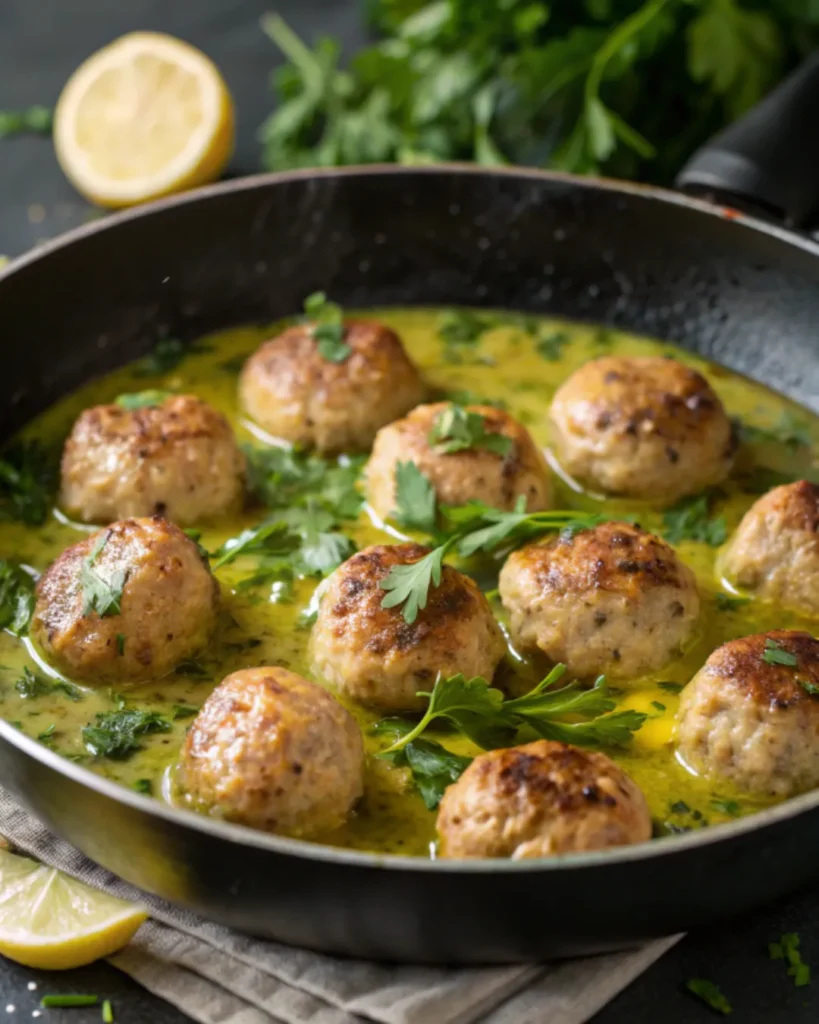
Return the meatballs to the skillet, nestling them into the sauce. Spoon the sauce over the tops. Simmer on low heat, covered, for 8 to 10 minutes until the meatballs are cooked through and reach an internal temperature of 165°F. Remove the lid and let the sauce reduce for another 2 minutes if you want it a little more concentrated.
Finish with a squeeze of extra lemon juice if you like things bright, and scatter the remaining fresh parsley on top. Serve immediately.
Pro Tips for Perfect Turkey Meatballs Every Time
- Don’t skip the lemon zest in the meat. This is the secret weapon. Sauce-only lemon flavor disappears between bites; zest in the meat means every single meatball is bright from the inside out.
- Keep your hands slightly damp when rolling. Turkey is stickier than beef. Wet hands prevent the meat from sticking to your palms and give you smoother, rounder meatballs.
- Don’t move them while they sear. Resist the urge to poke or rotate for at least 3 minutes. The meatball will release naturally from the pan when it has a proper crust. Moving it early tears the crust and the meatball falls apart.
- Taste the sauce before adding the meatballs back. The sauce needs to be well-seasoned on its own because it will carry the flavor of the whole dish. It should taste bright, buttery, and a little bold.
- Use a meat thermometer. Turkey must reach 165°F internally. Cutting one open to check releases the juices and dries it out. A reliable instant-read thermometer saves you every time.
- Grate your own Parmesan. A block of Parmesan grated fresh melts seamlessly into the meat mixture. Pre-shredded Parmesan has anti-caking agents that can leave a slightly grainy texture.
Variations and Substitutions
- Gluten-free: Swap the panko for certified GF breadcrumbs or rolled oats pulsed briefly in a food processor.
- Dairy-free: Leave out the Parmesan and add an extra tablespoon of nutritional yeast for a similar savory depth. Use olive oil in place of butter in the sauce.
- Herb swaps: Parsley is the backbone but the supporting herbs are flexible. Dill, chives, basil, and tarragon all work beautifully here. Rosemary and thyme together is a wonderful earthier direction.
- Ground chicken: Works exactly the same way with the same cook times. Ground chicken is slightly milder than turkey but picks up the lemon and garlic just as well.
- Make it creamy: Stir 2 tablespoons of plain Greek yogurt or heavy cream into the finished sauce for a richer, creamier version that pairs especially well over pasta or orzo.
- Spice it up: Add 0.25 to 0.5 teaspoon of crushed red pepper flakes to the meatball mixture or the sauce for a gentle kick.
What to Serve With Turkey Meatballs with Lemon Herb Sauce
- Over fluffy white rice or farro. Rice soaks up the lemon herb sauce like a dream. Farro adds a nutty chewiness that pairs perfectly with the herbs.
- Tossed with pasta. Linguine, orzo, or egg noodles are all excellent here. Add a splash of extra chicken broth to the sauce to make enough to coat the pasta.
- With stuffed pasta. If you love a complete baked dinner, these meatballs work beautifully alongside the Stuffed Shells Recipe with Meat, a hearty, crowd-pleasing pairing for a larger gathering.
FAQs about Turkey Meatballs with Lemon Herb Sauce
The most common culprits are skipping the egg (your binder), using too little breadcrumb (which absorbs moisture and holds structure), or overworking the mixture (which breaks down the proteins and makes everything mushy). A short chill in the fridge before cooking also helps the meatballs hold their shape in the pan.
Yes. Arrange the meatballs on a greased rack set over a foil-lined baking sheet and bake at 400°F for 18 to 20 minutes. You’ll get less crust and a lighter meatball, but the lemon herb sauce made in a separate saucepan will still be delicious poured on top.
You can, but use about one-third the amount (dried herbs are more concentrated). Fresh parsley makes the biggest difference in this recipe; dried parsley is considerably flatter. If you can only use one fresh herb, let it be the parsley.
Turkey Meatballs with Lemon Herb Sauce Recipe Card

Turkey Meatballs with Lemon Herb Sauce Recipe
4
servings15
minutes20
minutes310
kcalTender, garlic-and-herb-packed turkey meatballs seared in a skillet and finished in a bright, buttery lemon herb pan sauce. Easy enough for a weeknight, impressive enough for company.
Keep the screen of your device on
Ingredients
- For the Meatballs:
1 lb ground turkey (93% lean)
0.33 cup panko breadcrumbs
0.25 cup freshly grated Parmesan cheese
1 large egg
2 cloves garlic, finely minced
1 lemon, zested (about 1 tsp zest)
0.25 cup fresh flat-leaf parsley, finely chopped (divided)
0.5 tsp dried oregano
0.5 tsp kosher salt
0.25 tsp black pepper
2 tbsp olive oil (for searing)
- For the Lemon Herb Sauce:
3 tbsp unsalted butter
2 cloves garlic, finely minced
0.5 cup low-sodium chicken broth
3 tbsp fresh lemon juice (about 1 large lemon)
1 tsp fresh thyme leaves (or 0.33 tsp dried)
2 tbsp fresh flat-leaf parsley, finely chopped
Salt and black pepper to taste
Directions
- Combine ground turkey, panko, Parmesan, egg, 2 cloves minced garlic, lemon zest, 3 tablespoons of the parsley, oregano, salt, and pepper in a large bowl. Mix gently with your hands just until combined. Do not overmix.
- Scoop and roll the mixture into 18 to 20 equal-sized meatballs (about 1.5 tablespoons each). For evenly sized meatballs, use a cookie scoop. Optional: refrigerate for 15 minutes to help them hold their shape.
- Heat olive oil in a large oven-safe skillet (preferably cast iron) over medium-high heat. Add meatballs in a single layer without crowding. Sear 3 to 4 minutes per side until golden brown all over (work in batches if needed). Remove to a plate.
- Reduce heat to medium. Add butter to the same skillet. Once melted, add remaining 2 cloves of garlic and cook 60 seconds until fragrant.
- Pour in chicken broth and lemon juice. Scrape up all the browned bits from the bottom of the pan with a wooden spoon. Simmer 2 to 3 minutes to reduce slightly. Add thyme and remaining parsley. Season with salt and pepper.
- Return meatballs to the skillet, spooning sauce over them. Cover and simmer on low heat for 8 to 10 minutes, until meatballs reach an internal temperature of 165°F. Uncover and simmer 2 more minutes to concentrate sauce.
- Finish with a squeeze of extra lemon juice if desired. Garnish with remaining fresh parsley. Serve immediately.
Equipment
- 12-inch cast iron skilletBUY NOW!
Notes
- Storage: Refrigerate in an airtight container for up to 4 days. Freeze cooked meatballs (without sauce) for up to 3 months.
- Herb swaps: Dill, chives, basil, or tarragon all work well in place of parsley. If using rosemary, use only 0.25 tsp, it’s potent.
- Gluten-free option: Use certified GF breadcrumbs in place of panko.
Nutrition Facts
- Fat: 20g
- Saturated Fat: 7g
- Cholesterol: 125mg
- Sodium: 420mg
- Carbohydrates: 8g
- Protein: 28g
Did you make this recipe?
Tag @therecipemasterblog on Instagram and hashtag it with #therecipemaster
Like this recipe?
Follow @therecipemasterblog on Pinterest
Follow us on Facebook!
Follow The Recipe Master on Facebook
Closing
I hope these turkey meatballs with lemon herb sauce become as permanent a fixture in your kitchen as they are in mine. There’s something really satisfying about turning a pound of ground turkey into something this flavorful, and the skillet sauce is one of those little kitchen moves that completely changes what weeknight cooking can taste like. If you make them, I’d love to hear what you think, drop a comment below, leave a star rating, or tag me on Instagram with your bowl. Happy cooking!









Leave a Reply