
- Slow simmering lets split peas naturally break down, creating a velvety, creamy texture without cream or roux.
- Use a smoked ham hock or vegetarian smoked spices for deep savory flavor and rich mouthfeel.
- Prep matters: sauté the mirepoix, rinse peas, avoid salting early, and simmer low and slow for best results.
I can still vividly recall the fog on the kitchen windows when my mother made her famous soup. There is nothing quite like a steaming bowl of this split pea soup recipe to cure the winter blues. It is the culinary equivalent of a weighted blanket, heavy, warm, and incredibly soothing. While many people associate pea soup with the bland, watery versions from a cafeteria, this recipe is a revelation of texture and depth.
This dish fits perfectly into the category of healthy comfort food. It is robust enough to serve as a standalone dinner with a slice of crusty bread, yet simple enough for meal-prepping a week of lunches. Whether you have a leftover holiday ham bone or just a craving for something earthy, this split pea soup recipe transforms humble dried legumes into a velvety masterpiece.
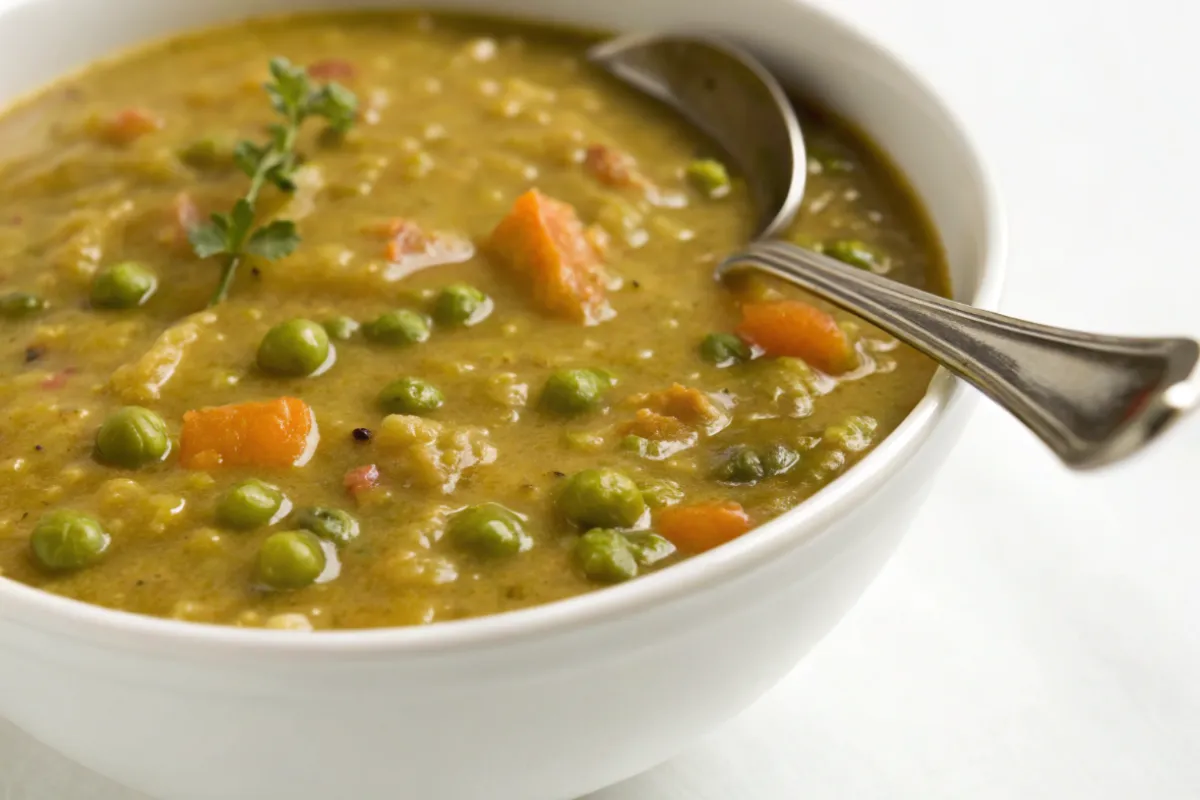
Table of contents
Getting Ready to Simmer
While this split pea soup recipe is largely hands-off during the simmering phase, a little prep ensures a smooth process. Here is how to organize your kitchen:
- Measure Spices: Have your thyme and bay leaves ready so you aren’t digging through the cabinet while the onions sauté.
- Sort and Rinse: Pour your dry peas onto a baking sheet to check for small stones or debris, then rinse them thoroughly in a colander until the water runs clear.
- Chop the Mirepoix: Dice your onions, carrots, and celery into uniform pieces. This ensures they cook evenly and provide the perfect texture in every bite.
- Thaw the Bone: If your ham bone has been sitting in the freezer since Christmas, move it to the fridge 24 hours before cooking.
Split Pea Soup Recipe Card
Split Pea Soup Recipe
6
servings15
minutes1
hour30
minutes320
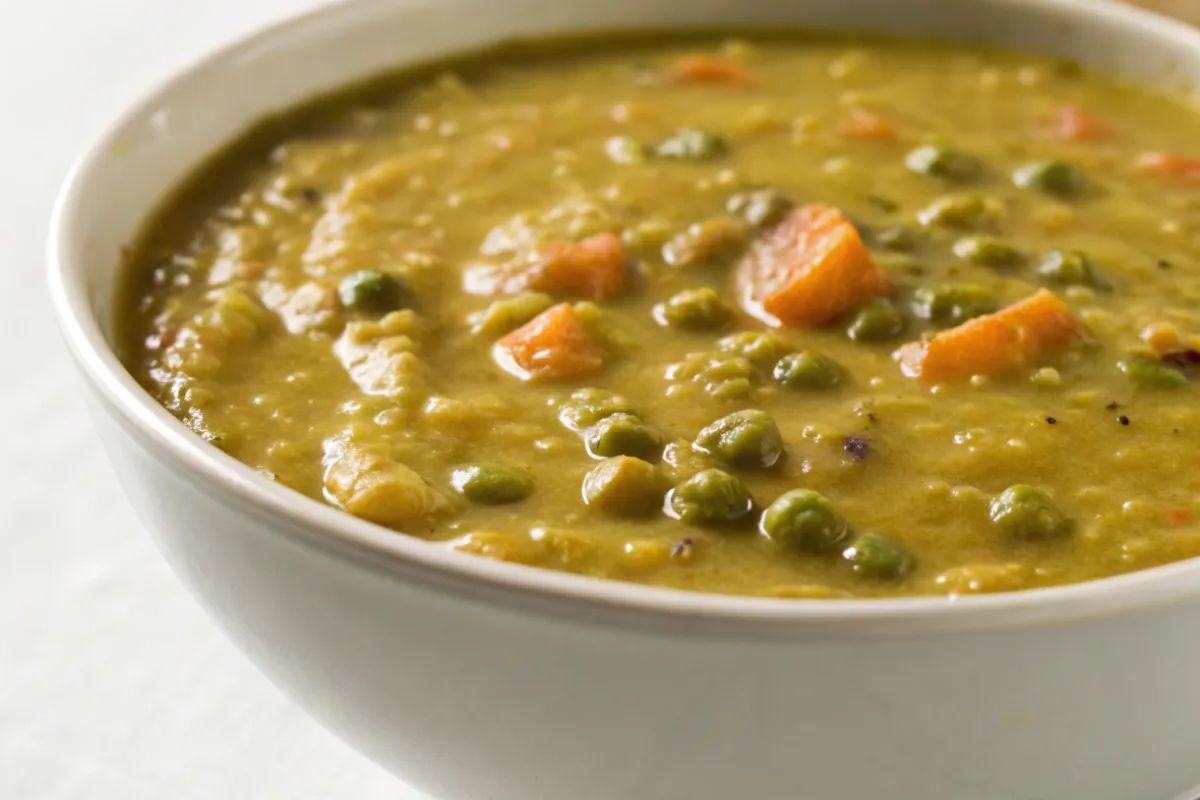
kcalThis authentic split pea soup recipe combines tender dried peas, a smoky ham hock, and fresh vegetables. It simmers slowly to create a thick, hearty, and nutritious meal perfect for cold days.
Keep the screen of your device on
Ingredients
1.0 lb Dried Green Split Peas
1.0 large Meaty Ham Hock (or leftover ham bone)
6.0 cups Chicken Stock (low sodium)
2.0 cups Water
2.0 tablespoons Unsalted Butter or Olive Oil
1.0 large Yellow Onion, chopped
3.0 stalks Celery, diced
3.0 large Carrots, diced
2.0 cloves Garlic, minced
1.0 teaspoon Dried Thyme
2.0 Dried Bay Leaves
Salt and Black Pepper to taste
Fresh Parsley for garnish
Directions
- Start by placing your dried split peas in a colander. Rinse them under cold water until the water runs clear. Pick out any shriveled peas or small stones. Set them aside.
- In a large Dutch oven or heavy-bottomed soup pot, melt the butter over medium heat. Add the chopped onion, celery, and carrots. Sauté them for about 8.0 minutes until the onions are translucent and soft. Add the minced garlic and cook for another minute until fragrant.
- Add the dried thyme and the rinsed split peas to the pot. Stir well to coat the peas in the butter and veggie mixture. Place the ham hock (or bone) into the center of the pot.
- Pour in the chicken stock and water. Add the bay leaves. Increase the heat to bring the mixture to a boil. Once boiling, reduce the heat to low, cover the pot with a lid slightly ajar, and let it simmer.
- Cook for 60.0 to 90.0 minutes. Stir occasionally to prevent the peas from sticking to the bottom. The soup is done when the peas have completely broken down and the soup is thick and creamy.
- Remove the pot from the heat. Carefully take out the ham hock. Remove the meat from the bone, chop it into bite-sized pieces, and return the meat to the soup. Discard the bone and the bay leaves. Taste and season with salt and pepper. Serve hot.
Notes
- Texture Control: If the soup is too thick for your liking, add a splash of water or stock. It thickens significantly as it cools.
- Leftovers: This soup tastes even better the next day. Reheat gently on the stove.
- Ham Alternative: If you don’t have a hock, you can use diced ham steak or bacon, but add it towards the end of cooking.
Nutrition Facts
- Fat: 6g
- Sodium: 680mg
- Carbohydrates: 45g
- Protein: 24g
Did you make this recipe?
Tag @therecipemasterblog on Instagram and hashtag it with #therecipemaster
Like this recipe?
Follow @therecipemasterblog on Pinterest
Follow us on Facebook!
Follow The Recipe Master on Facebook
The Flavor Foundation
The magic of this split pea soup recipe lies in the natural breakdown of the peas. Unlike other soups that require heavy cream or flour roux to thicken, split peas dissolve as they simmer, creating a naturally luxurious, velvety texture. We also utilize a smoked ham hock (or a leftover ham bone). The collagen from the bone melts into the broth, giving it a mouthfeel that stock alone cannot achieve.
Furthermore, this recipe is highly adaptable. If you are vegetarian, you can swap the ham for a dash of liquid smoke and smoked paprika to mimic that savory depth. Customization is easy here; add potatoes for more bulk or spinach at the end for fresh color. For a deeper understanding of why legumes are such a nutritional powerhouse, you can read about the health benefits of pulses. This balance of nutrition and rich flavor is why this specific formula is a winner.
The Soup Chef’s Guide
I have made gallons of soup in professional kitchens, and these are my non-negotiable rules for the best split pea soup recipe:
- Don’t Salt Early: Legumes can stay tough if salted too early in the cooking process. Wait until the peas are tender before doing your final seasoning, especially since the ham adds significant saltiness.
- Sauté the Veggies: Never just dump raw vegetables into the water. Sautéing the mirepoix (onions, carrots, celery) in butter or oil first builds a flavor base called “fond” on the bottom of the pot.
- Low and Slow: High heat destroys the flavor profile. A gentle simmer allows the peas to break down gradually without scorching the bottom of the pot.
- The Ham Hock Hack: Score the skin of the ham hock before adding it. This helps release more fat and flavor into the broth.
For more on the science of cooking dried legumes, check out this guide on cooking beans and peas.
Flavor Variants and Twists
The Vegetarian Smokehouse Variant
To make a plant-based version of this split pea soup recipe, omit the ham hock. instead, use a high-quality vegetable stock. The secret weapon here is smoked paprika (pimentón) and a teaspoon of liquid smoke. Sauté the vegetables in olive oil and add 1.0 teaspoon of smoked paprika with the garlic. The result is a soup that retains that classic campfire flavor without the meat.
The Golden Curry Twist
For a completely different profile, use yellow split peas instead of green. They are slightly milder and earthier. Add 1.0 tablespoon of curry powder and 1.0 teaspoon of turmeric when sautéing the onions. Finish the soup with a splash of coconut milk instead of dairy. This variant is vibrant, warming, and pairs beautifully with naan bread.
This soup begs to be dipped. Try pairing it with my Rustic Sourdough Focaccia for the ultimate winter meal.
The Split Pea Soup Recipe Q&A
No, unlike other dried beans, split peas do not need to be soaked. Because they are smaller and “split,” they cook relatively quickly. Rinsing them is sufficient for this split pea soup recipe.
The beauty of this recipe is that it thickens itself. As the peas simmer, they break down into a puree. If yours is too thin, simmer it uncovered for another 15 minutes to reduce the liquid.
If your peas are still hard after an hour, they might be old, or the water might be too hard. Also, adding acid (like lemon juice or tomatoes) too early can prevent them from softening. Keep simmering; they will eventually soften.
Green split peas are sweeter and less starchy, making them perfect for this split pea soup recipe. Yellow split peas have a milder, earthier flavor and are more commonly used in Indian dals or curries.
The Comfort Food You Need
I hope this split pea soup recipe becomes a staple in your winter rotation. It serves as a reminder that the best food doesn’t have to be complicated or expensive. With just a few humble ingredients and a little patience, you can create a meal that warms the soul.







Leave a Reply