
- Balance is everything: start with 1.5 teaspoons rose water in the batter, taste, and adjust for potency.
- Use cake flour for a pillowy texture or substitute AP flour plus cornstarch; weigh flour or spoon and level to avoid density.
- Room temperature butter and eggs are nonnegotiable; cream butter and sugar until pale and fluffy to build air and lightness.
- Sift powdered sugar, start frosting with 1 teaspoon rose water, add heavy cream and a pinch of salt, chill if too soft.
- Fill liners two thirds full, bake at 350°F for 18 to 22 minutes, cool completely before piping roses and garnishing.
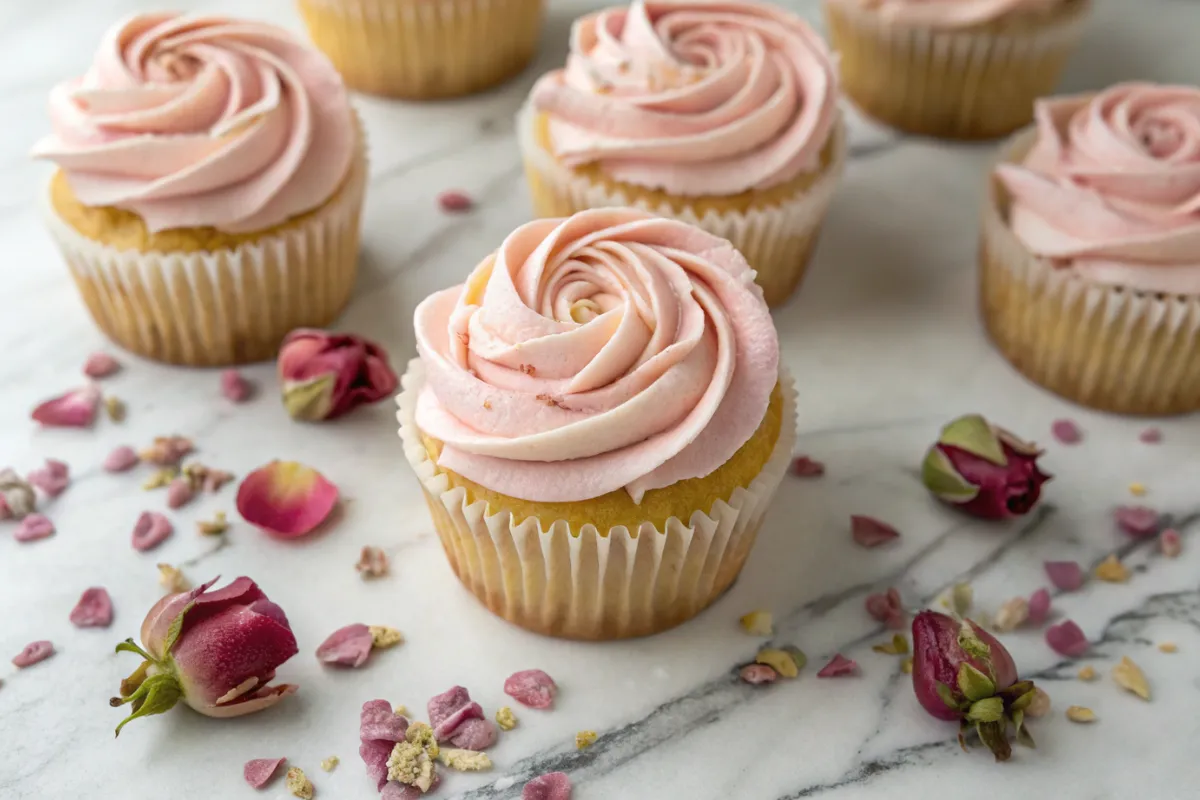
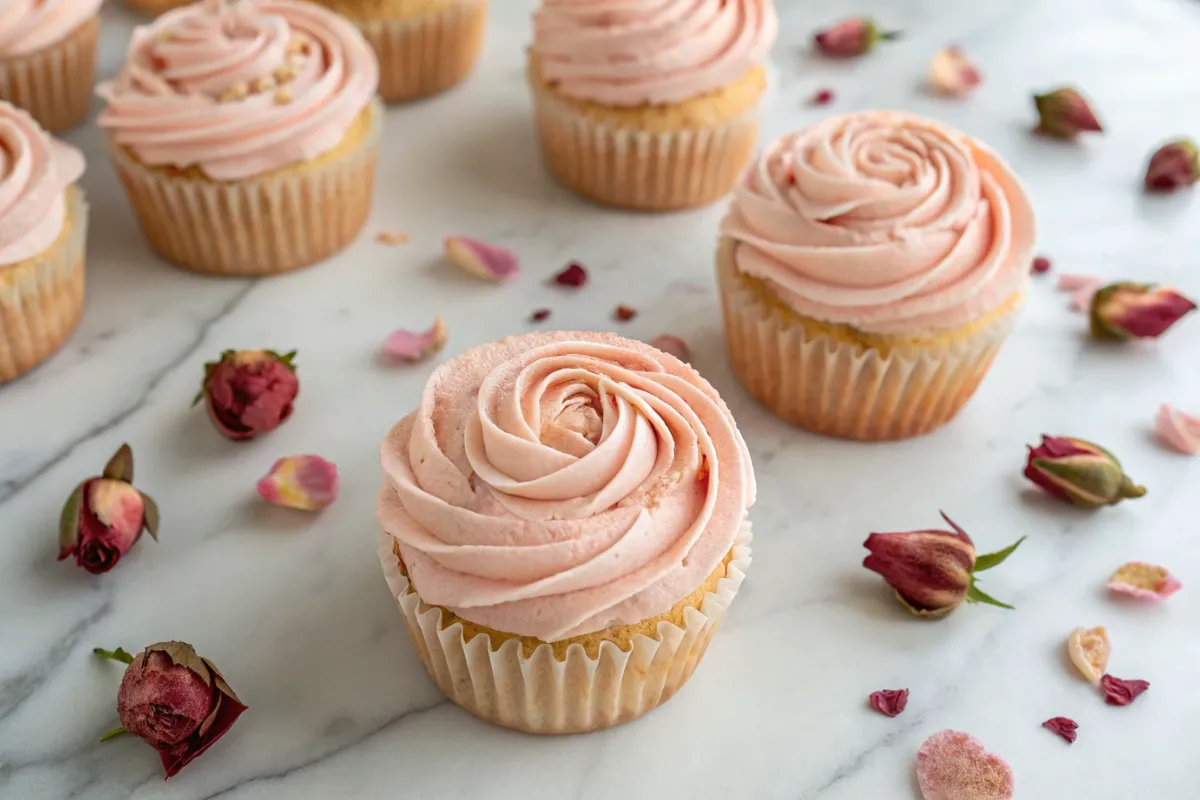
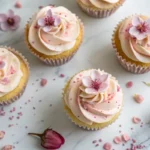
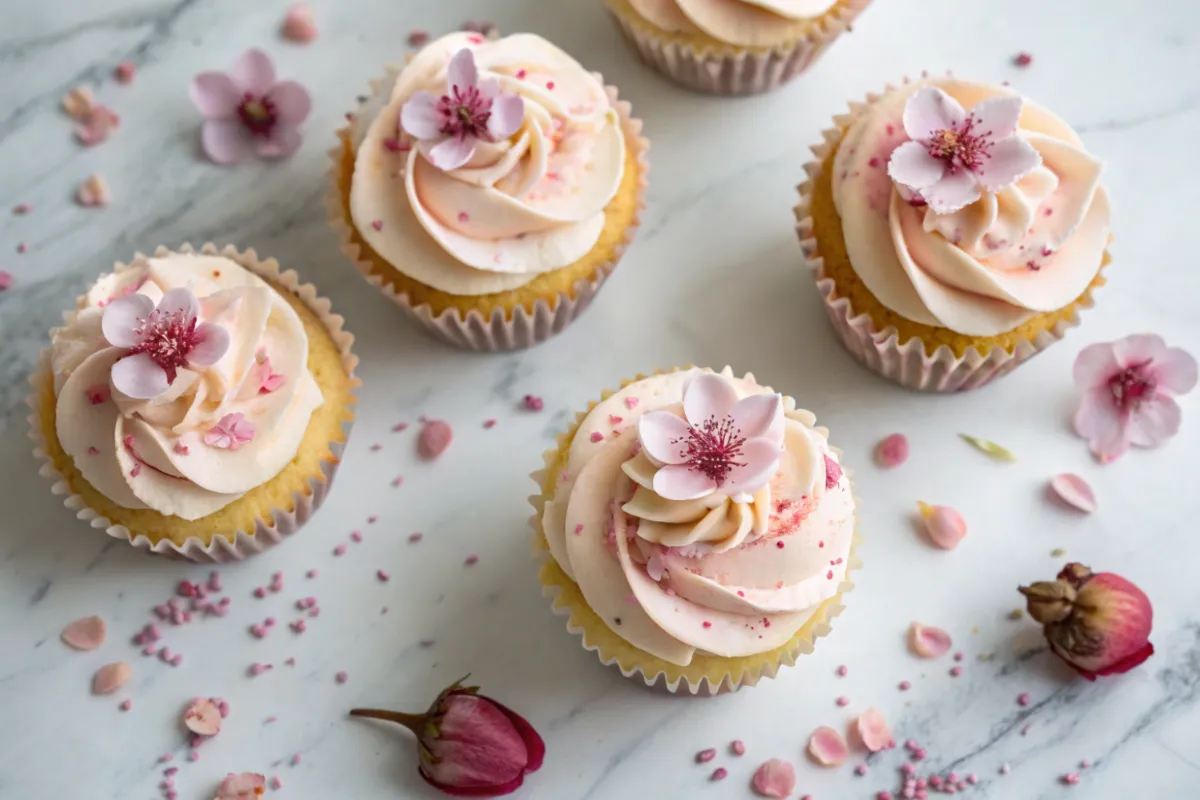
These rose vanilla cupcakes are the most beautiful thing you can pull out of your oven: a tender, buttery vanilla base infused with the softest hint of rose water, crowned with a cloud of blush pink rosewater buttercream. They are perfect for bridal showers, Valentine’s Day, spring birthdays, or any day that deserves a little magic.
This post contains affiliate links. As an Amazon Associate, we earn from qualifying purchases. This means we may earn a small commission if you purchase through our links, at no extra cost to you.
The Story Behind These Rose Vanilla Cupcakes
I’ll be honest: rose water intimidated me for a long time.
The first time I baked with it, I was heavy-handed and my cupcakes smelled like something from a perfume counter. I served them anyway and smiled politely while everyone took one polite bite and set them down. It was a lesson I only needed to learn once.
The second time around, I used less than half the amount, and something clicked. The rose was there, warm and floral and unmistakably romantic, but it was playing background music to the vanilla rather than drowning it out. That balance is everything in this recipe, and once you find it, you’ll understand why rose and vanilla are one of the great flavor pairings in baking.
These cupcakes have become my go-to for every spring celebration. I’ve made them for three bridal showers, two baby showers, and more Valentine’s Day dinners than I can count. Every single time, someone asks for the recipe before they’ve finished their first cupcake.
Ingredients Breakdown
Here’s what you need, and why each ingredient matters:
Cake flour: The secret to that pillowy, fine-crumbed texture. Cake flour has less protein than all-purpose, which means less gluten development and a more delicate, melt-in-your-mouth bite. If you don’t have it, you can substitute: for every 1 cup of cake flour, use 0.75 cup plus 2 tablespoons of all-purpose flour mixed with 2 tablespoons of cornstarch.
Unsalted butter: Use it at room temperature, genuinely room temperature, not fridge-cold and not melted. It should leave a slight indent when you press it with your finger. This is the single biggest factor in whether your batter creams properly.
Whole milk: The fat content in whole milk keeps these cupcakes moist. You can swap in buttermilk for a slightly tangier crumb, which actually plays beautifully against the floral notes.
Rose water: This is where the magic lives, and where things can go wrong. Start with 1.5 teaspoons in the batter. Different brands vary wildly in potency (Nielsen-Massey and Cortas are reliably balanced), so taste your batter and trust your nose. If it smells like flowers, you’re in the right zone. If it smells like a spa, pull back. Rose water is a common ingredient in Middle Eastern and Persian cuisine, and a little truly does go a long way.
Pure vanilla extract: Use good quality here. The vanilla and rose are equal partners in this recipe. Vanilla bean paste works beautifully in the frosting if you want those gorgeous little flecks.
Powdered sugar: Sift it. Always sift it. Lumps in your buttercream will clog your piping tip and ruin your roses, and you will be sad.
Pink food coloring or beet powder: For that signature blush. Gel food coloring gives a more vivid result than liquid. Beet powder is a gorgeous natural option that produces a warm, dusty pink.
For exact quantities, see the recipe card below.
How to Make Rose Vanilla Cupcakes: Step by Step
Step 1: Prep Your Pan and Preheat
Preheat your oven to 350°F (175°C). Line a standard 12-cup muffin tin with cupcake liners. This is also a great moment to pull your butter and eggs out of the fridge if you haven’t already, because room temperature ingredients are non-negotiable in cupcake baking. Cold butter will not cream properly, and cold eggs can cause the batter to curdle.
Step 2: Cream the Butter and Sugar
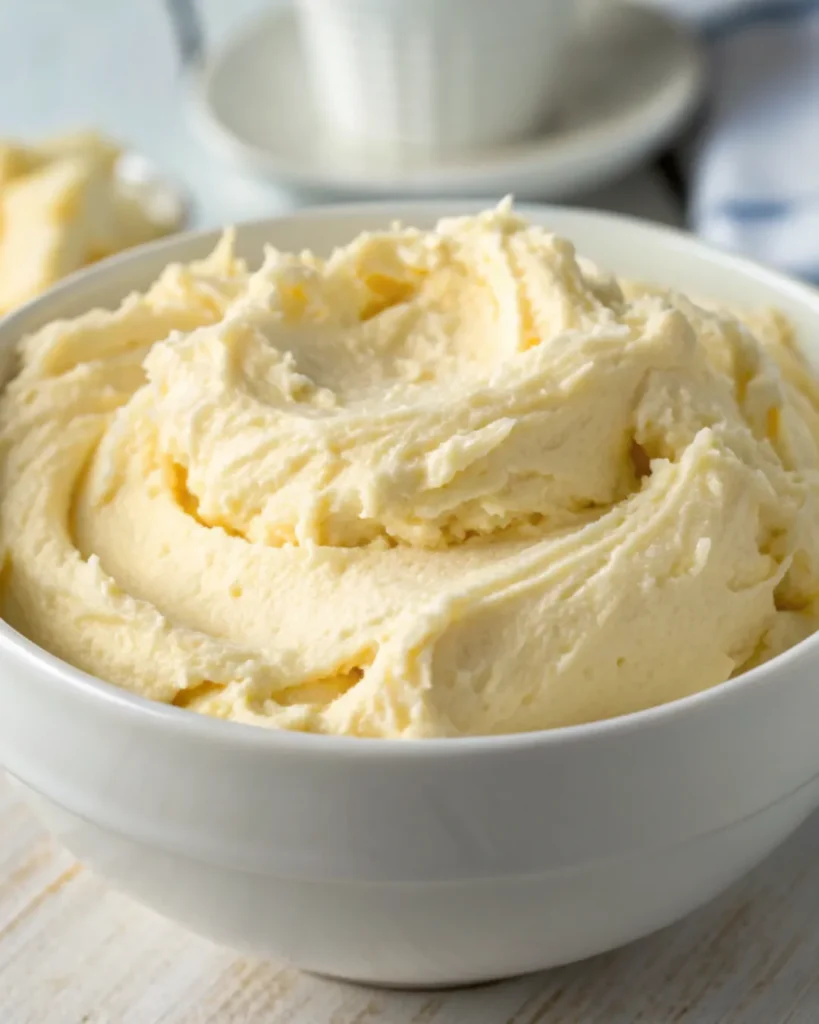
In a large mixing bowl, beat the room temperature butter and granulated sugar together on medium-high speed for 3 to 4 minutes, until the mixture is noticeably pale, fluffy, and almost doubled in volume. This step is building the air structure of your cupcakes, so don’t rush it. The mixture should look light and almost cloud-like when it’s ready.
Step 3: Add Eggs, Rose Water, and Vanilla
Add the eggs one at a time, mixing well between each addition and scraping down the sides of the bowl. Then mix in the rose water and vanilla extract. The batter may look slightly curdled at this point, which is perfectly normal. It will come together once the flour goes in.
Step 4: Add the Dry Ingredients and Milk
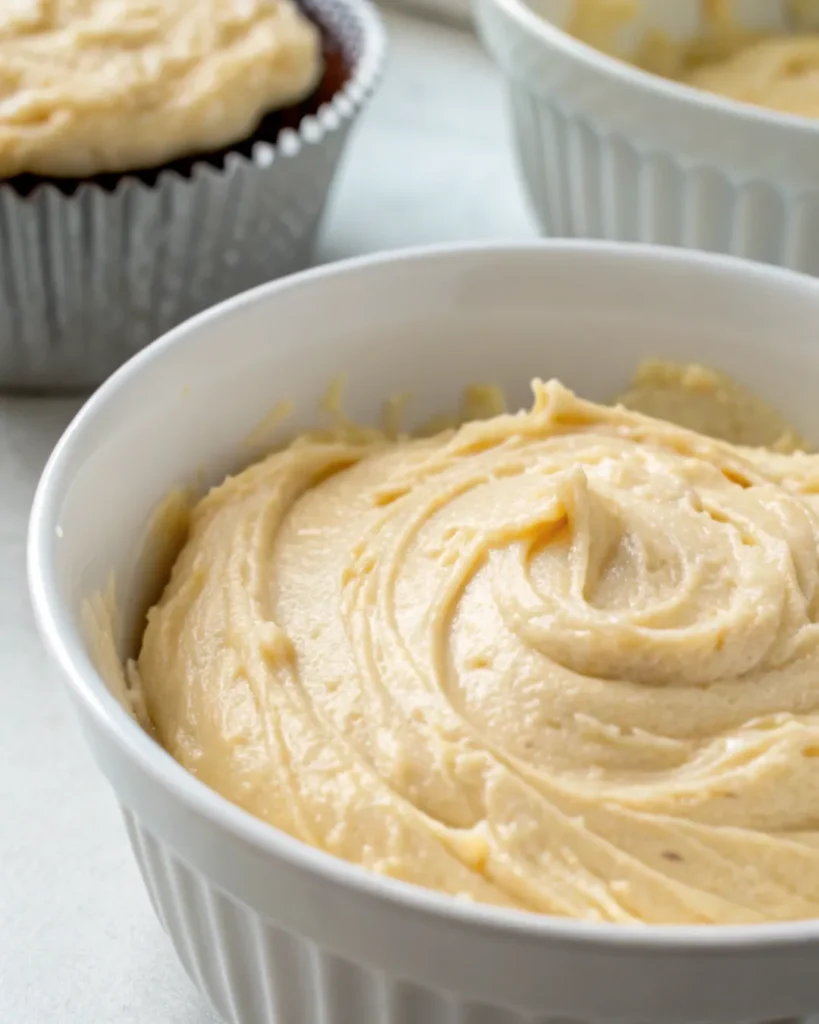
In a separate small bowl, whisk together the cake flour, baking powder, and salt. With your mixer on low, alternate adding the flour mixture and the whole milk to the butter mixture, starting and ending with the flour. Add in 3 additions of flour and 2 of milk. Mix just until combined, overmixing develops gluten and produces dense, rubbery cupcakes.
Step 5: Fill the Liners and Bake
Fill each cupcake liner about 0.67 of the way full. An ice cream scoop makes this fast, tidy, and consistent. Bake at 350°F for 18 to 22 minutes, until the tops spring back when lightly pressed and a toothpick inserted in the center comes out clean. Do not overbake: a cupcake that’s one minute past done is a dry cupcake.
Let them cool in the pan for 5 minutes, then transfer to a wire rack and cool completely before frosting. Completely. Frosting warm cupcakes is a one-way ticket to a melted, sad-looking mess.
Step 6: Make the Rosewater Buttercream
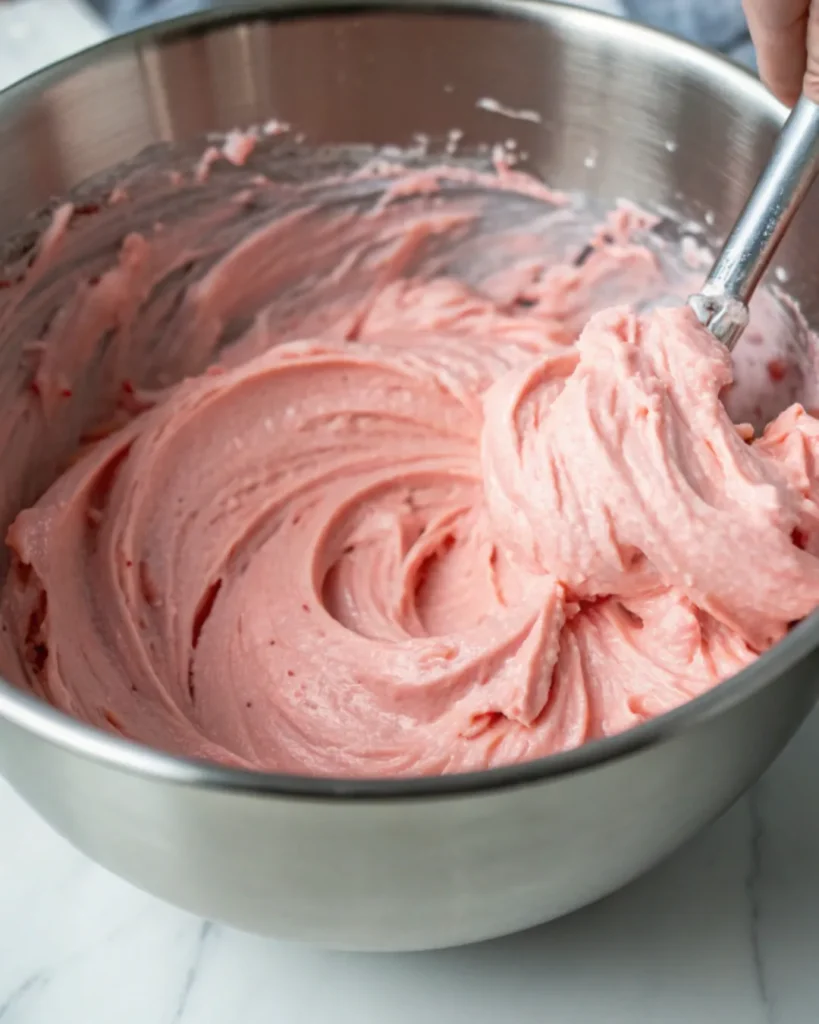
Beat the room temperature unsalted butter on medium-high speed for 2 full minutes until it’s pale and fluffy. Add sifted powdered sugar 0.5 cup at a time, mixing on low after each addition. Then, the rose water (start with 1 teaspoon, taste, and add more if you like), vanilla extract, and a tiny pinch of salt. And 2 tablespoons of heavy cream for a silkier consistency. Mix on high for 1 to 2 minutes until light and fluffy. Add pink gel food coloring a tiny drop at a time until you hit your ideal blush.
Step 7: Pipe Those Roses
Transfer the buttercream to a piping bag fitted with a large petal tip or a large closed star tip. Starting from the center of the cupcake, pipe in a slow circular motion outward, squeezing firmly and consistently. Finish by releasing pressure and pulling away at the edge. A quick tutorial video on piping roses is genuinely worth 3 minutes of your time before your first attempt.
Garnish with dried edible rose petals for that final, show-stopping touch.
Pro Tips for Perfect Rose Vanilla Cupcakes
- Use a kitchen scale for the flour. Scooping flour from the bag compresses it, and you can end up with 20 to 30% more flour than the recipe calls for. That’s the most common reason homemade cupcakes turn out dense. Spoon the flour into the measuring cup and level it off, or weigh it.
- Chill your buttercream before piping if it’s too soft. If your kitchen is warm and the frosting is sliding off the spatula, pop it in the fridge for 15 minutes. Cold buttercream holds its shape far better during piping.
- Don’t skip the salt in the buttercream. Just a pinch. It sharpens all the other flavors, cuts through the sweetness, and makes the rose come forward rather than disappearing into the sugar.
- Room temperature means room temperature. For both butter and eggs. This is one of those baking rules that seems fussy until the day you ignore it and your batter splits. Set them out 1 hour before you start. Rose water is also a delicate flavor that behaves differently in warm versus cold batter: always add it to room temperature ingredients for the most even distribution.
- Test your rose water before baking. Put 0.25 teaspoon in a small glass of milk, stir, and taste. That rough approximation will tell you exactly how potent your brand is and save you from any unpleasant surprises in the finished cupcake.
Variations and Substitutions
Make it dairy-free: Swap the butter for a good vegan butter (Miyoko’s is excellent), the whole milk for full-fat oat milk or coconut milk, and the heavy cream in the frosting for canned coconut cream. The rose water flavor actually shines even more in a dairy-free version.
Make it gluten-free: Use a 1:1 gluten-free all-purpose flour blend from Bob’s Red Mill or King Arthur. The texture will be slightly denser but still delicious. Do not substitute with almond or coconut flour, as these will not work with this ratio.
No rose water? No problem: Orange blossom water is a beautiful, slightly more citrusy substitute at the same quantity. It produces a completely different but equally floral result.
Cream cheese frosting option: Swap half the butter in the frosting for full-fat cream cheese. The slight tang cuts through the sweetness and pairs incredibly well with the floral notes.
Other floral or romantic baked treats: If you love the rose-and-vanilla combination, you’ll adore these Valentine Cupcakes with rose water buttercream from The Recipe Master, which use a chocolate base against the floral frosting for a beautiful contrast. For a quick, no-fuss companion dessert, this lemon cream cheese dump cake offers a bright citrus note that balances the sweetness of the cupcakes beautifully.
Make-Ahead, Storage, and Reheating
- Make-ahead: The unfrosted cupcakes can be baked up to 2 days in advance and stored in an airtight container at room temperature. The buttercream can be made up to 3 days ahead and stored in the fridge in a sealed container. Bring it to room temperature and re-whip for 1 to 2 minutes before piping.
- Refrigerator: Frosted cupcakes keep well in an airtight container in the fridge for up to 4 days. Always bring them back to room temperature before serving, about 30 to 45 minutes on the counter. Cold buttercream is dense and loses that airy, melting quality that makes it wonderful.
- Freezer: Unfrosted cupcakes freeze beautifully for up to 2 months. Wrap each one individually in plastic wrap and store in a zip-top freezer bag. Thaw at room temperature for about 1 hour before frosting. Do not freeze frosted cupcakes, as the buttercream texture changes on thawing.
- Reheating: Not recommended for frosted cupcakes. For unfrosted, a quick 10 seconds in the microwave restores that just-baked warmth beautifully.
Rose Vanilla Cupcakes Recipe Card
Rose Vanilla Cupcakes Recipe
12
servings20
minutes20
minutes385
kcalSoft, moist vanilla cupcakes with a delicate floral rose water note, topped with silky blush pink rosewater buttercream. The perfect rose vanilla cupcakes recipe for spring celebrations, bridal showers, and Valentine’s Day.
Keep the screen of your device on
Ingredients
- For the Cupcakes:
1.5 cups (180 g) cake flour, spooned and leveled
1.5 tsp baking powder
0.25 tsp fine salt
0.5 cup (113 g) unsalted butter, room temperature
0.75 cup (150 g) granulated sugar
2 large eggs, room temperature
1.5 tsp rose water
1.5 tsp pure vanilla extract
0.5 cup (120 ml) whole milk, room temperature
- For the Rosewater Buttercream:
1 cup (226 g) unsalted butter, room temperature
3 cups (360 g) powdered sugar, sifted
1.0 tsp rose water (plus more to taste)
1.0 tsp pure vanilla extract
2.0 tbsp heavy cream
0.125 tsp fine salt
Pink gel food coloring (a few drops)
- For Garnish:
Dried edible rose petals
Directions
- Preheat oven to 350°F (175°C). Line a 12-cup muffin tin with paper cupcake liners.
- In a medium bowl, whisk together the cake flour, baking powder, and salt. Set aside.
- In a large bowl, beat the room temperature butter and granulated sugar on medium-high speed for 3 to 4 minutes until pale, fluffy, and almost doubled in volume.
- Add the eggs one at a time, beating well after each addition. Mix in the rose water and vanilla extract.
- With the mixer on low, add the flour mixture in 3 additions, alternating with the milk in 2 additions, beginning and ending with the flour. Mix until just combined. Do not overmix.
- Fill each liner 0.67 full using an ice cream scoop for consistency.
- Bake for 18 to 22 minutes, until a toothpick inserted in the center comes out clean and the tops spring back when lightly touched.
- Cool in the pan for 5 minutes, then transfer to a wire rack. Cool completely before frosting.
- Make the buttercream: Beat the room temperature butter on medium-high for 2 minutes until pale and fluffy.
- Add the sifted powdered sugar 0.5 cup at a time on low speed. Then add the rose water, vanilla, heavy cream, and salt. Beat on high for 1 to 2 minutes until light and airy. Add pink gel coloring a drop at a time until you reach your desired blush shade.
- Transfer buttercream to a piping bag fitted with a large petal tip (Wilton #126) or star tip (1M). Pipe in a circular motion from the center outward to create a rose swirl.
- Garnish with dried edible rose petals and serve at room temperature.
Notes
- Storage: Unfrosted cupcakes keep at room temperature in an airtight container for 2 days. Frosted cupcakes keep in the fridge for up to 4 days. Bring to room temperature 30 to 45 minutes before serving.
- Rose water brands: Nielsen-Massey and Cortas are reliably balanced. Start with the stated amount and adjust to taste in the buttercream.
- Equipment: A piping bag and large petal tip (Wilton #126) or star tip (Wilton 1M) will give you the most beautiful rose swirl results.
Nutrition Facts
- Fat: 21g
- Sodium: 115mg
- Carbohydrates: 48g
- Sugar: 37g
- Protein: 3g
Did you make this recipe?
Tag @therecipemasterblog on Instagram and hashtag it with #therecipemaster
Like this recipe?
Follow @therecipemasterblog on Pinterest
Follow us on Facebook!
Follow The Recipe Master on Facebook
FAQs about Rose Vanilla Cupcakes
Yes, but use it very sparingly. Rose extract is significantly more concentrated than rose water. Start with just 0.25 teaspoon in the batter and 0.125 teaspoon in the frosting, taste as you go, and resist the urge to add more. Over-extracting rose is the most common mistake with these cupcakes.
The most likely culprits: opening the oven door too early (before the 15-minute mark), overfilling the liners, or underbaking. Make sure your oven is fully preheated to 350°F, fill liners only 0.67 full, and use the toothpick test before removing them. The toothpick should come out clean or with just a few moist crumbs, not wet batter.
Add a pinch more salt and a splash more heavy cream. Both cut perceived sweetness dramatically. You can also add a teaspoon of fresh lemon juice, which brightens the whole frosting without adding any lemon flavor.
Whether you’re baking these for a spring brunch, a birthday dessert spread, or simply because a Tuesday deserves something beautiful, these rose vanilla cupcakes will not let you down. The recipe is forgiving, the flavor is extraordinary, and the blush pink frosting practically photographs itself. If you make them, drop a comment below and let me know how they turned out. Happy baking!


Leave a Reply