

This popcorn balls recipe makes sweet, crunchy treats that hold their shape without falling apart. The corn syrup and butter mixture coats every kernel evenly and sets firm enough to handle but stays chewy inside.
The recipe takes 30 minutes start to finish and yields 12 popcorn balls. The key is heating the syrup to exactly 250°F so the coating hardens without turning brittle. Shaped balls keep for 3 days at room temperature wrapped individually in plastic wrap.
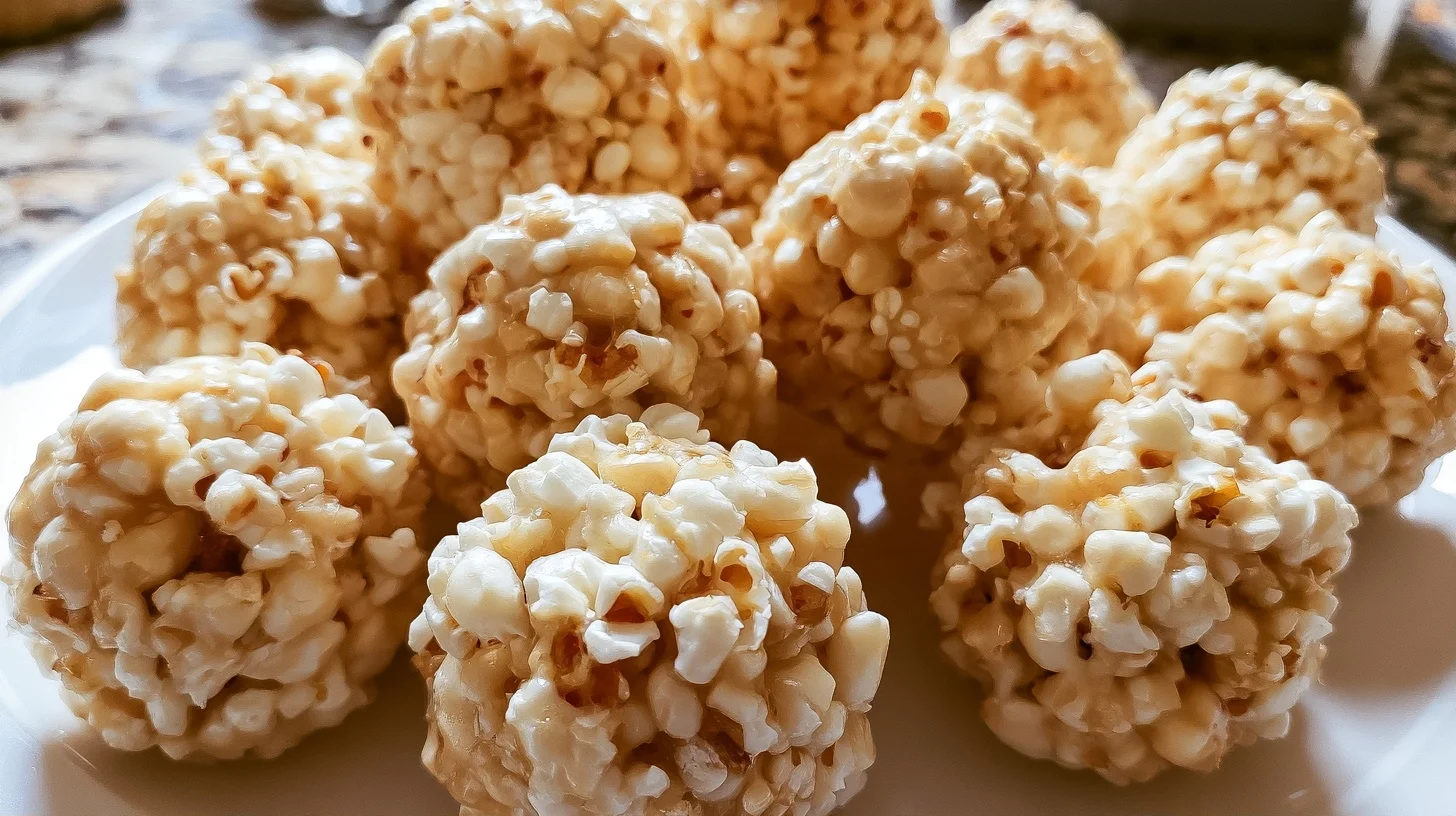
Table of contents
Why This Popcorn Balls Recipe Works
- Cooking the syrup to 250°F creates a hard ball stage that sets firm without crystallizing.
- Butter added at the end keeps the popcorn recipe coating smooth and prevents it from seizing.
- Working with greased hands lets you shape the balls quickly before the mixture cools and hardens.
Old Fashioned Popcorn Balls Recipe
Popcorn Balls Recipe
12
servings10
minutes10
minutes165
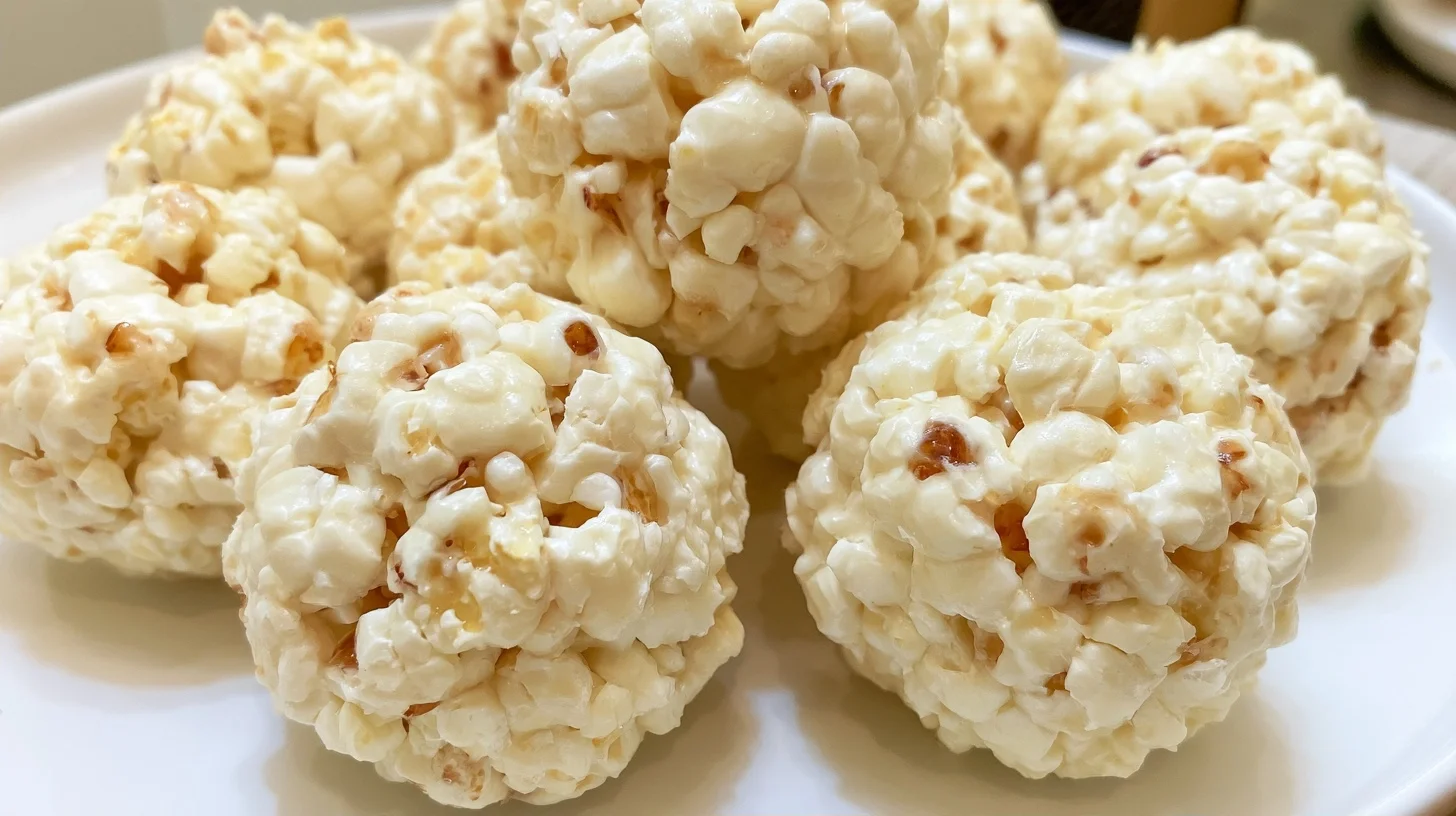
kcalThis popcorn balls recipe makes sweet crunchy treats with a firm coating that stays chewy inside. The recipe takes 30 minutes and yields 12 balls using corn syrup heated to exactly 250°F.
Keep the screen of your device on
Ingredients
10 cups popped popcorn
1 cup light corn syrup
1 cup granulated sugar
3 tablespoons unsalted butter
0.5 teaspoon vanilla extract
Directions
- Place the popped popcorn in a large heatproof bowl and remove any unpopped kernels. Set aside.
- Combine the corn syrup and sugar in a medium saucepan over medium heat. Stir constantly until the sugar dissolves completely, about 2 minutes.
- Attach a candy thermometer to the side of the pan and bring the mixture to a boil without stirring. Cook for 5 to 7 minutes until the thermometer reads exactly 250°F. The syrup will bubble vigorously and turn slightly golden.
- Remove from heat and immediately stir in the 3 tablespoons butter and vanilla extract. The mixture will foam up briefly. Stir until the butter melts completely, about 30 seconds.
- Pour the hot syrup over the popcorn and stir quickly with a wooden spoon to coat every kernel evenly. Work fast before the mixture cools.
- Grease your hands generously with butter or cooking spray. Scoop about 3/4 cup of the coated popcorn and press firmly into a ball about 3 inches across. The ball should feel solid and hold together when squeezed. Regrease your hands between balls.
Notes
- Heating the syrup to exactly 250°F creates the hard ball stage that sets firm without turning brittle or staying sticky.
- If the balls fall apart, the mixture cooled too much before shaping. Warm the bowl over simmering water for 30 seconds to soften it.
- Store popcorn balls wrapped individually in plastic wrap at room temperature for up to 3 days. Brown sugar can replace half the white sugar for a caramel flavor.
Nutrition Facts
- Serving Size: 1 g
- Total number of serves: 12
- Calories: 165kcal
- Fat: 3g
- Carbohydrates: 36g
- Fiber: 1g
- Protein: 1g
Did you make this recipe?
Tag @therecipemasterblog on Instagram and hashtag it with #therecipemaster
Like this recipe?
Follow @therecipemasterblog on Pinterest
Follow us on Facebook!
Follow The Recipe Master on Facebook
The sections below cover the best popcorn to use for this recipe, how to reach the right temperature without a thermometer, and what to do if the mixture hardens too fast.
Key Ingredients and Substitutions
Four ingredients control whether popcorn balls hold together or crumble apart.
- Popped popcorn: Use plain popped kernels with no butter or salt added. Air popped or stovetop popped both work. Microwave popcorn with added butter makes the coating slide off instead of sticking.
- Light corn syrup: Prevents sugar crystals from forming and keeps the coating smooth. Dark corn syrup adds a molasses flavor and darker color. Honey can replace half the corn syrup but makes the balls stickier.
- Granulated sugar: Provides structure and sweetness. Brown sugar can replace up to half the white sugar for a caramel flavor, but the balls will be softer.
- Unsalted butter: Adds richness and keeps the coating from turning rock hard. Salted butter works but makes the recipe taste saltier. Margarine creates a greasier coating that does not set as firmly.
How to Get Popcorn Balls Right
Three moments decide whether your popcorn balls recipe turns out chewy or hard as rocks.
- Measure the syrup temperature: Heat the mixture to exactly 250°F on a candy thermometer. At this temperature the syrup forms a hard ball when dropped in cold water. Below 245°F the balls stay sticky. Above 255°F they turn brittle and crack.
- Remove unpopped kernels: Pick out any hard kernels before adding the syrup. One unpopped kernel can crack a tooth. Spread the popcorn on a baking sheet and remove all the duds you see.
- Grease your hands generously: Coat your palms and fingers with butter or cooking spray before shaping each ball. The hot syrup sticks to dry skin and burns. Regrease between every 2 or 3 balls.
- Work fast: Shape the balls within 2 minutes of pouring the syrup over the popcorn. The mixture hardens as it cools. If it gets too stiff to shape, place the bowl over a pot of simmering water for 30 seconds to soften it again.
- Pack firmly: Press each ball tightly so the kernels stick together. Loosely packed balls fall apart when handled. Use both hands and squeeze until the ball feels solid.
What Went Wrong
Why Are the Balls Sticky?
The syrup did not reach 250°F. Undercooked syrup stays soft and tacky. Use a candy thermometer and wait until the temperature holds steady at 250°F for 10 seconds. If the balls are already shaped, place them in the refrigerator for 30 minutes to firm up.
Why Did the Balls Fall Apart?
You did not pack them tightly enough or the syrup cooled before you finished shaping. Press each ball firmly with both hands. If the mixture hardens mid batch, warm it briefly over simmering water. Next time work faster or ask someone to help shape while the mixture is still warm.
Why Are the Balls Too Hard?
The syrup overheated past 255°F or you added too little butter. Syrup above 255°F enters the hard crack stage and turns brittle. Check your thermometer accuracy by boiling water. It should read 212°F at sea level. Add the full 3 tablespoons of butter called for in the popcorn balls recipe to keep the coating chewy.
Recipe Variations
Marshmallow Popcorn Balls
Replace the corn syrup and sugar with 4 cups mini marshmallows melted with 3 tablespoons butter. Heat over low until smooth, then pour over 10 cups popcorn. The balls set softer and taste milder. Shape them within 1 minute because marshmallow hardens faster than syrup. For more marshmallow recipes, try this apple marshmallow recipe that uses the same melting technique.
Caramel Popcorn Balls
Use 1 cup brown sugar instead of white sugar and increase butter to 4 tablespoons. Cook to 250°F the same way. The balls have a deeper caramel flavor and darker color. They stay chewy for 2 days but harden faster than the white sugar version.
Colored Popcorn Balls
Add 3 to 4 drops gel food coloring to the syrup after it reaches 250°F and before pouring it over the popcorn. Stir quickly to distribute the color. Liquid food coloring thins the syrup and makes the balls sticky.
How to Store Popcorn Balls
Popcorn balls keep for 3 days at room temperature when wrapped individually in plastic wrap or wax paper. Store them in a single layer in an airtight container. Stacking them causes the bottoms to flatten and stick together.
Do not refrigerate popcorn balls. Cold air makes them sweat when brought back to room temperature, and the moisture turns the coating sticky. Freezing is not recommended because the popcorn loses its crunch and turns chewy when thawed. Make them no more than 2 days ahead for the best texture.
Popcorn Balls FAQs
Yes. Drop a small amount of the hot syrup into a glass of cold water. When it forms a hard ball that holds its shape but is still pliable, the syrup is ready at about 250°F.
Coat your hands with butter or cooking spray before shaping each ball. The grease creates a barrier between your skin and the hot sticky syrup. Regrease every 2 or 3 balls.
Plain popped popcorn with no butter or salt works best. Air popped or stovetop popped kernels both hold the syrup coating well. Avoid microwave popcorn with added butter because the coating slides off.
Yes. Add 3 to 4 drops of gel food coloring to the syrup after it reaches 250°F. Stir quickly before pouring over the popcorn. Liquid coloring thins the syrup and makes balls sticky.





Leave a Reply