

- Make light, fluffy dumplings by mixing just until combined; dough should be thick and shaggy, not smooth.
- Use bone-in chicken thighs for richer, gelatinous broth and moist meat; remove skin to avoid excess fat.
- Drop dumplings onto a gentle simmer, not a rolling boil, keep the lid on so steam puffs them up and cooks evenly.
- One-pot cooking makes cleanup easy; broth thickens as dumplings cook. Let the pot rest five minutes before serving for best texture.
There’s something deeply comforting about a bowl of chicken and dumplings recipe on a chilly evening. This classic dish combines tender chicken, hearty vegetables, and fluffy dumplings in a rich, creamy broth that warms you from the inside out. What sets this version apart is the method for making light, pillowy dumplings that don’t sink or turn gummy, they stay tender and absorb just enough broth to become flavorful without falling apart. The key is in the mixing technique and the consistency of the dough, which creates dumplings that hold their shape while remaining soft enough to melt in your mouth.
This recipe delivers a satisfying one-pot meal that feels like home cooking at its best. The chicken stays moist, the vegetables add texture and sweetness, and the dumplings provide that signature comfort food element that makes this dish memorable. Whether you’re feeding a family on a weeknight or looking for a dish that reheats beautifully, this chicken and dumplings recipe delivers every time.
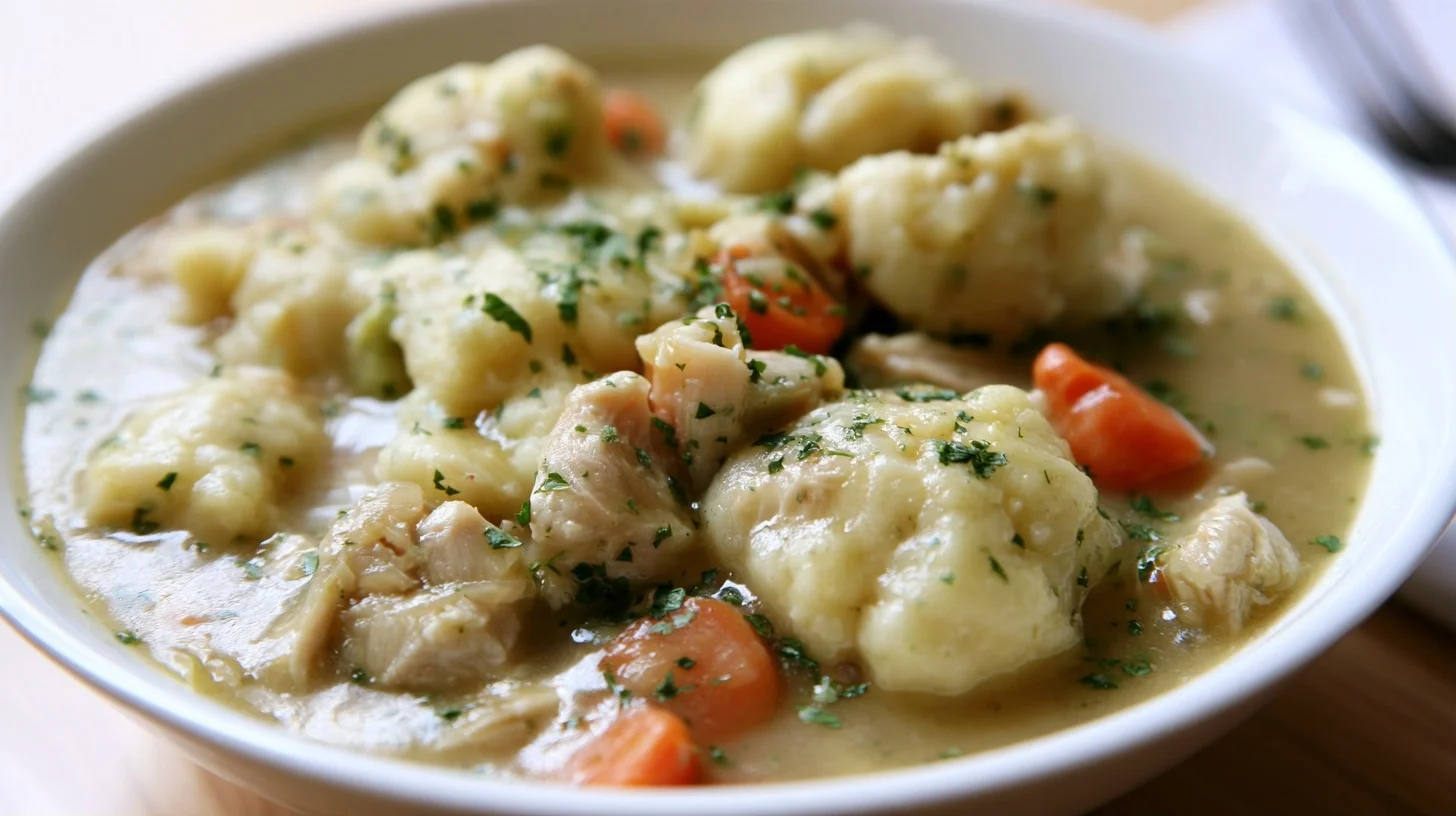
Table of contents
- Why You Will Love This Chicken and Dumplings
- Essential Tools for Perfect Chicken and Dumplings
- How to Make Chicken and Dumplings with Tender Results
- Expert Tips for the Best Chicken and Dumplings
- Common Mistakes That Ruin Chicken and Dumplings Recipe
- How to Customize Your Chicken and Dumplings
- What Makes Chicken and Dumplings Comforting
- How to Serve Chicken and Dumplings Recipe
- How to Store and Reheat Chicken and Dumplings
- Frequently Asked Questions about Chicken and Dumplings Recipe
Why You Will Love This Chicken and Dumplings
- The dumplings are light and fluffy, never dense or soggy, because the dough is mixed just until combined.
- This recipe uses bone-in chicken thighs for deeper flavor and meat that stays tender during simmering.
- Everything cooks in one pot, which means less cleanup and more time enjoying the meal.
- The broth thickens naturally as the dumplings cook, creating a creamy consistency without heavy cream.
Essential Tools for Perfect Chicken and Dumplings
Having the right equipment makes this recipe easier and ensures better results. You don’t need anything fancy, but a few key tools will help you achieve tender chicken and fluffy dumplings.
- Large Dutch oven or heavy-bottomed pot: A 5 to 6 quart pot with a tight-fitting lid distributes heat evenly and prevents scorching the bottom while the chicken simmers.
- Wooden spoon or silicone spatula: These tools won’t scratch your pot and are ideal for stirring the dumplings gently without breaking them apart.
- Mixing bowl: A medium bowl is necessary for combining the dumpling dough without overworking it.
- Measuring cups and spoons: Accurate measurements are important for the dumpling dough, which needs the right flour-to-liquid ratio to stay light.
- Ladle: A ladle makes it easier to serve the chicken and dumplings with plenty of broth in each bowl.
How to Make Chicken and Dumplings with Tender Results
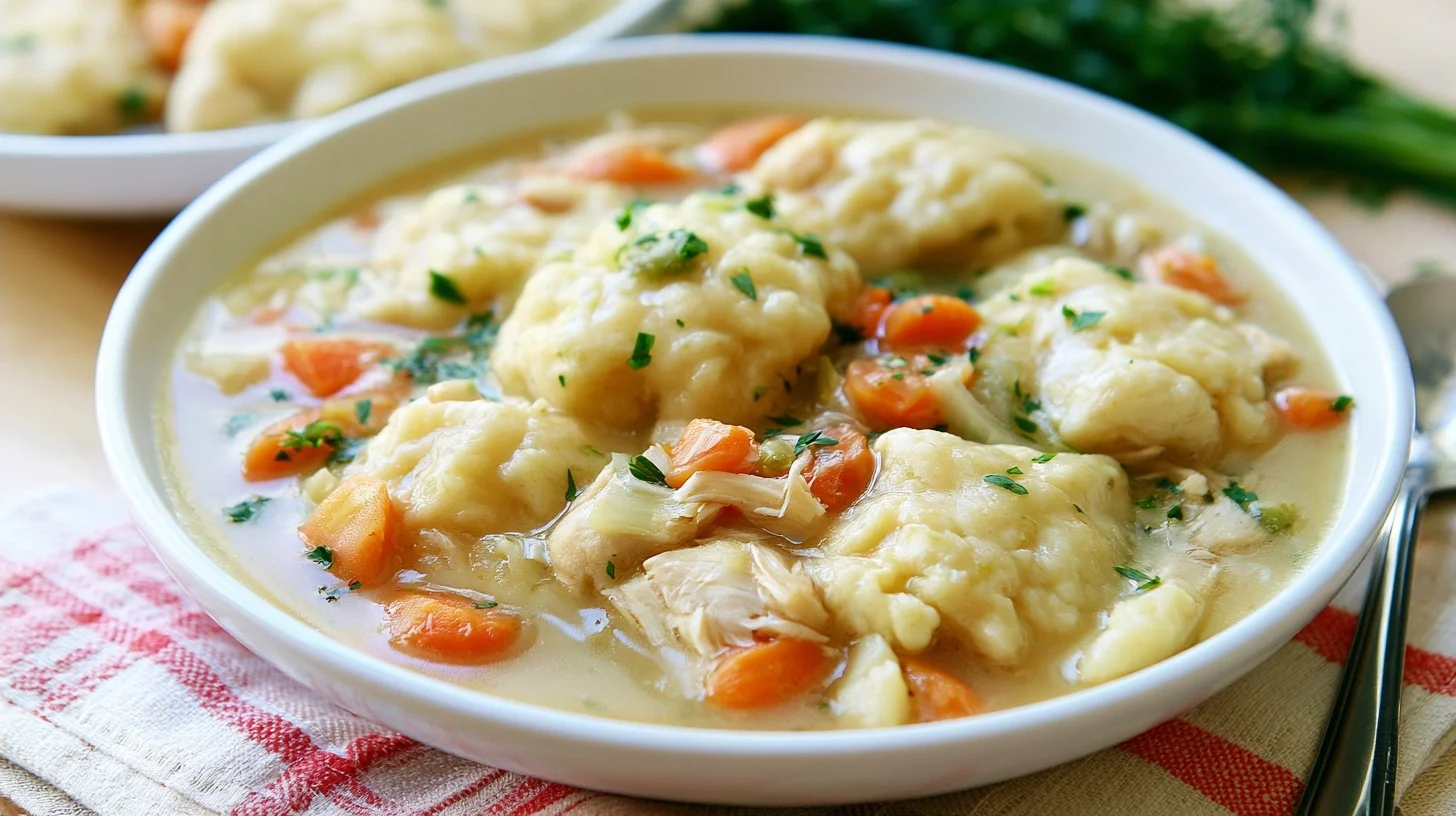
Chicken and Dumplings
6
servings15
minutes45
minutes420
kcalThis chicken and dumplings recipe combines tender bone-in chicken thighs, hearty vegetables, and fluffy homemade dumplings in a rich, savory broth. The dumplings are mixed just until combined to keep them light and tender, and they steam on top of the simmering broth to absorb flavor without becoming soggy. Everything cooks in one pot, making cleanup easy and the results comforting.
Keep the screen of your device on
Ingredients
1.5 pounds bone-in chicken thighs
4 cups chicken broth
2 medium carrots
2 stalks celery
1 medium yellow onion
2 cups all-purpose flour
1 tablespoon baking powder
1 teaspoon salt
3 tablespoons unsalted butter
0.75 cup whole milk
2 tablespoons fresh parsley
0.5 teaspoon black pepper
Directions
- Heat the chicken broth in a large Dutch oven or heavy-bottomed pot over medium-high heat. Add the chicken thighs, carrots, celery, onion, half a teaspoon of salt, and the black pepper. Bring to a boil, then reduce the heat to low, cover, and simmer for 25 to 30 minutes until the chicken is cooked through and the vegetables are tender.
- Remove the chicken from the pot and let it rest on a cutting board for a few minutes. Once cool enough to handle, shred the meat using two forks and discard the bones. Set the shredded chicken aside.
- Prepare the dumpling dough by whisking together the flour, baking powder, and the remaining half teaspoon of salt in a medium bowl. Add the cold butter and use your fingers or a pastry cutter to work it into the flour until the mixture resembles coarse crumbs.
- Pour in the milk and stir gently with a fork just until the dough comes together. The dough should be thick and slightly sticky, with a few lumps remaining. Overmixing will make the dumplings tough, so stop as soon as the flour is incorporated.
- Bring the broth back to a gentle simmer over medium heat. Using a spoon, drop rounded tablespoons of the dumpling dough onto the surface of the simmering broth, leaving space between each dumpling so they don’t stick together.
- Cover the pot with a tight-fitting lid and let the dumplings cook undisturbed for 15 to 18 minutes. The dumplings are done when they look puffy and a toothpick inserted into the center comes out clean. Do not lift the lid during this time, as the steam is what makes the dumplings rise.
Notes
- The dumplings will absorb broth as the dish sits, so the consistency will thicken over time. If reheating leftovers, add a splash of chicken broth or water to loosen the mixture.
- For a richer broth, leave the chicken skin on during cooking and skim off the fat before adding the dumplings. Removing the skin before cooking keeps the dish lighter.
- If the dumplings sink to the bottom instead of floating, the broth may have been boiling too vigorously. Keep the heat at a gentle simmer to allow the dumplings to steam properly.
Nutrition Facts
- Serving Size: 1 g
- Total number of serves: 6
- Calories: 420kcal
- Fat: 14g
- Carbohydrates: 42g
- Fiber: 3g
- Protein: 28g
Did you make this recipe?
Tag @therecipemasterblog on Instagram and hashtag it with #therecipemaster
Like this recipe?
Follow @therecipemasterblog on Pinterest
Follow us on Facebook!
Follow The Recipe Master on Facebook
Expert Tips for the Best Chicken and Dumplings
The difference between good chicken and dumplings and great chicken and dumplings comes down to a few key techniques that ensure tender chicken, flavorful broth, and light dumplings.
Use Bone-In Chicken for Deeper Flavor
Bone-in chicken thighs add richness to the broth that boneless cuts can’t match. The bones release gelatin during simmering, which creates a fuller, more satisfying mouthfeel. If you prefer white meat, bone-in chicken breasts work too, but thighs stay moister and are harder to overcook. Remove the skin before cooking to avoid excess fat in the broth, but keep the bones for flavor.
Don’t Overmix the Dumpling Dough
Overmixing the dumpling dough develops gluten, which makes dumplings tough and chewy instead of light and tender. Stir the wet and dry ingredients together just until the flour disappears and the dough looks shaggy. A few lumps are fine. The dough should be thick and sticky, not smooth like bread dough. This keeps the dumplings fluffy as they steam on top of the simmering broth.
Drop Dumplings onto Simmering, Not Boiling, Broth
A rolling boil will break the dumplings apart before they have a chance to set. Reduce the heat to a gentle simmer before spooning the dough onto the surface of the broth. The dumplings will puff up as they steam, and the gentle heat allows them to cook through without falling apart. Keep the lid on the pot during cooking to trap the steam, which is what makes the dumplings rise.
Let the Chicken Rest Before Shredding
Once the chicken is cooked through, remove it from the pot and let it rest for a few minutes before shredding. This allows the juices to redistribute, keeping the meat moist. Shred the chicken into bite-sized pieces using two forks, and discard the bones. Return the shredded chicken to the pot after the dumplings are cooked so it stays tender and doesn’t dry out.
Add Vegetables at the Right Time
Carrots and celery should go in early so they soften and release flavor into the broth. If you’re adding peas or frozen vegetables, stir them in during the last few minutes of cooking so they don’t turn mushy. This timing keeps each vegetable at the right texture and prevents the dish from becoming a uniform soft mash.
Common Mistakes That Ruin Chicken and Dumplings Recipe
Adding Dumplings to a Crowded Pot
If you drop too many dumplings into the pot, they’ll stick together and cook unevenly. Leave space between each spoonful of dough so steam can circulate around each dumpling. Overcrowding also lowers the temperature of the broth too quickly, which prevents the dumplings from puffing up properly. If your pot isn’t large enough, cook the dumplings in two batches.
Lifting the Lid While Dumplings Cook
Opening the lid releases the steam that the dumplings need to rise and cook through. Resist the urge to check on them for at least 15 minutes. The dumplings are done when they look puffy and a toothpick inserted into the center comes out clean. If you lift the lid too early, the dumplings may collapse or stay gummy in the middle.
Using Too Much Liquid
Chicken and dumplings should have a thick, stew-like consistency, not a thin soup. If the broth is too watery, the dumplings won’t absorb enough flavor and the dish will taste diluted. Start with just enough liquid to cover the chicken, and let it reduce slightly before adding the dumplings. The dumplings will absorb some of the broth as they cook, which naturally thickens the dish.
Skipping the Resting Time After Cooking
Letting the pot sit off the heat for five minutes after cooking allows the dumplings to firm up slightly and the broth to thicken. Serving immediately can result in dumplings that fall apart when you ladle them into bowls. This short rest also makes the dish easier to portion and improves the overall texture.
How to Customize Your Chicken and Dumplings
Make Chicken and Dumplings Recipe Dairy-Free
Replace the butter in the dumplings with an equal amount of vegetable oil or melted coconut oil. Use unsweetened almond milk or oat milk instead of whole milk. The dumplings will still be tender, though they may lack the slight richness that butter provides. If you want a creamier broth without dairy, stir in a few tablespoons of coconut cream at the end.
Add More Vegetables
Diced potatoes, parsnips, or turnips add heartiness and make the dish even more filling. Add them at the same time as the carrots and celery so they have enough time to soften. Green beans, corn, or peas can go in during the last few minutes. Just be mindful that adding too many vegetables can make the pot crowded and prevent the dumplings from cooking evenly.
Try Herb Variations
Fresh thyme, rosemary, or sage can replace or complement the parsley in the dumplings. Add a teaspoon of dried herbs to the dumpling dough, or stir fresh herbs into the broth just before serving. Thyme pairs especially well with chicken and adds an earthy note that deepens the flavor of the dish.
Use Rotisserie Chicken for a Shortcut
If you’re short on time, use shredded rotisserie chicken instead of cooking raw chicken. Start by making the broth with vegetables and chicken stock, then add the shredded chicken after the dumplings are cooked. This cuts the cooking time in half and still delivers a comforting, flavorful meal. Just be aware that the broth won’t be quite as rich without the bones.
What Makes Chicken and Dumplings Comforting
Chicken and dumplings is a one-pot meal that balances protein, vegetables, and carbohydrates in a single bowl. The chicken provides lean protein, while the dumplings offer a source of energy from the flour. The broth is relatively low in fat if you remove the chicken skin before cooking, and the vegetables add fiber and vitamins.
One serving typically contains around 400 to 500 calories, depending on the size of the dumplings and the amount of butter used. The dish is naturally high in sodium if you use store-bought chicken broth, so consider using low-sodium broth or making your own if you’re watching your salt intake. Adding extra vegetables increases the fiber content and makes the dish more filling without adding many calories.
How to Serve Chicken and Dumplings Recipe
Chicken and dumplings is a complete meal on its own, but a few simple sides can round out the table. A crisp green salad with a tangy vinaigrette cuts through the richness of the broth. Crusty bread or homemade biscuits are perfect for soaking up any leftover broth. If you want something lighter, steamed green beans or roasted Brussels sprouts add color and a bit of crunch.
Serve the chicken and dumplings in wide, shallow bowls so there’s plenty of room for the dumplings and broth. Garnish with fresh parsley or a crack of black pepper for a simple finishing touch. This dish is best enjoyed hot, right after cooking, when the dumplings are at their fluffiest.
How to Store and Reheat Chicken and Dumplings
Store leftover chicken and dumplings in an airtight container in the refrigerator for up to three days. The dumplings will absorb more broth as they sit, so the dish will thicken considerably. If the consistency becomes too thick, add a splash of chicken broth or water when reheating.
Reheat gently on the stovetop over low heat, stirring occasionally to prevent sticking. You can also reheat individual portions in the microwave, though the dumplings may lose some of their fluffy texture. Freezing is not recommended because the dumplings tend to become mushy when thawed and reheated. If you plan to make this dish ahead, consider freezing the chicken and broth separately and making fresh dumplings when you’re ready to serve.
Frequently Asked Questions about Chicken and Dumplings Recipe
Yes, you can use boneless chicken thighs or breasts, but the broth won’t be as rich. Bone-in chicken adds depth and gelatin to the broth, which creates a fuller texture. If using boneless chicken, consider adding extra chicken broth or a splash of cream to compensate for the missing richness.
Dense dumplings are usually the result of overmixing the dough. Stir the wet and dry ingredients together just until combined, leaving the dough slightly shaggy. Overmixing develops gluten, which makes the dumplings tough. Also, make sure the broth is at a gentle simmer, not a rolling boil, which can cause the dumplings to break apart before they set.
No, dumplings are best made fresh and cooked immediately. The dough doesn’t hold well once mixed, and pre-made dumplings tend to become gummy or fall apart. If you want to prep ahead, you can cook the chicken and broth in advance, then make and cook the dumplings just before serving.
The dumplings are done when they look puffy and a toothpick inserted into the center comes out clean. This usually takes 15 to 18 minutes of covered simmering. Avoid lifting the lid during cooking, as the steam is what makes the dumplings rise and cook through evenly.


Leave a Reply