
- Patience and low, steady heat are essential to transform raw onions into sweet, deeply browned, jammy caramelized onions.
- Prep ahead: uniform 1/4 inch slices and a deglazing liquid make cooking meditative and prevent burning.
- Use a large skillet, avoid overcrowding, and freeze extras for quick flavor additions to meals.
Nothing transforms a simple kitchen into a five-star bistro faster than the aroma of caramelized onions drifting through the air. I still remember the first time I sat in a tiny French cafe, tasting the deep, jammy sweetness of these golden strands atop a steak. This caramelized onions recipe is a testament to the power of patience and heat. It fits perfectly as a healthy comfort food option or a festive dish to impress your dinner guests. While many try to rush the process, true flavor comes from letting time do the work. Transitioning from raw, pungent vegetables to sweet, mahogany ribbons is a culinary magic trick. Let’s master this foundation of flavor together.
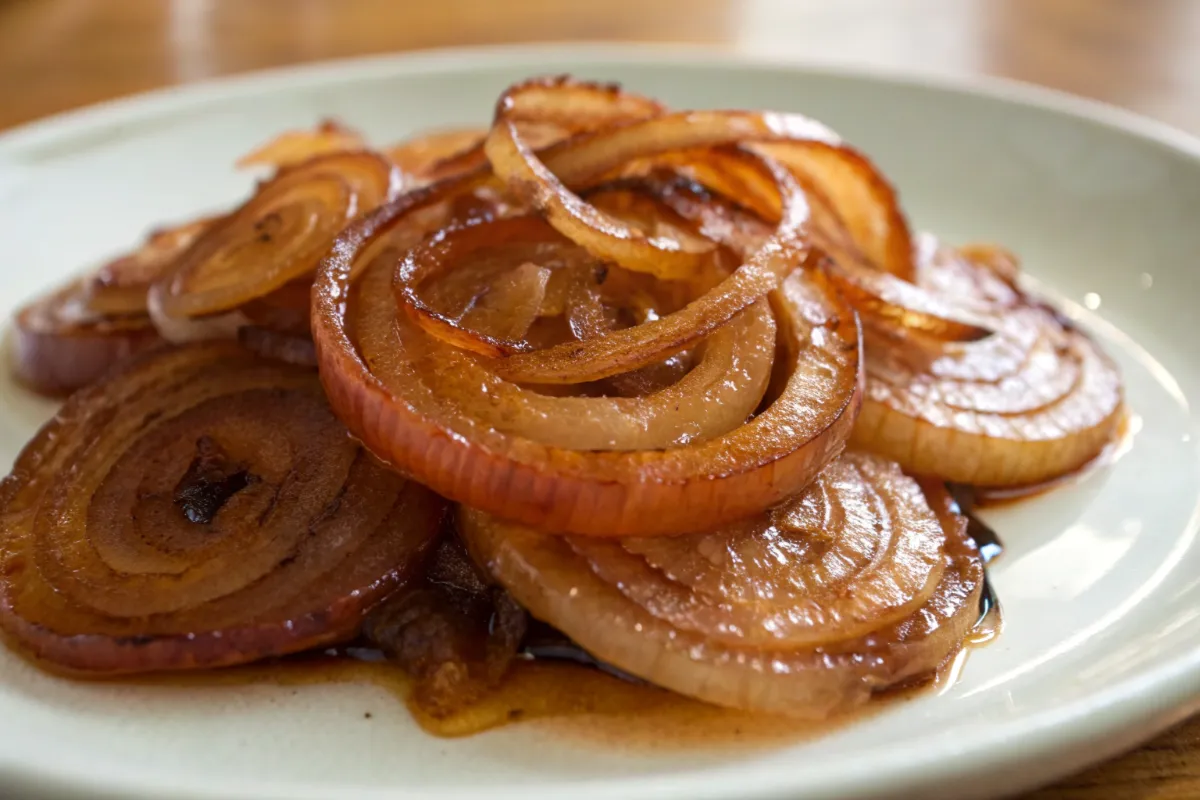
Table of contents
Caramelized Onions Recipe Card
Caramelized Onions Recipe
1
servings15
minutes45
minutes85
kcalSuccess with caramelized onions depends more on technique than a long list of fancy items. However, choosing the right variety of onion makes a significant difference. I prefer yellow or Vidalia onions for their high sugar content.
Keep the screen of your device on
Ingredients
3.0 lbs Yellow Onions (approx 4-5 large)
1.0 tbsp Fresh Thyme (optional)
- opacity Fats & Seasoning
2.0 tbsp Unsalted Butter
1.0 tbsp Extra Virgin Olive Oil
0.5 tsp Kosher Salt
1.0 tsp Balsamic Vinegar (for finishing)
Directions
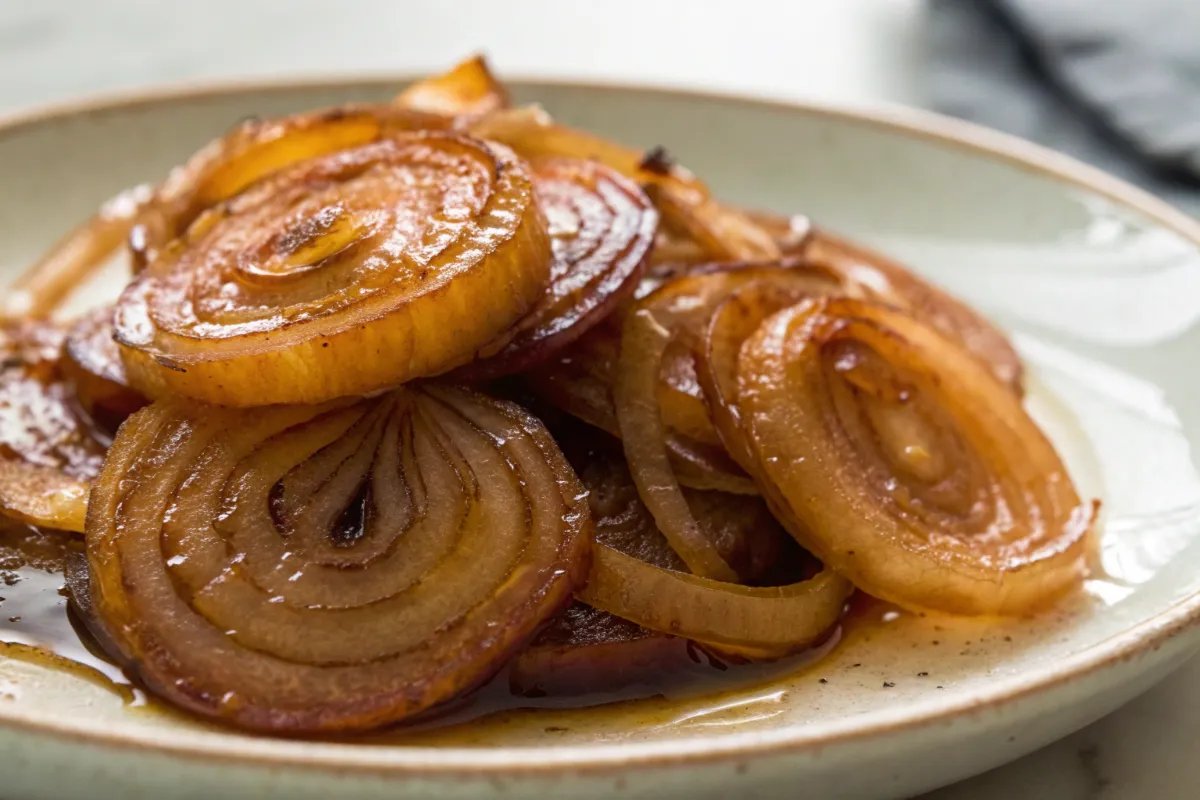
- Heat the butter and olive oil in a large, wide skillet over medium-low heat. Add the sliced onions to the pan and toss to coat thoroughly in the fats.
- Sprinkle with salt to encourage the onions to release their moisture early in the process. Cook slowly for 45.0 to 60.0 minutes, stirring every 5.0 minutes to prevent scorching.
- Deglaze the pan with a tablespoon of water whenever the brown bits (fond) build up on the bottom. Continue stirring until the onions reach a uniform, deep mahogany brown color throughout.
- Stir in the balsamic vinegar and fresh thyme during the last 2.0 minutes of cooking. Cool the onions completely before storing them in an airtight container in the refrigerator.
Notes
- If you are in a rush, add a tiny pinch of baking soda to speed up the browning (Maillard) reaction.
- Wait to add the balsamic until the end so the sugars don’t burn prematurely.
- Stainless steel or cast iron pans work much better than non-stick for developing that rich “fond.”
Nutrition Facts
- Fat: 6g
- Fiber: 2g
- Sugar: 4g
Did you make this recipe?
Tag @therecipemasterblog on Instagram and hashtag it with #therecipemaster
Like this recipe?
Follow @therecipemasterblog on Pinterest
Follow us on Facebook!
Follow The Recipe Master on Facebook
Pre-Sauté Success: What to Prep Ahead
To avoid a frantic cooking session, a little bit of foresight is your best ally. A great caramelized onions batch takes time, so prepping your space allows you to enjoy the process. I personally love to handle the heavy slicing long before I turn on the burner. If you prep your components early, the actual cooking becomes a meditative experience.
- The Deglazing Station: Keep a small jar of water, wine, or beef stock right by the stove to scrape up those delicious brown bits.
- Uniform Slicing: Use a mandoline or a very sharp knife to slice your onions 1/4 inch thick. Consistency ensures they all reach that jammy state at the same time.
- Freezer Storage: If you slice too many, you can freeze raw onions for up to 3.0 months. They actually break down faster after being frozen!
Pro-Tips for Achieving Mahogany Perfection
Follow these actionable tips to ensure you never burn your precious batch:
- Don’t Overcrowd: Use the largest skillet you have. If the onions are too deep, they will steam rather than brown.
- The Water Trick: If the pan gets too dark too fast, add a tablespoon of water to deglaze and distribute the color.
- Patience is Key: Never cook them over high heat. Low and slow is the only way to develop the natural sugars properly.
- Check Quality: Use high-quality butter for a richer, more luxurious mouthfeel.
Beyond the Pan: What to Serve With Them
Knowing what to plate with your caramelized onions determines the soul of your meal. They are the ultimate “flavor booster.” I love piling them high on a juicy cheeseburger or stirring them into a creamy dip. For a more sophisticated pairing, serve them alongside a pan-seared steak or folded into a fluffy omelet. They also act as a phenomenal healthy comfort food addition to grain bowls or roasted root vegetables.
Your Caramelized Questions Answered
Yellow onions are the kitchen workhorse, but Vidalia or Walla Walla sweets provide a naturally higher sugar content for faster results.
Absolutely. While there is fat involved, onions are rich in antioxidants. They are a great healthy comfort food addition.
Yes! They freeze beautifully in ice cube trays. Pop one into any sauce or soup for an instant flavor bomb.
Your heat is likely too high. Lower the flame and add a splash of water to cool the pan down and distribute the sugars.
No. Onions have plenty of natural sugar. Real caramelized onions don’t need added sweeteners!
Mastering the Slow Burn
I truly hope this caramelized onions recipe finds a permanent place in your kitchen rotation. There is a primal joy in taking a basic, inexpensive vegetable and coaxing out such sophisticated flavors. This caramelized onions journey is all about the reward of patience. Furthermore, don’t be afraid to make a double batch, they go faster than you’d think! Happy cooking, and may your kitchen always smell of sweet success.



Leave a Reply