
- Start by high-heat searing smoked meats to build a deep umami pot liquor before low-and-slow simmering.
- Use a tight-headed green cabbage cut into wedges; sear then simmer until fork-tender without overmixing.
- Brighten flavors with apple cider vinegar and season precisely with Kosher salt to avoid blandness.
- Simmer at 190°F–200°F, skim excess fat, and refrigerate leftovers; reheat gently on the stove, not microwave.
After years of professional recipe development, I finally found the secret to the ultimate Cabbage Boil that isn’t just a side dish, it’s the main event. If you’re looking for a “Monday Repentance” meal, that light yet deeply satisfying dish that resets your system after a weekend of indulgence, this is it.
I made this three times in one week just to get the texture right. My grandmother used to simmer her cabbage until it was practically a puree, which was nostalgic, but as a chef, I wanted something better. I tested different wedge sizes, varied the salt ratios, and timed the simmer to the second. The verdict? You need high-heat searing followed by a low-and-slow hydration phase. This recipe ensures every leaf is fork-tender without losing its soul to the pot liquor.
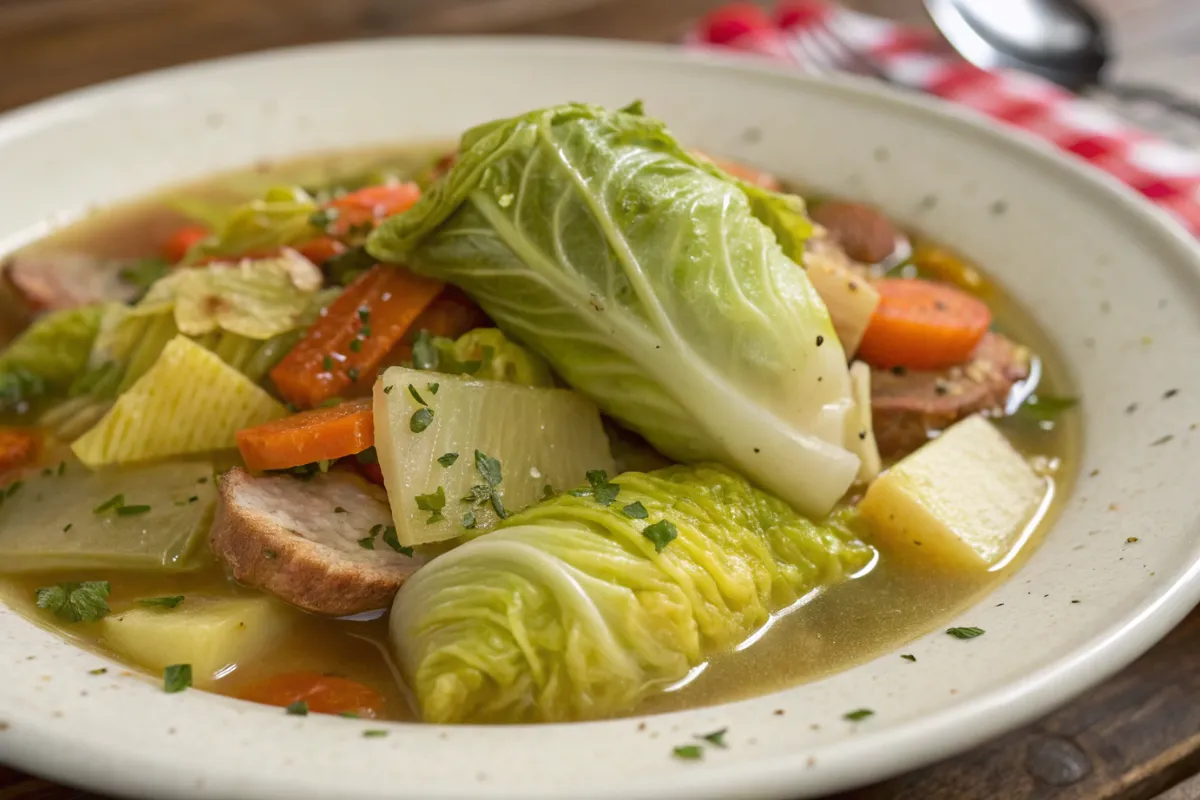
What Makes This Cabbage Recipe Special
- Deep Umami Base: We use smoked meats to create a “pot liquor” that tastes like it’s been simmering for days.
- Minimal Cleanup: This is a true one-pot wonder designed for effortless batch cooking.
- Budget-Friendly Nutrition: Cabbage is a nutrient powerhouse that feeds a crowd for pennies.
If you enjoy one-pot meals, you might also like my Classic Beef Stew Recipe.
What You Need for the Perfect Cabbage Boil
The Best Cabbage to Use
For a Cabbage Boil, you want a heavy, tight-headed Green Cabbage. Unlike Savoy or Napa, which are too delicate for a long boil, standard green cabbage has the structural integrity to withstand high heat. I’ve found that organic green cabbage tends to have a higher sugar content, which caramelizes beautifully during the initial sear.
Key Flavor Enhancers
- Smoked Meat: I recommend smoked turkey necks or high-quality Andouille sausage. If using sausage, ensure it reaches an internal temperature of 160°F before adding the vegetables.
- The Trinity: Onions, celery, and bell peppers (the Cajun holy trinity) provide the aromatic foundation.
- Apple Cider Vinegar: This is my “secret weapon.” It brightens the dish and balances the sulfurous notes of the cabbage.
- Kosher Salt: Never use table salt; the coarse grains of Kosher salt allow for better seasoning control.
How to Make Cabbage Boil Step-by-Step
Phase 1: Prep and Searing the Aromatics
Start by cleaning your cabbage. Use a sharp chef’s knife or a mandolin (set to a thick slice) for uniform wedges. Pat dry your smoked meats with paper towels. Heat a Dutch oven over medium-high heat. Sear the meat until a brown crust (fond) forms on the bottom of the pot. Whisk until a roux forms if you want a thicker broth, but traditionally, we keep it light.
Phase 2: Building the Pot Liquor
Add your diced onions and garlic to the rendered fat. Hydrate the bottom of the pan with a splash of chicken stock, scraping up all those flavorful brown bits. Pour in the remaining stock and bring to a rolling boil. Reduce the heat and let the aromatics infuse the liquid for at least 20 minutes before adding the cabbage.
Phase 3: Finishing Touches
Lower the cabbage wedges into the liquid in a single layer as much as possible. Don’t Skip! This is the most critical part: once the cabbage is in, do not overmix. If you stir too aggressively, the wedges will disintegrate. Cover and simmer until the cabbage is translucent and perfectly fork-tender.
Expert Secrets for the Best Cabbage
- Temperature Precision: Use an instant-read thermometer to check your broth. For the best flavor extraction, your liquid should be at a steady 190°F–200°F (just below a boil) while simmering the cabbage.
- The “V” Cut: Always cut a “V” shape to remove the core, but leave a tiny bit of the base. This keeps the leaves attached so they don’t float away.
- Sulfur Control: To prevent that “old cafeteria” smell, do not overcook. The moment the cabbage is tender, remove it from the heat.
- The Fat Cap: If your pot liquor looks too oily, let it sit for 5 minutes and use a wide spoon to skim the excess fat off the top.
Cabbage Boil Recipe Card
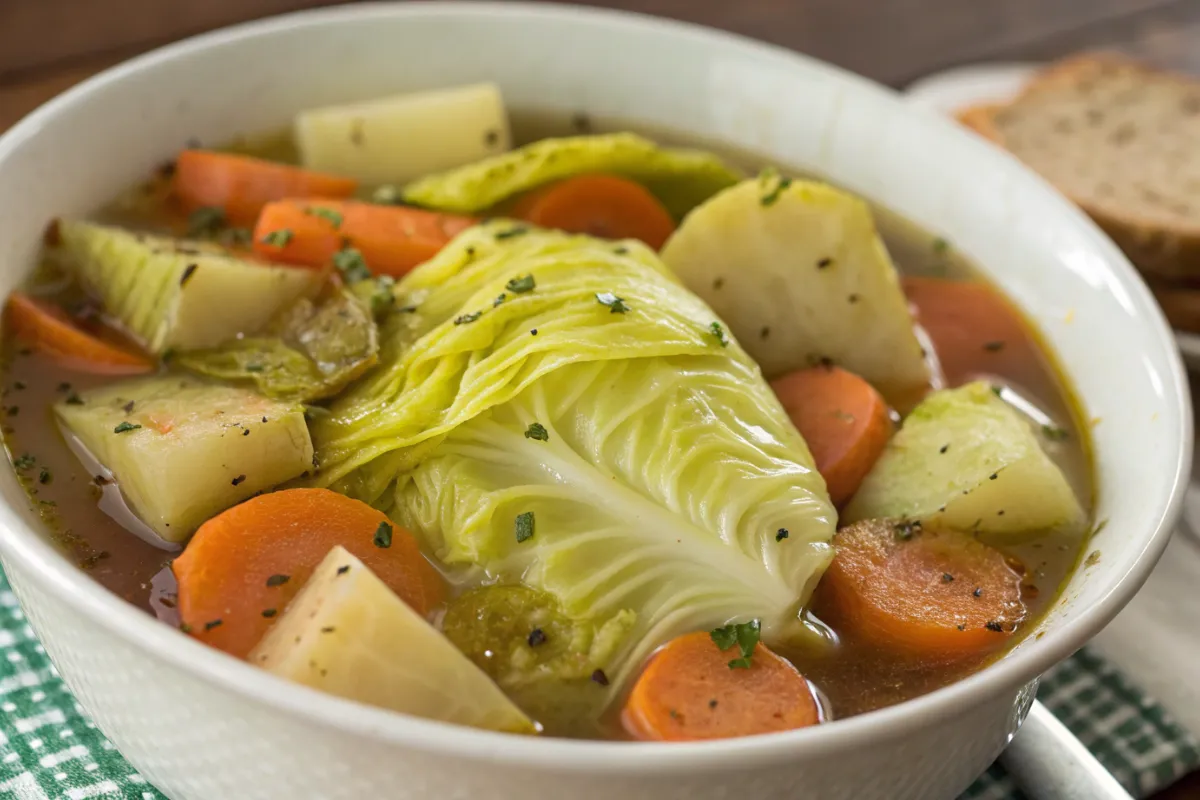
Cabbage Boil Recipe
6
servings15
minutes45
minutes300
kcalThis Cabbage Boil combines smoky, savory meats with silky, tender greens for the ultimate comfort meal. It is a nutritious, one-pot wonder that brings the heart of Southern cooking to your table.
Keep the screen of your device on
Ingredients
1 large head of Green Cabbage (approx. 3 lbs)
1 lb Smoked Sausage or Andouille (sliced)
1 lb Smoked Turkey Necks or Bacon slices
1 large Yellow Onion (diced)
4 cloves Garlic (minced)
6 cups Chicken Bone Broth
1 tbsp Cajun Seasoning
1 tsp Red Pepper Flakes (optional)
2 tbsp Apple Cider Vinegar
Kosher Salt and Black Pepper to taste
Directions
- The Searing Phase: In a large heavy-bottomed pot, add your sliced sausage or smoked meats. Cook over medium-high heat until they are browned and the fat has rendered. Use a slotted spoon to remove the meat and set aside, leaving the fat in the pan.
- Aromatic Base: Lower the heat to medium. Add the diced onion to the rendered fat. Sauté for 5-7 minutes until translucent. Add the minced garlic and cook for just 60 seconds until fragrant.
- Developing the Liquor: Pour in the chicken bone broth. Use a wooden spoon to scrape the “fond” from the bottom of the pot. Add the Cajun seasoning and red pepper flakes. Bring the liquid to a boil, then reduce to a simmer for 15 minutes.
- Cabbage Preparation: While the broth simmers, cut your cabbage into 8 thick wedges. Ensure the core is mostly removed but the base remains to hold the leaves together.
- The Simmer: Carefully place the cabbage wedges into the simmering broth. Ensure they are mostly submerged. Cover the pot with a tight-fitting lid.
- Final Execution: Simmer for 20-25 minutes. Check for doneness with a fork; it should slide in with zero resistance.
- The Finish: Turn off the heat. Stir in the apple cider vinegar. Taste and adjust salt and pepper. Let the pot sit for 5 minutes uncovered before serving to allow the flavors to settle.
Notes
- If/Then: If your broth is too salty (common with smoked meats), add a peeled potato to the pot; it will absorb the excess salt.
- Pro Tip: Use a potato ricer on one boiled potato and stir it back into the broth for a silkier, heartier “pot liquor.”
- Texture Secret: For a bit of crunch, sear the cabbage wedges in a separate pan for 2 minutes per side before adding them to the liquid.
- Nutrition Disclaimer: Nutrition values are calculated independently using standard ingredient databases and are provided for informational purposes only.
Nutrition Facts
- Fat: 14g
- Sodium: 840mg
- Carbohydrates: 12g
- Protein: 18g
- Vitamin C: 85mg
- Vitamin K: 120mg
Did you make this recipe?
Tag @therecipemasterblog on Instagram and hashtag it with #therecipemaster
Like this recipe?
Follow @therecipemasterblog on Pinterest
Follow us on Facebook!
Follow The Recipe Master on Facebook
Your Questions Answered
Absolutely. In fact, like a good chili, a Cabbage Boil often tastes better the next day once the flavors have fully melded. Store it in an airtight container in the fridge.
I do not recommend freezing. Cabbage has high water content; freezing breaks the cell walls, and it will turn into mush when thawed.
If your dish tastes flat, it’s likely missing acidity. Add a teaspoon of apple cider vinegar or a squeeze of lemon juice.
Reheating Your Cabbage Boil the Right Way
To maintain the best texture, store leftovers in an airtight container for up to 4 days. When reheating, avoid the microwave. Instead, place the cabbage and broth back into a saucepan over medium-low heat. If you used sausage or potatoes, you can even toss them in an air fryer for 3 minutes to regain some crispness while the cabbage warms on the stove. Ensure all meat components reach room temperature before heating to ensure even warmth.
Expert Resources for Further Learning:
- Learn more about the health benefits of cruciferous vegetables at Healthline.
- For technical meat safety guidelines, visit the USDA Food Safety Site.
Would you like me to help you pair this with a Southern-style cornbread recipe?




Leave a Reply