

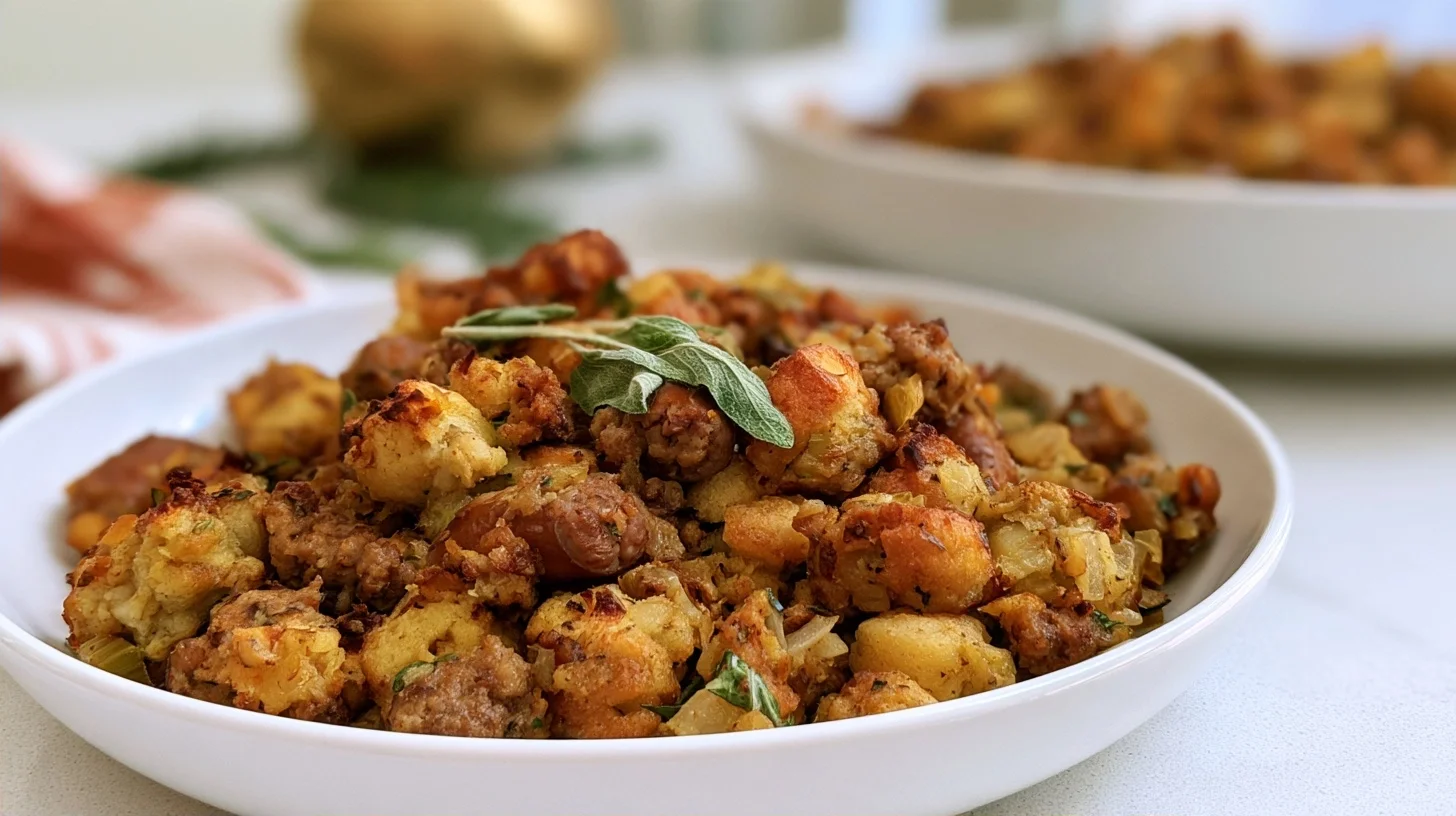
This sausage stuffing recipe combines crumbled Italian sausage, toasted bread cubes, and fresh herbs for a savory side dish with rich flavor and a golden, crispy top. The sausage adds depth and moisture that plain bread stuffing lacks.
The recipe takes 60 minutes and yields 10 servings. Browning the sausage fully before mixing prevents greasy stuffing, and using day-old bread keeps the texture firm instead of mushy. You can assemble it a day ahead and bake it just before serving.
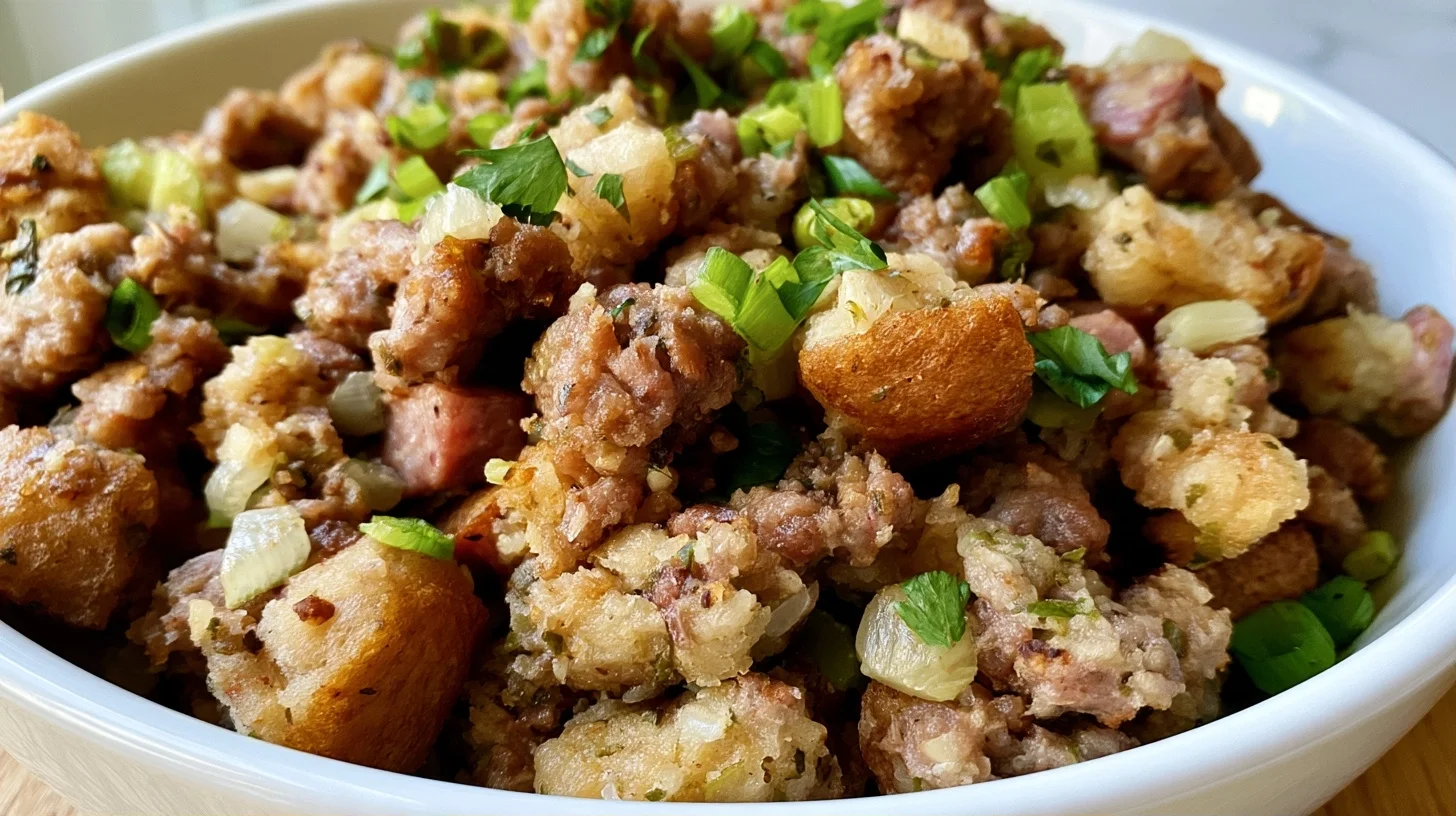
Table of contents
Why This Sausage Stuffing Recipe Works
- Toasting the bread cubes for 15 minutes at 300°F dries them enough to absorb the broth without turning soggy.
- Browning 1 pound of Italian sausage until no pink remains adds savory fat that coats every piece of bread.
- Baking uncovered for the final 15 minutes crisps the top while the sausage and stuffing stay moist underneath.
Sausage Stuffing Recipe
Sausage Stuffing Recipe
10
servings20
minutes40
minutes285
kcalThis sausage stuffing combines crumbled Italian sausage, toasted bread cubes, and fresh herbs for a savory side dish with a crispy golden top. The recipe takes 60 minutes, yields 10 servings, and uses day-old bread to keep the texture firm instead of mushy.
Keep the screen of your device on
Ingredients
12 cups day-old bread cubes
1 pound Italian sausage
1 medium onion
2 stalks celery
3 cloves garlic
2 cups chicken broth
2 large eggs
1 tablespoon fresh sage
1 tablespoon fresh thyme
1 teaspoon salt
0.5 teaspoon black pepper
Directions
- Preheat the oven to 300°F. Spread the bread cubes on a large baking sheet in a single layer. Bake for 15 minutes until dry and lightly golden. The cubes should feel firm when pressed.
- Increase the oven temperature to 350°F. Grease a 9×13-inch baking dish with butter or cooking spray.
- Brown the sausage in a large skillet over medium-high heat for 8 to 10 minutes. Break it into small pieces with a wooden spoon. Stop when no pink remains and the edges are golden brown.
- Add the onion, celery, and garlic to the skillet with the sausage. Cook for 5 minutes until the onion turns translucent and the celery softens slightly.
- Stir in the sage, thyme, salt, and pepper. Cook for 1 minute until the herbs smell fragrant.
- Whisk the broth and eggs together in a large bowl. Add the toasted bread cubes and the sausage mixture. Toss until every piece of bread is moistened. The mixture should feel damp but not soaking wet.
Notes
- Toasting the bread cubes at 300°F for 15 minutes removes excess moisture so the stuffing stays firm instead of mushy.
- If the stuffing turns out dry, drizzle 1/4 cup of warm broth over the top and return it to the oven covered for 5 minutes.
- Store leftovers in an airtight container in the refrigerator for 3 to 4 days. Reheat at 350°F for 20 minutes covered, then 5 minutes uncovered. Substitute turkey sausage for Italian sausage, but add 2 tablespoons of butter to prevent dryness.
Nutrition Facts
- Serving Size: 1 g
- Total number of serves: 10
- Calories: 285kcal
- Fat: 13g
- Carbohydrates: 28g
- Net Carbs: 26g
- Fiber: 2g
- Protein: 12g
Did you make this recipe?
Tag @therecipemasterblog on Instagram and hashtag it with #therecipemaster
Like this recipe?
Follow @therecipemasterblog on Pinterest
Follow us on Facebook!
Follow The Recipe Master on Facebook
How to Make Sausage Stuffing
Follow these steps to get golden, moist stuffing with a crispy top every time.
- Toast the bread cubes: Spread 12 cups of bread cubes on a baking sheet. Bake at 300°F for 15 minutes until dry and lightly golden. This step prevents soggy stuffing by removing excess moisture before the bread meets the broth.
- Brown the sausage completely: Cook 1 pound of Italian sausage in a large skillet over medium-high heat for 8 to 10 minutes. Break it into small pieces with a wooden spoon. Stop when no pink remains and the edges turn golden brown. Undercooked sausage releases water during baking and makes the stuffing greasy.
- Sauté the vegetables: Add 1 diced onion and 2 diced celery stalks to the sausage. Cook for 5 minutes until the onion turns translucent. The vegetables should soften but still have a slight bite.
- Mix the wet ingredients: Whisk 2 cups of chicken broth with 2 beaten eggs in a bowl. Pour this mixture over the bread cubes and toss until every piece is moistened. The stuffing should feel damp but not soaking wet.
- Bake covered, then uncovered: Transfer the mixture to a greased 9×13 baking dish. Cover with foil and bake at 350°F for 30 minutes. Remove the foil and bake for 15 more minutes. The top should be golden and crispy while the center stays moist.
Make Ahead Instructions
Assemble the stuffing up to 24 hours ahead. Cover the unbaked dish tightly with plastic wrap and refrigerate. Remove it from the fridge 30 minutes before baking so it comes to room temperature. Bake as directed, adding 5 minutes to the covered baking time if the center is still cold.
What Went Wrong
Why Is the Stuffing Dry?
Dry stuffing means too little liquid or overbaking. The bread cubes need enough broth to hydrate fully. Add broth 1/4 cup at a time until the mixture feels moist when squeezed. If the stuffing is already baked, drizzle 1/4 cup of warm broth over the top and return it to the oven for 5 minutes covered.
Why Is the Center Mushy?
A mushy center happens when the bread was too fresh or the sausage was undercooked. Fresh bread absorbs too much liquid and breaks down. Use day-old bread or toast fresh bread cubes until completely dry. Undrained sausage also adds excess fat and water. Always drain the sausage after browning if more than 2 tablespoons of fat remain in the pan.
Why Is the Top Pale?
A pale top means the stuffing stayed covered too long or the oven temperature was too low. Remove the foil for the final 15 minutes so the top can brown. If it is still pale after the full baking time, turn on the broiler for 2 to 3 minutes. Watch closely to prevent burning.
Ways to Change It
Apple Sausage Stuffing
Add 1 large Granny Smith apple, peeled and diced, to the skillet with the onion and celery. The apple adds sweetness and a slight tartness that balances the rich sausage. Use sweet Italian sausage instead of hot for this version.
Cornbread Sausage Stuffing
Replace 6 cups of the bread cubes with 6 cups of crumbled cornbread. The cornbread adds a slightly sweet, crumbly texture. Reduce the broth to 1 3/4 cups because cornbread is more absorbent than white bread.
Gluten-Free Sausage Stuffing
Use gluten-free bread cubes in place of regular bread. Toast them the same way. Gluten-free bread dries out faster, so check after 10 minutes of toasting. The texture will be slightly more crumbly but still flavorful.
What to Serve With Sausage Stuffing
Sausage stuffing pairs well with roasted turkey, baked ham, or pork tenderloin. Serve it alongside mashed potatoes, green beans, or roasted Brussels sprouts. Cranberry sauce adds a tart contrast to the savory sausage. For a complete Thanksgiving spread, try it with classic bread stuffing for guests who prefer a milder version.
How to Store and Reheat Sausage Stuffing
Sausage stuffing keeps for 3 to 4 days in the refrigerator in an airtight container or covered tightly with foil. Freeze it for up to 2 months in a freezer-safe container. Thaw overnight in the refrigerator before reheating.
Reheat in a 350°F oven for 20 minutes covered with foil, then 5 minutes uncovered to crisp the top. Add 2 tablespoons of broth before reheating if the stuffing looks dry. Microwave individual portions for 1 to 2 minutes, but the top will not crisp. According to Spice Station Silverlake’s history of turkey stuffing, traditional stuffing evolved from bread-based fillings used to stretch meals, and proper storage ensures the dish stays safe and flavorful for days.
Sausage Stuffing FAQs
Yes, assemble the stuffing up to 24 hours ahead. Cover it tightly and refrigerate. Bring it to room temperature for 30 minutes before baking, then bake as directed.
Bulk Italian sausage works best because it crumbles easily and adds savory fat. Mild or hot Italian sausage both work. Turkey sausage produces a drier result, so add extra butter.
Toast the bread cubes at 300°F for 15 minutes until dry. Use day-old bread instead of fresh. Brown the sausage fully and drain excess fat before mixing.
Yes, freeze baked stuffing for up to 2 months in a freezer-safe container. Thaw overnight in the refrigerator. Reheat at 350°F for 20 minutes covered, then 5 minutes uncovered.







Leave a Reply