

A stuffing recipe delivers soft, savory bread cubes soaked in broth and butter, baked until the top is golden and crisp. This version uses simple ingredients and takes 1 hour from prep to table, making it a reliable side dish for any meal that needs something hearty alongside roasted meat or vegetables.
The recipe makes 8 servings in 1 hour with 15 minutes of prep. Dried bread cubes absorb the broth evenly without turning mushy, and the dish holds well for up to 4 days in the refrigerator.
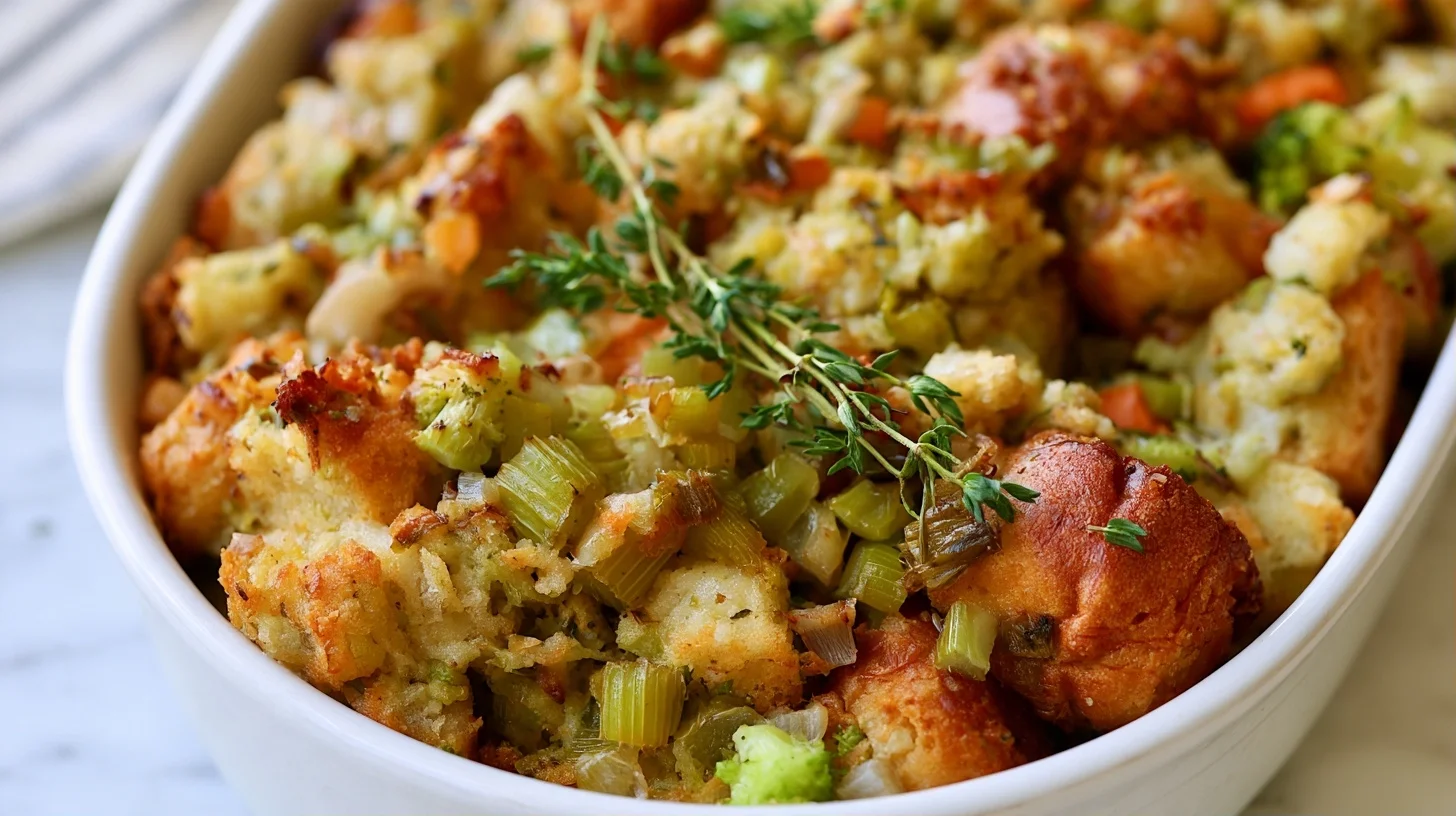
Table of contents
Why This Stuffing Recipe Works
- Dried bread cubes absorb 2 cups of broth without falling apart, so the stuffing recipe stays moist inside and crisp on top.
- Sautéing the vegetables in butter for 5 minutes before adding them to the bread builds a savory base that plain raw vegetables cannot match.
- Baking uncovered at 350°F for the final 15 minutes creates a golden crust while keeping the center tender.
Classic Stuffing Recipe
Stuffing Recipe
8
servings15
minutes45
minutes220
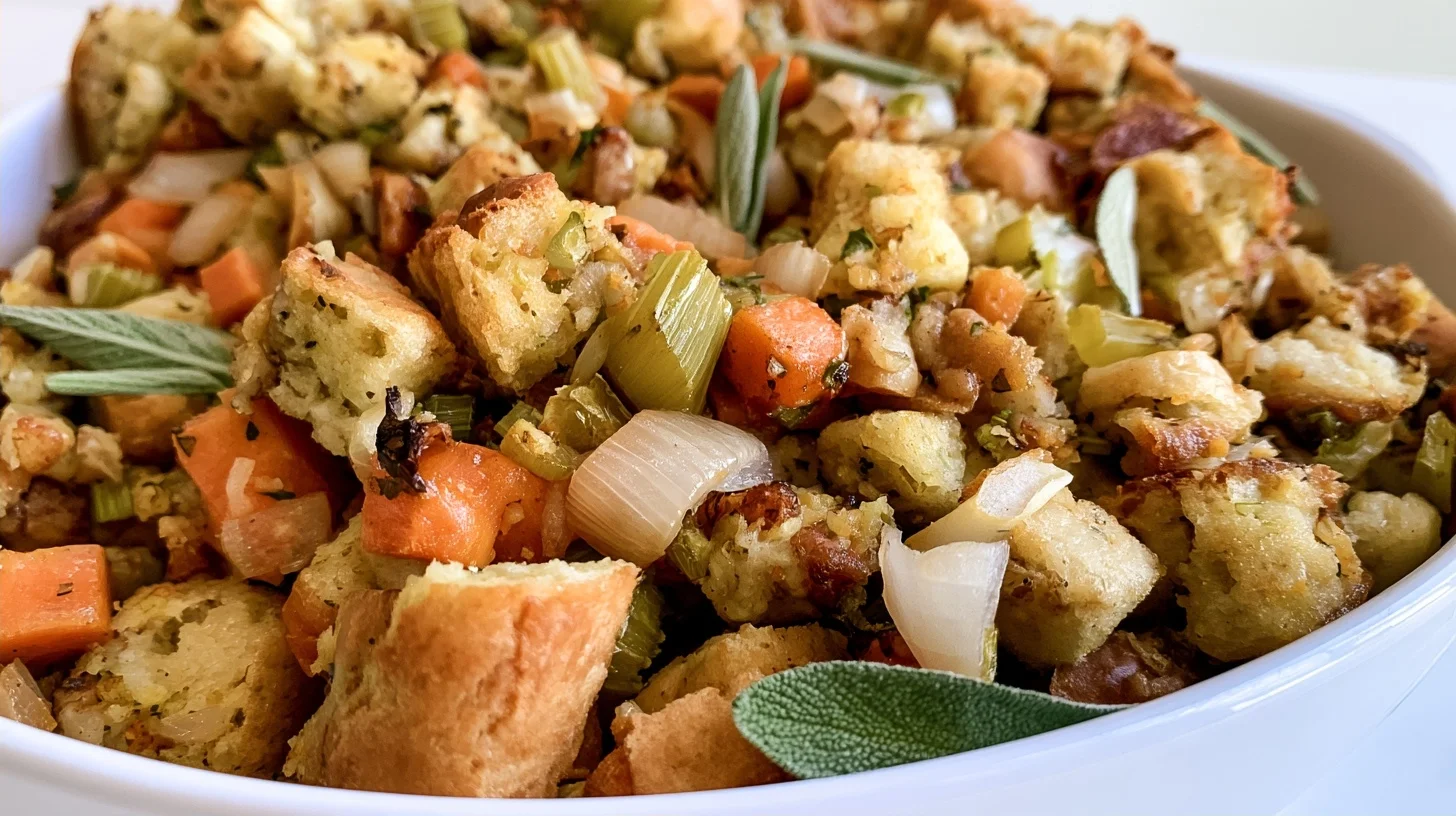
kcalClassic stuffing combines dried bread cubes with sautéed vegetables, broth, and eggs, baked until the top is golden and crisp. The recipe takes 1 hour total and makes 8 servings with a moist center and crunchy edges.
Keep the screen of your device on
Ingredients
8 cups dried bread cubes
0.5 cup butter
1 cup diced celery
1 cup diced onion
2 cups chicken broth
2 large eggs
1 tablespoon poultry seasoning
0.5 teaspoon salt
0.25 teaspoon black pepper
Directions
- Preheat the oven to 350°F and grease a 9×13 inch baking dish with butter or cooking spray.
- Melt the butter in a large skillet over medium heat for 1 minute until it foams. Add the celery and onion and cook for 5 minutes, stirring occasionally, until the vegetables are soft and the onion is translucent.
- Combine the bread cubes, sautéed vegetables, poultry seasoning, salt, and pepper in a large bowl and toss until the seasonings coat the bread evenly.
- Whisk the eggs and broth together in a separate bowl, then pour the mixture over the bread cubes. Stir until all the bread is moistened but not soaked.
- Transfer the stuffing to the prepared baking dish and spread it in an even layer. Cover tightly with foil.
- Bake covered for 30 minutes, then remove the foil and bake uncovered for 15 more minutes. The stuffing is done when the top is golden brown and the internal temperature reaches 165°F.
Notes
- Dried bread cubes absorb 2 cups of broth without turning mushy, so the stuffing stays moist inside and crisp on top.
- If the center is soggy, spread the stuffing in a thinner layer and bake uncovered at 350°F for 20 more minutes.
- Stuffing keeps for 3 to 4 days in the refrigerator in an airtight container. Use vegetable broth instead of chicken broth for a lighter flavor.
Nutrition Facts
- Serving Size: 1 g
- Total number of serves: 8
- Calories: 220kcal
- Fat: 9g
- Carbohydrates: 28g
- Net Carbs: 26g
- Fiber: 2g
- Protein: 7g
Did you make this recipe?
Tag @therecipemasterblog on Instagram and hashtag it with #therecipemaster
Like this recipe?
Follow @therecipemasterblog on Pinterest
Follow us on Facebook!
Follow The Recipe Master on Facebook
The sections below explain which bread works best for this stuffing recipe, how to keep the texture right, and what to do if the center comes out too wet or too dry.
Key Ingredients and Substitutions
This stuffing recipe depends on six ingredients that control moisture, flavor, and texture.
- Dried bread cubes: Day-old or dried cubes absorb broth without dissolving. Fresh bread turns soggy. If you only have fresh bread, cut it into cubes and bake at 250°F for 15 minutes.
- Chicken broth: Broth adds savory depth and keeps the bread moist. Vegetable broth works but tastes lighter. Use 2 cups for soft stuffing or 1.75 cups for a firmer texture.
- Butter: Butter coats the vegetables and adds richness. Olive oil works as a substitute, but the flavor is less traditional and slightly fruity.
- Celery and onion: These vegetables form the aromatic base. Frozen diced onion and celery save time and work just as well as fresh.
- Eggs: Eggs bind the bread and broth so the stuffing holds its shape when scooped. Without eggs, the mixture stays loose and crumbly.
- Poultry seasoning: This blend of sage, thyme, and marjoram gives stuffing its signature flavor. If you don’t have it, use 1 teaspoon dried sage and 0.5 teaspoon dried thyme.
How to Get Stuffing Right
These tips prevent the most common stuffing recipe failures and help you adjust the texture before baking.
- Dry the bread completely: Bread that still feels soft will absorb too much broth and turn mushy. Dried cubes should feel hard and sound hollow when tapped together.
- Taste the mixture before baking: Add salt and pepper in small amounts after mixing the broth and bread. The stuffing should taste slightly overseasoned raw because baking mellows the flavor.
- Cover for the first 30 minutes: Foil traps steam so the bread absorbs the broth evenly. Remove the foil for the last 15 minutes to crisp the top.
- Check doneness at 45 minutes: The stuffing is done when the internal temperature reaches 165°F and the top is golden brown. Bread cubes around the edges should feel crisp.
- Let it rest for 5 minutes: Resting allows the eggs to set fully and makes the stuffing easier to scoop without falling apart.
Make Ahead Instructions
Assemble the stuffing up to 1 day ahead, cover tightly, and refrigerate. Add 10 minutes to the covered baking time if starting from cold. The texture stays the same, and you save time on the day of serving.
What Went Wrong
Why Is the Center Soggy?
Too much broth or fresh bread causes a soggy center. If the stuffing is already mixed, spread it in a thinner layer in a larger pan and bake uncovered at 350°F for 20 minutes. Next time, use only 2 cups of broth and make sure the bread cubes are completely dry.
Why Is the Top Burned but the Inside Cold?
The oven temperature is too high or the pan is too shallow. Cover the top with foil and bake for another 10 minutes at 325°F. Use a 9×13 inch pan next time so the stuffing is at least 2 inches deep and cooks evenly.
Why Is It Dry and Crumbly?
Not enough broth or overbaking dries the stuffing out. Drizzle 0.25 cup of warm broth over the top, cover with foil, and bake for 10 more minutes. For your next stuffing recipe, add broth until the bread feels moist but not soaked when you squeeze a handful.
How to Change It
Sausage Stuffing Recipe
Brown 0.5 pound of crumbled breakfast sausage in the skillet before adding the vegetables. The sausage adds fat and a savory, slightly spicy flavor. Drain excess grease if the sausage releases more than 2 tablespoons.
Cornbread Stuffing
Replace half the bread cubes with dried cornbread cubes. Cornbread makes the texture slightly denser and adds a hint of sweetness. Baking time stays the same.
Herb Stuffing Recipe
Add 2 tablespoons of chopped fresh parsley and 1 tablespoon of chopped fresh sage to the bread mixture. Fresh herbs taste brighter than dried and stay green after baking.
What to Serve With Stuffing
Stuffing pairs with roasted turkey, baked chicken, or pork chops because it soaks up pan drippings and balances rich, savory meats. Serve it alongside cranberry sauce and green beans for a traditional plate, or with gravy poured over the top. If you need a main dish that uses stuffing as an ingredient, try Stove Top Stuffing Meatloaf, which bakes boxed stuffing mix directly into ground beef for a one pan dinner.
How to Store and Reheat Stuffing
Stuffing keeps for 3 to 4 days in the refrigerator in an airtight container or covered tightly with foil. Reheat individual portions in the microwave for 1 to 2 minutes, or reheat the whole batch covered in a 350°F oven for 20 minutes. Stuffing freezes well for up to 3 months in a freezer safe container. Thaw overnight in the refrigerator before reheating.
According to Virginia Living’s stuffing guide, stuffing baked inside a turkey must reach 165°F at the center to be safe, but stuffing baked separately in a dish cooks faster and more evenly.
Stuffing Recipe FAQs
Yes, assemble the stuffing up to 1 day ahead and refrigerate. Add 10 minutes to the covered baking time if starting from cold.
Dried white bread, sourdough, or French bread work best. The cubes should feel hard and dry. Fresh bread turns soggy.
Eggs bind the bread and broth so the stuffing holds its shape. Without eggs, the mixture stays loose and crumbly when scooped.
Yes, stuffing freezes well for up to 3 months in a freezer safe container. Thaw overnight in the refrigerator and reheat covered at 350°F for 20 minutes.









Leave a Reply